Qodo 3.0: In the Era of Agents Writing Code at Scale, Install a Quality Line for the Software Factory First
On October 1, AI code quality platform Qodo launched 3.0, upgrading itself from an 'AI code review tool' to 'quality and governance infrastructure for agentic software factories.' The logic stings: 91% of engineering leaders fear losing control of their codebase. When agents submit more code in a day than a team writes in a week, the question is no longer speed — it's who keeps the mess out.
What happened: a code review tool declares it will govern the whole "agentic software factory"
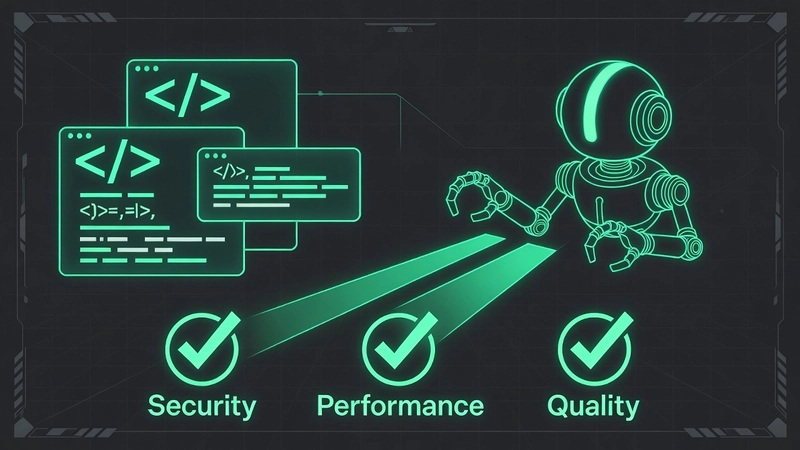
On October 1, Qodo released 3.0 — officially "the next generation of its AI Code Quality and Governance Platform." The biggest change from earlier versions is ambition: instead of only reviewing code after a PR appears, it now injects quality controls throughout the agentic software development lifecycle, from code generation and architecture design all the way to governance.
CEO Itamar Friedman put it bluntly: "Every enterprise will build its software factory around its own systems, tools, and ways of working — that factory becomes trustworthy when agents can draw on the organization's accumulated knowledge and operate within its standards." Translation: agent coding speed is no longer the problem. Trust is.
Three new capabilities: intercept early, triage PRs, blast-radius maps
At the heart of Qodo 3.0 is something called the Wisdom Base: a continuously updated organizational knowledge base holding the codebase's current state, coding standards, architecture rules, and historical PR decisions. Agents no longer work naked — they start the job carrying your house rules.
That lands as three concrete moves. First, pre-commit interception: the organization's coding standards are surfaced directly into the agent's workspace, and the review engine runs before code is even committed — smelly code never becomes a PR. Second, PR Triage: PRs from one task are grouped into a single work package, so a reviewer sees at a glance what a change touches and its priority relative to other work — and can claim ownership to prevent duplicate review. Third, the Software Map: it automatically maps every repository, calculates the blast radius of a proposed change, and surfaces quality risk as a heat map across the architecture.
Signals worth noting: Gerrit, on-prem, open models
Version 3.0 adds Gerrit support (alongside GitHub, GitLab, Bitbucket, and Azure DevOps) plus full on-premises or air-gapped deployment — the Context Engine and Agentic Toolbox can live inside the customer's own data center. Review can also run on open-source models like Nemotron, with weights never leaving the perimeter.
That combination reveals the target customer: banks, governments, large traditional enterprises — places where code cannot leave the building and compliance is strict, but where teams still want agent-driven speed. Founded in 2022, Qodo has raised $120 million from investors including Qumra Capital and Square Peg, plus angels who are executives at OpenAI, Meta, Shopify, and Snyk.
Our take: vibe coders should steal this playbook
An industry study Qodo cites says 91% of engineering leaders fear losing control of their codebase, with governance and visibility the top risk for nearly 30%. That number only gets more extreme in vibe coding: one person plus an agent can generate in an evening what a small team writes in a week — with nobody running incoming quality inspection on any of it.
Qodo's approach is directly copyable by individual developers: move the standards upstream. Don't wait until the agent finishes to review; brief it on the rules before it starts — project coding standards in AGENTS.md, dangerous operations on a denylist, and an impact analysis before every large change. The Wisdom Base that enterprises buy with $120M of funding, you can replicate seventy percent of with a seriously written project manual. Tools will keep getting pricier, but the habit of "set the rules before starting work" is free.
Sources
Related articles

Stack Overflow published its 16th annual developer survey on October 6: 30,000+ respondents across 169 countries. 66% use coding assistants, 26.2% already run automated agent workflows; but trust has shifted — nearly half only trust AI when they can verify its work, and just 6.6% would entrust it with important decisions; 30% say workplace AI use is left to individual discretion. The official snapshot of vibe coding penetration in 2026.

Zed 1.22 stable (Sep 30) builds multi-model orchestration into the editor itself: spawn_agent gains a model parameter so each subagent can run a different model; subagents get automatic context compaction; GPT-6.1 Sol gets BYOK and Grok 4.7 becomes xAI's recommended default. For vibe coders who lean on subagent division of labor, this is a direct productivity change.

On October 5, Instinct — the $10B AI agent startup — announced its agent is entering group chats. Early access users can pull it into chats with friends: trip planning, tickets, fantasy leagues, carpools — friends need no account. The shot lands on Meta's Muse, which still lacks group chat. Instinct and Muse both shipped "phone calls" recently; OpenAI launched ChatGPT Dots plus Spaces last week. The race is shifting from "who's smarter" to "who becomes social infrastructure first."