AI Agents Crash the Group Chat: After Instinct, the 1v1 Chatbox Is No Longer the Default
On October 5, Instinct — the $10B AI agent startup — announced its agent is entering group chats. Early access users can pull it into chats with friends: trip planning, tickets, fantasy leagues, carpools — friends need no account. The shot lands on Meta's Muse, which still lacks group chat. Instinct and Muse both shipped "phone calls" recently; OpenAI launched ChatGPT Dots plus Spaces last week. The race is shifting from "who's smarter" to "who becomes social infrastructure first."

What happened: a $10B agent startup puts AI in the group chat
On Monday, October 5, personal AI agent startup Instinct — valued at $10 billion in its latest round — announced an ambitious move: its agent can now join group chats. Early access users can pull their agent into chats with friends and have it participate in the discussion and execution. The official examples: trip planning, snagging concert tickets, running a fantasy league, organizing carpools, splitting Thanksgiving dish duties.
The most important detail hides in the distribution: friends don't need an Instinct account to use it. You pull the agent into the group, and it serves the whole group — no signup required for anyone else. That's a growth funnel built directly into the product: every group chat is a product demo that needs no download and no registration.
The rollout is measured: early access first, full launch "soon." If you don't have a spot, your own Instinct agent can add you to the waitlist — even queueing is handled by the agent.
Why group chat is the agent's next battlefield: coordination cost dwarfs personal productivity
For years, the default consumer-agent shape has been the 1v1 chatbox: you ask, it answers, it does things for you. That shape solves personal productivity — research, writing, booking. But Instinct founder Noah Shinn nailed a different pain when explaining the group-chat feature: "Making plans with friends usually turns into a frustrating back-and-forth over times and places." And: "With Instinct in the group, you can explore options together, agree on a plan and get it done, all in one thread."
That captures the ceiling of the 1v1 shape. Dinners, trips, carpools, group buys — the pain was never "nobody does the work," it was "nobody decides." Twelve people replying past each other in a group, times never aligning, opinions never converging, plans quietly dying. An AI in 1v1 is an assistant; in a group it can be a tireless coordinator — immune to being left on read, unbothered by tedium, able to distill 40 scattered messages into three options, chase everyone for a decision, and then execute (book the tickets, create the calendar event, split the bill).
In other words, 1v1 agents compete on "doing for me"; group-chat agents compete on "deciding for us." The former saves time; the latter eliminates coordination friction — the most universal, most persistent, and hardest-to-automate cost in human organization. Whoever captures it first defines the agent's next decade of form factors.
What builders should take away: multi-user agents are a brand-new product surface
If you're building agent products, the thing worth dissecting in Instinct's launch isn't the feature — it's the three new questions it exposes.
First, the permission model needs a rewrite. Single-user agent permissions are already tricky enough (April's Cursor-agent-deletes-production-database incident still looms), and multi-user agents multiply the complexity: whose agent gets to speak for whom? Can A's agent commit A to something in front of B? When one person's agent acts in a group, whose authorization counts? There are no established design patterns here; the first product to get the rules right becomes the de facto standard.
Second, trust design is the product. Shinn laid out five privacy rules on X, and every one is worth copying: 1) your personal agent asks permission before connecting to a group agent; 2) you choose which groups to trust, revocable anytime; 3) the group Instinct is isolated from your personal account and can't see your personal data; 4) your personal agent always asks before sharing info or acting; 5) when a new member joins, your personal agent's pending replies are held. Translated into product language: make control visible, revocable, and predictable. In a high-sensitivity setting like group chat, users don't want a smarter AI — they want firmer boundaries.
Third, "being pulled into a group" is the strongest viral loop. Traditional consumer growth runs on shared links and invite codes; the agent era's growth loop may be "being @-mentioned into a group." One Instinct user pulls the agent into a chat, and eight unregistered friends watch it coordinate a trip firsthand — more persuasive than any ad. And "friends need no account" reduces that loop's friction to zero. Expect everyone to follow: group chat isn't a feature, it's a distribution channel.
Reading the arms race: from chatbot to social infrastructure
Zoom out and the past two weeks look unusually dense: Instinct and Muse both shipped "make phone calls" (the agent literally dials and gets things done); last week OpenAI launched ChatGPT Dots plus Spaces — collaborative spaces where humans and agents work together; now Instinct stuffs the agent into group chats. Three launches from three players in one month, all pointing one way: the agent is morphing from "a bot I chat with" into "infrastructure in my life."
The competitive geometry is interesting too. Instinct's shot lands on Meta's Muse, which has no group-chat feature yet. But Meta holds an old card: legacy Meta AI could already enter group chats on WhatsApp, Messenger, Instagram, and Facebook. The fight for the group-chat agent entry point is really a fight over the social graph: wherever your friends are, your agent has to show up there. Model capabilities will converge, but your 500 contacts, your family group, your fantasy league circle can't be ported. The real moat may not be the model — it's the group relationship graph.
That also explains why a $10B Instinct is rushing to move first: the consumer-agent window is short. Once Muse fills in group chat and OpenAI spreads Dots, the contest becomes who owns the user's groups. The first-mover edge isn't technical — it's becoming "the default agent in the group," the way browsers once fought to be your default.
The sober side: public embarrassment risk and the silent majority
But group-chat agents face a problem 1v1 never encounters: mistakes are public executions. A wrong answer in 1v1 — close the window, move on. In a group, the agent misquoting a price, mixing up a time, or blurting out a preference you wanted private — twelve people see it at once. One of Shinn's five privacy rules specifically holds pending replies when a new member joins, which tells you the team knows: group context is fluid, and what was sayable yesterday becomes unsayable when a stranger walks in today.
There's a subtler issue: the silent majority. Every group has people who rarely speak, and their reaction to the agent may be a feeling of being watched — an always-on AI that remembers everything and can act on anyone's behalf sitting in the chat. Could it make the group feel less relaxed? Group chat is social at its core, and social needs "safe imperfection": you can leave messages on read, crack jokes, change your mind last minute. Does an over-efficient coordinator turn the group chat into a meeting room?
So our read: the direction is right, but don't declare "group-chat agents have arrived" yet. Watch the word of mouth during early access — whether real groups feel "finally, someone decides" or "there's an AI pressuring me to commit." The former is infrastructure; the latter is an interruption. Instinct put the hardest part (trust design) on the table first, which is the right call — but the real exam happens in real social life, not in the launch announcement.
Sources
Related articles
On October 8, 2026, Google Cloud launched the Gemini agent at Gemini at Work 2026: a universal agent for work that takes objectives, plans by itself, auto-selects between Gemini and Claude models per task, and introduces 'coworker agents' with their own email, calendar, and directory seat. Four judgments on why the second half of the agent race is about 'agents that feel like colleagues.'
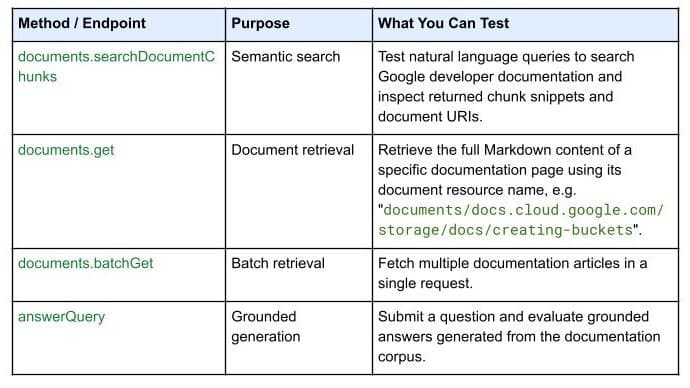
On October 7, 2026, Google Developers launched the Developer Knowledge API ecosystem: official Google Cloud, Firebase, and Android docs as a programmatic source of truth, with a gcloud CLI surface, an official Agent Skill (one-line install), an MCP server, and multi-language client libraries. Why 'docs as APIs' uproots vibe coding's classic failure of models misremembering APIs.

On October 7, 2026, GitHub announced via Changelog: starting with CLI 1.0.94-0, the /model command discovers models in your local Ollama instance, listed alongside configured and cloud models. Discovery doesn't auto-enroll — each model needs manual confirmation — and models must support tool calling and streaming. GitHub also teased intelligent routing, and clarified: a local model neither enables offline mode nor disables telemetry.