Qwen on a laptop reads model weights: a weight-space programming replication
Simon Willison reports that Qwen 3.8 27B, running on his laptop, identified Pac-Man, Pong and Breakout from raw model weights alone, and missed on Freeway. This article explains the experiment, the numbers, the critics, and why the conclusion should stay restrained.
The news in one sentence
On November 3, 2026, Simon Willison wrote on his blog that Qwen 3.8 27B, running on his own laptop, could interpret model weights: given nothing but a string of raw weight numbers and no tools at all, it identified the games hidden behind them — Pac-Man, Pong, and Breakout, three out of three — and only missed on the fourth. The post's title is deliberately restrained — "Qwen 3.8 27B on my laptop can interpret model weights, too" — and Willison's own conclusion is more restrained still: do not rush to declare "the age of source code is over."
Why does this deserve a full article? Because it turns a claim that sounds mystical into a concrete experiment you can reproduce on your own machine. "Weight-space programming" is the idea that future programmers might not write source code at all, but instead adjust model weights directly — hiding a program inside numbers, and letting another model read the program back out. If that idea holds, the shape of software, its copyright, even the definition of "a program" would need rewriting. Willison's post is valuable precisely because it shows the astonishing result while pushing back on the hype.
How the experiment actually worked
Start with the source. The experiment replicates half of a paper by Rikiya Takehi, Jayden Teoh, Alex Zhang, and Omar Khattab, titled "Sparks of Weight-Space Programming." The paper's method: first train small reinforcement-learning agents to play Atari games — Pac-Man, Pong, Breakout, Freeway; then take the agents' weights and hand them to a large model, which, looking only at the weight numbers and using no tools, guesses which game each set of weights belongs to.
Willison replicated the no-tools half. His model was Qwen 3.8 27B, a 17 GB local model running in LM Studio with a long context window. The method: feed the agent's weights to the model as text, and let the model reason about what the numbers represent. No external tools, no web lookup, no code execution — pure "look at numbers, think of an answer."
The results, as recorded in Willison's post: Pac-Man identified at 72% confidence in 46 minutes 12 seconds with 43,506 reasoning tokens; Pong at 75% in 1 hour 4 minutes 54 seconds; Breakout at 88% in 52 minutes 25 seconds. The fourth game, Freeway, was misidentified as "a simplified Pac-Man-like grid game." Three right, one wrong — and the miss is informative, because Freeway and Pac-Man may genuinely share structural similarities in weight space, and the model was led astray by that similarity.
Willison also ran a comparison: Kimi K3.1 Pro via OpenRouter guessed Breakout in 9 minutes 41 seconds with 19,493 reasoning tokens. A stronger model is faster — but Willison's point is not "who is faster." It is that even a 27B model on a laptop can do this at all. The bar is much lower than you would expect.
Why "recognizing a game" is so startling
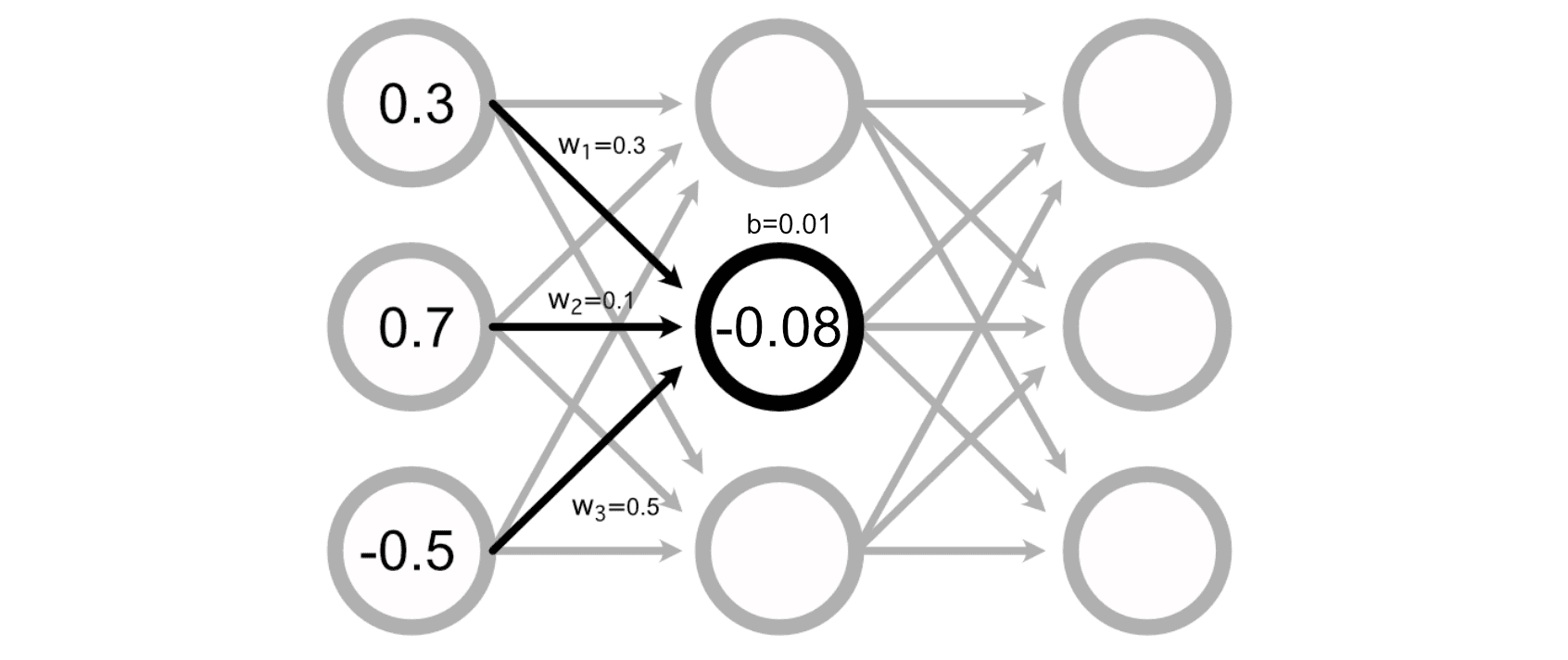
To feel the impact, think about what weights are. A neural network's weights are a huge string of numbers left over after training — millions or billions of them. To a human, they look like noise. Yet a model looking at those numbers can reverse-engineer "these numbers are playing Pac-Man." It is like showing someone the dimensions of every gear in a machine and having them correctly say whether the machine weaves cloth or grinds flour — three times in a row.
The deeper implication is that weights contain structure, and that structure can be "read" by another model. Traditionally we assume a program must exist as source code for humans to read, change, and understand. Weight-space programming challenges that assumption: if weights themselves are an encoding of a program, then "reading a program" might not require source code, and "writing a program" might not require a keyboard — adjusting weights or training agents could count as writing programs.
But here comes the brake pedal, and Willison presses it himself. Do not declare the end of source code, for three reasons. First, these agents are tiny and these games are trivial; the gap between an Atari game and real software spans several orders of magnitude. Second, the model is guessing, and it says so — 72%, 75%, 88% are not 100%, and the fourth guess was wrong. Third, recognizing a game is not understanding a program, let alone modifying, debugging, or guaranteeing one. Reading and writing well are different skills.
What the critics said
Willison's post also records critical voices, naming Matthew Honnibal and Sean Goedecke among them. The core criticism boils down to one sentence: the experiment shows that a model can extract recognizable patterns from weights — not that weights are source code. Between pattern recognition and program semantics lies a very long road.
The distinction matters. Seeing an electrocardiogram and recognizing "a heart is beating" is not the same as knowing what prescription to write. A model recognizing "these weights play Pac-Man" is not the same as understanding Pac-Man's rules, designing a new level, or fixing a bug. Each step from "recognition" to "understanding" to "programming" is an exaggeration if you skip it.
There is also a more practical objection: the agents in the experiment were trained specifically for it, with relatively clean weight structures. Real-world large models are trained on vast data over long runs across many tasks, and their weights are far messier. Reading a game out of small, clean weights does not imply reading anything useful out of large, messy ones. Extrapolating lab results straight into industry is the most common way this kind of news goes wrong.
What it means for ordinary developers right now
If you do not work on model interpretability, this news has three grounded takeaways rather than one futuristic one. First, models are better at "reading numbers" than you think. Next time you are debugging, staring at logs, or looking at a pile of seemingly meaningless numbers, let a model look first — it may spot structure you missed. Spotting structure is not a correct conclusion, though; you still verify.
Second, the bar for small local models is falling fast. A 27B model, 17 GB on disk, on one laptop, produced a result worth writing a paper about. Three years ago that experiment needed lab compute; now it needs a decent laptop. That trend is good news for independent developers: experiments that used to be "only big labs can play" can now be reproduced locally, verified, and then decided upon.
Third, and most important: judge "what AI can do" by reproducible experiments, not by headlines. If a tabloid rewrote this story, it could easily read "AI can now read a program's soul; source code is about to die." Willison did not write that. He wrote confidence levels, timings, the failed fourth case, and the critics' names. That is what trustworthy technical writing looks like.
A note for vibe coders: do not let "weight programming" mislead you
For this column's readers — people building projects with AI — there is a counterintuitive lesson. Weight-space programming sounds like "soon nobody will write code," but Willison's experiment shows the opposite: the model that can read weights was itself built with code, data, and experiments. The more magical the tool, the more concrete the engineering behind it.
More practically, vibe coding will not change because of this paper. You still write requirements, review diffs, run tests, and fix bugs. Even if weight programming arrives, it will first appear in model research, model compression, and model auditing — not in "build me an expense-tracking app." Treating a distant possibility as a near-term action plan is the easiest trap in tech trend-chasing.
What the paper does offer vibe coders is a good training sample in judgment. When you see an astonishing claim, ask four questions: How big was the experiment? What was the success rate? What failed? What do the critics say? Willison's post answers all four, which is exactly why it is worth reading. Apply those four questions to the next "AI just disrupted X" headline before deciding whether to get excited.
How to reproduce it yourself
The friendliest thing about this story is how reproducible it is. You need no lab account and no compute grant. The public path: read the original paper, "Sparks of Weight-Space Programming," to understand the design — train small agents, extract weights, feed them to a large model to guess the game. Then read Willison's blog post and match each step: which model, what size, what runtime, how long each game took, how many reasoning tokens, what confidence, which one failed.
Then the hands-on part. Qwen 3.8 27B is publicly downloadable; local runners like LM Studio are readily available. The hardware you need is a machine with enough memory and preferably a decent GPU; a 17 GB model file is not extreme. Prepare the agent weights the way the paper does, feed them to the local model with no tools, record its answers and confidence levels, and compare with Willison's numbers: Pac-Man 72%, Pong 75%, Breakout 88%, plus the Freeway miss.
Reproducing is valuable not to "prove Willison right," but to feel the phenomenon's boundaries with your own hands. You will notice confidence is not decoration: the model is confident on some games and hesitant on others, and hesitation is often where it goes wrong. You will also notice the cost: 46 minutes, over an hour — this is slow, expensive reasoning, not instant magic. One run of your own moves your understanding from headline level to engineering level.
Watch for pitfalls. First, the weight data format must match the paper's, or the model is not seeing what the paper saw. Second, a long context window is mandatory; if the context is too short, the weights do not fit at all. Third, inference parameters matter — temperature and sampling change answers and confidence, so record your parameters, or you cannot explain why your result differs from Willison's.
If your reproduction succeeds, do what Willison did before celebrating: write down the failures too. Did Freeway come out right or wrong for you? Does changing the random seed change the answer? Does a smaller model still recognize anything? Those answers are worth more than the word "success" — they define the range where the phenomenon holds, and range is what engineering decisions actually need.
Where weight programming might land first
On a longer timeline, even if weight-space programming becomes real, it will not first disrupt everyday development. It will first land in specialist areas. One is model auditing: regulators or security teams wanting to know what a model "actually learned" could read weights and identify internal structures, going deeper than input-output testing. Another is model compression and transfer: if you can read which part of the weights corresponds to which capability, you can prune, merge, or transfer capabilities deliberately instead of compressing blindly.
A third is "translation" between models: different architectures use incompatible weight formats, but if there is a universal "weight semantics," one model's capabilities could in principle be translated into another. That sounds like science fiction, but Willison's experiment at least proves one thing: weight information is not completely unreadable; to another model, it has structure.
All three directions share a precondition: readability must grow from "recognize a game" to "locate a capability, modify it, and verify the modification." Today's experiment only does recognition, on small models and simple tasks. From recognition to modification lie interpretability, causal verification, and safety evaluation — several gates, each needing new experiments, new failures, and new papers. No single blog post crosses them.
So the rational stance for ordinary developers is "follow, don't bet." Follow the papers and reproductions in this direction; know where it is heading. Do not bet your technical roadmap, learning plan, or product direction on it. Your next project will still be written in source code, guaranteed by tests, and explained in documentation. Weight programming, if it comes, will first become one more tool in your toolbox, not a replacement for the toolbox.
Conclusion: the spark is real; the fire is not lit yet
The paper's title chose its word well: Sparks. A spark means the phenomenon is real but far from a blaze. Qwen recognizing three games on a laptop is a real spark. From spark to "weights are the next source code" still needs many experiments, many orders of magnitude, and many accumulated failures.
So read this news with excitement and restraint at once. Excitement, because a local model reading weights is genuinely cool, and you can reproduce it on your own machine today. Restraint, because recognizing a game is not understanding a program, understanding a program is not writing one well, and writing one well is not replacing source code. Sparks are worth gathering around — just do not announce the bonfire yet.
If you want to try it, the path is public: the original paper, Willison's blog, Qwen 3.8 27B's local deployment, LM Studio — all available. One reproduction will do more for your judgment than forwarding ten sensational articles. And that, arguably, is what this story most wants to teach.
Comments (0)
Sources
Related articles

Anthropic has released FlashProve, an open-source prototype that uses zkSNARKs to prove a reply came from a committed set of model weights without revealing them. It reaches about 110 tokens per second on one H100 with 19 MB proofs, but proving costs 70 to 95 times plain inference and contexts are capped at 1,024 tokens.
LiberAI introduced Liber-0 on November 3, a world action model scoring 36% across 600 trials on 60 tasks. The real story is the breakdown: 63.5% on pick-and-place, 34% on other manipulation, just 10.5% on long-horizon tasks — and a glove-data route where 10,000 annotated hours beat 2 million hours of raw video.

Sarvam AI released Prism on November 3: a decision model that does not generate long text but scores given options, averaging 71.8 at 44 milliseconds, with weights open under Apache 2.0. Its real selling point is not being the smartest, but being calibrated, order-stable, and fit to serve as the judgement layer inside automated workflows.