Tencent Released Hy4's Full Weights: a 770B MoE With a Million-Token Context — but the Licence Is Not Apache 2.0
On 20 November 2026, Tencent released the full weights of flagship model Hy4: 770B total parameters, 49B active per token, and a 1,048,576-token context. Beyond the parameter count, the licence is the real story: the model card names the custom Tencent Hy License, whose Section 10 draws two lines for model-as-a-service operators — not Apache 2.0, as same-day coverage claimed.
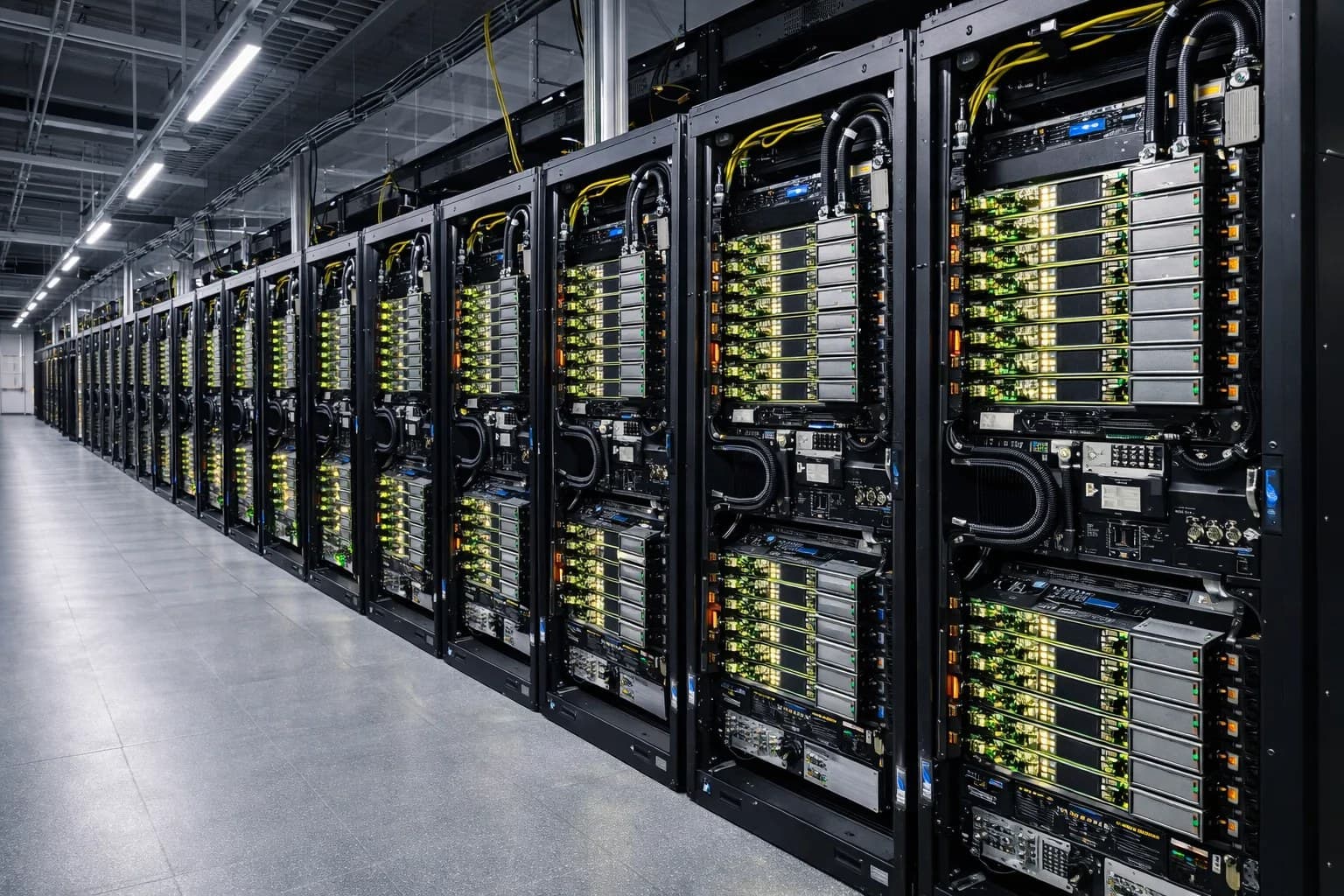
On 20 November 2026, Tencent released the full weights of its flagship model Hy4 on Hugging Face, ModelScope, and GitCode at the same time: the instruct model, the FP8 quantized build, and the pre-trained base, all three repositories in one go. The release itself was not a surprise — Hy4 had already launched on Tencent's API on 4 November, and open weights were the promised next step. But what makes this worth its own article is a detail in how it was released: several outlets reported it that day as "open source under Apache 2.0", while the licence written in the model card itself is not Apache 2.0 at all.
Start with the basic facts. Hy4 is the new-generation mixture-of-experts flagship from Tencent's Hunyuan team (now called the Hy team). Its language backbone has 770 billion total parameters, with 49 billion activated per token, a context window of 1,048,576 tokens, and support for text, image, and video understanding. A preview shipped on 28 August, the full model reached the API on 4 November, a smaller Hy4 flash followed on 16 November, and the full weights were released on 20 November. The model card also links a system card with safety evaluations. Judged on size alone, this is a heavyweight open-weights release — a 770-billion-parameter flagship you can download directly is still rare.
But parameter count is not the point of this article. The point is the licence. TechNode's report that day said the model was offered "under the Apache 2.0 license". That is wrong. The licence section of the Hugging Face model card states that Hy4 is released under the Tencent Hy License. GPUJournal and explainx both checked the card the same day: this is a custom licence derived from Apache 2.0, but it is not Apache 2.0, and the licence tag on Hugging Face reads license:other. The part that matters most is Section 10. If an organisation uses Hy4 to run a model-as-a-service business — giving third parties remote access to inference or fine-tuning, for example through an API — it must first obtain a separate written licence from Tencent once either of two conditions is met: its worldwide gross revenue exceeds US$50 million in any 12-month period (whether or not that revenue comes from the model), or the product or service using the model passes 100 million monthly active users. Purely internal use is exempt, as are end-user products whose features are confined to specific workflows. The contact for licence requests is hy_partners@tencent.com.
Why does that belong in the headline? Because "open weights" and "free for any commercial use" are two different things, and many people's first reaction to a downloadable 770B model is the second one. For most developers — downloading it, deploying it themselves, using it internally — the licence looks permissive: weights, derivatives, fine-tunes, quantizations, and distillations are all covered. But for an inference provider, the US$50 million line is not high; a mid-sized API business can cross it easily, and past it, selling Hy4 inference means negotiating with Tencent first. That is not to say Tencent did anything wrong — the condition is written in plain text in the licence, with a contact address attached — but the simplified "Apache 2.0, commercial use and modification allowed" line in the day's coverage makes readers miss the one paragraph that actually affects their decision. The August preview genuinely was Apache 2.0; the final release changed licences. The two should not be confused.
Architecture: how the 770B is put together
The model card documents the architecture in unusual detail, and it is worth unpacking. The language backbone is 78 layers: the first is a standard dense feed-forward network, and the remaining 77 are mixture-of-experts layers. Each MoE layer holds 256 routed experts and one shared expert, and every token activates eight routed experts plus the shared one. The hidden size is 6,144 and the vocabulary is 120,832. The vision encoder is a 1.23-billion-parameter ViT with 40 layers, supporting dynamic image resolutions. Attention uses Gated DeepSeek Sparse Attention (Gated DSA) with an IndexCache for cross-layer sparse-index reuse; the residual pathway uses iHC (identity Hyper-Connections) with four residual streams. Built into the model is a five-layer DFly2 speculative-decoding drafter with 3.3 billion parameters, which reuses Hy4's own KV cache and sparse indices, so speculative decoding adds no separate KV memory and the cost of drafting a token stays roughly constant.
In plain terms: 256 experts with only eight firing per token is the standard sparse-MoE play — 770 billion parameters of capacity for the compute cost of 49 billion. Sparse attention plus an index cache exists so a million-token context does not wreck memory and latency at inference time. A built-in speculative decoder exists so token generation stays fast even in long contexts. All three choices point at the same goal: a model designed for long contexts and long tasks, not one that merely stacks parameters.
The size is the unavoidable catch. From the model card's figures, GPUJournal puts the full Hy4 checkpoint at about 1.55 TB, the FP8 build at about 0.79 TB, and the base at about 1.54 TB. Tencent's deployment recipes use vLLM and SGLang, both with prebuilt images (vllm/vllm-openai:hy4 and lmsysorg/sglang:hy4), and the sample commands use eight-way tensor parallelism. In other words, serving this model starts at an eight-GPU node; the FP8 weights alone are about 770 GB, and no single card holds them. The card also offers a GGUF compressed build, but it is explicitly described as being for end-to-end testing, not as the recommended production route. A complete fine-tuning pipeline is documented. For an individual developer who wants to play with it locally, the realistic path is the API, or a community quantization — not a direct 1.55 TB download.
What it can do: vision, computer use, and long tasks
Against the August preview, the full Hy4's biggest change is two additions: vision and computer use. According to the model card, Hy4 can understand fine-grained image details, interpret complex charts, and support computer-use workflows across command-line and graphical interfaces. Training was targeted at professional software such as Blender and CAD, and at long-horizon workflows spanning multiple applications. Frontend and game development is another focus: Tencent says it optimized the model for complex UI interactions, business logic, state management, and full-stack integration, and on the games side it worked with professional developers at Tencent Interactive Entertainment Group to curate training data and build evaluations, adapting the model for Unreal Engine, Unity, and Godot, and extending it to multiplayer game development. Against the preview, Tencent reports GameDev up 19.1% and GameLogic up 9.8%.
Finance and office work is where Tencent spends the most ink, and the numbers are the most detailed. The Tencent Financial Technology team ran 213 finance professionals (153 of them from leading financial institutions, more than 70% with over five years of industry experience) across 579 real-world financial tasks. On a four-point scale, Hy4 averaged 3.04, against 2.97 for DeepSeek-V4.1-Flash and 2.68 each for Kimi K3.1 Pro and GLM-5.3. The lead over DeepSeek is small — 0.07 points — but it is a lead. In internal search evaluations, the hallucination rate fell from 15.76% on the preview to 5.45%, and speculative errors fell from 23.1% to 5.6%. One more detail: Hy4 can co-edit Word, Excel, and PowerPoint files with people in real time, and in blind evaluations it shows clear gains over the preview in document formatting, reliability, and overall usability.
Scientific research and AI R&D is the most ambitious section of the card. Hy4 ranks first among open-weight models on TenureTrail — Tencent's own internal benchmark of 123 research tasks across seven disciplines. The card also mentions that, paired with its Hyra 2.0 training harness, Hy4 optimized the team's internal pre-training infrastructure for smaller models with the same architecture, and autonomously trained a variant that outperforms the official Jev baseline on multiple benchmarks. If that holds up, it means the model is not only used for tasks but also for improving training itself. The caveat is that TenureTrail and the Jev baseline are both Tencent's own, with no third-party reproduction, so read them at a discount.
Finally, the long-horizon personal assistant: given chat history, emails, documents, calendars, and meeting notes as context, Hy4 can track project history and updates, surface action items, prepare meeting briefs, flag upcoming deadlines, and help prioritize tasks. There are no hard numbers attached to this part — the card offers a description only — and this article will not invent a score for it.

Benchmarks: strengths and weaknesses both on the record
Hy4's benchmark scores come in two tables — one for the base model, one for the instruct model — and both are Tencent's own evaluations, with no independent reproduction. In the base-model table, Hy4 is genuinely strong on knowledge: MMLU 91.6, MMLU-Pro 73.9, MMLU-Redux 90.6, SuperGPQA 62.7, C-Eval 95.0, CMMLU 93.1, Chinese-SimpleQA 83.9, mostly ahead of the DeepSeek-V4 baselines listed alongside. But the weaknesses sit in the same table: MBPP-plus at 74.0 trails DeepSeek-V4-Pro-Base at 79.1, and OCW Courses at 66.7 trails the comparison group's 68.2. The card adds its own disclaimer: because the base model was exposed to a large amount of synthetic instruction data during mid-training, it occasionally fails to follow the expected answer format in few-shot evaluations, which may distort the scores. That disclaimer deserves respect — it is Tencent saying, in its own card, that these numbers should not be taken at face value.
The instruct-model table is more informative, because Tencent reran rival models under consistent settings: twelve benchmarks, seven models compared, and Hy4 never ranks first, landing between second and fourth. Its best results are E-Bench 2.0 at 70.0 (second, behind Claude at 80.0) and OSWorld 2.1 at 78.9 (third, behind 81.8, with Kimi K3.1 Pro at 79.6). On ProgramBench it scores 30.0 (third, behind Claude Opus 5.5 at 56.5); on Terminal-Bench 4.0 it scores 44.4 (fourth, behind Kimi at 66.8); on AutomationBench 56.2 (third, behind Kimi at 65.6). It beats Kimi K3.1 Pro on six of the twelve and loses six: its strengths cluster in code generation, 3D modeling, retrieval, and research, while Kimi leads on terminal work and automation.
Tencent did not hide the worst numbers either. On Hy-FrontierMath T5, Hy4 scores 13.0 against 97.5 for GPT-6.1 Sol; on Goal2Repo, 23.2 against 74.0 for Claude; on Terminal Bench Science, 19.8 against 60.9 for GPT. The card's "Known Limitations" section states plainly that a notable gap remains between Hy4 and the top proprietary models, particularly on research-level mathematics, long-horizon coding, model self-improvement, and advanced visual question answering. A vendor writing its weaknesses that specifically in its own model card is worth crediting — at least readers do not have to guess what this model cannot do.
On independent evaluation, one number deserves its own mention. On Artificial Analysis's CWE-Bench-AA, Hy4 scores 75.8% pass@1, above DeepSeek V4.1 Flash at 69.2% and Grok 4.7 at 68.3%. That benchmark grades whether a coding agent can audit a real repository, find a vulnerability in a described area, and patch it without breaking legitimate behaviour — 120 held-out tasks with a two-hour cap per task. But note the other leaderboard: on Collinear's own 2 November ranking (250 tasks, Claude Code as the harness), Hy4 places seventh at 64.1%, with Claude Fable 5.2 leading at 75.0%. The two leaderboards use different task mixes and harnesses, so the scores cannot be compared directly; this article prints both so readers do not see only one of them.
Deployment and pricing: do the maths before downloading
For developers who want to use Hy4, two sums come first: the hardware sum and the licence sum. The hardware sum was done above: a 1.55 TB full checkpoint, 0.79 TB for FP8, eight-way tensor parallelism as the official recipe's starting point. API list prices are RMB 6 per million input tokens, RMB 18 per million output tokens, and RMB 0.3 per million cached tokens, with 50% off on TokenHub through 31 December 2026; OpenRouter lists a tencent/hy4 route at about $0.417 input and $1.25 output per million tokens (check the live page before budgeting). The card's recommended call parameters are temperature 0.9 and top_p 1.0; reasoning mode defaults to deep chain-of-thought ("high"), and passing reasoning_effort as "no_think" gives direct answers.
The licence sum is the other one. Section 10's two triggers were covered above; here is the operational reminder: the triggers look at the organisation's worldwide gross revenue and the product's monthly active users — not at how much money Hy4 itself earns. A company just over US$50 million in annual revenue that offers Hy4 inference or fine-tuning to third parties needs Tencent's written licence first, even if Hy4 is a small part of its business. In the other direction, purely internal use — where neither the model nor its outputs reach third parties — is exempt, as are end-user products whose features are confined to specific workflows. So the decision question is not "is this licence permissive?" but "how do you plan to use it?": use it yourself and there is basically no problem; sell inference to others and first check how far you are from those two lines.
One more easy confusion: Hy4 flash. It is a separate, smaller release from 16 November — 224 billion total parameters, 12 billion active per forward pass, API input prices roughly one-twelfth of full Hy4 — positioned for office-style tasks. Whether its weights will be open, and when, is listed on the official page as "planned" with no date. Do not apply flash's numbers and prices to full Hy4, and do not assume "Hy4 is open" means "flash is open too".
What this release means for developers
The most concrete point first: the open-weights field has one more serious contender. Hy4's base model leads the DeepSeek-V4 comparison group on knowledge benchmarks, its instruct model holds second to fourth place across twelve benchmarks, and it also places near the top on the independent CWE-Bench-AA run. For long-context, multimodal, and computer-use work — multi-application long tasks, financial document handling, game and frontend development — Hy4 belongs on the shortlist of open-weights options. The million-token context in particular is a real asset for jobs that need a whole codebase or a whole document set inside one prompt.
The second point is that the word "open" itself is changing. Hy4's licence shows it: weights downloadable, commercial terms held back. The US$50 million and 100-million-MAU lines draw a boundary between "individuals and small teams use it freely" and "large providers negotiate first". Tencent is not alone in this; the whole industry is moving that way — open weights, commercial strings attached. For developers, judging whether a model is usable now means reading the licence's Section 10-type clauses, not just the model card's parameters and scores. TechNode calling the licence Apache 2.0 on the day is a ready-made lesson: a simplified retelling usually goes wrong exactly where it matters most.
The third point is about where Chinese open models stand. Hy4's Chinese-language benchmarks are strong (C-Eval 95.0, CMMLU 93.1, Chinese-SimpleQA 83.9), and its finance evaluation is built closely around Chinese financial work — 579 real tasks. For developers building Chinese-language products, the model's value is not only in its scores but in how well it fits Chinese tasks. The weaknesses are just as clear, though: on hard tasks like research-level mathematics, long-horizon coding, and terminal work, there is still a large gap to the strongest closed models. Choosing by task beats choosing by origin.
There is also a point worth making on its own: Hy4's technical lineage shows how open models learn from each other. The model card states openly that the attention module was inspired by DeepSeek and GLM, using Gated DeepSeek Sparse Attention. That is nothing to hide; it is how the open-model ecosystem works. One team's published design becomes another team's starting point; one model's released weights become the next model's training data or comparison point. Hy4 stands at the 770B scale partly because it builds on work published before it. In turn, Hy4's released weights will become something others compare against and improve on. The real value of open weights is not in any single release, but in whether that cycle keeps turning.
A cold splash of water is still in order: a 1.55 TB checkpoint is not something you download and use. An eight-GPU node, FP8 quantization, and a vLLM or SGLang deployment recipe are all costs. For individual developers and small teams, the more sensible path is to try it through the API first — TokenHub is half price until the end of the year, and there is a route on OpenRouter — confirm the model actually performs on your own tasks, and only then consider self-hosting. Downloading the weights directly fits teams with hardware and operations capacity, or researchers who want to fine-tune or distill from it.
What to watch next
Four threads are worth following. First, real-world usage feedback from the community. The weights have been out for two days, downloads are still few, and real behaviour — retrieval accuracy, reasoning quality, and latency across the full million-token window — will only become clear once more people run it. Every number on the card is Tencent's own; third-party reproduction has not arrived yet.
Second, whether Hy4 flash's weights get released, and when. At 224 billion parameters, its hardware demands are far lower, and for smaller teams it could matter more than the full model. The official page currently says only "planned", with no date.
Third, how the licence is actually enforced. The US$50 million and 100-million-MAU lines will be tested if an inference provider actually applies for a written licence, and how Tencent handles it will be the key evidence for how "open" this licence really is.
Fourth, Tencent's own next step. Chief scientist Yao Shunyu warned on 8 November, at Future Science Prize Week, that model biology capabilities may soon approach a threshold for real harm, and that open-weight releases need stronger safety work. Read alongside the safety evaluations in Hy4's system card, that suggests Tencent is itself weighing "release it" against "keep it under control". Whether the safety section gets more substantial at the next model release is worth watching.
Taken together, the Hy4 release carries real weight: a 770-billion-parameter flagship whose weights can genuinely be downloaded, with a million-token context, vision, and computer use included, benchmark results that show strengths and weaknesses, and a vendor that wrote the weaknesses into its own model card. But the word "open" needs a discount: the licence is the custom Tencent Hy License, and Section 10 draws two lines for model-as-a-service operators. Read this release as "Tencent put out a strong 770B open-weights model, but large providers selling its inference need to negotiate a licence first", and that is enough. One step more would be over-reading. As for whether the model is actually good on your tasks, the answer is not on the model card; it is in your own evaluation. Trying it through the API first is far cheaper than downloading 1.55 TB.
Comments (0)
Sources
Related articles

On November 24, 2026, OpenAI added nine manuscripts to its public math repository, one claiming the matrix multiplication exponent is exactly 9/4. The October upper bound is real; the new lower bound would close a 56-year gap — but the preprint is unreviewed, the Lean formalization covers only division-free circuits, and no faster program follows from it.

On November 16, 2026, Abu Dhabi's IFM released K2-Horizon: six open models from 0.9B to 375B, with weights, data, 380 intermediate checkpoints, training logs, and all code published at once. The headline is not the flagship but the 7B at 72.4 on SWE-bench Verified — a model you can run locally, coding like the big ones.
On November 22, 2026, Sarvam AI released Sarvam-105B-1711, a new open-weight checkpoint of its 105B model: eight-benchmark average up from 42.6 to 73.9 in nine months, blended price cut from $0.44 to $0.15 per million tokens, and a 65 GB NVFP4 build that runs on a single workstation GPU. Strong on Indian languages and voice, weaker on general tool calling and banking tasks.