Five Terminal Agents Shipped the Same Day: H2 2026's War Is Fought in the Terminal
On September 30, Copilot CLI, Claude Code, Antigravity CLI, and Kiro CLI all shipped — plus Gemini CLI and Codex CLI's v0.159 series the day before. Five terminal agents updating within 48 hours isn't coincidence; it's proof "terminal-first" became industry consensus. This piece rounds up the key releases (Codex 0.159's keyword: "control") and asks why every major lab is pouring resources into the terminal in H2 2026.
On September 30, something surreal happened in the terminal-agent world: five CLIs shipped on the same day. GitHub Copilot CLI v1.0.90, Claude Code v2.1.286, Antigravity CLI v1.2.14, Kiro CLI v2.26.0 — all September 30; Gemini CLI v0.62.0 and Codex CLI's v0.159 series (0.159.0/0.159.1/0.159.2 on the 29th, 0.159.3 on the 30th) right alongside. Nobody coordinated this. It's evidence that "terminal-first" has become industry consensus.
This piece rounds up the most important releases in this "shipping storm," then asks: why is every major lab pouring resources into the terminal in H2 2026?
Codex CLI 0.159 first: the keyword is "control"
The September 29 rust-v0.159.0 is a "terminal workflow" release with one theme: giving users more control while the AI works. instant_interrupt (interrupt a responding AI mid-stream and steer it), safer sandboxes (tightened filesystem protections around approved commands), draft recovery (long sessions that crash can recover drafts), better Mermaid rendering and transcript navigation.
Note the release's character: it promises not "smarter" but "more controllable." ChatGPT AI Hub's assessment is spot-on — this is a developer-experience and control-surface update, not proof that "agentic coding is now safe." OpenAI's wording is careful too: "steer" does not mean "undo filesystem changes," "verify correctness," or "roll back a half-executed plan." The conservative read: interactive control got better, but Git checkpoints, permission boundaries, diff review, and rollback procedures remain as mandatory as ever.
The shipping cadence is its own story: v0.158.0 on the 28th, three 0.159.x builds on the 29th, 0.159.3 on the 30th. Havoptic counts 99 Codex CLI releases in 2026 — one every 2.6 days. Terminal agents now iterate faster than traditional software; we've entered the era of daily shipping.
The other four: each on its own road
Claude Code v2.1.286 (September 30) walks the "stability" road. Its September trajectory (2.1.277 adding AGENTS.md, 2.1.280 defaulting to Opus 5.5, 2.1.281 fixing stability) shows Anthropic's strategy: high-frequency small steps, never break. When a terminal agent crashes, it costs users hours of work — so Claude Code puts "never lose anything" ahead of "more features." That's enterprise thinking.
GitHub Copilot CLI v1.0.90 (September 30) walks the "ecosystem" road. Copilot's edge was never the single strongest feature — it's "wherever you are, I am": VS Code, JetBrains, CLI, Slack, Teams, full coverage. The CLI is one tile in its mosaic, but for terminal-heavy users, "use Copilot without switching tools" is reason enough.
Antigravity CLI v1.2.14 (September 30) walks the "Google-unified" road. Google killed Gemini CLI's individual tier in September and went all-in on Antigravity (one harness: CLI + Desktop + Cloud + SDK). Its differentiator is "configure once, works everywhere" — write a hook once, all four surfaces honor it. The price is model lock-in: basically Gemini only.
Kiro CLI v2.26.0 (September 30) walks the "latecomer differentiation" road. Kiro's background is AWS-adjacent, and spec-driven development is its label. While the giants fight over "control" and "stability," it bets on "methodology" — write the spec clearly first, then let the agent work. That runs opposite to vibe coding's "one sentence and go," but enterprise buyers eat it up.
Why is everyone piling into the terminal? Three reasons
First, the terminal is the agent's "highest-privilege zone." In an IDE, agent actions are fenced (plugin API sandboxes); in a terminal, agents can do nearly anything: read/write files, run commands, hit networks, start services. The more autonomous agents get, the more they need to operate the machine directly — the terminal is closest to "actually doing work." Whoever owns the terminal owns the agent's hands.
Second, terminal users are the highest-willingness-to-pay cohort. Heavy terminal users = senior engineers = team tech decision-makers. Win them and you win the team's selection vote. Pricing like Pro 500 ($500/month) is drawn for exactly this portrait — live demos, live coding, high-frequency refactors, "making a living on speed."
Third, the terminal is where observability is best. Every command has output, every file change diffs, every network request is capturable. By contrast, plenty of IDE agent operations are black boxes. H2 2026's theme is "trustworthy," and the terminal is trustworthy by nature — visible, auditable, rollback-friendly.
Three hands-on recommendations
First, install all of them, but go deep on one. Install cost is trivial (one npm/winget line each) — ten minutes for all five. Then pick one primary and go deep for a month, keeping the others for comparison. The selection criterion isn't the feature list — it's "when it messes up, how long did recovery take." Recovery cost is the true price of a terminal agent.
Second, train "interrupt" into muscle memory. 0.159's instant_interrupt marks a trend: good terminal agents must support interrupt-and-steer anytime. Build the habit: if an agent runs 30+ seconds without producing what you want, interrupt it — don't wait. Your time costs more than its tokens.
Third, commit terminal agent configs to version control. AGENTS.md, settings.json, hook scripts — all of it belongs in git alongside code. New machines, new tools, team collaboration: configs travel. This restates the lesson from the September 18 Claude Code AGENTS.md piece: configuration is an asset, and assets go in the repo.
The five CLIs compared: pick from this table
Put all five in one table and the differences jump out:
- Codex CLI: models GPT-6.1 Sol/Astra (full OpenAI family); strength is "control" (instant_interrupt, sandboxes, draft recovery); fastest shipping (a release every 2.6 days); for "daily drivers who want the new." Risk: ships so fast regressions slip in.
- Claude Code: Claude family models (Opus/Sonnet 5.5); strength is "stability" (high-frequency small steps, never loses work); AGENTS.md compatible; for "people who earn a living with it and can't afford losses." Risk: few model choices — don't come if you don't use Claude.
- Copilot CLI: multiple models (GPT, Claude, per Pro 500 tiers); strength is "ecosystem" (VS Code/JetBrains/CLI full coverage); for "people already living in GitHub's world." Risk: nothing extreme anywhere — the "good enough" pick.
- Antigravity CLI: basically Gemini only; strength is "unification" (one hook, four surfaces); for "deep Google-ecosystem users." Risk: worst model lock-in; flagship model unavailable until Argon opens.
- Kiro CLI: AWS-side models; strength is "methodology" (spec-driven); for "enterprise-process teams needing audits." Risk: smallest community — the least homework to copy when stuck.
One-line picks: power users take Codex, reliable workers take Claude Code, suite inhabitants take Copilot, Google faithful take Antigravity, enterprise process takes Kiro. No silver bullets — only "the one fitting your workflow."
Terminal-agent decision tree: three questions settle it
Don't drown in feature lists; three questions decide:
Question 1: which lab's models do you mainly use? The CLI is the "shell"; the model is the "core." Mainly GPT? Choose between Codex and Copilot. Mainly Claude? Claude Code is the only answer. Mainly Gemini? Antigravity. Core first, shell second — reversed is painful.
Question 2: what's your maximum acceptable "screw-up cost"? If the agent deletes the wrong file, do you lose "half an hour" or "half a day"? The former takes Codex (aggressive, cutting-edge); the latter Claude Code (conservative, stable). Selection isn't about features — it's about "the trust protocol between you and it."
Question 3: how wide is your collaboration radius? Solo: pick whatever delights you. Team: pick "configs in the repo, behavior auditable" (Claude Code and Kiro are more mature here). Company-wide rollout: pick "enterprise support" (Copilot, Kiro). The wider the radius, the less "personal preference" weighs and the more "manageability" does.
Q4 2026 forecast: three directions of the terminal war
Direction 1: the IDE/terminal boundary dissolves. Cursor pushes "Projects" (cloud parallelism) while terminal CLIs add "visualization" (Mermaid rendering, rich transcripts). Both converge toward the middle: the future shape is likely "terminal execution power + IDE visualization" — whoever nails "seamless switching" wins the second half.
Direction 2: "interrupt" becomes standard; "automatic" becomes the selling point. 0.159's instant_interrupt is just the start. Expect every CLI to add "interrupt and steer anytime," then competition moves to "never needing to interrupt" — the agent's first-try success rate. 2027's benchmarks may shift from "task completion rate" to "zero-interruption completion rate."
Direction 3: enterprise features sink to personal tiers. Audit logs, SSO, permission management — currently enterprise-only — will sink downward as the "trustworthy" theme advances. Indie builders get "quasi-enterprise" terminal agents. Good for individuals; pressure for vendors monetizing enterprise tiers.
The bottom line: September 30's "five CLIs, one day" isn't coincidence — it's the starting gun for the terminal-agent war going white-hot. The IDE war is settled (Cursor, Windsurf, Copilot each hold territory); the next war is fought in terminals — on control, stability, and ecosystem. That's good for users: fiercer competition makes "interruptible, auditable, rollback-friendly" standard faster. But remember: the more privilege the terminal holds, the higher the guardrails must be. Before installing, write your AGENTS.md, turn on the sandbox, protect your important branches. The faster the gun, the sooner you check the safety.
Sources
Related articles
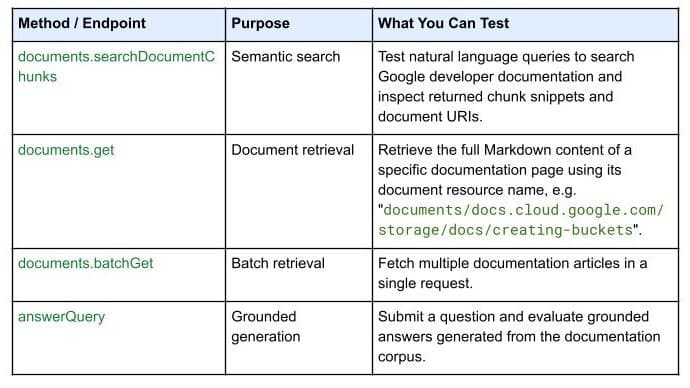
On October 7, 2026, Google Developers launched the Developer Knowledge API ecosystem: official Google Cloud, Firebase, and Android docs as a programmatic source of truth, with a gcloud CLI surface, an official Agent Skill (one-line install), an MCP server, and multi-language client libraries. Why 'docs as APIs' uproots vibe coding's classic failure of models misremembering APIs.
On October 7, 2026, GitHub announced via Changelog: starting with CLI 1.0.94-0, the /model command discovers models in your local Ollama instance, listed alongside configured and cloud models. Discovery doesn't auto-enroll — each model needs manual confirmation — and models must support tool calling and streaming. GitHub also teased intelligent routing, and clarified: a local model neither enables offline mode nor disables telemetry.

On September 30, 2026, Bitdefender launched AI Guardian in public beta: a security layer for autonomous AI agents that verdicts every tool call, file access, and credential use as allowed, flagged, or blocked. First on macOS, free during beta, supporting Claude Code and OpenClaw. Why this 'agent behavior firewall' arrives right on time for vibe coders.