Tesla Says Optimus V3 Is 'Ready for Mass Production' — But Mind the Three Numbers It Didn't Share
Tesla's annual-meeting materials filed October 19 say the third-gen Optimus is 'readied for mass production' — but disclose no output, delivery counts, or launch date. We lay out the original wording, the missing numbers, and the next checkpoints. Cautiously optimistic.
One Sentence in an SEC Filing Set the Robot World Buzzing
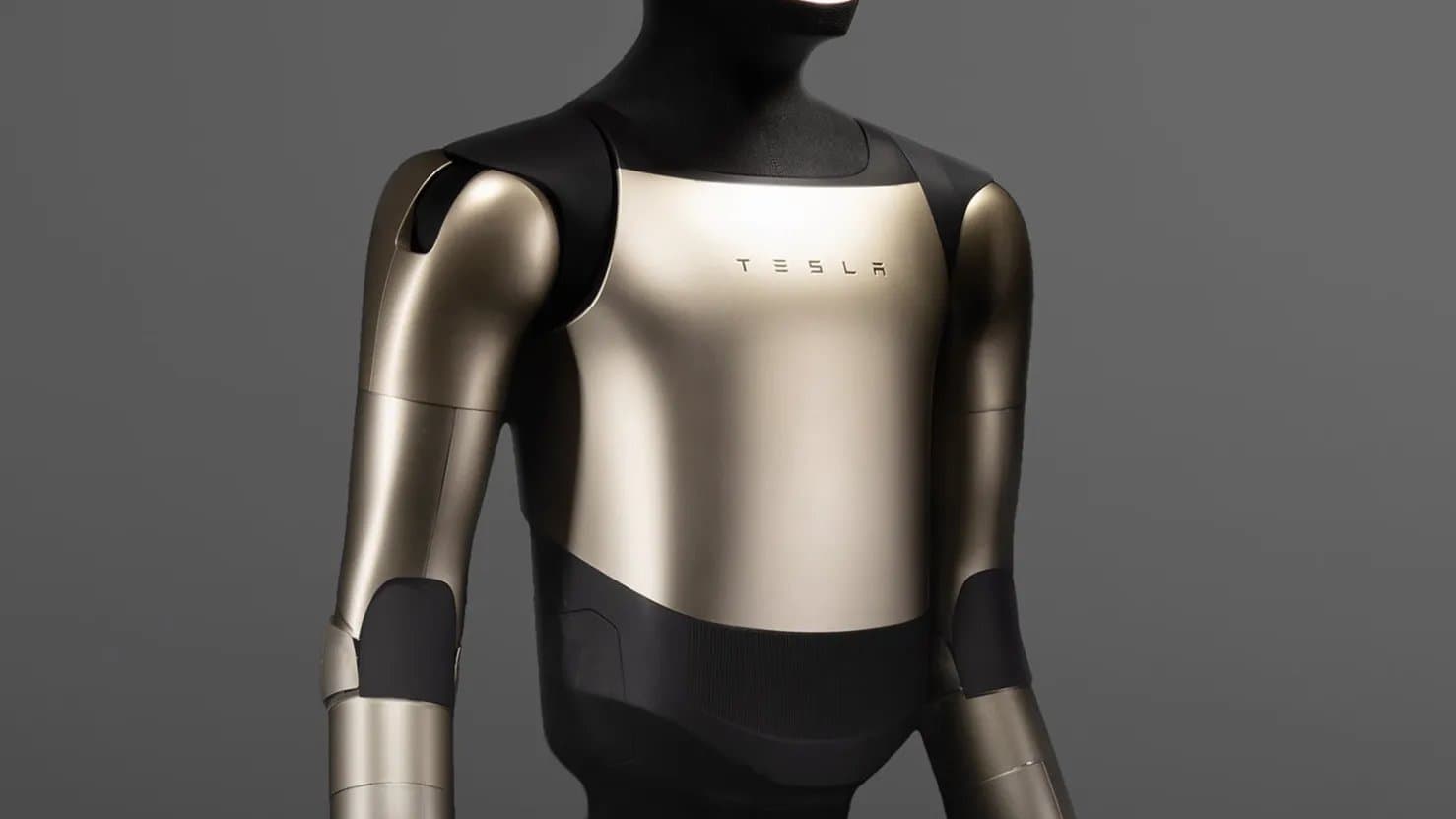
On October 19, Tesla filed its 2026 annual-meeting materials with the U.S. Securities and Exchange Commission (SEC). Buried in this hundreds-of-pages regulatory document was a line that set the entire humanoid-robot world buzzing: the third-generation Optimus humanoid robot has been "Readied V3 Optimus for mass-production" — prepared for mass production.
The wording deserves a close read. Tesla did not say "started mass production," nor "in mass production," but "readied…for mass-production": the preparation is complete. This is a carefully chosen perfect tense — it declares "readiness," not "kickoff." On October 20, AI Industry Today covered the filing with a telling headline: Tesla Says Optimus V3 Is Ready for Mass Production, Without Reporting Output — the "readiness" was announced, but no output was reported.
This report's value lies in its composure. It didn't ride the "Tesla robots are about to go on sale" sentiment; instead it separated what the filing "said" from what it "didn't say." That's this article's approach too: put the original text on the table, look at the missing numbers, then offer a framework for judgment. No hype, no bashing.
Dissecting the Filing: What It Did vs. What It Didn't Say
Per AI Industry Today's citation of the SEC filing, the disclosure contains three substantive points:
First, the V3 design is ready. "Readied V3 Optimus for mass-production" — the third-generation Optimus design is prepared for mass production. This is a landmark wording upgrade in humanoid-robot commercialization: from "we're developing" to "the design is ready," meaning the hardware is most likely frozen and at the "can be built" stage.
Second, investing in the first production lines. The filing also confirms Tesla is investing in its first Optimus production lines, plus supporting AI-training data-center capacity. Note the verb: "investing" — the lines are under construction, not in production.
Third, the annual meeting is scheduled. The 2026 annual meeting is set for December 3 at Giga Texas. According to several outlets' readings of the proxy, the agenda includes re-election of three Class I directors (Musk, Robyn Denholm, JB Straubel) and an advisory vote on 2025 executive compensation.
Then comes the "didn't say" part, which AI Industry Today states plainly: the statement gives no production rate, no customer-delivery count, and no commercial launch date. Three key numbers, all absent.
Why an SEC Filing Matters: The Weight of Regulatory Wording
This story has one more easily missed dimension: it comes from an SEC filing, not a launch event. The two carry completely different levels of credibility.
Launch-event wording is marketing language — get it wrong and at worst you get mocked online. Every sentence in an SEC filing carries legal liability; misstatements can invite shareholder lawsuits and regulatory action. Tesla choosing to write "Readied V3 Optimus for mass-production" in a Definitive Proxy Statement means its legal and audit teams signed off on the phrasing — at minimum, on the fact of "design readiness," Tesla is willing to put its name down.
That's also why AI Industry Today's coverage stays composed throughout: every judgment it makes rests on filed text. The value of regulatory disclosure isn't "how many nice things were said" but "the granularity of the wording": from last year's "targets" and "plans" to this year's "readied," the tense shift in the verbs is itself information. Read SEC filings like financial-statement footnotes — look past the adjectives to the verbs and the numbers.
The coin has another side, of course: precisely because filing language carries legal liability, companies only write what they're confident about. "Readied for mass-production" is an offensively-and-defensively sound formulation — it declares the fact of design readiness while committing to no output or timeline. Legally airtight, informationally wide open to interpretation. Which is why the "three-layer" reading below is necessary.
2026: From the Year of Demos to the Year of Mass Production?
Placing Optimus V3's "readiness" in 2026's humanoid-robot landscape, the timing is telling. In the first half of the year, the industry's theme was still "demos": everyone took turns showing off whose robot backflips more steadily or folds laundry faster. But in the second half, the vocabulary clearly shifted — from "what it can do" to "how many can be built," "at what cost," "delivering when."
Tesla setting the tone for "mass production" via an SEC filing is effectively laying down rules for the whole industry: demo videos don't count; wording in regulatory filings and production-line investment do. When the top player starts speaking manufacturing language — "design ready," "first production lines" — vendors still shipping demo videos suddenly face much steeper pressure. In 2026's second half, humanoid competition is shifting from "showing muscle" to "manufacturing" — and manufacturing is exactly Tesla's strongest, most underrated edge (remember: it's the only EV company on earth that has actually survived "production hell").
But calling 2026 the "year of mass production" is premature. A true "year of mass production" needs at least one vendor putting up real "ten-thousand-unit delivery" numbers. Until then, all we have is one "readiness" declaration after another. Optimus V3's disclosure is the closest to "confirmed" so far — but "closest" isn't "there."

Three Layers of "Ready for Mass Production": Don't Conflate Them
"Ready for mass production" carries at least three layers of meaning in manufacturing — and Tesla has only reached the first:
Layer one: design readiness. Hardware frozen, supply chain locked in, process documentation complete. This is the literal meaning of "readied…for mass-production," and the entire substance of this disclosure.
Layer two: production ramp. Lines built, yields qualified, utilization climbing. This is what "investing in the first production lines" is doing — but it takes time; going from equipment move-in to stable output always takes quarters in any manufacturing.
Layer three: volume delivery. Real customers, delivery numbers, recognized revenue. The finish line of commercialization — and the part the filing doesn't touch at all.
Conflating the three is the recurring misread in every Tesla robot story: "design ready" gets read as "on sale tomorrow." AI Industry Today deliberately stresses: the claimed readiness of the robot design and the factory ramp needed to build it at scale are two different things. That sentence should be framed and hung at the top of every Optimus article.
Historical Reference: Q1's "1 Million Units" Was Design Capacity
To weigh this wording, look at what Tesla said before. In this year's Q1 business update, Tesla described a first-generation Fremont line with a "designed annual capacity" of one million robots, and a second-generation Texas line targeting ten million long-term. One million, ten million — sexy numbers.
But AI Industry Today flags the crucial qualifier: those were design capacities, not realized annual output. Design capacity is "how many this line could build at full tilt"; actual output is "how many actually rolled off this year" — separated by equipment commissioning, yields, supply chain and demand. And October's "readiness" statement doesn't establish that either target has been met.
A reading method worth keeping for all Tesla robot news: find the verb first, then the numbers. Is the verb "target," "plan," "prepare" — or "deliver," "produce"? Are the numbers "design capacity" or "actual units off the line"? This filing's verb is "readied," and its numbers are zero. The conclusion is clear: the milestone is real (the wording did escalate), but the filing gives no new tick marks on the commercialization progress bar.
The "1 Million Bots" in the Pay Package: The Production Pledge Is Tied to Musk's Wallet
The proxy holds one more detail worth pulling out: Musk's compensation. Per outlets like fourweekmba reading the filing, the 2025 CEO performance award spans 12 tranches of 35.31 million shares each, with operating milestones including "deliver 1 million bots."
The significance is incentive alignment: when "deliver 1 million robots" is written into the conditions for the CEO's stock, mass production stops being launch-event sloganeering and becomes a KPI tied directly to personal wealth. Of course, the reverse also holds — an aggressive target is precisely evidence it hasn't been achieved yet. Read pay-package milestones as a "roadmap," not a "report card."
At the December 3 annual meeting, this pay package faces an advisory shareholder vote. Optimus production progress will likely be the most-asked topic of the day. Musk needs something more convincing than "readied" before then — or at least a verifiable timeline.
The advisory vote itself deserves a word: it's non-binding — the board may ignore it. But at a founder-dominated company like Tesla, its real function is a "temperature check": an ugly vote on the Optimus production question would publicly book a "trust deficit" for management. Musk's 2018 mega pay package went through similar shareholder wrangling. So on December 3, watch not just the result but institutional shareholders' stance expressed through it: do they believe the word "readied"?
Cross-Validation: Supply Chain and Market Reactions
One source is never enough. Two cross-checking threads surround this "readiness" disclosure, both from mid-to-late October:
Supply chain: Per Chinese media reports, on October 12, Optimus chain supplier Hangzhou New Sword Transmission (新剑传动) said in a Shenzhen Stock Exchange IPO inquiry response that the robot's hardware design was nearing finalization and the project nearing mass production. If accurate, it corroborates the filing's "design ready" claim — a supplier's "finalization" and the OEM's "readiness" are two sides of the same process. But note: this is a supplier's inquiry-response wording, a step removed from Tesla's official filing — treat it as supporting evidence.
Markets: After the news broke on October 20, A-share humanoid-robot concept stocks (Zhejiang Rongtai, Ningbo Dongli and others) hit the 10% daily limit-up. Markets voted with their feet, expressing excitement for the "mass production narrative." But between market excitement and factory reality stands a permanent wall of verification — limit-ups validate sentiment, not output.
Together, the two threads point to one conclusion: the supply chain is indeed preparing for mass production, but between "preparing" and "producing," no numbers bridge the gap yet.
A special warning about a common "validation illusion": supply-chain chatter and limit-ups look like "multiple confirmations," but they validate the same thing — the market's expectation of the mass-production narrative — not mass production itself. A supplier saying "nearing finalization" speaks to design progress; concept-stock rallies trade on sentiment. Both, together with the filing's "readied," are essentially the same information source (Tesla's own statements) reflected in different mirrors. Truly independent validation can only come from the factory floor: equipment move-in, line ignition, units off the line. Until then, all cross-validation is "echo," not "evidence."
The Next Checkpoint: October 21 Q3 Earnings
AI Industry Today ends its report by flagging the next key date: October 21 — around this article's publication — when Tesla releases its Q3 update (production, deliveries and deployments). For the robot business, production volumes, manufacturing costs and delivery timing will be more convincing than any "capacity target."
In other words, the SEC filing handles the "official wording"; earnings handle the "numbers." If the Q3 update shows Optimus pilot-production counts, line capex breakdowns, or a firm mass-production timeline, the weight of "readied" rises sharply. If it's wording without numbers again, this disclosure is just a "wording upgrade," and the market keeps waiting.
Further out, the December 3 annual meeting is the second checkpoint. Shareholders won't settle for "ready" — they'll ask: who gets the first batch? When? At what yield? At what unit cost? Musk must have answers ready before December 3.
One more easily overlooked window: Tesla's hiring. A real production ramp always comes with mass hiring of manufacturing, process and quality engineers. If Tesla starts hiring aggressively for Optimus lines in Fremont or Texas over the coming months, that's hard evidence "layer two" (the ramp) is happening — more honest than any wording. After all, verbs can be carefully chosen; hiring headcount is hard to fake.
A Judgment Framework for Readers: Three Questions on Optimus
For "production-ready" news like this, three quick questions work as a filter — for Optimus, and for any robotics company's mass-production announcement:
Question one: is the design truly frozen? Check whether the supply chain is locked in and core-component suppliers publicly talk about "finalization." The New Sword Transmission inquiry response is a positive signal, but more supplier cross-confirmation is needed.
Question two: are the lines funded, and where's the money going? Check capex. Tesla says it's "investing in the first production lines" — Q3's capex breakdown will show whether that money is "planned" or "spent." Equipment move-in and commissioning are the true start of the ramp.
Question three: who gets the first batch? The litmus test. Real mass production always has first customers — whether Tesla's own factories (Optimus working in its own plants first is the most sensible start) or external pilots. A production announcement without "delivered to whom" is half a story.
This SEC filing answers the three questions as: one — "most likely yes"; two — "in progress"; three — "not mentioned at all." That's the entire basis for "cautious optimism": the direction is real, the numbers are absent.
One more word on question three — "who gets the first batch" — and why it's the litmus test. Humanoid robots differ from EVs: an EV's first customers are consumers, and delivery means revenue; a humanoid's first "customer" is most likely Tesla's own factories. Having Optimus "work" first on Fremont or Giga Texas lines — hauling, inspecting, sorting — is the lowest-risk path to volume: no external delivery pressure, problems contained internally, plus real operating data. If some future filing mentions "X Optimus units deployed at Tesla's own factories," that will be the true starting gun for mass production. Until then, every "readiness" stays at the "everything's ready except the final push" stage.
Closing: Applaud the Wording Upgrade, Stay Patient on the Missing Numbers
"Readied V3 Optimus for mass-production" — placed on Tesla's robot timeline, it is genuinely a milestone: the first time Tesla has discussed Optimus production readiness in the perfect tense inside an SEC regulatory filing. Regulatory filings carry legal liability for their wording — far more credible than a launch-event slide. From that angle, applauding this wording upgrade is fair.
But after applauding, read the second half of AI Industry Today's headline: Without Reporting Output — no output reported. A "ready for mass production" with no production volume, no delivery count and no commercial date is an unfinished sentence. Its second half will be written by the October 21 Q3 earnings and the December 3 shareholder meeting.
For the humanoid-robot industry, 2026 is shifting from the "year of demos" to the "year of mass production," and Optimus V3's "readiness" is the loudest starting gun so far. But a starting gun firing doesn't mean the race is run. Stay excited, stay patient, let the numbers speak — that's our full stance on this story.
A final note for readers tracking this long-term: mark down October 21 (Q3 earnings) and December 3 (shareholder meeting). When the dates arrive, come back and score Tesla against this article's three-question framework — that's far closer to the truth than any clickbait "on sale now."
Comments (0)
Sources
Related articles
On October 20, DeepSeek open-sourced DeepInfer (Apache-2.0), the inference framework behind its production services, launching with NVIDIA SM100 and Huawei Ascend 950 support — just 18 months after it said it would not open-source the full engine. This piece breaks down what was released, what was held back, and why inference cost is agent cost.
The DHS exclusion order against DeepSeek was signed July 24 but only disclosed October 20 — and its "joint liability" clause reaches affiliates plus third-party products built on DeepSeek implementations. Open weights meet federal procurement: model lineage is now a compliance item.

Attorneys general from eight U.S. states sued OpenAI on October 14, alleging ChatGPT was designed to be overly agreeable to earn trust and engagement — and, in the harshest demand, asking courts to bar self-improving AI models unless alignment with human values can be proven. What it means for vibe coders: your system prompt's agreeableness, minor protections, and risk disclosures are compliance red lines, not options.