The World Is Vibe Coding Its TVs: Claude Code Removes 25 Ad Packages, cleanyourtv Hits 10,700 Stars in Days
On October 17, developer Gathin T. posted that he had 'vibe coded' his parents' Xiaomi TV: Claude Code found the set over Wi-Fi, disabled 25 ad-laden packages, and wrote a new launcher. His open-source cleanyourtv project hit 10,700 GitHub stars within days, with tested setups for 107 TV models. This piece breaks down the ADB chain that makes it possible, the weekend frenzy it sparked, and three warnings the carnival shouldn't drown out.

Saturday, October 17, 2026. Developer Gathin T. posted on X with a photo: "Vibe coded my parents' TV this afternoon!" The trigger was wonderfully mundane — the family's Xiaomi TV insisted on playing a sponsored ad before anyone could reach Netflix. He gave Claude Code the TV's model number and let the agent handle the rest: it found the TV on his home Wi-Fi, switched off 25 Xiaomi software packages, and wrote a brand-new home-screen launcher. "Looks like an Apple TV now lol."
The post went viral over the weekend, and "vibe coding your TV" became a phrase. By the time Decrypt covered it on October 20, Gathin had packaged the prompt as an open-source project, cleanyourtv, which had collected 10,700 GitHub stars, listed tested setups for 107 TV models from 37 brands, and accumulated 1,200 forks and 85 open pull requests. In his own words: within two days, a few thousand people had done the same to their own TVs. This may be vibe coding's first breakout as hardware reclamation — aimed at the most familiar screen in every living room.
The TV's original sin: the set you bought keeps making money for someone else
Why did this ignite so instantly? Because the pain is universal. Most smart TVs sold in the last decade run ACR — Automatic Content Recognition — software that fingerprints whatever is on screen, whether it's cable, a game console, or anything plugged into an HDMI port, and reports it back to sell targeted ads. When Texas's attorney general sued Sony, Samsung, LG, Hisense, and TCL in December 2025, the complaint alleged these TVs could capture a screenshot of your display every 500 milliseconds — twice a second.
This isn't new. Back in 2017, Vizio paid $2.2 million to settle FTC charges that it collected viewing data from 11 million TVs without consent. It barely dented the business: in 2024, Walmart bought Vizio for about $2.3 billion, with executives openly crediting Vizio's "profitable, fast-growing ad business" as part of the appeal. Translation: the TV you paid for keeps earning money for someone else every time you turn it on. Boot-up ads, bloated home screens, untouchable trackers — "vibe coding your TV" going viral is essentially a consumer uprising a decade overdue. Only this time, the rebels are armed with AI agents.
The business model looks uglier when you take it apart. TV hardware is sold at a loss: Roku's Q3 2025 device revenue fell 6% year over year to $146 million, while platform revenue rose 17% to $1.065 billion — and the devices segment ran a negative gross margin of 16.3% in Q1. The company loses money on hardware on purpose. Where does the lost money come back? Ads and data. Industry analysts estimate smart TV makers extract $5 to $10 per device per year in advertising and data-licensing revenue. A TiVo quarterly report cited by Mashable found that over one-third of respondents consider home-screen advertising excessive; an All About Cookies survey of 1,000 US adults in March 2026 was blunter: 76% of streaming subscribers say there are too many ads, only 24% actually watch the screen during ad breaks, and 52% have considered canceling a service because of the ads. The money you paid for the TV bought the hardware. Every boot-up since, you've been paying in attention — a bill the manufacturer never settled with you.
The subtlest part is the design that can't be switched off. Google TV lets you delete your advertising ID in settings, but Google notes this only makes ads "less tailored" — it doesn't reduce them. Samsung's Viewing Information Services, LG's Live Plus, and Roku's Smart TV Experience have similar toggles: they shut off one pipe of data collection, not the advertising itself. Home-screen ad inventory is sold as a separate product: when Samsung opened its smart TV home screens to programmatic buying in June 2026, it used the phrase "premium, non-skippable placements"; the IAB Tech Lab's December 2025 CTV format draft lists these units as "menu ads," alongside pause ads and screensaver ads. Boot-up ads aren't a bug — they're a product: the second revenue curve manufacturers designed by hand after hardware margins hit zero. "Vibe coding your TV" is aimed squarely at that curve.
What actually happened, technically: one prompt's takeover chain
First, a misconception to clear: this isn't hacking. It uses legitimate channels built into Android itself. Most smart TVs run Android (Android TV / Google TV), which ships with ADB — the Android Debug Bridge, a maintenance tool. The folk method to enable it: find "Build number" in the TV's settings and tap it seven times to unlock developer mode; then any computer on the same Wi-Fi can connect and run commands.
That's where Claude Code's newer capability slots in: it can type and run commands on your computer. The full chain looks like this: you state the need in plain language → Claude Code reads the TV's model number → connects over Wi-Fi via ADB → lists every installed package → flags which ones serve ads or run telemetry (background software phoning home with usage data) → disables them → writes a clean new launcher to replace the bloated stock one.

Two details make this daringly playable. First, disable, don't delete. Cleanyourtv uses Android's disable mechanism rather than uninstallation, and ships a restore script that undoes every change in one shot. There's a way back if things go sideways — that's the confidence that let thousands of people copy the trick within two days. Second, no root required. Rooting — unlocking full administrator control — is the high-risk ritual of the modding scene, one wrong move from a brick. This approach sidesteps it entirely; the bar is "can copy-paste a prompt."
So what exactly were those 25 packages? The repo doesn't publish a full list, but user-posted cleanup logs (collected via secondary reporting) show the typical makeup, roughly four buckets. First, system curios and dead weight: Android Easter Egg, Sony's Digital Demo showroom mode — pure clutter, zero cost to remove. Second, on-device compute and personalization components: Services on Device Personalization, Federated Compute — they process data locally for recommendations and model updates, nominally without uploading, but they eat memory and battery and wake the device in the background. Third, feedback and telemetry: components like Google Feedback — essentially the manufacturer's data pipes. Fourth, preinstalled apps untouched for ages: Google Play Games, Play Movies, Calendar Sync, Camera Gallery, plus anything unopened for 50+ days — a photo-gallery app on a television is absurd on its face. Note the list mixes two kinds of things: removals with no downside, and ones worth weighing — disabling device personalization or system services can break voice assistants or recommendations, which is exactly what the restore script is for. The confidence to play comes half from disable-rather-than-uninstall, half from "you can come back."
One underappreciated detail: these tools back up the full package list and generate an automatic restore script before touching anything. In other words, the agent takes an "X-ray" of the TV before operating. That's a habit worth stealing for every AI-era workflow — have the agent snapshot the current state before any irreversible operation. Most people see the thrill of "AI deletes ads" and miss what actually gave thousands of people the nerve to copy it: the engineering habit of backing up before deleting. And the connection is friendlier than it sounds: Mac and Windows both work, no Linux background or command-line experience needed — tap the build number seven times and you're in. At that bar, "vibe coding" stops being geek slang and becomes a living-room mass movement.
There are boundaries, of course. Cleanyourtv only fully works on Android TV / Google TV sets (Sony, TCL, Hisense, Philips, Xiaomi, and the like). Samsung's Tizen and LG's webOS are different operating systems — not applicable. Fire TV only gets the cleanup half — but a rival project, dumbtv, already targets it: disabling about 65 packages including the ACR software, then installing a 41 KB launcher with no internet permission at all. Its pitch is blunt: "your apps, your HDMI inputs, a clock, and nothing else."
A weekend of collective joy: when the living room becomes an open-source project
The best part isn't Gathin's solo score — it's the 72 hours of "homework chain" that followed on X. Mihir Gupta said his TV had gotten unbearably slow, so he spent an afternoon having Claude Code do three things: disable 25 bloat apps, replace the 192 MB stock launcher with a custom 83 MB one, and add rotating wallpapers. "With AI, all you have to do is imagine!" Ansub Khan cleaned up his parents' old Android TV and freed roughly 90% more memory. Ryan Doyle went further off-script: he just sent Claude his TV's product listing, asked "could you hack it," and ended up with a screensaver showing his revenue and incoming Stripe payments.

Others got more creative. Rod Pers swapped the ad slots for a live 3D model of his apartment, with lights and the ceiling fan switching in real time. Adrian Friend built a minimal interface in the animation tool Rive. Someone cleaned up their grandma's TV — "she is now very happy with it." By the numbers: as of October 20, cleanyourtv listed tested setups for 107 models across 37 brands — meaning the community had crowdsourced in two days the device adaptation work manufacturers never bothered to finish. 1,200 forks, 85 open PRs. One weekend, one TV, one genuine open-source project.
Three judgments: why this is vibe coding's home turf
Judgment one: vibe coding's real breakout may not be writing apps — it's taming the devices around you. Most vibe coding we've seen this past year has been "build a website" or "ship a little tool." The TV episode reveals a bigger surface: every home is full of good hardware running rotten software — TVs, routers, NAS boxes, old phones. The common thread: the hardware is fine; the software is polluted by the vendor's business model. AI agents have collapsed the barrier to "fixing" things from "can reflash firmware" to "can talk." Prompt as script; natural language as (spiritual) root access. The living room is just the start — your router's admin page could be next.
Judgment two: open source is distribution; prompt is product. What Gathin did was package a one-off chore — "fix my parents' TV" — into a reusable prompt plus scripts, and throw it on GitHub. Two days, 10,700 stars — a distribution velocity traditional software companies can only dream of. The product shape of the vibe coding era is shifting: it doesn't have to be an app; it can be a prompt workflow that solves one concrete problem. Whoever open-sources their life-hack first eats the attention dividend. This is the other side of the same coin as Epic announcing last week that it vibe-coded its own launcher: vendors are doing it, consumers are doing it — "vibe" is graduating from geek slang to general-purpose productivity.
Judgment three: beneath the carnival, the risks are real — don't just watch the show. Decrypt's reporting hides three warnings worth pulling out one by one. First, someone genuinely bricked a TV — one user said Claude "uninstalled the os" during a reboot attempt last month, leaving only the ancient Android recovery screen. Agents executing commands have no undo button, especially when the target is the only TV in your parents' living room. Second, cleanyourtv's own README warns that network ADB is unencrypted — any device on the same Wi-Fi can take over the TV — so you must switch debugging off when you're done, or you've left a backdoor for the whole household. Third, Microsoft found this year that hidden instructions could push Claude Code into exposing credentials (Anthropic patched it in May). When an agent can directly operate your devices, prompt injection stops being a "weird chatbot answer" problem and becomes a "living-room device takeover" problem.
The ADB risk deserves one more layer. The ADB protocol itself is unencrypted, text-based — security researchers at Synacktiv who dissected its internals put it plainly — and it was never meant to be exposed to a network. It's a developer tool designed for a USB cable. Network ADB moves it onto Wi-Fi, which is like leaving an unlocked door open on your LAN: any device on the same Wi-Fi that knows the TV's IP can connect and run commands. Device-vendor documentation warns repeatedly: use it only on trusted networks, switch it off when done. Worse, the pairing mechanism itself can be bypassed: CVE-2026-0073, disclosed in 2026, is an authentication bypass in adbd's TLS certificate-verification path affecting Android 14, 15, and 16, letting an adjacent attacker be mistaken for a paired host and land a shell — one researcher even reproduced the exploit on a Chromecast TV (fixed at the May 2026 security patch level). In plain language: fall asleep with debugging mode on, and the neighbor leeching your Wi-Fi could theoretically take over your TV.
The bricking case deserves a technical explanation too. The user whose TV got "uninstalled" by Claude tripped over the line between uninstall and disable: disable merely flags a package as inactive — the files stay on the system partition, recoverable anytime; uninstall actually deletes. A TV's system apps form a dependency chain — the launcher, the system framework, input services, all interlinked — and deleting one critical package leaves the device booting into nothing but the recovery screen. The hardware is fine; the system partition has been hollowed out, leaving a board that can only enter recovery mode. That's why cleanyourtv insists on disable-never-uninstall, and why the restore script is standard equipment, not a bonus. AI agents executing commands have no undo key — the undo key has to be designed in advance by a human: backup, disable, restore script. All three, no exceptions.
From TVs to routers: the reckoning for "good hardware, rotten software"
Zoom out one notch and cleanyourtv looks like the first domino. Every household has a pile of devices whose hardware is fine but whose software has been poisoned by the vendor's business model: carrier-locked routers, NAS admin pages stuffed with ever more ads, old tablets turned into e-waste when the vendor stops updating them. The barrier to "fixing" these used to be flashing firmware, rooting, TTL serial cables — geek territory. Now the barrier is "can talk." Judgment one already named the router: flashing OpenWrt once meant following a tutorial line by line; in principle you could now tell an agent "turn off the ads and tracking on my router, and set up the guest network while you're at it." To be honest: I haven't seen a router vibe-coding case with real momentum, and I won't invent one. But the TV episode proves the pattern — once someone runs the first prompt successfully and open-sources it, the cost of copying drops toward zero.
There's a trade-off worth thinking through. The TV hack's success rests on three coincidences: Android is an open system (with ADB as an official debug channel), the disable mechanism provides a safety net, and a broken TV isn't fatal — worst case, the living room loses a screen. Routers meet only one and a half of those conditions: many run closed firmware with no official debug channel; recovering a bricked router is far harder than recovering a TV; and the router is the throat of the whole home network — a mistake means no internet, not one fewer screen. So the expansion of "vibe coding consumer electronics" won't be mindless copying. It'll advance along the line of "has an official debug channel, has a recovery path, and breaking it isn't fatal": TVs, set-top boxes, old phones, NAS boxes likely come first; routers and smart locks — the "breaking it hurts" category — come later. Enjoy the carnival, but don't use the family's network as the test bench.
The vendors won't sit still either. Epic announcing last week that it vibe-coded its own launcher shows vendors are already using the same methods on their own software; the next step is likely vendors pushing back against user modification — tightening debug channels, clawing back disable permissions, or writing prohibitions into the terms of service. The $5 to $10 per device per year that TV makers earn from ads and data won't vanish quietly. The cat-and-mouse game between "vibe coding your TV" and the manufacturers is just starting. And dumbtv's update (via X posts: 420 stars, 600k+ views, 12 PRs merged, over 100 people have already cleaned their TVs) suggests the players are shifting from watching the show to joining in. The living-room screen is just the first negotiating table where consumers and vendors renegotiate the AI era.
Tempted to try? Read this checklist first
If you're sold, walk through this list before touching anything — distilled from the project README and the failure cases:
- Check your model: Android TV / Google TV only. Look up cleanyourtv's tested-device list (107 models) first; Samsung Tizen and LG webOS owners, sit this one out.
- Back up, then act: confirm the restore script works. Rule: disable, never uninstall — always leave yourself a way back.
- Kill debugging when done: turn ADB debugging off the moment you finish. Leaving unencrypted network ADB on is hanging your TV's controls out on the LAN for anyone to grab.
- Don't do it the night before the big game: as one user advised — "if you clean up your parents' TV, don't explain how, because they own a lot of other things with model numbers." And pick an afternoon when nobody's watching.
- Accept imperfection: Fire TV only gets half the cleanup; disabling some system apps may cause minor quirks; bricking is an edge case, but not a zero-probability one.
One last thing: what moves me about this story isn't the technology — ADB is years old, and the disable command is no invention. It's the combination: one Saturday afternoon, one X post, one AI agent, turning something everyone hates but everyone tolerates into something everyone can fix themselves. Vibe coding gets mocked as a toy — but when it starts solving real annoyances in the real world, the line between toy and tool blurs. Still staring at boot-up ads on your TV? Maybe this weekend, you could vibe code it too — just remember to turn off debugging when you're done.
Comments (0)
Sources
Related articles
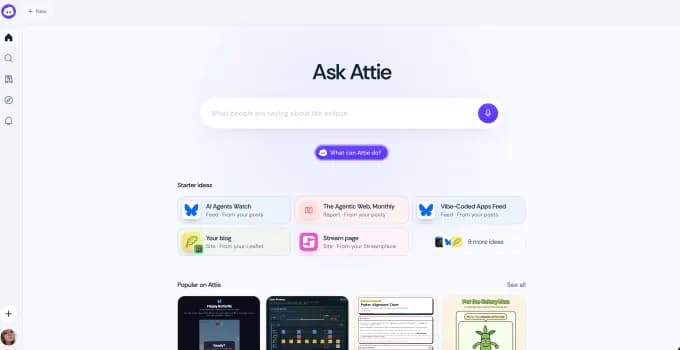
On October 15, 2026, Bluesky upgraded Attie at TechCrunch Disrupt 2026: from AI-generated custom feeds to one-sentence websites, quizzes, games, and polls — each on its own attie.site domain, on AT Protocol, reaching Bluesky's 47M registered users. CEO Toni Schneider calls it 'social vibe coding'. Our take: the second half of vibe coding is distribution, not the editor. Four honest caveats and action items included.
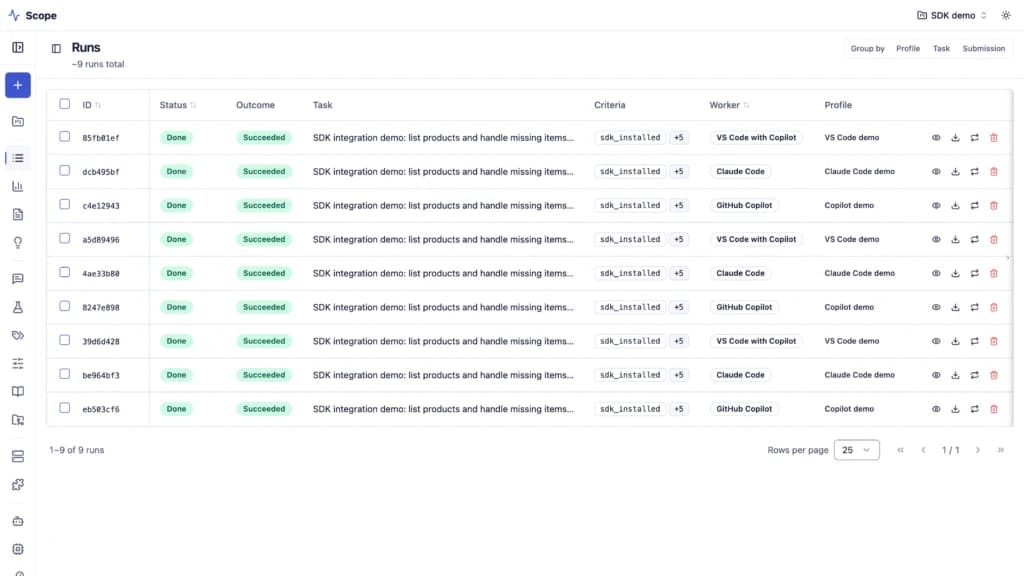
Microsoft's DevRel team open-sourced Scope (MIT), its year-plus-old agent evaluation platform. It doesn't benchmark models — it exams your product: the same task across Copilot, Claude Code and more, scored against DAG criteria by an LLM Judge, with full logs and workspace snapshots. Cosmos DB fixed 20 Agent Kit issues and 27 doc issues with it. Our take: as agents become software's users, DevEx must grow into DevAx — diagnosis before prescription.

Simon Willison's Oct 20 post: Battle Drones, a browser RTS with 321 commits written almost entirely by coding agents. The turning point was one prompt — 'Make it a LOT more fun' — plus an overnight Ultracode run in which Claude played 1,200 AI-vs-AI matches to rebalance the game. Now it has 3D graphics, audio-based multiplayer, and LLM-vs-LLM battles.