The Boundaries of Vibe-Coded toB: Between "Demo" and "Delivery" Lies a SOC 2
Vibe coding's sweetest moment is the demo — but sign a toB contract and start delivering, and a chasm opens between demo and delivery. This piece draws four boundaries: security compliance is a hard gate (quote at 5x demo cost), maintenance liability is bottomless (never promise a free year), requirement changes must be billed (block the "quick change"), data ownership and IP go in the contract. The thesis: between "demo" and "delivery" lies a SOC 2 — and SOC 2 can't be vibed.

Vibe coding's sweetest moment is the demo: three days to a working system, the client's eyes light up — "that's the one!" Then you sign the contract, start delivery, and discover: between "demo" and "delivery" lies a chasm called "toB." This piece maps the boundaries of doing toB services with vibe coding — which money to take, which pits to avoid.
The thesis up front: between "demo" and "delivery" lies a SOC 2. Not one missing feature — a whole apparatus of enterprise-grade engineering discipline, security compliance, and accountability. Miss this and your first toB project will cost you your shirt.
The conclusion first: where's the sweet spot for vibe-coded toB?
Vibe coding for toB isn't impossible — it has a clear sweet spot: internal tools, MVP validation, dashboards, workflow automation. These share traits: users are insiders (problems get absorbed internally), data isn't sensitive, failures are recoverable. In this zone, vibe coding's "speed" is a crushing advantage: two weeks of traditional outsourcing becomes your two-day delivery at a lower quote. The client's choice is obvious.
Outside the sweet spot lie minefields: touching money, core production data, or heavily regulated industries (finance, healthcare, government) with raw vibe coding is suicide. Not because the models can't — because the "accountability chain" can't. When something breaks, who's responsible? The AI? You? Does your vibe code have audit logs? A rollback plan? A penetration-test report? Fail those three questions from the client's security team and the contract dies.
Boundary 1: security compliance is a hard gate, not a bonus
For toC, security is "nice to have"; for toB, it's "don't bother talking without it." Enterprise procurement in 2026 treats SOC 2, ISO 27001, and local certifications as table stakes. Vibe coding's biggest weakness is exactly here: AI-generated code doesn't consider security by default — SQL injection, broken access control, hardcoded secrets, everything in the review checklist (guide9 in this batch) — each one a veto in toB.
Practical advice: before taking a toB project, ask the client three questions — "do you have a security review process?" "can data leave the intranet?" "do you need compliance certification?" Three yeses means the real cost is at least 5x the demo cost. Quote at 5x; if they won't pay it, walk away. The biggest toB trap isn't failing to build — it's quoting toB work at toC prices.
Boundary 2: maintenance liability is a bottomless pit
Demos are one-offs; delivery is forever. Code vibed out in three days breaks three months later — do you remember the original prompt? Do you still have context on why the AI wrote it that way? Vibe code is inherently less maintainable than human code — because it has no "design intent," only "generated output." Human code may be bad, but you know why it's bad; with AI code, you don't even know why it's written that way.
So toB contracts must specify: maintenance term, response SLAs, whether bug fixes are billed. The classic wreck is "one year free maintenance included" — vibe code's first-year bug volume runs 2–3x human-written code (unhandled edges, swallowed errors — all covered in guide9). The right approach: ship a "code health report" (test coverage, known TODOs, risk points) with delivery, and bill maintenance per-incident or per-month — never promise a yearly flat rate.
Boundary 3: pricing requirement changes
Vibe coding makes "changing requirements" absurdly cheap — one sentence to the AI, new version in half an hour. Once clients discover this, change requests snowball: "add an export feature," "change this button's color," "can it connect to our OA system."
In toC days you could grin and bear it; in toB you can't — every "quick change" burns your margin and your time. The contract must define in writing: what counts as "bug fix" (free) vs. "requirement change" (billed), and the change process (written confirmation + quote + scheduling). Vibe coding's "speed" is double-edged here: speed makes clients think "it's easy to change," and you need process to block that "easiness."
Boundary 4: data ownership and IP
The most overlooked, most painful when it blows up. Vibe-coded code is AI-generated, trained on public code — copyright ownership remains a gray zone in 2026. toB contracts must spell out: who owns the delivered code's IP? How are rights and liabilities split for AI-generated portions? Was the client's data used to "improve models" (many AI tools do this by default)?
In practice: add an "AI-generated code disclosure" clause — inform the client "parts of this project were AI-assisted" — assign IP to the client while retaining your right to reuse "methodology." And never tune AI on the client's real data — desensitize, mock data first. That's a red line, not a suggestion.
Sweet spot vs. minefield: one comparison table
Rank vibe-coded toB scenarios by "take it or not":
- Sweet spot (take with eyes closed): internal dashboards, OA workflow automation, marketing landing pages, MVP validation, data-cleaning scripts. Traits: users are insiders, data isn't sensitive, failures recoverable, no compliance demands. Here vibe coding delivers 5–10x faster than traditional outsourcing — and you can still quote 30% lower. Dimensionality reduction as a weapon.
- Yellow zone (take with a premium): customer-facing websites, non-core SaaS modules, internal AI assistants. Traits: outsiders see it, but no money or core data involved. Takeable, but quotes must include "hardening costs" (testing, security review, docs) — typically 3x demo cost. Define maintenance boundaries in the contract.
- Red zone (don't touch): payment systems, core transaction flows, healthcare/finance/government core systems, systems handling sensitive personal data. Traits: failure = compensation / legal liability / headlines. Vibe coding can participate, but only via "full-process engineering" — requirements review, architecture design, security audit, penetration testing, none skippable. Then vibe merely means "coding went faster"; nothing else is saved. Quote like a traditional project.
The decision rule: ask "worst case." "If this system bugs out, what's the worst outcome?" — "grumbling in the internal chat" = sweet spot; "customer complaints and refund demands" = yellow zone; "pay damages, break laws, make news" = red zone. Price by the worst case; contract by the worst case.
A real quote dissected: 2-day demo, 2-month quote
A real quoting story (details sanitized): a client wanted a "dealer order management system." Demo built in 2 days, client delighted, asked "how much for the production version?" The quote broke down like this:
- Feature development: 2 weeks. The demo covered happy paths only; production needs edges, exceptions, permissions filled in. Vibe coding is fast, but "filling in" runs 5x the demo effort — the most underestimated part for newcomers.
- Testing & hardening: 2 weeks. Unit tests, integration tests, security scans, load tests. toB clients ask "what's the test coverage" — no answer kills half the deal.
- Docs & delivery: 1 week. Deployment docs, ops runbooks, user training materials. toB delivery without docs is undelivered — the client's IT team takes over, and they can't read your vibe code.
- Compliance & security: 1 week. Certification questionnaires, data-flow diagrams, permission matrices. Even if the client doesn't require them now, prepared materials get reused on the next deal.
- Maintenance: 3 months (included in quote). Quoted as "4-hour response, 2-day fix" SLA — never "one year free." List maintenance cost separately so clients see "maintenance is valuable."
The total quote was 15x the "2-day demo cost"; the client balked at first. But walking through the quote line by line, they signed — because toB clients don't fear expensive; they fear "cheap but unexplainable." A quote that explains "the slow parts" is itself proof of professionalism. Remember: vibe coding's edge isn't "cheap" — it's "fast + transparent."
Contract checklist: 7 clauses you must include
In toB contracts, these 7 clauses missing means flying naked:
- □ Requirements freeze: "contract scope per Appendix X; new requirements follow the change process." Without this, vibe's "speed" becomes "infinite rework."
- □ Change pricing: changes billed per "person-day" at a fixed rate. Small changes (<2 person-days) take the express lane; big ones get rescheduled.
- □ Acceptance criteria: concrete, testable. "System runs stably" doesn't count; "7 consecutive days with zero P0 incidents" does. The more specific, the fewer disputes.
- □ Maintenance SLA: response time, fix time, maintenance term, billing method. Never sign "one year free maintenance."
- □ Data clauses: who owns data, where it lives, who accesses it, how it's handled when the project ends. AI tools' data flows declared separately.
- □ IP clauses: code IP goes to the client; you keep "methodology reuse rights." AI-generated portions declared (see boundary 4 in the main text).
- □ Confidentiality & non-compete: can you resell "the system built for company A" (modified) to company B? Agree upfront to avoid future lawsuits. My advice: negotiate "industry exclusivity," not "blanket non-compete" — the former protects the client; the latter starves you.
Quoting script: how to explain "15x" to clients
"2-day demo, 2-month delivery" — the client's first reaction is always "are you ripping me off?" Three sentences explain it:
Sentence 1: "The demo 'looks usable'; delivery 'doesn't break.'" Demos skip concurrency, data-loss scenarios, and client-IT handover. 80% of delivery effort lives in "doesn't break." Show clients the sweet/yellow/red zone table (above) and let them pick "which zone do you want?"
Sentence 2: "The slow parts are exactly what protects you." Testing, security scans, docs, compliance — each protects the client. Testing protects "launch day doesn't explode"; security protects "no data incidents"; docs protect "someone else can take over." Clients buy not "code" but "the certainty of not breaking." Vibe coding saves "writing code" time, never "proving reliability" time.
Sentence 3: "Pay in stages; each stage is accepted before the next is paid." Don't scare clients with one lump sum. Split "40% build + 30% test + 30% deliver," with acceptance gating each stage's payment. Client risk drops; your cash flow steadies. Remember: toB sales sells not "cheap" but "controlled risk."
The bottom line
The biggest misconception about vibe-coded toB is mistaking "demo speed" for "delivery speed." Demos are fast because nobody asks for your SOC 2, negotiates maintenance, or assigns data liability — toB is slow not at writing code, but at "proving you're right" (audits, tests, docs, compliance). See that boundary and you can clean up in the sweet spot: internal tools, MVPs, automation — where speed is everything. Miss it and the minefield will punish you with everything promised at demo time. Remember the line: between "demo" and "delivery" lies a SOC 2 — and SOC 2 can't be vibed.
Related articles

On October 2, GitLab disclosed CVE-2026-90970: the prompt template sandbox in the self-hosted AI Gateway can be escaped, letting a logged-in user with Duo Agent Platform permissions execute arbitrary commands on the gateway host. CVSS 9.9. It is the component's second 9.9 this year — February's CVE-2026-1868 was the same template engine, the same CWE-1336. Eight months apart, both patches fixed specific escape paths without moving the trust boundary.
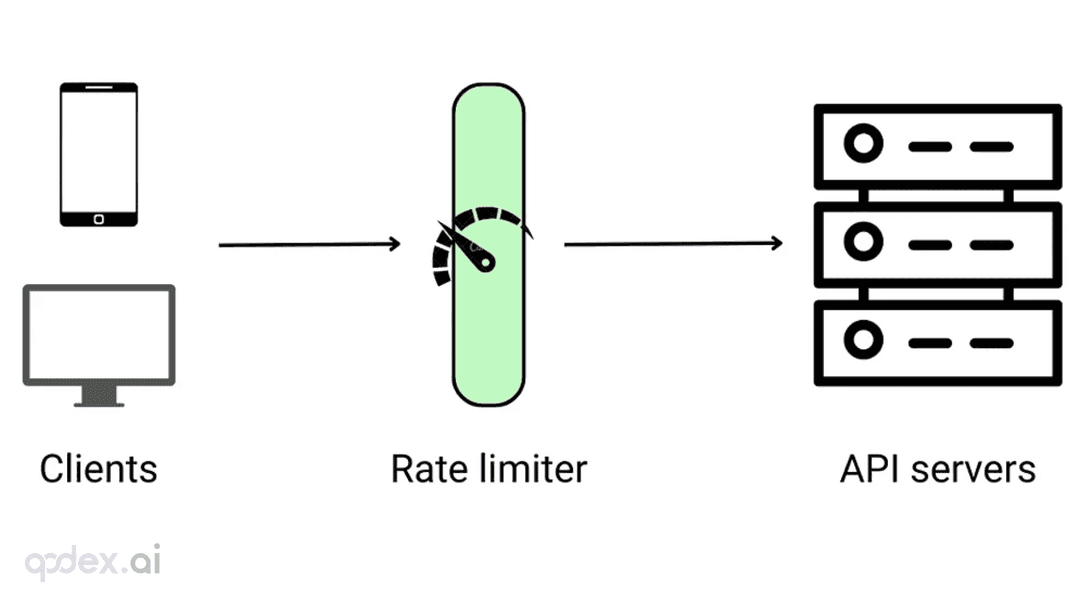
Every public endpoint will be called beyond your expectations some night. This guide builds a one-person-team rate-limiting system: algorithm choice (sliding window vs token bucket), four-layer defense, AI-endpoint money-burning protection, quota design, 429 response conventions, false-positive triage, and a launch checklist.

Traffic is moving from the search box to the AI answer box. A vibe coder ships a product in a week — and nobody finds it. This guide turns the SEO fundamentals (sitemaps, JSON-LD, Core Web Vitals) and the new AI-discovery toolkit (llms.txt, per-page Markdown versions, FAQ schema, agent-readable pricing and API docs) into a shippable 30-day checklist. The core judgment: how well you document sets your product's ceiling in the agent economy.