Gamification for Vibe Projects: Points, Badges, Leaderboards, and Anti-Cheat
Points, badges, leaderboards, streaks: a solo-dev playbook for making users come back on their own — append-only ledgers, idempotent awards, Redis Sorted Set boards, timezone-safe streaks, three-layer anti-cheat, and a shutdown plan.
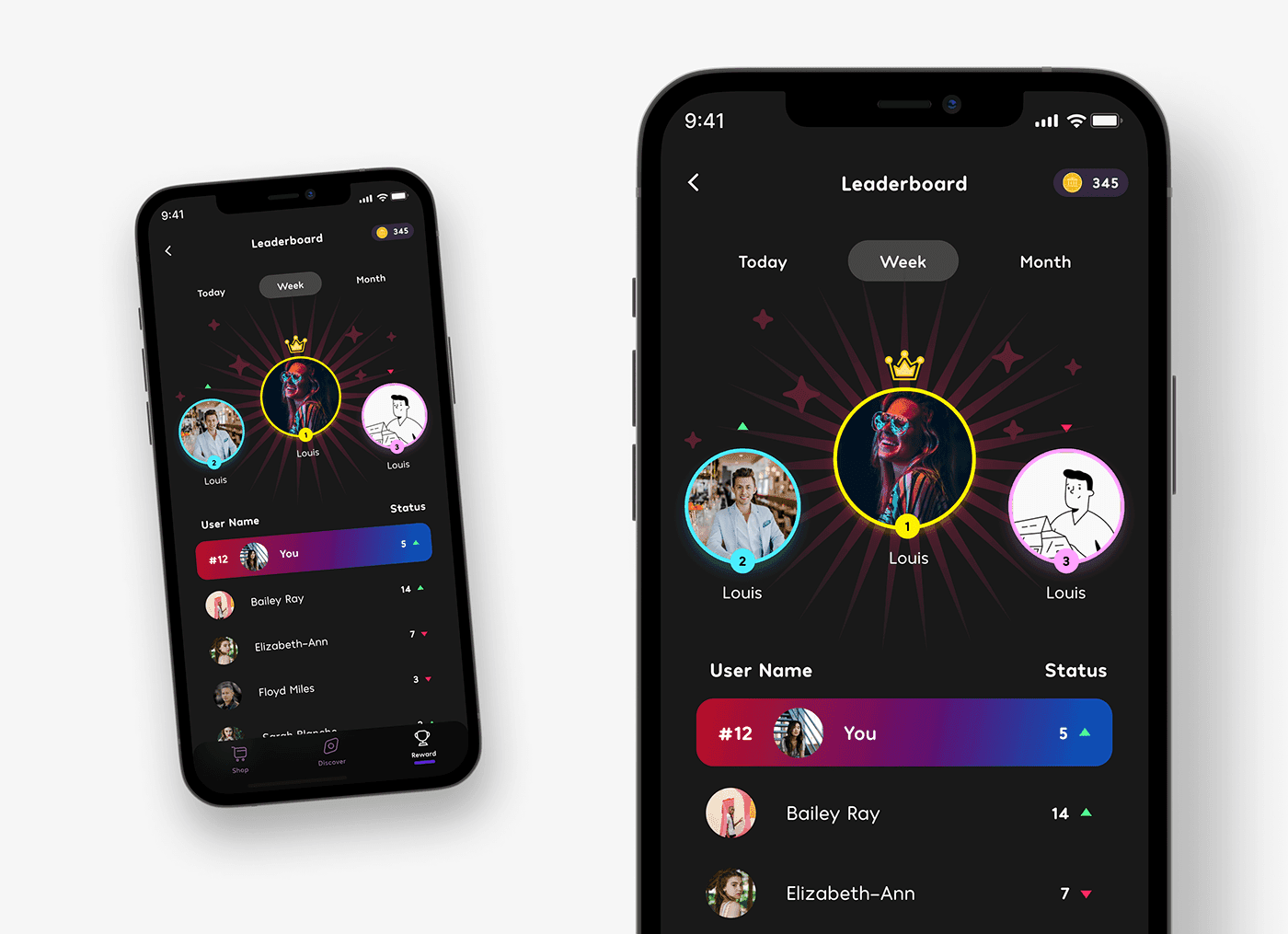
Let's draw the boundaries first, so you don't finish reading and realize this wasn't what you needed: this guide does not cover referral rewards (that's the Referral Program Guide's territory), does not cover win-back campaigns for churned users (see the Retention & Win-back Guide), and does not cover the billing credits ledger (see the Credits Ledger Guide). That last one is the easiest to confuse, so one more sentence: the Credits guide is about "money going out" — users pay, you deduct, reconciliation is life-or-death. This guide is about "points coming in" — users act, you award points. The two ledgers look alike but run in opposite directions; sharing one table for both is where disasters start.
This guide answers exactly one question: how to use the four-piece set — points, badges, leaderboards, and streaks — to make users come back on their own, while making sure cheaters gain nothing. The target reader is a solo indie developer building a toC vibe project (community, learning, tool, or content) who wants better retention and activity — no growth team, no data analyst. Every solution here is designed to be built and operated by one person.
The conclusion up front, to save you time: gamification is not "adding something fun" to your product. It is a feedback amplifier bolted onto a core behavior that already exists. If users don't want to do the core behavior in the first place, gamification won't save it — it will just leave you maintaining four extra systems. That sentence is the master switch for the whole guide; every section below returns to it.
1. The Four-Piece Set and Where It Applies: Know What You're Amplifying
Points, badges, leaderboards, and streaks each solve a different behavioral problem. Mixing them up is like taking the wrong medicine.
- Points solve the "behavior can be measured" problem. A user does A, you give 10 points; does B, 50 points. Points translate discrete actions into a single currency so users can feel "I'm accumulating something." They fit high-frequency, low-unit-value scenarios: community posting, daily learning check-ins, frequent micro-actions in tools.
- Badges solve the "identity needs proof" problem. Points are quantity; badges are milestones. A "30-day streak" badge isn't valuable because of the point total — it's valuable because users want to show it off. Badges fit products with identity: contributor badges in open-source communities, course-completion badges in learning products.
- Leaderboards solve the "people need a reference frame" problem. Psychologists call it social comparison: a user has no idea whether 500 points is a lot, but seeing rank #37 with only 20 points separating them from #36 creates instant motivation. Leaderboards fit competitive products where users are comparable: learning check-in boards, creator boards, gamified tools.
- Streaks solve the "habits need protection" problem. The magic of streaks is loss aversion: breaking a 47-day streak hurts more than earning 47 days of rewards feels good. Streaks fit habit-dependent products: vocabulary apps, meditation, fitness logging, writing.
You don't have to ship all four. The solo-developer iron rule: ship one first; add the second only after the first runs smoothly. Use this decision matrix to choose:
| Behavioral goal | First pick | Build cost (solo) | Cheating risk | Notes |
|---|---|---|---|---|
| Raise core-action frequency | Points | Low (one ledger table) | High (farming actions = farming points) | Pair with anti-cheat, see Section 6 |
| Build identity, drive sharing | Badges | Medium (rules engine) | Medium (conditions can be targeted) | Hidden badges resist scripted farming |
| Create competition, lift top users | Leaderboards | Medium (Redis Sorted Set) | High (the top is where cheaters gather) | Tiered boards resist cheating better than global ones |
| Build daily habits, protect D1/D7 retention | Streaks | Low (one streak table) | Medium (timezone tricks, scripted check-ins) | Timezone pitfall, see Section 5 |
Before choosing, define your north-star behavior: if your product could make users do exactly one thing more often, what is it? For a learning product it might be "finish a lesson"; for a community, "publish a post that gets replies"; for a tool, "complete an export or share." Gamification must amplify that behavior — not "login" or "browse." Awarding points for login is the most common form of self-comfort: logins go up, the north-star behavior doesn't move, and you've taught users to show up for welfare checks.
Then the applicability boundaries. For these three product types, gamification is likely poison, not medicine:
- Low-frequency serious tools. Tax software, contract signing, medical records — users open them three times a year and want to finish fast. A "Tax Filing Master" badge just tells them you don't respect their time. Serious tools retain on "it worked well last time," not "it was fun last time."
- Products where the core behavior carries negative emotions. Debt management, smoking cessation, task collection — users already feel bad opening your app; a leaderboard only makes it worse. Streaks are especially dangerous here: breaking a streak becomes a public execution.
- Products whose core behavior doesn't work yet. Three months in, double-digit DAU — don't think about gamification yet. Gamification is an amplifier, and zero times anything is zero. Your job right now is finding product-market fit, not minting badges for features nobody uses.
A self-check question — if you can't answer it, stop reading: "If there were no points or badges at all, would users enjoy doing this thing for its own sake?" If the answer is no, gamification is just renewing a painkiller prescription.
The full pipeline looks like this; the following sections take each box apart:

2. Designing the Points Ledger: This Is the "Earning" Ledger, Not the "Spending" One
Settling this with the Credits Ledger Guide once and for all: that guide is about users spending money — the core constraint is never overcharge, never undercharge. This guide's ledger has a completely different constraint: you may over-award (inflation is survivable), but you must never double-award, mis-award, or lose an award. One is a financial system, the other an incentive system. Keep them in physically separate tables — that is the iron rule.
2.1 Schema: Append-Only
The ledger has one martial law: the ledger table only takes INSERTs — no UPDATEs, no DELETEs. Every "adjustment" is a new positive or negative entry. The reason is practical: a year from now, when you ask "why did this user gain 500 points that day," a mutated balance column tells you nothing; an append-only journal lets you reconstruct exactly what happened.
CREATE TABLE points_ledger (
  id            BIGSERIAL PRIMARY KEY,
  user_id       BIGINT NOT NULL,
  -- Idempotency key: the same behavioral event is recorded exactly once, see 2.2
  idempotency_key VARCHAR(128) NOT NULL UNIQUE,
  -- Positive = award, negative = spend / expiry / deduction
  delta         INTEGER NOT NULL CHECK (delta != 0),
  balance_after INTEGER NOT NULL,
  -- Behavioral origin: comment_created / lesson_completed / checkin ...
  reason        VARCHAR(64) NOT NULL,
  ref_id        VARCHAR(128),
  -- Season membership: season resets only clear the current season; history stays queryable
  season_id     INTEGER NOT NULL DEFAULT 0,
  expires_at    TIMESTAMPTZ,
  created_at    TIMESTAMPTZ NOT NULL DEFAULT now()
);
CREATE INDEX idx_points_ledger_user ON points_ledger (user_id, id DESC);
Note the balance_after denormalized column: it's a snapshot computed at write time, turning "check balance" into a single index scan instead of a full-table SUM. For a solo developer, that's a small write amplification traded for massively simpler reads. The authoritative balance is always SUM(delta); balance_after is just a cache. When they disagree, SUM wins — write a weekly reconciliation script (ten minutes of work).
2.2 Idempotent Awards: One Event, One Entry
The most common production incident in points systems isn't "awarded wrong" — it's "awarded twice." A user likes a post, the request retries, the backend awards points again. Users won't complain about extra points, but your economy now has a hole. The fix is awarding with an idempotency key:
-- Idempotency key shape: user + action type + action object + date (as needed)
-- e.g.: user:42:lesson_completed:lesson_101 / user:42:daily_checkin:2026-10-19
INSERT INTO points_ledger (user_id, idempotency_key, delta, balance_after, reason, ref_id)
VALUES (42, 'user:42:lesson_completed:lesson_101',
        50, (SELECT COALESCE(SUM(delta),0) FROM points_ledger WHERE user_id=42) + 50,
        'lesson_completed', 'lesson_101')
ON CONFLICT (idempotency_key) DO NOTHING;
Three hard rules. First, the idempotency key must be determined where the behavioral event is born and passed into the award function — not invented inside it. A key invented at award time looks different on every call, which is the same as no idempotency. Second, after ON CONFLICT DO NOTHING, check affected rows: zero rows means a duplicate event — return success directly ("already awarded" and "just awarded" are indistinguishable to the caller). Third, keys must carry business meaning for human debugging: seeing user:42:daily_checkin:2026-10-19 tells you exactly where the entry came from.
A common trap: confusing "daily caps" with "idempotency." "Max 50 points per day for posting" is a business rule; "the same post only counts once" is idempotency. The former is implemented with counters, the latter with idempotency keys. You need both, but they are two different things.
2.3 Expiry and Inflation: Devalue or Reset?
Points that are only issued and never removed inflate: veterans sit on hundreds of thousands of points, newcomers can never catch up, and the system becomes decorative. Two fixes:
| Scheduled devaluation (e.g. balance × 0.8 quarterly) | Season reset (zero out at season end) | |
|---|---|---|
| User perception | Gentle: "my points shrank" | Sharp but predictable: "a new season begins" |
| Build cost | Medium (batch balance snapshots + negative entries) | Low (a season_id cut; leaderboards segment naturally) |
| Fits | Points redeemable for goods/perks — devaluation is repricing | Leaderboard-driven products — seasons are natural narratives |
| Risk | Users feel robbed; requires advance notice | End-of-season activity cliff; offset with settlement rewards |
| Solo-dev recommendation | ★★★ | ★★★★★ |
My call is unambiguous: solo developers should pick season resets, no contest. Three reasons: it's simple to build (the season_id column supports it natively — new season just writes a new season_id); it pairs perfectly with leaderboards (every season is a fresh board, veterans carry no historical baggage, newcomers can join anytime); and the reset is itself an operations event ("Season S3 is live" sounds a hundred times better than "your points were devalued 20%"). Devaluation only makes sense when points redeem for real value — at which point your points have one foot in the "spending" ledger, and you should go read the Credits Ledger Guide.
Recommended season length: 4–8 weeks. Shorter (2 weeks) and users barely get going before the reset; longer (half a year) and inflation kills you first. One week before season end, send a "season settlement preview" — give users a reason to spend points and push the boards. That's designing behavior with rules, not patching it afterward.
2.4 Section Checkpoint
- Is the ledger table append-only? Is there any code path that UPDATEs balances?
- Does every award carry a business-meaningful idempotency_key? Do duplicate events return success rather than errors?
- Do balance reads use the balance_after snapshot, and is the SUM reconciliation script written?
- Season vs. devaluation — decided? Season length and the reset announcement on the ops calendar?
3. The Badge / Achievement System: Event → Condition → Grant
If points are a salary, badges are trophies. Salaries arrive monthly and everyone gets one; trophies go to people who did specific things, and they're displayed where everyone can see. Technically, a badge system is a rules engine: listen for behavioral events, evaluate configured conditions, grant on match. It sounds simple; all the pitfalls are in "how rules are configured" and "don't grant twice under concurrency."
3.1 Minimal Rules Engine: JSON Config vs. Hardcoding
Solo developers tend toward two extremes: hardcode every badge condition in business code (adding a badge means changing code and redeploying), or build a visual rule editor on day one (three months you'll never get back). The middle path is JSON rule configuration: rules live in config files; the engine only parses and executes.
// badges.json: adding a badge edits config, not code
[
  {
    "id": "first_post",
    "name": "First Blood",
    "tier": "common",
    "trigger": { "event": "post_created" },
    "condition": { "count": 1, "window": "all_time" }
  },
  {
    "id": "streak_30",
    "name": "Thirty Days Strong",
    "tier": "rare",
    "trigger": { "event": "checkin" },
    "condition": { "streak_days": 30 }
  },
  {
    "id": "night_owl",
    "name": "Night Owl",
    "tier": "hidden",
    "trigger": { "event": "post_created" },
    "condition": { "hour_range": [0, 5], "count": 10, "window": "30d" },
    "hint": "Rumor says someone roams at night…"
  }
]
The engine's execution logic is three steps, in pseudocode:
def on_event(event):
    for rule in load_rules():                      # few rules; load all into memory
        if rule.trigger.event != event.type: continue
        if evaluate(rule.condition, event.user_id):
            grant_badge(event.user_id, rule.id)    # idempotent grant, see 3.3

def evaluate(cond, user_id):
    # extend condition types as needed: count / streak_days / hour_range
    # all counting is read-only queries; no writes here
    ...
The trade-offs are clear:
| Hardcoded | JSON rules (recommended) | Visual rule editor | |
|---|---|---|---|
| Cost of adding one badge | Code change + deploy | Config edit + hot reload | A few clicks |
| Condition expressiveness | Unlimited (Turing-complete) | Limited to implemented condition types | Limited to a PM's imagination |
| Build cost | 0 (write it inline) | 1–2 days | Weeks minimum |
| Fits which stage | Validation (< 5 badges) | Growth (5–50 badges) | The day you have a growth team |
Practical advice: start hardcoded; refactor to JSON config the day you pass 5 badges. Five is an empirical threshold — below it, hardcoded ifs are still readable; above it, conditions scattered through business code become landmines nobody dares touch. Start the JSON config's condition types with just three: count (cumulative), streak_days, hour_range (time-window behavior). Don't pre-build abstractions for "conditions we might need someday" — that's scheduling your own overtime.
3.2 Badge Tiers and Display Surfaces
Three tiers — a ratio validated by countless games:
- Common: everyone can earn them; tutorial in nature. "Finish onboarding," "publish your first post." Their job is getting the user their first badge within 10 minutes of signup — the time-to-first-badge determines whether users ever understand your badge system. If three days pass with nothing unlocked, users will assume the system isn't for them.
- Rare: require sustained effort. "30-day check-in streak," "100 likes received." These are the backbone; keep them at roughly a third of the common count. Rare badges must ship with a progress bar: "7 more check-ins to unlock" beats "???" by a mile — visible progress is behavioral fuel.
- Hidden: users aren't told they exist; unlocking is a surprise. "Post 10 times at 3 AM" unlocks "Night Owl." Hidden badges do two things: they resist farming (you can't optimize for conditions you don't know — see Section 6) and they manufacture social spread ("holy grail, I unlocked a hidden badge" is premium UGC material). But keep them under 10% of the total — more than that and the rules feel opaque.
Display surfaces follow one principle: the badge wall is the user's living room, not a warehouse. Show the 3–5 most recently unlocked badges prominently on the profile; tuck the full collection one tap away. Every badge needs its unlock date ("Unlocked 2026-09-12"); rare badges need the site-wide unlock count ("128 holders site-wide") — scarcity needs numbers to back it. Never bury badges three menus deep like some products do: if you're embarrassed to display what users worked for, motivation gets cut in half.
3.3 Idempotent Grants Under Concurrency: The (user_id, badge_id) Unique Key
One post can satisfy three badge conditions at once; three workers grant concurrently. Without idempotency, the user gets three "congratulations" notifications — or worse, the same badge recorded twice. The fix mirrors the points ledger:
CREATE TABLE user_badges (
  user_id    BIGINT NOT NULL,
  badge_id   VARCHAR(64) NOT NULL,
  granted_at TIMESTAMPTZ NOT NULL DEFAULT now(),
  -- Composite unique key: one user, one badge, one grant
  PRIMARY KEY (user_id, badge_id)
);

-- Granting:
INSERT INTO user_badges (user_id, badge_id) VALUES (42, 'streak_30')
ON CONFLICT DO NOTHING;
-- affected rows = 1 → newly unlocked, send notification; = 0 → already owned, skip silently
Note the product decision baked into this schema: are badges lifetime or seasonal? The table above is lifetime — once unlocked, forever owned. If badges bind to seasons ("S3 Season Champion"), you need a (user_id, badge_id, season_id) triple key. My recommendation: common/rare badges are lifetime (identity assets appreciate with age); season-limited badges get their own system (the season-pass playbook). Mixing them confuses users ("will I still have this badge next season?").
3.4 Section Checkpoint
- Can a new user unlock their first badge within 10 minutes? Has the path been actually tested?
- Are badge rules configuration-driven? Does adding a badge require code changes?
- Is the grant path protected by the (user_id, badge_id) idempotency? Tested under concurrency?
- Do rare badges have progress bars? Are hidden badges over 10% of the total?
4. Leaderboards in Practice: Redis Sorted Set Is the Standard Answer
No suspense in the tech choice: Redis Sorted Set. This isn't a "recommendation" — it's the industry standard. Members sorted by score, O(log N) inserts and Top-N reads, millisecond responses at million-user scale. ORDER BY score DESC LIMIT 100 in a relational database works too, but past ~100K rows every board query is a full-table sort, and your slow-query log will go on strike first.
4.1 Core Commands and Minimal Implementation
You need exactly four commands (all standard per redis.io docs, no strong version dependency):
# Score change: ZADD key score member (updates if the score exists)
ZADD leaderboard:season:3 1250 "user:42"

# Top 100, highest first: ZREVRANGE key start stop
ZREVRANGE leaderboard:season:3 0 99 WITHSCORES

# A user's rank (zero-based) and score
ZREVRANK leaderboard:season:3 "user:42"
ZSCORE leaderboard:season:3 "user:42"

# Score-range fetch (for cursor pagination, see 4.3)
ZRANGEBYSCORE leaderboard:season:3 (1250 -inf LIMIT 0 20
Update strategy in the app layer: update the Redis board synchronously when the behavioral event fires; persist to the database asynchronously. Why? The board is derived data — losable and rebuildable. Even if Redis dies, you can rebuild from SUMs over points_ledger. Making board updates synchronous buys the instant feedback of "I acted and my rank moved right away"; persisting asynchronously (queue or background job) is fine because the ledger is the authority — it can't be lost, but it can wait a few seconds. The reverse order (sync persist, async board) also works, but the UX is a notch worse — and for a toC product built by one person, that immediacy is worth the small architectural complexity.
Tied scores? In a Sorted Set, members with equal scores sort by member lexicographic order — producing weird "same score, different fate" rankings. The standard fix is encoding the timestamp into the score: score = action_points × 10^10 + (9999999999 - unix_time), first to arrive ranks higher. Or simpler: allow ties in the product and display "tied #3" — for most vibe projects, displayed ties are more legible than timestamp hacks.
4.2 Three Tiers of Boards: Global / Friends / Tiered
Shipping only a global board is the laziest leaderboard mistake. The problem is obvious: a new user sees #1 at 500,000 points, themselves at 30, and closes the page. Psychologists would call it learned helplessness, leaderboard edition. The fix is three board tiers:
- Global board: site-wide ranking. Gives top users glory and gives ops "whale" material. But it only serves the top 1% — the other 99% are spectators.
- Friends / following board: ranks only people the user follows. Dunbar's number makes this competition real — you genuinely care about those dozen people's ranks. Implementation: one key per user,
leaderboard:friends:{user_id}, rebuilt when follow relationships change. Small data; do whatever you want. - Tiered board (Bronze → Champion): users are sliced into divisions by score; everyone competes within their division. This is what retains the middle and the tail: the joy of #1 in Bronze is no less than #1 in Champion. Adjust division thresholds dynamically per season (use last season's P20/P40/P60/P80 score cutoffs) to avoid the joke of "Bronze #1 outscoring Silver's bottom."
Default display order should be: tiered → friends → global. The first board users see should be one they have a chance to win — not one they can never win. That detail decides whether the leaderboard is a retention tool or a churn tool.
4.3 Pagination Must Use Cursors, Not Offsets
Board pagination has a fatal trap: ZREVRANGE key 100 120-style offset paging skips and duplicates entries while the board moves in real time. A user on page 5; someone storms to the top; page 5's contents shift down one slot — the user turns to page 6 and sees page 5's last entry again. UX disaster.
The correct approach is cursor pagination: remember the last entry's score on the previous page and fetch the next page by score range with ZRANGEBYSCORE:
# Previous page's last entry: score=1250, member=user:42
# Next page: the 20 entries below score 1250 (open interval excludes the shown user:42)
ZRANGEBYSCORE leaderboard:season:3 (1250 -inf LIMIT 0 20
# Edge case: members tied at 1250 but ranked after user:42 would be skipped
# Fix: carry a (score, member) tuple cursor and filter in the app layer for
# score=1250 AND member lexicographically greater than user:42
Honestly, the tuple cursor takes twenty extra lines. But skipped/duplicated pages generate support tickets that cost far more time. It's a choice between "twenty lines now or fifty support emails later."
4.4 Seasons: Settlement Cron + Rewards + Reset Ritual
A seasonal leaderboard needs to feel like a season. Three things happen at season end, in order:
- Settlement (cron): at season end, a cron job snapshots the final board into the relational database (
season_results: season_id, user_id, rank, score). The snapshot is the credential of historical glory and the basis for rewards. From this moment, the old season's Redis key gets a TTL (e.g. 30 days) and expires naturally — don't DEL it; leave it for nostalgia and screenshots. - Rewards: season rewards by rank (badges, titles, points multipliers). Rewards go through idempotent awarding (idempotency keys carry the season_id); failed awards are retryable — this is money and glory, and losing them makes users hold grudges.
- Reset ritual: a new season doesn't start silently. Three things: a site-wide announcement ("Season S4 is live — everyone back to the same starting line"), last season's honors on display ("S3 Diamond Division" badge on the profile, lifetime), and double points for the new season's first week (a reason for everyone to push).
Keep the leaderboard season aligned with the points season (4–8 weeks, see 2.3) — two independent season calendars are an operations disaster.
4.5 Section Checkpoint
- Do board reads go through Redis Sorted Set rather than database ORDER BY?
- Are all three board tiers live? Is the tiered board the default view?
- Is pagination on the (score, member) cursor rather than offsets?
- Is the season settlement cron written? Do old season keys expire via TTL instead of DEL? Are rewards idempotent?
5. Streaks / Check-ins: Timezones Are the Pitfall, Make-Up Cards Are a Business
Streaks are the simplest of the four to build and the sneakiest in their pitfalls. One table, two columns, and it runs — but timezone bugs can detonate your support inbox.
5.1 The Timezone Pitfall: Count "Days" in the User's Timezone
The scenario: a user in Los Angeles checks in at 23:30 on Oct 18 and again at 00:30 on Oct 19 — in local time, that's two consecutive days of check-ins, and the streak should increment. But if your server counts "days" in UTC, 00:30 PDT is 07:30 UTC, the same UTC day as the previous check-in (06:30 UTC): the streak neither breaks nor grows. The user sees "I checked in two days running and my streak didn't move," and trust goes to zero. Worse is the reverse — the streak-eater: the user checks in every local day, but one check-in lands in the same UTC day as the previous one, so the system marks "already checked in today"; the next local-day check-in is then two UTC days later, and the streak breaks.
The iron rule: day boundaries are computed in the user's timezone — never the server's, never a blanket UTC. Implementation:
CREATE TABLE streaks (
  user_id       BIGINT PRIMARY KEY,
  timezone      VARCHAR(64) NOT NULL DEFAULT 'UTC',  -- IANA timezone, user-editable
  current_streak INTEGER NOT NULL DEFAULT 0,
  longest_streak INTEGER NOT NULL DEFAULT 0,
  -- "Last check-in date" in the user's timezone; store a date, not a timestamp
  last_checkin_date DATE NOT NULL
);

-- Pseudocode: check-in adjudication (server_time MUST be server time, see 5.3)
def checkin(user_id):
    s = get_streak(user_id)
    today = server_now().astimezone(s.timezone).date()
    if s.last_checkin_date == today:
        return {"streak": s.current_streak, "already": True}
    elif s.last_checkin_date == today - timedelta(days=1):
        s.current_streak += 1
    else:
        # Broken streak: check for a make-up card first, see 5.2
        s.current_streak = 1
    s.last_checkin_date = today
    s.longest_streak = max(s.longest_streak, s.current_streak)
    save(s)
Three details. First, the timezone field must be user-editable — a student moving from Beijing to New York gets permanently wrong "days" otherwise. Second, let astimezone handle the DST transition weeks automatically; never hand-roll a +8 offset — hardcoded offsets explode twice a year, in March and November. Third, last_checkin_date is a date meaningful only in that user's timezone; comparing it across users is meaningless — keep that in mind for reporting queries.
5.2 The Economics of Broken Streaks: Make-Up Cards
When a streak breaks, users react two ways: "whatever, starting over" (your ideal user) or "47 days down the drain, uninstalling" (most users). A make-up card gives the second group a ladder: pay a small price (watch an ad, pay $1, spend 100 points) to restore yesterday's miss and keep the streak alive.
Make-up pricing is economics. The core formula: make-up price < the psychological cost of rebuilding the streak, but > 0. Priced at zero, there's no penalty and streaks devalue; priced too high, users give up. Reference anchors:
| Make-up method | Suggested price | Fits | Watch out |
|---|---|---|---|
| Spend points | ~3–5 days of a user's points income | Products with a points economy | Don't price at 1 day's income — that's no penalty |
| Watch a rewarded video | 1 view / day | Products with ad monetization | The make-up earns eCPM too — two birds |
| Pay directly | $0.15–0.50 / use, max 2 per month | Tools/learning products with paying users | Cap the uses! Uncapped = selling streaks = streak system collapse |
| Friend assist | Get 1 friend to vouch the make-up | Social products | It's really user acquisition — count it under referral metrics, don't double-count |
One key rule: make-ups cover yesterday only — never last week. Allowing week-old repairs tells users "streaks don't matter, you can always fix them" — and the moment loss aversion is diluted by make-ups, the streak degrades from a habit engine into a paid prop. In product terms: more than one day broken, the make-up entry disappears, and the copy switches from "repair your streak" to "a fresh start." Give users a ladder — but only one rung.
5.3 Anti-Cheat: "Changed My System Timezone" — Server Timestamps Rule
The cheapest streak cheat: set the phone's clock to tomorrow, open the app, check in, set it back — a 30-day streak in one afternoon. The defense is one sentence: check-in time is when the server receives the request; client-sent times are display hints only.
Two layers in practice. Layer one: the check-in endpoint ignores client time parameters entirely and records now() — the baseline; without it, everything else is theater. Layer two: flag users with anomalous check-in counts in 24h (e.g. > 3) as suspicious — flagged, not banned — feeding Section 6's manual review queue. Why not ban outright? False-positive cost is too high: cross-timezone flights and phone clock sync glitches can both trigger it. Streak cheating only buys vanity numbers; it doesn't deserve the heavy weapon of bans. Flagging plus make-up-card disqualification is enough.
5.4 Streak Reward Curves: Increasing, but Capped
Streak rewards (points, badge progress) should grow with the day count — day 30 must pay better than day 3, or there's no "sticking around pays more" feeling. But they must cap: 30 or 60 days, then flat. Uncapped curves let veterans' daily income snowball until newcomers can never catch up — the same disease as points inflation, see 2.3.
A battle-tested curve (daily check-in points): 10/day for days 1–7, 20/day for days 8–30, 30/day from day 31, capped. Simple, memorable, and explainable by support. "Support can explain it" is the gold standard for reward rules — if it takes three paragraphs to describe, users won't do the math; they'll just feel "these points are stingy."
5.5 Section Checkpoint
- Are "days" computed in the user's IANA timezone? Any hardcoded +8 left in the code?
- Does check-in use server time? Is the client time parameter ignored?
- Do make-ups cover yesterday only? Are make-up uses capped?
- Are streak rewards capped? Can the rule be explained in one sentence?
6. Anti-Cheat: Cheaters Are More Diligent Than You Imagine
Mindset first: if points have value, someone will farm them. Not "whether" — "when." A solo developer's anti-cheat goal isn't "zero cheating" (that's a big-tech security team's KPI); it's "make cheating cost more than it's worth." If farming 100 points takes 2 hours of scripting and 100 points are worth a dime — you've won.
6.1 The Three Farming Playbooks
99% of the cheating you'll see in the next year is one of these three:
- Multi-accounting (Sybil): register 50 sockpuppets that like and reply to each other, funneling points to the main account. The #1 enemy of community/content products. Signatures: multiple accounts on one device/IP, synchronized behavior (batched actions within the same minute), sockpuppets that only like the main account.
- Scripted behavior: automation that runs the "post → like → check-in" loop. Signatures: machine-regular intervals (exactly every 60 seconds), 24/7 activity (humans sleep), anomalous User-Agents or behavior fingerprints.
- Packet replay: capture the "complete lesson" API request and replay it 100 times. Signatures: repeated request patterns outside the idempotency key (note: idempotency keys stop accidental retries, not deliberate key-rotating replays — an attacker who mints a fresh ref_id each time sails past your idempotency).
Honest labeling: these three are industry-public common patterns; the exact attacks on your product depend on your points rules — your rules are the attacker's manual. The moment "posting earns 10 points" is written down, someone is thinking about bulk posting. Every rule deserves an "attacker-view" walkthrough at design time; that's this section's most important habit.
6.2 Three Layers of Defense
Deploy in cost order — a solo developer goes layer by layer:
Layer 1: Rate limiting (ship today). Every point-earning action gets a "reasonable human" cap: max 10 counted posts/day, 50 counted likes/day, 1 check-in/day. Over-cap actions still succeed (never block legitimate use) — they just stop earning. Implementation is a Redis counter + TTL, a few lines of code. This layer stops 80% of script kiddies — the script keeps running, earns zero, and the attacker leaves on their own.
-- Rate limit on counted posts: first 10 per day count
INCR points_limit:post:user:42
EXPIRE points_limit:post:user:42 86400
-- Return value > 10 → this action earns nothing (the action itself still succeeds)
Layer 2: Behavioral baselines (ship in week two). Record per-user statistical baselines: average daily posts, active-hour distribution, inter-action intervals. Flag users deviating 3+ sigma from their own baseline. Note: their own baseline, not a site-wide threshold — a power user posting 20 times a day is normal; a fresh account doing it is farming. Solo developers don't need ML: simple z-score rules plus a weekly human glance at the flagged list is enough.
Layer 3: Device fingerprinting (add after cheating appears). Multi-accounting is fundamentally "one human, N accounts," and device fingerprints (same device ID / IP block / browser fingerprint across accounts) are the most direct evidence. But this layer has privacy-compliance cost (fingerprinting belongs in your privacy policy) and false-positive risk (a family sharing one iPad). So it's a reactive measure for when cheating shows up — not day-one standard kit.
How they relate: rate limiting is the city wall (stops most), behavioral baselines are the patrol (spots anomalies), device fingerprinting is the secret police (precise arrests). Don't build the secret police first — your product may not be worth attacking yet.
6.3 The Solo-Dev 10-Minutes-a-Week SOP
Beyond automated defenses, keep a manual review queue. Ten minutes a week, four steps:
- Open the "suspicious users" list (baseline-flagged + frequent rate-limit hitters), sorted by suspicion score.
- Review the top 5: open each profile — 30 seconds to tell a genuine power user from a farmer. Human eyes beat rules here.
- On confirmed cheating: deduct points first (a negative entry, reason: anti_cheat), then suspend point-earning for 7 days, and only then consider banning. Three escalating tiers. Direct bans are nuclear weapons — wrongly banning one real user costs more than letting ten farmers go.
- Write down the technique, update rate-limit thresholds or baseline rules — anti-cheat is an arms race, and your rulebook should be alive.
Should punishments be public? Yes — but publish the behavior, not the names: "12 farming accounts cleared this week, 3,400 points clawed back." Deterrence without the "public shaming" controversy. Specific user IDs are handled in the appeals channel only.
6.4 Division of Labor with the Payment-Fraud Guide
This guide covers game cheating (farming points, boards, badges); the fraud-prevention guide covers payment fraud (stolen cards, black-hat payments, refund abuse). The dividing line is money: cheaters want numbers and glory on the books; fraudsters want real cash. The moment your points become redeemable for cash or goods, the two problems merge — from that instant, game cheating is payment fraud, and the anti-cheat budget should be sized to fraud standards. The litmus test: can your points be turned into money? Yes → go read that guide; no → this section is enough.
6.5 Section Checkpoint
- Does every point-earning action have a daily earning cap? Is over-cap silently non-earning rather than an error?
- Before a new rule ships, did it get the attacker-view walkthrough? (If I were a farmer, how would I farm this rule?)
- Is there a suspicious-user review queue? Is the weekly 10-minute SOP on the calendar?
- Are punishments three escalating tiers? Is there an appeals channel?
7. Reach and Display: Unlocked — Now What?
Many teams spend 90% of their energy on "how to compute points" and 10% on "how users perceive it." That's backwards: gamification users can't perceive might as well not exist. Points land in the ledger but the number never visibly ticks up; a badge unlocks but the notification drowns in the message pile — all four systems built for nothing. This section is about what to say, when to say it, and how to display it. Channel implementation (push, in-app messages, email) belongs to the Notification System Guide; this guide covers content and timing strategy only.
7.1 Unlock Timing: Instant vs. Batched
Two timing strategies for completely different situations:
| Instant (within 5s of the action) | Batched (daily/weekly digest) | |
|---|---|---|
| Fits | Badge unlocks, streak milestones, hitting #1 | Routine point changes, minor rank fluctuations |
| Psychology | Strong action–reward association ("I just did it and the reward arrived") | Avoids interruption; builds "weekly report" anticipation |
| Anti-pattern | "You earned 2 points" popping 10×/day → user disables notifications | "You unlocked a hidden badge" held for the weekly digest → surprise served stale |
The litmus test: would the user screenshot this and post it? Yes → instant; no → batched. "Unlocked a hidden badge," "100-day streak," "hit #1 on the board" deserve one interruption; "+37 points today" doesn't. Notification permission is credit users lend you — every ping spends it. Spend it where it counts.
The copy formula (steal it): achievement name + concrete behavior + scarcity proof. Good: "Unlocked [Thirty Days Strong] — 30 consecutive check-ins, achieved by only 3% of users." Bad: "Congratulations on your achievement!" — which achievement? Why me? Unanswered, so unsaid. The scarcity number (3%, 128 people) is the key: it translates "I did it" into "I'm better than most," and the latter is what drives sharing.
7.2 Board Page Performance: 60-Second Cache + Top-100 Warmup
The board page is the highest-traffic surface in the gamification stack — and the easiest to melt. Two moves:
- Cache board results for 60 seconds. Users tolerate a 60-second-old board — nobody complains a ranking is 40 seconds stale, but your Redis will die first under thousands of
ZREVRANGEcalls per second. Implementation: cache query results per key (e.g.cache:leaderboard:season:3:global), TTL 60s. Sixty seconds is empirical: under 30s the hit rate never climbs; over 5 minutes users feel "my score went up but my rank didn't move." - Pre-warm the top 100. 90% of board traffic hits page one. A cron actively queries the Top 100 every minute (or at key season moments) and writes the cache — instead of computing on user request. That's "moving computation off the request path," the cheapest performance optimization a solo developer can make.
Personal rank lookups ("what's my rank?") shouldn't go through the board cache: ZREVRANK is O(log N) — query it live; it's real-time and cheap. But mind the long-tail rank display strategy: showing "#108,642" is humiliation, not motivation. For users past rank 1,000, show the tiered-board rank ("#12 in Bronze") or the friends-board rank instead of the global number — display strategy is itself gamification design.
7.3 Achievement Posters and Social Sharing
Badge unlocks, season settlements, streak milestones — moments users want to share. Make sharing one tap, not a screenshot. The standard pattern is the achievement poster: a server-generated image (username + achievement name + scarcity number + product logo + QR code) that the user shares via the native share sheet with one tap. Poster generation can use server-side canvas (e.g. node-canvas) or pre-made templates with text overlaid at coordinates — solo developers should pick the latter: 5–10 template images, dynamic text stamped at fixed positions, ten minutes of work.
The QR code/link on the poster must land on a dedicated landing page ("lee just unlocked [Thirty Days Strong] — achieved by 3% of users. Come try it yourself"), not the homepage. Landing-page conversion differs from homepage conversion by an order of magnitude. Anti-abuse and parameter design for share links belong to the Share Links Guide; the point here: gamification manufactures "moments worth sharing," the share pipeline turns moments into new users — the two guides meet at the poster landing page.
7.4 Section Checkpoint
- Is every reach event classified instant/batched? Is "would they screenshot it?" the criterion?
- Does the board page have the 60-second cache + Top-100 warmup? Do personal ranks query live?
- Do long-tail users see tiered ranks instead of "#108,642"?
- Is one-tap achievement-poster sharing live? Do QR codes land on dedicated pages, not the homepage?
8. Measuring Results and the Launch Checklist — Plus the Shutdown Plan
8.1 A/B Testing: The Control Group Is "No Gamification"
Gamification launches require A/B testing, and there's a common control-group mistake: the control must see no gamification at all — not "a different gamification." "Group A sees old points rules, Group B sees new points rules" tests rule quality, not gamification's value. The correct design: the experiment group sees full points + badges + boards; the control sees nothing (points still compute in the background, just unshown — so when you roll out fully, control users' history is intact).
Split by user_id hash, not by business segments like "new vs. old users" — new and old users already behave so differently they'd contaminate the experiment. Run at least 2 weeks, covering a full weekly behavior cycle (weekday and weekend behavior patterns are completely different; concluding after 3 days is fortune-telling).
8.2 Core Metrics: Three Is Enough
Solo developers watch three metrics. More is unwatchable; fewer drift:
- D1 / D7 retention: gamification's ultimate goal. If the experiment group's D7 retention beats control by 2–5 percentage points, that's success. Don't expect doubling — retention is a compounding game; five points compounds into an enormous number over a year.
- North-star behavior frequency: back to Section 1 — gamification must amplify the core behavior. So watch "lessons completed per user per week" or "posts per user per week" directly. Points claimed rising while the north-star behavior flatlines means users are farming side quests — fix the rules.
- Points spend ratio (if points are spendable): issued vs. consumed. Issue-only with no spend is a pre-inflation warning; issuing 100 and spending 90 is healthy; issuing 100 and spending 5 means nobody wants your points mall — fix the mall before adding new mechanics.
Vanity metric blacklist: signup conversion (gamification doesn't do acquisition), page PVs (high board PVs may just be users refreshing ranks — not health), total badges issued (minting 100 badges everyone gets looks good and means nothing).
8.3 The 12-Item Pre-Launch Checklist
- North-star behavior defined; gamification rewards hook only to it and its prerequisites.
- points_ledger is append-only; no code path UPDATEs balances.
- Every award carries an idempotency_key; duplicate events return success, not errors.
- Balance reads use the balance_after snapshot; the SUM reconciliation script is written and cron'd.
- Season system decided: season length, reset announcement, settlement cron — all three ready.
- Badge rules are configuration-driven; adding a badge needs no code change; (user_id, badge_id) idempotency tested under concurrency.
- Boards run on Redis Sorted Set; all three tiers live; the tiered board is the default view.
- Board pagination uses the (score, member) cursor; no offset pagination anywhere.
- Streaks count days in the user's timezone; check-ins use server time; make-ups cover yesterday only and are capped.
- Every point-earning action has a daily earning cap; the suspicious-user review queue + weekly 10-minute SOP is calendared.
- Reach events classified instant/batched; board page has the 60-second cache + Top-100 warmup.
- The shutdown plan is written (see 8.4), the feature flag is in place, and killing gamification leaves core flows untouched — test this one before launch.
8.4 The Shutdown Plan: Gamification Is a Plugin, Not the Foundation
The last item — and the most important architectural view: gamification is always a plugin, never the foundation. If one day the farming, support load, and ops burden outweigh the gains, you must be able to switch it off within an hour while the core flows (posting, learning, purchasing) stay completely intact.
Three designs make that possible:
- A master feature flag. With
GAMIFICATION_ENABLED=false, all points awarding, badge granting, board display, and streak computation are skipped — skipped, not deleted. Behavioral events themselves (posting, check-ins) are unaffected. Flag granularity should reach at least the four-piece level (disable boards alone, streaks alone), ideally the single-rule level. - Display layer decoupled from core flows. When the frontend renders a post page, the badge wall and points balance are independent components on independent endpoints. Kill gamification and those components don't render; everything else is fine. The anti-pattern: synchronously calling "award 10 points for posting" inside the post endpoint — the day the gamification service dies, posting dies with it. That's welding the plugin into the foundation.
- Archive data, don't delete it. On shutdown, the ledger, badges, and board snapshots are all archived (rename the tables, mark read-only — anything), never deleted. Two reasons: when a user asks "where are my old badges," you have receipts; and if you ever restart gamification, history is cold-start fuel. A shutdown that deletes data isn't a shutdown — it's suicide.
Final word: the hardest part of gamification was never the tech. Redis commands, SQL schemas, cron jobs — one weekend. The hard part is restraint — restraining the urge to award points for every side quest, to ship all four pieces at once, to build a perfect defense system the moment you spot a farmer. A solo developer's gamification MVP is "points + streaks." Run it three months, let the data decide, then consider badges and boards. What gets users hooked is "my effort was seen" — not "how many numbers are on my screen."
Comments (0)
Related articles

A customer pastes one line of script into their site, and your chat/booking/review component must run stably inside someone else's DOM: iframe + postMessage protocol, Shadow DOM style isolation, publishable keys with domain allowlists, version pins and performance budgets — the embeddable widget playbook.

When a user edits an event in Google Calendar, your app notices in seconds, syncs incrementally, and writes back without conflicts: syncToken/deltaLink cursors, watch push renewal, external-ID mapping with deletion tombstones, updated-timestamp conflict resolution — a calendar sync engine built to stay stable for months.

Bots scraping your content, images, and product data around the clock? From Cloudflare's four-layer detection and JA3/JA4 fingerprints to signed URLs, watermark forensics, and an ROI checklist — a costed anti-scraping playbook for small site owners.