Don't make journalists piece it together: a press-kit playbook for vibe projects
A press kit answers four deadline questions: one usable sentence, one usable image, one quotable number, one reachable person. This guide gives the eight-piece checklist, three lengths of copy, five standard screenshots, and data-definition rules. Fictional example throughout, clearly labelled.
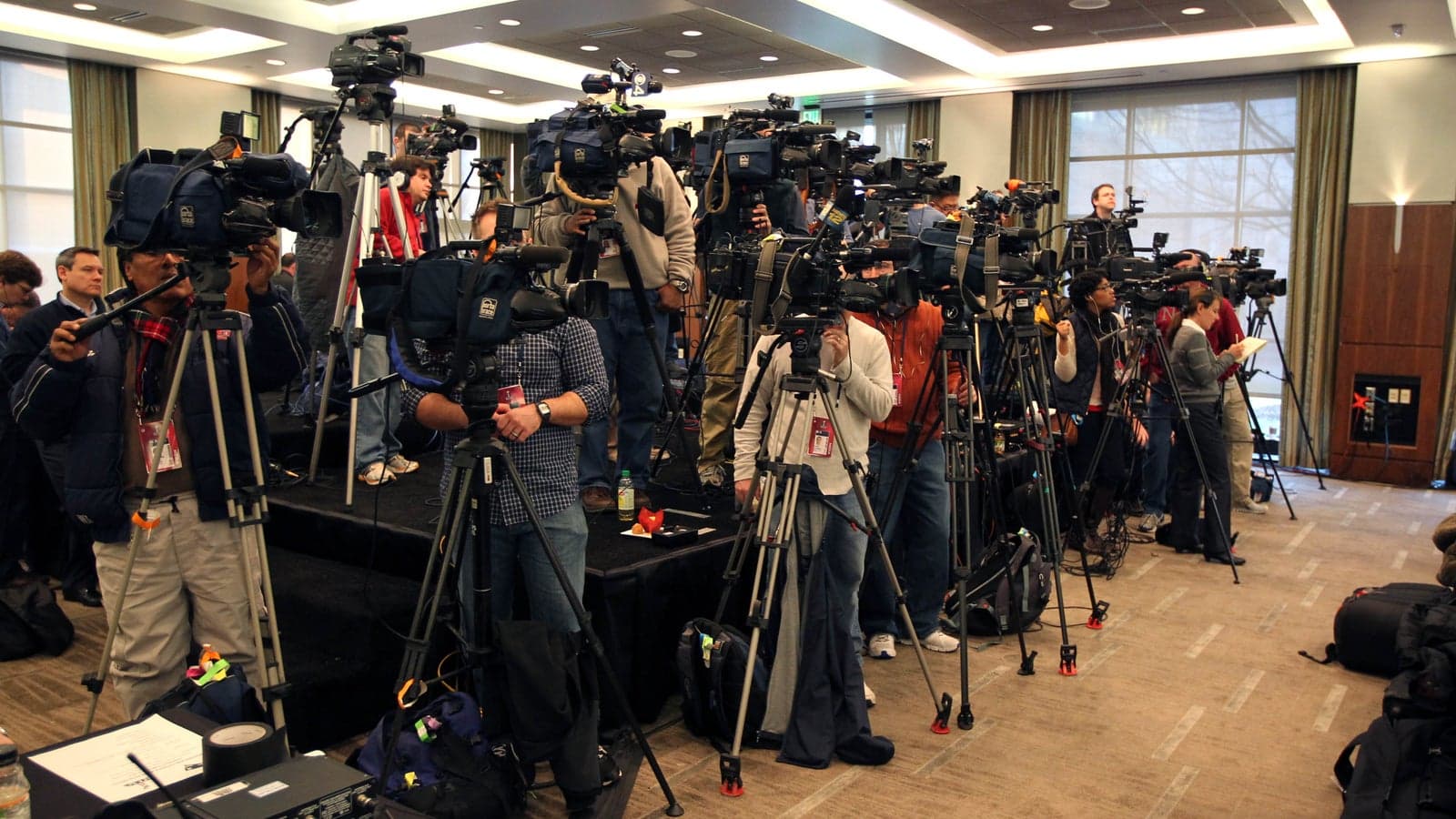
When a journalist writes about your product, the worst problem is not that the product is not good enough, but that the material is not enough. Without high-resolution screenshots, they have to make do with the homepage; without a one-sentence description, they have to invent one — and may invent it wrong; without contact details, they can only message an unknown account on social media and hear nothing back. A press kit exists to solve those three "withouts": one page where everything can be found, so journalists do not have to ask you a second time before deadline.

This guide follows one fictional example throughout: Lu Yao (a fictional person) built a camping-planning tool called "Sea Breeze Camping" (a fictional product), live for six months with 20,000 registered users, now preparing a major update and a press kit for tech media. All names, product names, and numbers are fictional examples, used only to explain the method, and do not refer to any real project. If you are preparing your own press kit, swap "Sea Breeze Camping" for your product and follow every item on the checklist directly.
The eight-piece press kit
Start with a master list: a press kit is the collection of these eight pieces, and any missing piece should be marked as missing on the list, not pretended into existence. First, a one-sentence product description; second, a three-sentence description; third, a one-paragraph description; fourth, product screenshots (five standard shots); fifth, logo and brand assets; sixth, key data with definitions; seventh, founder and team bios; eighth, contact details and interview rules. Beyond the eight, you can add a demo video, user stories, and FAQs, but those are bonuses, not requirements — finish the eight first, then talk about extras.
Where the kit lives matters too: put it at a fixed address on your own site, such as /press or /media — not in a cloud-drive link. Drive links expire, throttle, and require login; a journalist who opens a login-walled drive link before deadline effectively has no press kit. A fixed address can be bookmarked, forwarded, and cited directly in articles; when updating, you only change this one page instead of replacing links everywhere. Put the last-updated date at the top of the page, so journalists can tell at a glance whether the kit is current.
One sentence, three sentences, one paragraph: three lengths of copy
Journalists need different lengths for different contexts, so the kit must provide all three at once, sparing them from compressing or expanding it themselves — and getting it wrong. The one-sentence version reads: "Sea Breeze Camping (fictional) is a planning tool that helps camping beginners pick sites, pack gear, and invite companions." One sentence must contain three elements: what it is, who it is for, and what problem it solves. Miss one, and journalists have to fill it in themselves, with all the risk that brings. The three-sentence version adds two more: one on the core feature, one on what makes it different. For example: "It puts sites, weather, and packing lists on a single trip plan; beginners can follow a template once and be ready to go, without reading ten guides."
The paragraph version is for journalists who need a background paragraph, roughly 120 to 180 words, structured as: what the product is, why it was built, how far it has come, and what comes next. Keep adjectives under control: do not write "disruptive", "revolutionary", or "world-leading" — journalists rarely quote those verbatim, and they make the whole paragraph sound untrustworthy. Where numbers can be used, use numbers: launch date, registered users, sites covered, team size — numbers are more credible than adjectives. Lu Yao's (fictional) paragraph contains no piled-up adjectives at all, only facts, so a journalist can copy it into a draft without introducing errors.
All three lengths also need an English version, even if your product currently serves only Chinese-speaking users. The English version is not for going abroad; it is so that English-language media, bilingual journalists, and reprints and translations share one agreed rendering. The English spelling of the product name, feature names, and founder name must be fixed in the kit — do not leave journalists guessing at pinyin or translations. The English version must also cover all three lengths, matching the Chinese version, not a single sentence in English against a paragraph in Chinese.
The five standard screenshots: not just the homepage
Screenshots are where press kits most often cut corners: many authors post only the homepage and consider the job done. What journalists actually need are five standard shots. First, the core-feature shot: the main screen a user sees on opening the product, which must show at a glance what the product does. Second, the key-flow shot: the steps of completing one core task, for example from picking a site to generating a packing list. Third, the mobile shot: if the product has a phone version, show a real phone interface — not desktop only. Fourth, the data-or-result shot: what users get after using it, such as a trip plan, statistics, or a completed checklist. Fifth, the team-or-scene shot: a team working photo or a user-scene photo, giving the story a human feel.
The technical requirements for the five shots must also be stated: original size, no watermarks, no real user information in test data, and both dark and light mode sets if both exist. Sample data in screenshots must use fictional, generic names and content — never real users' names, emails, phone numbers, or addresses. When preparing screenshots, Lu Yao (fictional) replaced all real test accounts with "sample user" and real campsite phone numbers with placeholder numbers. That step took half an hour, and avoided putting user privacy into public coverage.
Logo and brand assets must also be complete: colour logo, single-colour logo, transparent-background PNG, SVG vector file, brand colour values, and font names. Do not provide only a JPG logo — journalists need different files for dark backgrounds, small sizes, and simplified versions. The brand usage note only needs three lines: the logo must not be recoloured, stretched, or given shadows or outlines; how the product name is capitalised; and one example of disallowed use. The shorter the note, the more likely journalists are to follow it.
Data definitions: define first, then give numbers
Data in a press kit is where things go wrong most easily, because the same word means different things to different people. Does "users" mean registered users, monthly active users, or paying users? Does "site count" mean listed sites or bookable sites? Is "growth" month-on-month or year-on-year? Before every number, write its definition, then the number. Lu Yao's (fictional) kit reads: "Registered users 20,000 (fictional figure, meaning accounts that completed email verification, excluding unverified registrations); monthly active users 6,000 (fictional figure, meaning users who opened a trip page in the past 30 days)." With definitions written, journalists will not mistake registered users for monthly active users.
Data should also be labelled in three classes: public data quotable directly, data quotable with attribution, and internal data not for quotation. Public data goes in the body of the kit; attributable data states its source and reference date; data not for quotation should not be in the kit at all — once it is in, it is effectively quotable. Sensitive figures such as funding, revenue, and costs, if you do not want them public, must not appear in the kit, even marked "for reference only" — once journalists see them, it is hard to treat them as unseen. Time references must be unified too: all figures stamped with the same cut-off date, such as "as of October 2026", not one figure from September and another from June.
Competitor comparisons and industry rankings need extra care. Do not write "we are number one" or "we are the only one" in a press kit unless you can attach a third-party source and methodology. Journalists will instinctively verify such claims, and if they cannot, they will delete the whole passage — and may discount the credibility of the entire kit. The safer approach is to state only your own facts: features, scale, dates, and let journalists judge the position themselves.
Founder bios and interview rules: who to contact, and how
A founder bio is not a CV, but a background paragraph journalists can use directly: name, role, what they did before building this product, and why they built it — one sentence each. Lu Yao's (fictional) bio is only four sentences: previously an outdoor trip leader who led camping groups for three years; discovered that beginners' biggest barrier was not gear but "not knowing what the first step is"; built Sea Breeze Camping for that reason; and now leads a five-person, fully remote team. Four sentences are enough for background, and give feature writers an interview angle.
Interview rules must be specific: which formats are accepted (written, phone, video, email), response time (for example, within two working days), whether pre-publication review is accepted (generally no review, but factual errors can be checked), and embargo rules. An embargo — material given early with an agreed publication time — can buy more thorough coverage when used well, and becomes a dispute about "the journalist published early" when used badly. State the rules clearly: the embargo deadline down to the time zone, whether early publication counts as a breach, and what happens after a breach. If there is no embargo need, write plainly "no embargo, publish on receipt" — do not leave journalists guessing.
Contact details should list only one main channel and one backup. The main channel can be a dedicated press email, such as a press@ address — never a founder's personal email or phone number. The backup can be a social account or a form link. Next to the contact details, state response time and time zone; before deadline, what journalists fear most is "emailed, but no idea which time zone the other side is in or when they will reply".
Distribution: who gets it, and how it is sent
Once the kit is ready, there is still the question of who receives it and how. The distribution list has three groups: first, journalists who have already covered similar products — they know the field, so the email subject can name the product and the update highlight directly; second, editors at general tech media, who receive dozens of pitches a day — the first three lines of the email must state the product, the highlight, and the kit link, not three paragraphs of company vision; third, vertical bloggers and newsletter writers, who value real hands-on experience — you can offer a test account, but do not attach a full user manual.
The pitch email itself should follow a template: a one-line subject, five sentences of body, one kit link, one line of contact details. The five sentences are: who I am, what the product is, what the update highlight is, why it is worth covering now, and where the kit is. Do not paste the kit's entire contents into the email — it becomes too long for anyone to finish; and do not send only "please see the attachment", since attachments are blocked or ignored in many inboxes. Put the kit link prominently in the body, with the attachment only as a fallback. After sending, do not chase the same day asking "have you read it"; allow at least two working days, and when following up, send only one short reminder, not three in a row. Remember, the pitch email's goal is not to "explain the product thoroughly", but to "make the journalist willing to open the kit link".
Update rhythm: a press kit is not a one-off
A press kit needs an update rhythm, or three months later it becomes a file that "looks complete but is entirely out of date". The recommended rhythm: update on every major release, on every data-definition change, and on every team or contact change, with a quarterly check in between. Each update must change three things: the last-updated date at the top of the page, the figures and screenshots that changed, and the feature descriptions that changed. Changing only the date without changing content is no update at all; changing content without changing the date leaves journalists unaware that you changed anything.
Old versions need rules too: after a major update, old screenshots and data must not stay mixed into the same page — they can be archived under a "past materials" link, or deleted outright. Mixing old and new screenshots is the most common cause of journalists pairing the wrong image. Lu Yao's (fictional) approach: after each major update, the old kit is archived as a whole dated folder, and the new page contains only new content, so journalists cannot pick wrong between old and new.
Finally, before launch, run a "stranger test" on the kit: give the link and ten minutes to someone who does not know your product, and see whether they can answer three questions: what does this product do, who is it for, and who do you interview. If any one of the three cannot be answered, the kit is not finished. The test costs little time, yet catches problems authors can never spot themselves: things the author takes for granted are often invisible to strangers.
Anti-patterns: the five ways press kits are wasted
First, logo only, no content: a page full of brand assets with no description, no data, and no contact details — journalists still have to ask. Second, all screenshots are homepages: five images, all different crops of the homepage, with no core-feature shot. Third, numbers without definitions: registered users, monthly actives, and growth rates mixed together, leaving journalists to guess when quoting. Fourth, a personal email as contact: once a founder's personal email is public, spam and irrelevant enquiries follow until it has to be abandoned. Fifth, an unclear embargo: only "do not publish early", with no deadline or time zone, so journalists and authors understand "early" completely differently.
These five wastes share one trait: the author built the kit from their own perspective, not from the perspective of a journalist before deadline. What journalists actually need before deadline is quite specific: one usable sentence, one usable image, one quotable number, and one reachable person. Every item in the kit should map to one of those four needs; anything that maps to none of them, however beautiful, is surplus.
How this differs from neighbouring guides already published
This guide covers the press kit as an outward-facing asset set, with distinct jobs from several neighbours: the launch-day guide covers the execution rhythm of launch day, not the material itself; the Product Hunt launch-day guide covers the tactics of one channel, not general media material; the partnership and distribution guide covers finding partners and distribution channels, not material for journalists; the changelog and release-communication guide covers version notes for existing users, not introductions for media; the public-roadmap guide covers publishing future plans to users, not reporting material for media; and the social-share image (OG image) guide covers making a single social sharing image — only a small part of a kit's brand assets. Distinguish by "who it is for, and what it is used for", and they will not blur together.
Comments (0)
Related articles
Closing a product well is a handover, not an ending: a 90-day countdown, three-tier export, stop-billing-first refunds, four letters, a read-only archive, and a 30-day wind-down. Fictional example throughout, clearly labelled.

When a user hits cancel, don't panic and don't obstruct: ask why on one screen, offer fix, switch, then discount in that order, and hold four red lines. This guide gives the per-reason scripts, the five metrics that matter, and the pre-launch checklist. Examples fictional.

Account stolen, banned, or locked out by your own hand — three different problems with three different playbooks. This guide gives the golden-hour theft checklist, a graded appeal evidence pack, and the 24-hour post-recovery routine. All examples are fictional.