Winning Launch Day on Product Hunt: A 24-Hour Battle Plan for Vibe Projects
Is Product Hunt still worth launching on in 2026? This single-platform deep dive covers the traffic truth, the 2-week pre-launch checklist, a Pacific-Time launch-day timeline, canvassing red lines, and three paths if you do not rank.
Almost every vibe developer has heard the story: some product took #1 on Product Hunt, traffic exploded, users rejoiced, and they lived happily ever after. The story is true — and so is the part hidden in the ellipsis: the "ever after" usually lasts about 48 hours. This guide doesn't sell dreams, only operations: whether a vibe project is worth launching on Product Hunt in 2026, what to prepare in the two weeks before, what rhythm to run on launch day, and what to do if you don't rank.
1. Is PH Still Worth It in 2026? Look at the Traffic Truth First
The harsh part first: Product Hunt is no longer the Product Hunt of 2015. Absolute homepage traffic has shrunk, AI-generated submissions have flooded the site and diluted what ranking means, and the PR value of "we topped PH" keeps deflating. If you're counting on "rank → traffic explosion → coast forever," the answer is: not worth it — don't burn two weeks of prep on that.
But PH's value was never just launch-day traffic. Its real value is three long-tail assets:
- A high-authority SEO asset: your PH product page ranks extremely well on Google — "yourproduct alternative" queries are often topped by PH pages. That's a permanent traffic entrance, not a 24-hour trial card.
- Social currency: the "#1 Product of the Day" badge goes on your site, your X bio, your pitch deck. It doesn't bring users directly, but it lowers the trust cost of every later conversion.
- Feedback density: the PH comment section is one of the highest concentrations of makers and early adopters anywhere online. One sharp critique from a veteran indie hacker beats 100 upvotes — provided you're ready to receive it.
So the right mindset for launching on PH in 2026 is: treat it as a ritualized public launch + feedback harvest, not a traffic lottery. Go in with the former mindset and you almost can't lose; go in with the latter and you'll probably be disappointed.
Which Vibe Projects Fit
| Good fit | Bad fit |
|---|---|
| Visually striking products (interfaces, GIFs, video demos that click in one glance) | Pure APIs, backend tools — PH users can't see or touch them, voting intent is near zero |
| Tools whose value is explainable in 30 seconds ("it turns X into Y") | B2B products needing long sales cycles and custom demos |
| Consumer/prosumer products with a clear audience profile | Products still in MVP validation with broken core flows (bad reviews will be a public execution) |
| PLG-leaning: users can sign up and play on their own | Strongly geo-dependent tools — PH's global traffic is noise to you |
A one-line self-test: if you turned your product's hero image into a GIF, posted it on X, and strangers asked "what is this, where do I try it?" — you're a fit for PH. If you can't even explain what the hero image should show, go back and polish the product; don't rush the launch.
2. The 2-Week Pre-Launch Checklist: Preparation Decides 80%
Winning on PH is "one day on stage, two weeks backstage." There's actually little room to maneuver on launch day itself — the outcome is mostly decided before launch.
Tagline: The One-Sentence Formula
The tagline is the first line users see on the leaderboard; 60 characters decide the click. The formula: verb + object + differentiator.
- Anti-example: "The best AI tool for productivity" — says nothing; "best" and "productivity" are both correct nonsense.
- Good structure: "Turn your X into Y in 30 seconds," "X for Y, without Z" — concrete verb, concrete object, concrete differentiator.
Write 10 versions, find 5 friends who've never seen your product, give each 3 seconds, and ask "what does this do?" Only the versions they get right pass.
Scheduled vs. Manual Launch
PH supports both scheduled launches and manual day-of publishing. Recommendation: schedule it, but don't fully trust it. Scheduling decouples the 00:01 PT launch action from your sleep — especially since your "launch day" starts mid-afternoon Beijing time, scheduling saves you from waking up at 3 AM to click a button. But scheduled launches have a trap: get the date wrong (PT vs. Beijing differ by 15–16 hours; wrong-date scheduling is a frequent accident) and you miss the entire day. The correct posture: set the schedule 48 hours ahead, double-check the date and time zone 24 hours ahead, and manually verify it's live around 0:00 PT (mid-afternoon Beijing time).
Thumbnail / Hero Image: The Click-Through Life-or-Death Line
The PH leaderboard is a visual animal. Rule of thumb: demo GIF > short video > polished static image > big logo headshot. The hero image's goal isn't "pretty" — it's "understood in 3 seconds." Record a 10-second GIF of the core flow with one line of large explanatory text; it beats any polished render. The thumbnail (logo) must stay recognizable at 48px — complex gradients and hairlines turn to mush at small sizes.

The Maker's First Comment: Write It in Advance
Right after launch, post the maker's first comment on your own product page. It's not an ad — it's an opening line. Suggested structure:
- Who you are and why you built this (2–3 sentences of personal story, the more specific the better — "I spent 2 hours a day organizing meeting notes and got fed up" beats "we're committed to efficiency" by 100x);
- What the product can and can't do right now (being honest about "can't" builds trust);
- An ask-for-feedback posture ("the thing I'd most love you to roast is feature X" — giving commenters a concrete target visibly increases comment counts).
Write it in advance and keep it in your notes app; paste it on launch day. Your brain will be scrambled that day — don't count on improvising.
The Hunter Mechanism: Find One or Go Solo
Product Hunt allows two launch modes: publish as the maker yourself, or have a hunter publish for you. The 2026 reality:
- Self-launch: simple process, the "maker" badge is your own account, interactions are direct. Suits authors who already have some X/community presence.
- Hunter launch: top hunters bring their own followers and an early traffic wave. But good hunters are picky, cold emails have low hit rates, you need to reach out 2–3 weeks ahead — and accept that they might say no.
One decision rule: can you drive 50–100 real visits yourself within 4 hours of the 0:00 launch? If yes, go solo. If no, start hunter outreach two weeks out. Don't remember this the day before launch.
3. Launch-Day Timeline (Pacific Time)
A PH day runs 00:01 to 23:59 Pacific Time. Beijing time = PT + 15 hours (daylight saving) or +16 (standard time), so your "launch day" runs from 3–4 PM Beijing time one day to 3–4 PM the next — burn this time-zone math into your head; don't sit waiting on Beijing-time "launch day."

- 00:01 PT — Launch: schedule it in advance (PH supports scheduled launches). Within 10 minutes of launch: paste the maker's first comment, verify the hero GIF renders correctly and links work. Then go to sleep — staring at the refresh button is useless.
- 07:00–09:00 PT (Europe/US morning rush) — first wave: the most important window of the day. Email your seed users (waitlist, beta users, newsletter subscribers) with a "we're live" ask; post the launch thread on X and tag a few friends you regularly interact with (don't mass-tag — that's spam). Goal: crack the day's top 10 by end of morning rush to earn leaderboard-driven organic traffic.
- 12:00–17:00 PT — comment section operations: reply to every comment, as fast as possible. Answer questions, acknowledge roasts before explaining, thank the praise. Comment activity is itself a ranking signal — and it's how passersby judge whether "this maker is legit." Prepare 3–5 canned answers for FAQs; copy-paste away.
- 18:00–23:59 PT — second wave and closing: Europe's evening rush plus US after-work hours form the second traffic wave. Post a progress update ("we're #X now, thanks everyone — Y votes from top 3" — concrete numbers beat vague "please vote"). After 23:00, stop mass canvassing; defend the ranking and thoughtfully reply to the last comments.
Canvassing compliance red line: PH explicitly bans vote-buying, bots, and vote-trading rings. Getting caught doesn't just zero your votes — products get delisted, accounts get banned, and PH's anti-cheat is retroactive: not getting caught this time doesn't mean you're safe next time. Gray areas deserve caution too: "please vote for me" in a group chat is fine; "register 20 sock puppets to vote" is not. Remember: PH wants real interest from real users — any attempt to manufacture interest gambles your account's life.
Launch-Day Toolkit: 6 Tabs to Pin in Advance
Don't hunt for links on launch day — pin these 6 tabs the day before: the PH product dashboard (live rank and votes), the PH comment section (for replies), X (for posting and engagement), your email/newsletter backend (for the seed-user email), your product analytics dashboard (for real-time PH-sourced signups), and a notes doc (holding the maker first-comment, 3–5 canned FAQ answers, and progress-update copy templates). Reserve all of launch day's cognitive bandwidth for "replying to comments" and "reading the rhythm" — not for finding links.
4. Beyond Launch Day: Staggering and Sequencing
X / Reddit / Newsletter: Stagger, Don't Volley
The classic rookie mistake: blasting X, Reddit, newsletter, and group chats all at 0:00, watching traffic spike for 10 minutes, then flatline. The right move is staggering by 2–3 hours so the traffic curve has 3–4 peaks, keeping the PH page alive all day:
- Newsletter / email: send earliest (before 07:00 PT) — this is your home base with the highest open rates;
- X: main thread at the PT morning rush, progress update in the afternoon, closing post at night — X is the one channel worth posting 3x in a day;
- Reddit: pick 1–2 most relevant subs (e.g., r/SideProject) and read the rules first. Many subs ban pure self-promotion and require you to be an actual community member. Registering a throwaway to drop a launch post on launch day gets your post removed and account banned with high probability. The Reddit play is "nurture the account a month ahead," not "parachute in on launch day."
Sequencing with the Pre-Launch Phases (Boundaries)
PH launch day doesn't fall from the sky — it's the last link of your whole launch chain:
- Waitlist: the users you collected in the 30 days before launch are your seed votes in the first hours after 0:00. No waitlist means a cold-start launch day. See Waitlist in Practice (slug: vibe-project-waitlist-launch-guide).
- Private beta: beta users are the source of your first credible comments — they've used the product, so their comments read specific and trustworthy. See Don't Rush the Press Conference: The Private Beta Operations Playbook (slug: vibe-project-private-beta-playbook-guide).
- Community growth: the people who praise you or give suggestions in the comments are your community's first members. Don't let them scatter — get them into a group/Discord the night of launch day. See From 0 to 100 Die-Hard Fans (slug: vibe-project-community-growth-guide).
The boundary in one line: waitlist and beta answer "will anyone show up on launch day," this guide answers "how to fight the PH battle once they're here," and community growth answers "do they stay after the battle." They're sequential, not substitutes.
5. The Retro: What Numbers to Read, What If You Don't Rank
Which numbers
48 hours after launch day ends, sit down with 5 numbers:
- Final rank and vote count: vanity metrics — but don't look only at these;
- Registration conversion from PH traffic: 1,000 visitors, how many signed up? Below 5% means the landing page or product has a problem — not the traffic;
- Comment count and quality: 20 generic "cool product"s are worth less than 3 specific critiques — the latter are gold mines for iteration;
- 7-day retention: how many PH-acquired users remain after 7 days? The only test of whether leaderboard traffic was real fire or flash paper;
- Backlink growth: did blogs or newsletters reference your PH page? A signal that the long-tail SEO asset is appreciating.
The Retro Meeting: 30 Minutes, 48 Hours Later
Read the numbers, but write down the conclusions. 48 hours after launch day ends (once the long-tail traffic settles), spend 30 minutes writing a one-page retro: the four numbers (rank/votes/conversion/7-day retention), three things to change next time, and "if we did it again, which week-two prep action could we cut." That page's value: next launch — your next product, or a friend's — you don't pay tuition twice. Many makers do far better on their second PH launch than their first. The difference isn't luck; it's that one page.
What if you don't rank
The conclusion first: not ranking is the norm, not failure. Hundreds of products launch daily; only 10 rank. Three paths after missing out:
- Retro the product, not the luck: low votes usually aren't "bad timing" — they're an unclear tagline, a weak hero image, too few seed users. All fixable next time;
- PH isn't the only channel: Hacker News (Show HN), BetaList, newsletter cross-promos, SEO long tail — each may fit your product better than PH. Plenty of quietly profitable vibe projects never launched on PH;
- You can launch again: PH allows relaunching after a major update. Fix what the comments roasted, come back in 3–6 months with version 2.0 — the second story is much easier to tell than the first.
6. Boundaries: How This Guide Relates to the Site's Launch Series
- Launch and Sink? The Vibe Project Cold-Start Launch-Day Playbook (slug: vibe-project-launch-day-guide): the platform-agnostic general launch-day manual — the 14-item pre-launch checklist, the 24-hour launch-day rhythm, four-platform copy templates, traffic contingency plans. This guide is its single-platform deep dive: only the Product Hunt battlefield, but down to the granularity the general manual won't reach — hunter mechanics, the PT timeline, canvassing red lines.
- Waitlist in Practice (slug: vibe-project-waitlist-launch-guide) + The Private Beta Operations Playbook (slug: vibe-project-private-beta-playbook-guide): the 30-days-before to 1-day-before story. This guide assumes you already have seed users and covers launch day itself.
- From 0 to 100 Die-Hard Fans (slug: vibe-project-community-growth-guide): the after-launch-day story — turning PH's one-time traffic into a community.
One last line: the most common way to die on a PH launch isn't "being unprepared" — it's "preparing backwards": spending 80% of your energy researching how to canvass votes and 20% on whether your hero image explains the product in 3 seconds. Flip that ratio and you've already won half of launch day. The other half belongs to time zones, luck, and that maker first-comment you wrote in advance.
Comments (0)
Related articles

100 people willing to pay beat 10,000 likes for proving demand. This guide covers the full crowdfunding pre-sale campaign: platforms, goal math, tier design, four-phase rhythm, and fulfillment.
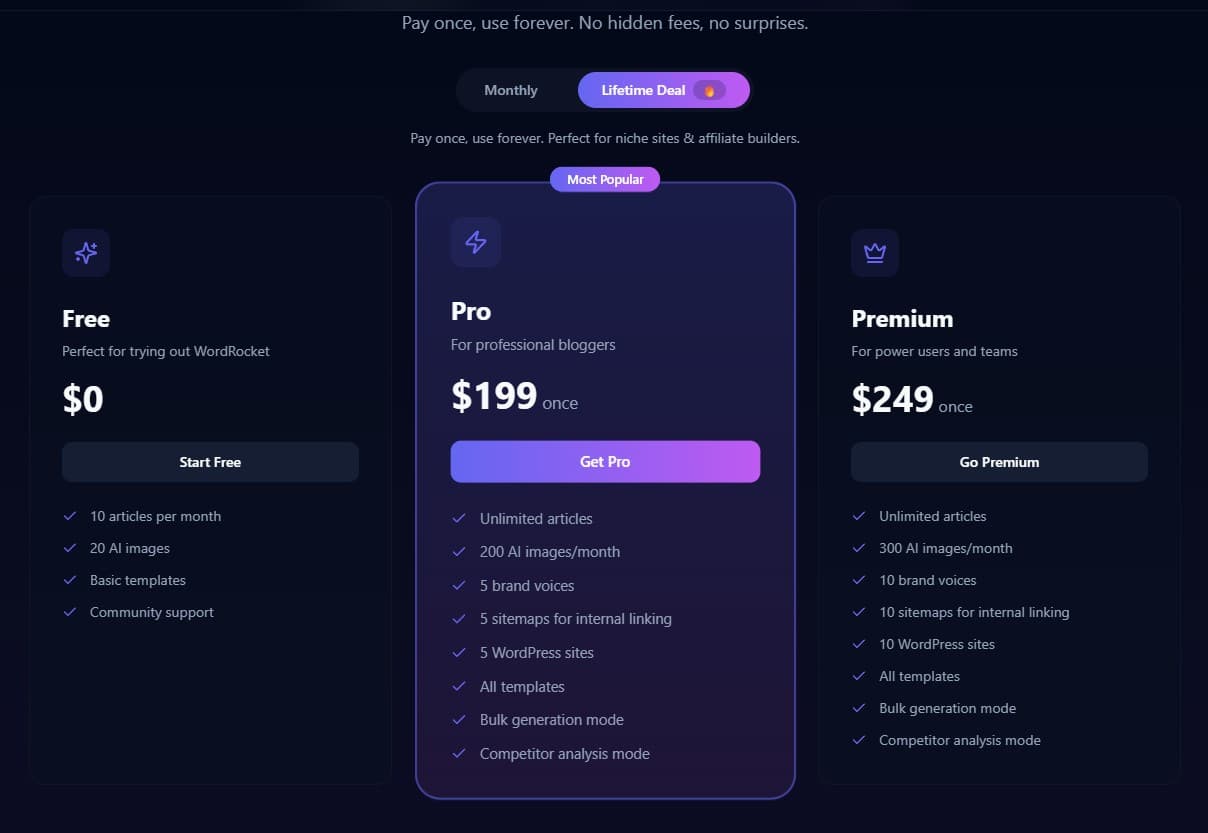
When subscriptions stall, many indie hackers pivot to lifetime deals — but LTD is a financing strategy, not a pricing strategy. This guide does the LTV math of LTD vs. subscription, gives the pricing ≥ 3× annual fee rule, walks through an AppSumo launch (revenue share, review process, bad-review firefighting) and the self-run flash-sale process, and dissects five real pitfalls that killed products. One-page checklist included.

The most common brand disaster for indie hackers: your product isn't launched yet and the name is already squatted. This guide gives the complete two-week pre-launch lockdown checklist — four-step name clearance, defensive domain registration, hands-on US/China trademark filing, 12 must-claim account slots, and how UDRP enforcement connects when squatting happens. Two weeks of prevention beats six months of lawsuits.