Wabi 2.0: No Longer an App Builder — Now a Messenger That Builds Apps for You
Eugenia Kuyda, founder of Replika, is pivoting her AI startup Wabi: Wabi 2.0 goes from “build apps with prompts” to an AI messenger that builds apps for you in the moment — aiming to be “the OS for the agentic era.” Invite-only for now.
The app builder becomes a messenger
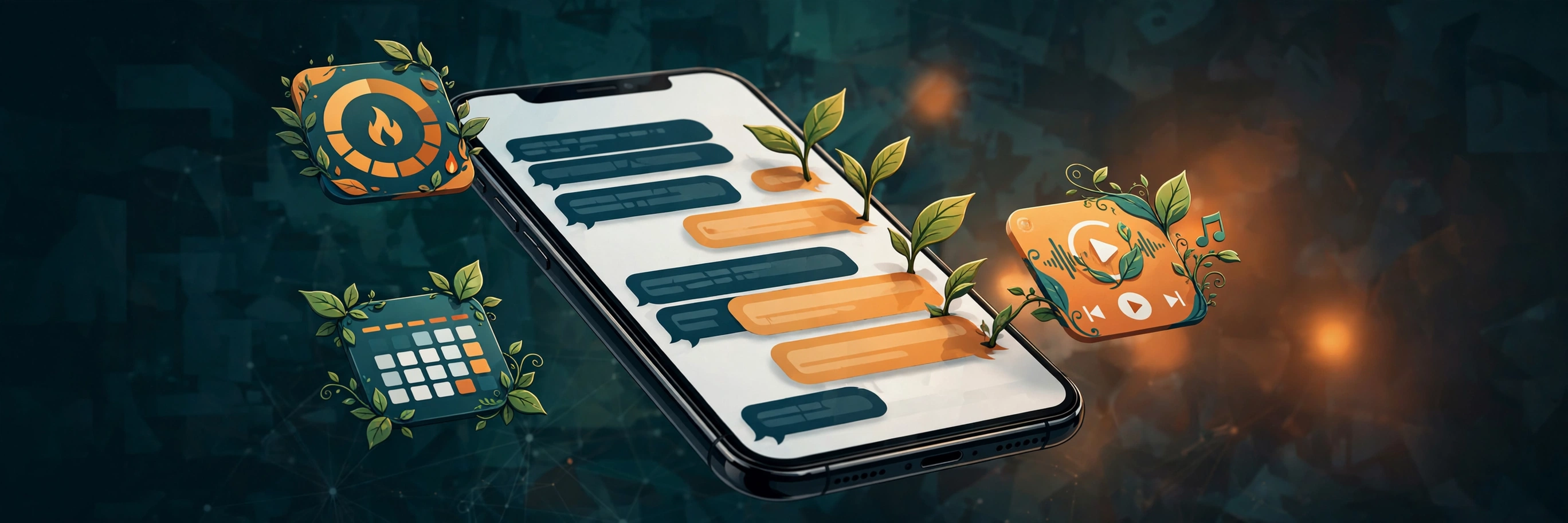
Wabi used to be an AI startup that let anyone build apps with prompts. This week it pivoted: Wabi 2.0 is no longer an app-building tool but an AI messenger that happens to build apps for you along the way. Founder Eugenia Kuyda — who previously founded the AI companion startup Replika — calls it “a personal agent that does stuff for you and builds the interface you need in the moment.”
The company's X account put it this way on September 28: “We're building the OS for the agentic era – software that adapts to your life, gets things done.” Wabi 2.0 is invite-only for now, with codes going out on X.
Apps that grow inside the chat
The logic is in Kuyda's own words: “The more you use a chat-only agent, the worse the experience gets. Your history and ongoing tasks end up buried in one endless scroll. People don't just want to type-type-type; they want to tap-tap-tap, scroll, and look.”
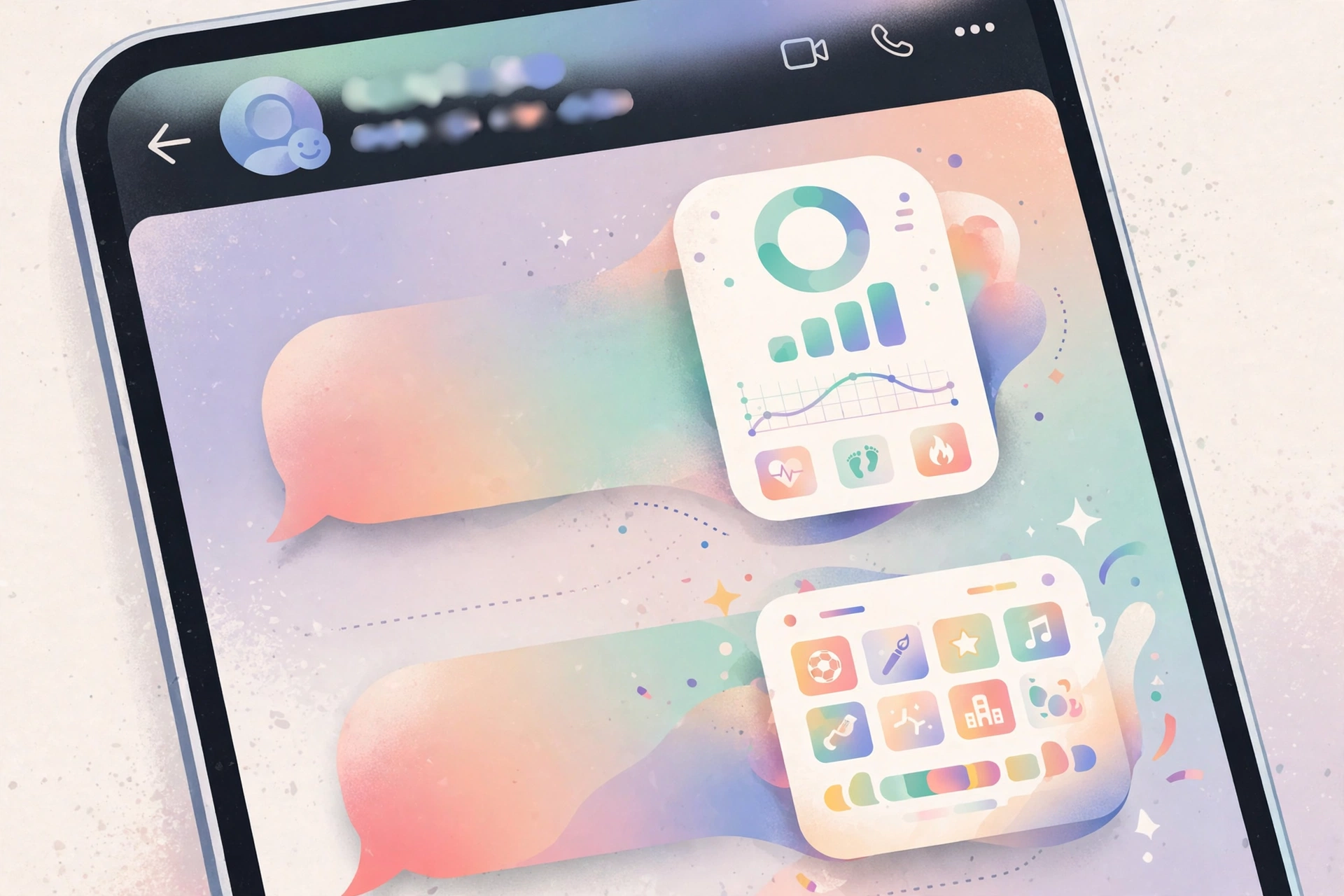
What does it look like in practice? In a health thread, it can spin up a calorie tracker or a weightlifting log. In a family thread, a calendar of the kids' activities, a language learning app, a roundup of local kid-friendly events — each interface appearing where the conversation needs it.
“So far, personal agents have been one person, one chat, a stream of one-off tasks. We think the future is your agent, your apps, and your people in one place, running the parts of life that matter most, together.” — Eugenia Kuyda
The wind has shifted: agents are growing interfaces
The timing is telling. Meta's Muse and Instinct are pushing agents into chat; on the same day, OpenAI announced at DevDay that ChatGPT plug-ins will let apps offer interactive experiences inside ChatGPT, with the app's name pinned more visibly in the sidebar.
The consensus is converging: pure conversation isn't enough — the next step for agents is interfaces generated on demand. Wabi is betting on packing both into a messenger for regular people, not a tool for developer
s.
Sources
Related articles
On October 8, 2026, Google Cloud launched the Gemini agent at Gemini at Work 2026: a universal agent for work that takes objectives, plans by itself, auto-selects between Gemini and Claude models per task, and introduces 'coworker agents' with their own email, calendar, and directory seat. Four judgments on why the second half of the agent race is about 'agents that feel like colleagues.'
On October 1, 2026, Microsoft AI shipped three voice models at once: MAI-Transcribe-2-Streaming (streaming transcription, #1 on Artificial Analysis for streaming accuracy at 2.5% WER, final transcript 0.13s after end of speech), MAI-Voice-2.1 (23 languages, one consistent voice across languages), and 2.1-Flash (45s of audio at ~150ms end-to-end). With listening and speaking covered, a voice agent on a pure-Microsoft stack can now complete a turn in under a second.

Gergely Orosz visited OpenAI, Anthropic, Cursor, and Ramp and wrote up the 2026 state of the industry: near-100% AI-generated code, agent PRs up ~10x in eight months, code review degrading into theater, the IDE declared legacy. Key takeaways plus three verdicts and four actions for vibe coders.