Xojo 2026 R3 Adds Agentic Mode: A 30-Year-Old RAD Tool Hands Its Compiler to AI Agents
Xojo 2026 Release 3 (Oct 20) ships Agentic Mode: external coding agents edit project files, the IDE auto-reloads, runs the compiler, and feeds errors back — a real compile-reload-fix loop. A 30-year-old RAD tool betting on agents rebuts the 'AI belongs to new tools' story.
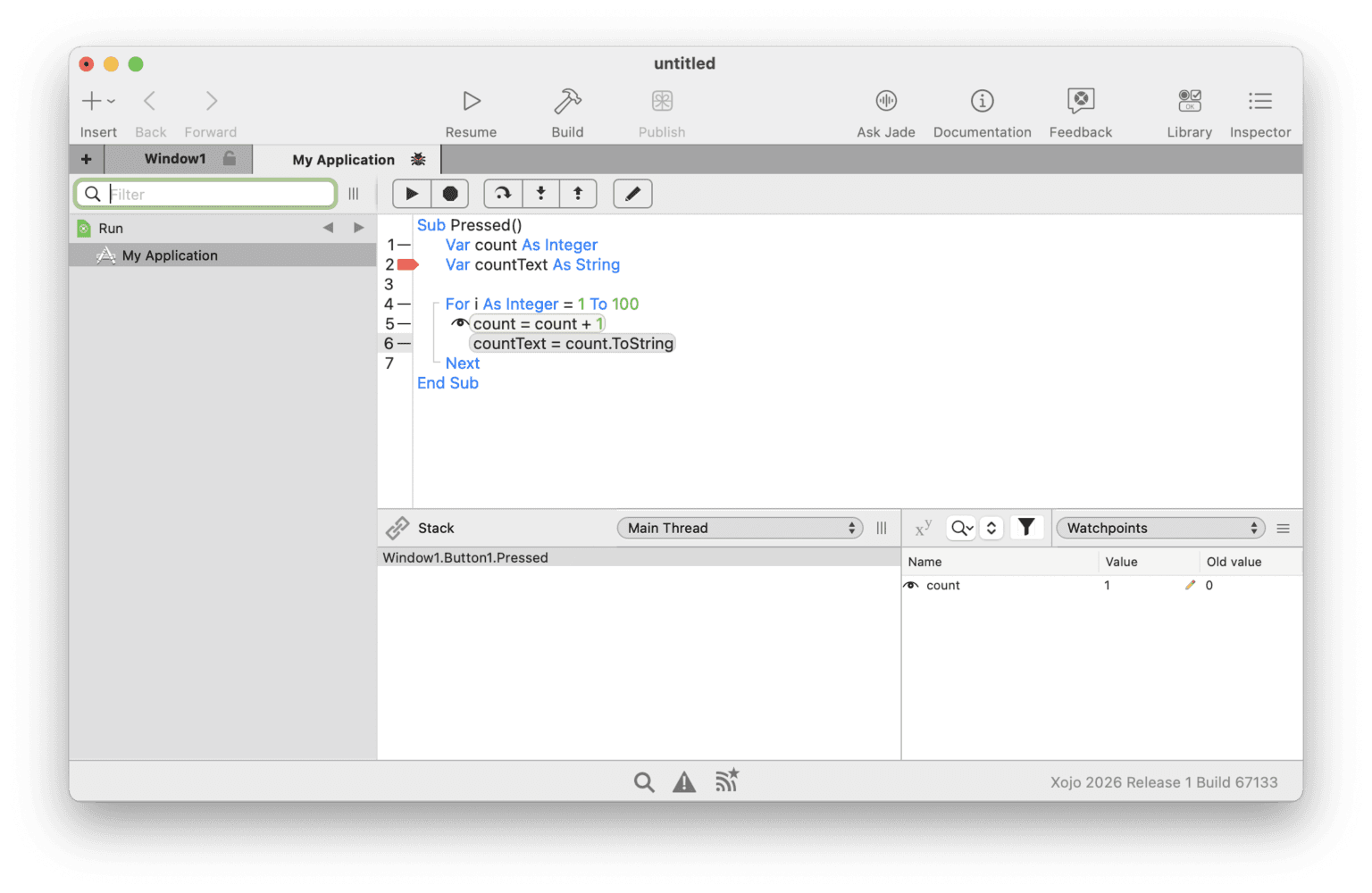
On October 20, 2026, Xojo, Inc. shipped Xojo 2026 Release 3 (2026r3). The first line of the official release notes' Highlights reads: "AI Support - New Agentic Mode allows an AI agent to modify and run the project then get compilation errors if any."
From any AI startup founded in 2024, that sentence wouldn't merit an article. But Xojo is no startup: it is a 30-year-old cross-platform RAD (rapid application development) tool — one codebase compiling to native macOS, Windows, and Linux desktop apps, iOS and Android mobile apps, web apps, even Raspberry Pi. When this kind of "old money" hands its compiler to an AI agent, the narrative of the agent wave needs a rewrite.
Meet Xojo: a RAD veteran across three decades
Many younger developers may be hearing the name for the first time, so it's worth a paragraph — because its "oldness" is precisely the point of this story.
Xojo descends from 1990s REALbasic, a cross-platform tool sold on being "as easy as BASIC." Renamed Xojo in 2013, it has spent three decades doing one thing: one language, one IDE, one codebase, compiling to native apps on macOS, Windows, Linux, iOS, Android, the web, and Raspberry Pi. Its users are a fixed demographic: indie developers, small teams, schools, and legions of "deliver software without writing much code" industry developers — the engineer writing factory equipment software, the teacher writing school admin systems.
Such tools have long been the forgotten corner of AI narratives: media chases Cursor's funding rounds and Claude Code's updates; nobody covers a BASIC dialect's IDE. But that corner hides the software industry's silent majority — far more developers make a living with "uncool" tools than with the newest, coolest ones. Xojo's pivot is worth covering not because Xojo is pivotal, but because it signals where the silent majority is heading: when even Xojo rewires its compiler for agents, agent-ification is no longer a pioneers' game but an industry-wide default. Its official release notes, with dates and feature descriptions in black and white, are also far more solid as a primary source than most AI startups' "announcement tweets."
It has survived three decades — the classic Mac OS and Windows desktop era, the mobile era, the web era — with someone predicting "tools like Xojo are done" at every platform shift, and surviving every time. The secret is one sentence: abstract away platform complexity. Agentic Mode is the same secret extended into the agent era: it used to abstract platform complexity for humans; now it abstracts "IDE internal state" complexity for agents, so an agent can drive the whole toolchain without learning to click and drag controls.
What Agentic Mode actually is: a compiler-feedback loop
The official release notes (documentation.xojo.com, release date 2026-10-20, verified): the first IDE new feature is "Added Agentic Mode to allow Xojo to work better with coding agents." The release also carries 136 bug fixes and 48 new features — Agentic Mode is the one placed first in the Highlights.
The mechanism is unmysterious, in plain language a compile-reload-fix loop:
- An external coding agent edits the Xojo project's files on disk directly;
- Xojo IDE, with Agentic Mode switched on from the File menu, detects the changes and auto-reloads the whole project or the changed items (the reload machinery itself is new in 2026r3, also serving version-control workflows);
- The agent instructs Xojo to run/compile the project;
- Xojo hands the compiler's output — errors, warnings, or success — back to the agent verbatim;
- The agent reads the errors, revises the code, and the loop repeats until the build succeeds.
CEO and founder Geoff Perlman in Xojo's official press release: "An agent can write code, run the project, read the compiler's feedback, and keep going, freeing developers to focus on the creative work."

Note where the loop closes: on a real compiler. A conventional AI coding assistant "suggests text" and humans judge correctness; in Agentic Mode's loop, the compiler judges — the agent isn't guessing whether the code is right, it's told by the same toolchain a human developer would use. That is the fundamental difference from "bolting a chat sidebar onto an editor."
Why compiler feedback is what agents lack most
This deserves expansion, because it's the key to the entire October agent arms race.
Today's coding agents share an open secret: they're best at writing code and worst at knowing they wrote it correctly. LLM code generation is probabilistic; no pass rate survives "wrong but unaware of where." How do human developers confirm? Run it. Compile, run tests, read errors — the toolchain is the human's reality check. And for most of the time before 2026, agents had no stable reality check: they could write files and run shells, but "what state is the project in inside the IDE" and "which line does this error actually map to" lived in each tool's private state, out of agents' reach.
Xojo's Agentic Mode essentially translates the IDE's private state into text feedback agents can consume: disk change → auto-reload → compile → error text. Each step is something agents already handle (reading files, reading text); Xojo just bridged the part "the IDE knows but the agent doesn't."
Hence my term verdict machine: compilers, type checkers, test frameworks, linters share one trait — they deliver a deterministic, agent-parseable verdict of right or wrong. Agents don't need the IDE to get smarter; they need it to be more honest — handing over verdicts in machine-readable form. Xojo's cleverness is that it never tried to make the IDE "understand" what the agent is doing; it simply handed the agent something it already had — the compile result. Small change, huge leverage.
Following this logic, the next step is predictable: test-framework agent-ification will outpace IDE agent-ification. A test verdict is more business-relevant than a compile verdict — "this test failed" carries more information for an agent than "missing semicolon on line 42." Whoever turns test reports into agent-friendly structured feedback first wins the next efficiency dividend. Xojo opened the compiler door; the testing door won't be far behind.
Agentic Mode and Jade: Xojo's two AI legs
Note that Agentic Mode isn't Xojo's only AI move. Xojo ships a built-in AI assistant called Jade (think IDE-embedded Copilot), and 2026r3 improved it too: more reliable special-character display on Windows, longer timeouts for long prompts, clearer error output.
The division of labor is telling: Jade is "AI inside the IDE"; Agentic Mode is "the IDE inside AI." Jade serves "a human writing code with an assistant at hand"; Agentic Mode serves "an agent working outside the IDE with something to hold onto." One faces inward, one faces outward; one serves humans, one serves agents. Xojo didn't pick a side — it moved both legs, confirming its positioning once more: no allegiance to either camp, just the plumber making both sides collaborate.
The lesson for vibe-coding practitioners: don't judge a tool's AI maturity by whether it has a chat box. Assistants like Jade are table stakes; the watershed capability is "opening the toolchain to external agents" like Agentic Mode. The former makes writing code slightly nicer; the latter lets your entire build pipeline be agent-driven. They differ by an order of magnitude in automation potential.
Nine days, fifth tool: an arms race on fast-forward
Xojo's release didn't happen in isolation. Line up mid-to-late October 2026 and the developer-tools world looks fast-forwarded:
- Oct 12: OpenCode 2.0 — from "wait at the terminal" to a background service with API and SDK;
- Oct 15: Codex CLI 0.163.0 — redirect the agent mid-response, parallel read-only tools;
- Oct 16/19: two Claude Code point releases — subagents fork by default, guided auto-mode;
- Oct 20: Xojo 2026r3 — Agentic Mode ships.
Nine days, five tools, one shared problem: how to let an agent do more work between human interventions. OpenCode solved "no need to watch," Codex CLI solved "no need to wait for a full run to course-correct," Claude Code solved "one agent working as several," and Xojo supplied the missing piece: whatever the agent writes, a real compiler verifies at the other end.
The twist: the first four are all agent-native newcomers; Xojo is the first "old money." The newcomers race on "making the agent itself more autonomous"; Xojo races on "opening a thirty-year toolchain to agents." Two different tracks, one finish line: the human moving further back in the loop.
What Xojo didn't do: more honest than what it did
Judging a legacy vendor's AI pivot, what it didn't do is often more revealing than what it did. Xojo has three notable "didn't"s:
First, no in-house model. Agentic Mode introduces no Xojo-branded model, no model-selection menu in the IDE. The official example shows Claude Code driving a Xojo Web project end to end, but the official line is "your favorite coding agent" — any external agent can connect. Xojo built plumbing, not an engine.
Second, no separate charge. Xojo's licensing didn't change: free for learning and development, free Linux/Raspberry Pi builds, paid licenses from $499 for cross-platform desktop/mobile/web, Pro from $999. No standalone AI subscription for Agentic Mode — the agent and model bills go to the agent's provider, and Xojo takes no cut. In 2026, the year of "AI feature as price-hike excuse," that's a breath of fresh air.
Third, no published efficiency numbers. Xojo published no productivity benchmarks for Agentic Mode; secondary coverage (RuntimeWire) explicitly notes: a workflow description exists, not measured data. A 30-year-old vendor shipping a headline AI feature without slapping "XX% faster" on it — that restraint reads as credible. At least it's not papering over with lab numbers.
Together the three "didn't"s draw a clear portrait: Xojo doesn't want to be an AI company; it wants to be the AI era's plumber. No racing Anthropic, OpenAI, or Google on models — just one job: letting the agents that already exist read, modify, and verify Xojo projects. A low-risk, high-leverage bet: the model-layer arms race burns money without a floor; the interface-layer plumber gets paid rain or shine.
Competitive landscape: Xojo leads the RAD pack, for now
Zoom out. Xojo's closest conceptual rivals — Delphi, PowerBuilder, FileMaker, OutSystems, the same RAD/low-code category, the same private project formats and proprietary toolchains — have, as of October 22 press coverage, published no comparable agent-integration move.
That hands Xojo a temporary "right to define": the next RAD or low-code vendor adding agent support will be measured against Xojo's compile-reload-fix loop, whether it intended to enter the race or not. A first mover's advantage in standard-setting is never "more features" — it's "later features get measured with your ruler."
Cold water, though: Xojo isn't in these rivals' weight class — Delphi has Embarcadero behind it, OutSystems is a unicorn, FileMaker sits inside Apple. How long the head start lasts depends on whether Xojo can grind Agentic Mode from "works" to "delightful" before rivals react — a compatibility matrix, measured data, test-framework integration. The window is short, a quarter or two at most.
Take: the agent wave reached "old money" — rewrite the narrative
For the past year the dominant narrative about AI programming has been "newcomer revolution": AI-native tools like Cursor, Windsurf, and Claude Code sweeping legacy IDEs like Visual Studio and Eclipse into history. Xojo's Agentic Mode rebuts it: old tools don't have to die; old tools can be agent-remodeled.
Consider how "un-AI" Xojo's starting point is: 1990s RAD philosophy, visual drag-and-drop controls, a proprietary project file format, a native compiler — every item a textbook pre-AI asset. By the "newcomer revolution" script, it should have been among the first to be swept away. Instead Xojo chose to open its hardest asset — the compiler — as the agent's feedback source. The visual designer stays, drag-and-drop stays, but writing code, changing code, and reading errors are now directly agent-operable.
That points every legacy dev tool down a road: you don't need to rewrite an AI-native IDE; you need to turn your toolchain into a verdict machine agents can call. Compilers, build systems, test frameworks, type checkers — old tools' superpower is delivering a deterministic right-or-wrong, which is exactly what agents lack most. One closable deterministic feedback loop beats ten "smarter prompts."
Deeper still, Xojo punctures an implicit bias: "AI belongs to new tools." The bias says legacy tools are architecturally stale and baggage-laden, unable to keep up with the agent era. Xojo proves baggage can be an asset — a thirty-year compiler, a seven-target build chain, things the newcomers simply don't have. Newcomers have smarter agents; old money has more reliable verdicts; and in the agent era, the latter may be the scarcer of the two. When everyone can call a top-tier model, differentiation lands on "who gives agents the most reliable reality check" — and that's the old tools' home turf.

Who should care: three groups
One: existing Xojo users. If you already ship cross-platform apps with Xojo, Agentic Mode means you can now plug Claude Code (or your agent of choice) into your project and let it chew through the "change, compile, read errors, change again" grunt work. File > Agentic Mode, no extra bill. Note there's no published compatibility matrix — try your agent's temperament on a small project first.
Two: people agent-ifying legacy tools. Xojo's implementation is worth dissecting: it didn't touch the project file format or rewrite the IDE; it patched three points — "detect disk changes → auto-reload → expose compilation." Any old tool with a private format and proprietary build chain faces roughly the same three-item retrofit list. Xojo's release notes (issue numbers like #81930 included) are a ready-made construction blueprint.
Three: practitioners still wondering "will AI make our category of tools obsolete." Xojo's answer: not obsolescence, but remodeling. Your moat isn't "how fast code gets written" but "whether your toolchain can hand agents a deterministic verdict." Instead of anxiety, inventory now: in your build-test-deploy chain, which verdicts are still "human-readable only"? Making them machine-readable is your Agentic Mode. No vendor needed — you can start today: turn test reports from HTML into JSON, emit build errors in a fixed format to a file. That plumbing work is the agent era's "rewiring."
Back to the opening line. Xojo calls agents "first-class collaborators" in a project while insisting "the developer stays in control." Those eight words are every legacy tool's standard 2026 answer to AI — and the hardest to actually deliver. Xojo at least took the first step: when a 30-year-old compiler starts talking directly to agents, vibe coding stops being the newcomers' monopoly and becomes the software industry's foundation retrofit. When the foundation moves, every house above gets remodeled. This article is the whistle for the renovation crew.
And the one question worth tracking after the whistle: do Delphi and OutSystems follow, and how fast? Xojo bought the right to define with 2026r3, but definition rights need renewing with "a better next version." The race to agent-ify old tools has Xojo as merely the first sprinter out of the blocks — the real marathon starts now. VibeFix will keep tracking this lane.
Core facts in this article (release date, Agentic Mode description, issue numbers, version statistics) were verified against Xojo's official 2026r3 release notes (documentation.xojo.com, October 23, 2026); the release timeline, the Geoff Perlman quote, and pricing were cross-checked against Xojo's official press release (PR Newswire) and October 22 secondary coverage. Xojo has published no measured productivity data for Agentic Mode; related statements follow the "workflow description" framing.
Comments (0)
Sources
Related articles

Public since August and covered by press on October 22, fx is a Zig single-binary coding agent with no runtime whose conversation prints to terminal scrollback. Through fx ask, the Agent Client Protocol, and libfx, Vercel is betting on the embeddable agent engine — not another chat window. 3,555 stars and counting.
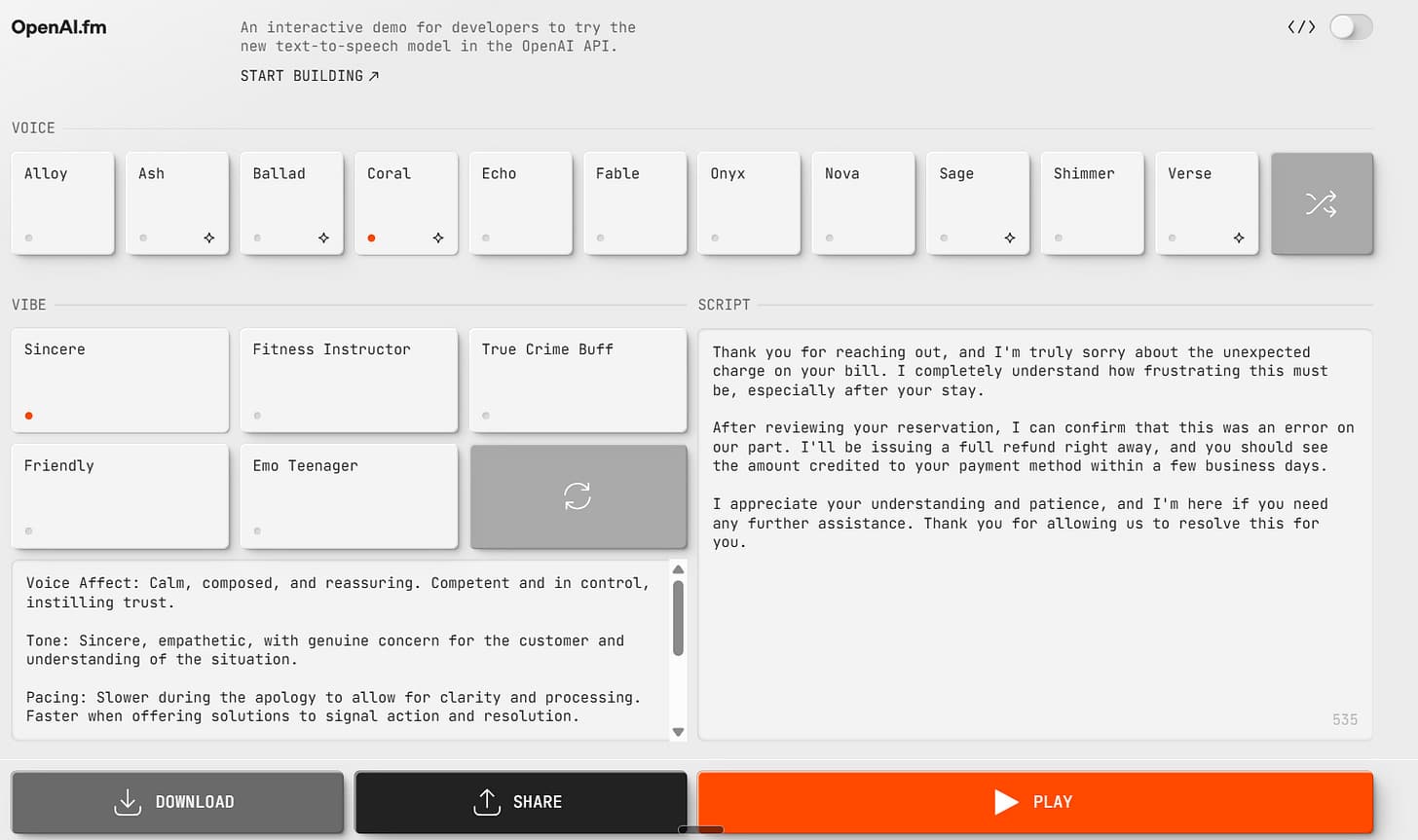
OpenAI's Oct 12-16 developer updates: free sandbox pre-warming for the Agents API (unattached sandboxes expire after 5 minutes); native Decisions API integration in GPT-Live that fires while the caller is still speaking; and prompt-to-voice — a custom GPT-Live voice from one text description, free to create — plus 9 new preset voices in German, French, Hindi, Japanese, and Korean. Catch: prompt-made voices are GPT-Live-only, 100 per org, disclosure required.

Anthropic opened Claude Duet as a research preview on Oct 21, 2026: a proactive agent with a morning brief and app checks every few hours. Before sending, paying, signing or deleting it shows the exact draft — but securities trading and inter-account transfers are forbidden even with approval. It runs on Claude Opus 5.5 in its own cloud VM. Sharpest detail: checks run every few hours, not real-time, because continuous checks burn Pro/Max quotas.