Project Directory

Browse all indie developer projects and co-creation requests

Active: ShowcaseAutomation
Showcase
Online
Automationclaude

Push: Serverless Web Push for iPhone, Vibe-Coded with Claude

Send push notifications to your iPhone from a web page — no app, no server. Safari Web Push plus GitHub Actions and an Apple Shortcut do the work.

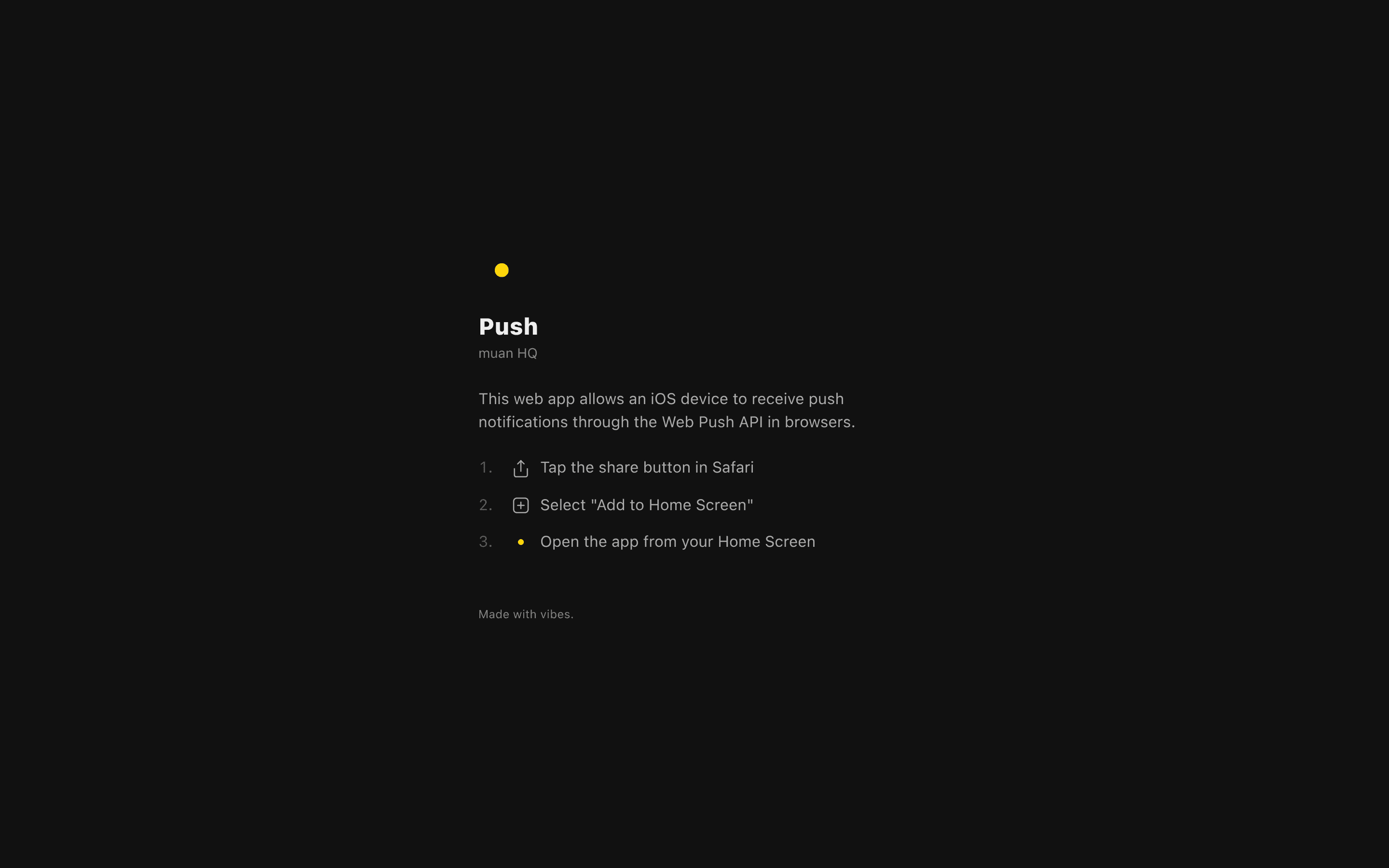
Push solves a small, real problem with an almost absurdly lean stack. The author, Mu-An Chiou (muan), wanted a notification every time the neighbor's cat Chi-chi wandered onto the balcony — the neighbor's camera already had animal detection, but there was no good way to turn that event into an iPhone notification without building an app and a server. Push closes the gap: a web page you add to your iOS home screen subscribes through Safari's Declarative Web Push, an Apple Shortcut fires a dispatch call when the camera automation triggers, and a GitHub Action signs and delivers the notification. No app, no server, no running costs. The README states the provenance plainly: "This is almost entirely vibe-coded with Claude (except this README) and reviewed humanly by me. Reading through the code should take less than 5 minutes." That last line is the whole pitch — the entire kit is index.html, one GitHub Actions workflow, and send.js. Fork it, deploy the page to any static host, add three secrets (a VAPID key pair and subject), and you own a push notification service that runs on GitHub's free tier. The demo page even signs off with "Made with vibes." Honest caveats, straight from the docs: this is Apple-only (Safari's Declarative Web Push, no service workers), the live demo can only send notifications using the author's own keys, and tapping a notification opens com.apple.home:// by default. None of that diminishes the idea — it's a clean demonstration that a personal notification pipeline no longer needs infrastructure, just a shortcut and a workflow file. The repo (muan/push) sits at 6 stars and was pushed days ago; small, maintained, and genuinely useful for anyone wiring home automations to their phone.
Showcase
Online
Automationclaude-codecodex-cli

Worth the Walk?: AI Agents Turn Junk Mail Into a Walking Route

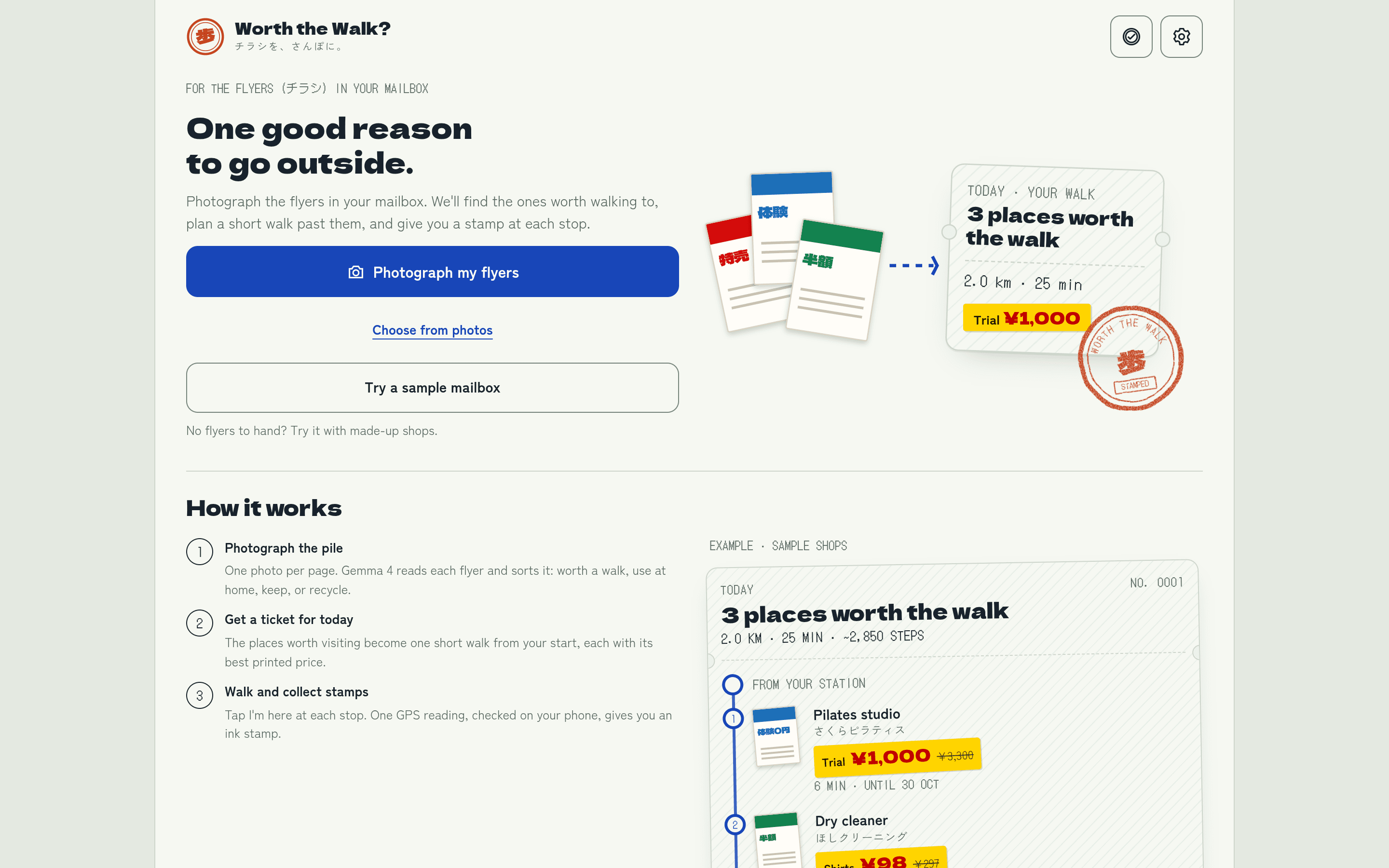
Photograph your junk mail — two AI agents sort every flyer, plan a walking route to the deals worth visiting, and stamp each stop like a train ticket.

Worth the Walk? starts from a very specific frustration: a mailbox full of Japanese flyers the author can't read well enough to triage. Instead of learning Japanese, they built an app that does the reading — photograph each flyer, and Gemma 4 sorts it into one of four piles: worth a walk, use at home, keep (bills and notices), or recycle. The walkable ones become stops on a route rendered like a Japanese train ticket, each deal printed as a yellow sticker in the flyer's own visual language. At each stop you tap "I'm here," one GPS reading mints an ink stamp, and the day's savings add up — but only from prices actually printed on the flyer. What makes this one worth paying attention to is how it was built. The author's dev.to build log is unusually honest about the process: "Claude Code was the architect. It wrote the specs and the contracts between modules, reviewed every diff, ran the tests and checked the screenshots. Codex CLI wrote most of the modules from those specs." On the final night the two agents ran in a loop for five hours — Claude writing a spec per round, Codex building it, Claude testing against screenshots and sending back what was wrong. The post also documents what broke along the way: a brush-style logo read as two different restaurants, a prompt example leaking its own phone number onto a gold buyer's flyer, a model inventing prices for a yoga studio. This is the rare AI-built project that shows its scars. The engineering choices are pragmatic rather than flashy. Reading is adaptive — whole pages first, then a second pass over a 2x3 grid of overlapping tiles only for dense price lists, which cut a five-flyer pile from four and a half minutes to 38 seconds. Flyers you dismiss and stamps you collect train a TabPFN model through Prior Labs' MCP so the ranking learns your taste; addresses resolve through Japan's free GSI geocoder with SerpApi and OpenStreetMap as fallbacks. The whole mailbox costs about five cents to read, which is why there's no sign-up and no account — photos are read and thrown away, everything else stays on your phone. It's brand new — submitted to DEV's Hacktoberfest Open-Source AI Challenge on October 12, 2026, and the GitHub repo adkbbx/worth-the-walk is sitting at a single star. The demo runs on Render with a "Try a sample mailbox" mode so you can see the ticket, walk mode and stamp flow in under a minute without any Japanese mail. Small, opinionated, and built in the open — exactly the kind of project that makes you want to check what it does with your own junk mail.

Showcase
Online
Automationclaude-code

home-stack

An entirely vibe-coded self-hosted smart-home stack: family portal, per-person AI assistants, voice panels, cameras, local LLMs — on one PC.

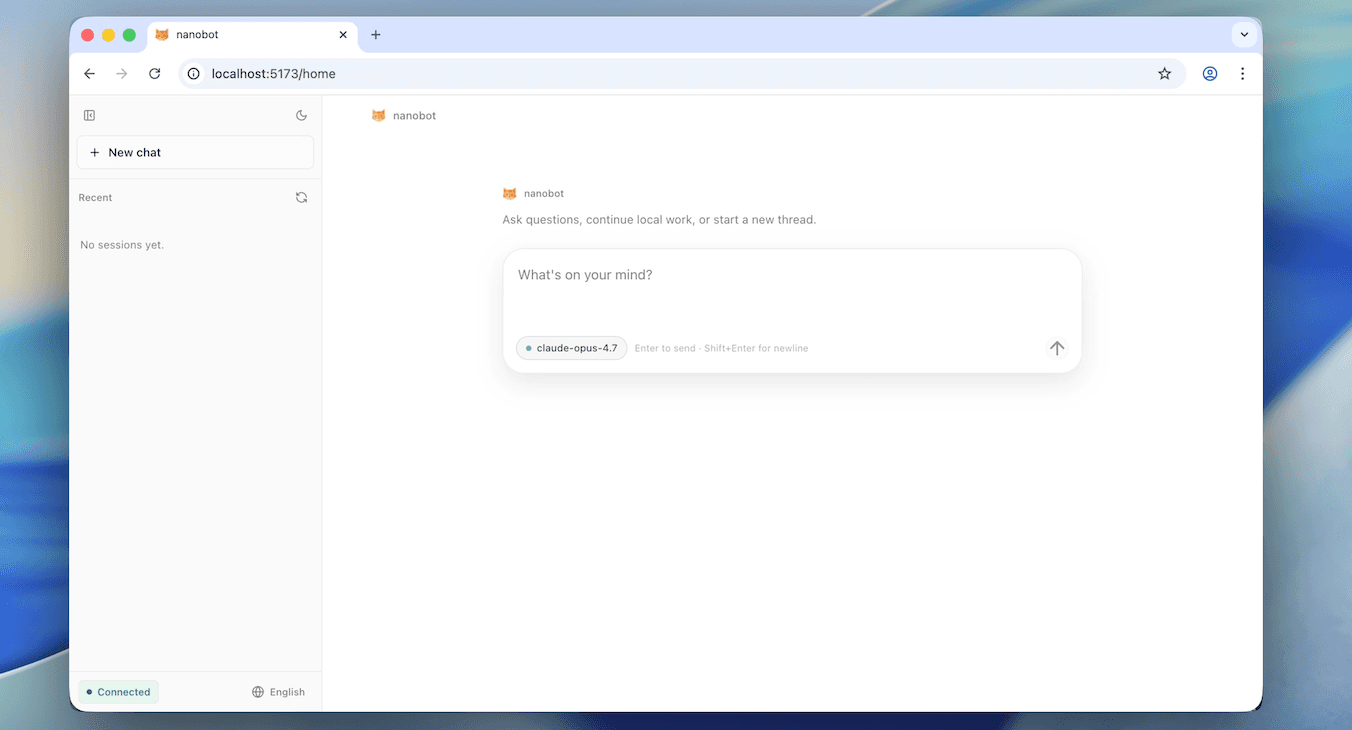
home-stack is a self-hosted smart-home stack for one household, and the README says it plainly: entirely vibe coded, every line written by AI coding agents (mostly Claude Code) and directed by one person running it for their own family. It ships 21 services, 12 on by default: a family portal (chat, files, chores, shopping list, weekly menu), a personal AI assistant for each household member (a nanobot fork with memory, house skills, reminders) plus a shared room-facing assistant, per-profession spaces (Programmer, Teacher, Designer, Health, Legal), voice panels with local speech-to-text, a camera wall with a local vision model, an MQTT broker, a document archive (Paperless-ngx), own notifications (ntfy), own web search (SearXNG), and backups with verified restore. "Alfred fixes himself" — report a problem in chat and the Programmer agent proposes a fix without committing anything until you approve. Local models run on your own GPUs via Ollama or llama.cpp; the default hosted provider is OpenCode Zen. Everything runs on one PC; it was extracted from a live household that uses it daily. MIT licensed.