Bitchat
Jack Dorsey vibe-coded a Bluetooth mesh messenger over a weekend — no internet, no servers, no phone numbers.
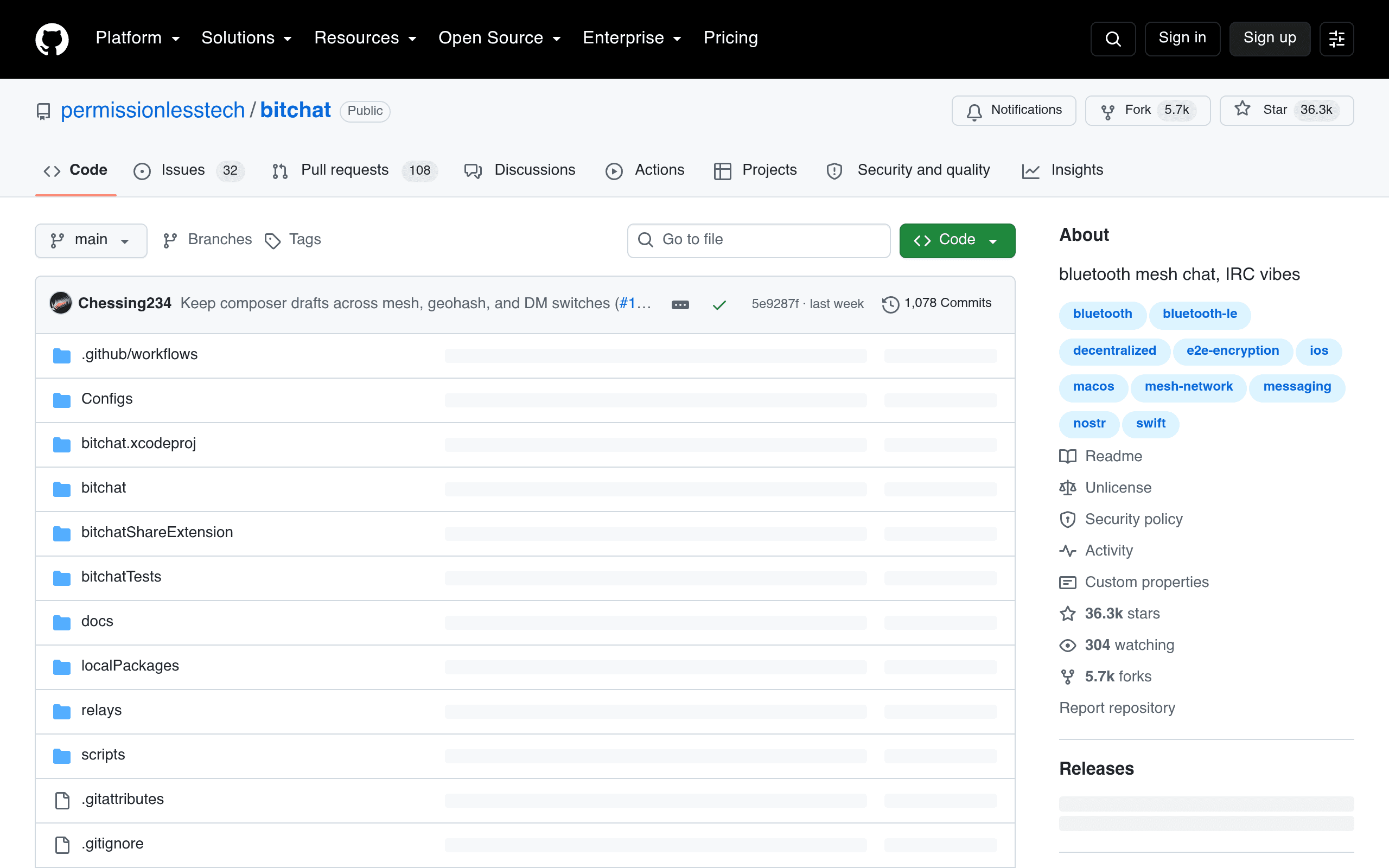
Bitchat is the most famous weekend project in vibe coding history: Twitter co-founder Jack Dorsey built an encrypted messaging app that works without the internet, and he did it in about two days with an AI coding assistant. His stated goal was modest — "my weekend project to learn about Bluetooth mesh networks" — but the result became one of the most-starred vibe-coded repositories on GitHub, with over 36,000 stars. The app itself is a genuinely interesting piece of engineering. It uses Bluetooth Low Energy mesh networking so phones within roughly 100–300 meters can relay encrypted messages peer-to-peer, no Wi-Fi, no cell service, no central servers, no phone numbers or accounts. Messages are ephemeral by default, channels can be password-protected, and there's a panic mode that wipes all data with a triple-tap on the logo. Dorsey compared it to FireChat, the mesh messaging app popular during Hong Kong's protests in the early 2010s. The vibe-coding story is unusually well documented because Dorsey wrote about the process. He used Goose, Block's open-source AI coding agent, as part of a self-imposed challenge: "build something every day that I didn't think I was capable of." His verdict: "I'm always surprised at how much…just works." The core worked within a day; private messages and channels were added the next day. Here's the part most retellings skip, and it's the most valuable lesson: security researchers promptly found real flaws — impersonation risks, broken authentication, forward-secrecy issues. Dorsey's team had to add explicit warnings that the protocol hadn't received external security review. Bitchat is the perfect case study for both sides of vibe coding: an experienced builder can ship a working, genuinely novel product in a weekend with AI — and precisely because it shipped so fast, the security review that normally takes months didn't happen. Speed is real. So is the debt. Note: This project is curated by the VibeFix editors from public sources. All rights belong to the original creator.