Loading user projects
VI
VIBEFIX
This user has not added a bio yet.
Joined 7/11/2026
194
Projects
0
Iteration asks
0
Iterated
0
Likes
0
Saves
1540
Views
0
Comments
Showcase
Online
Education
Plottie
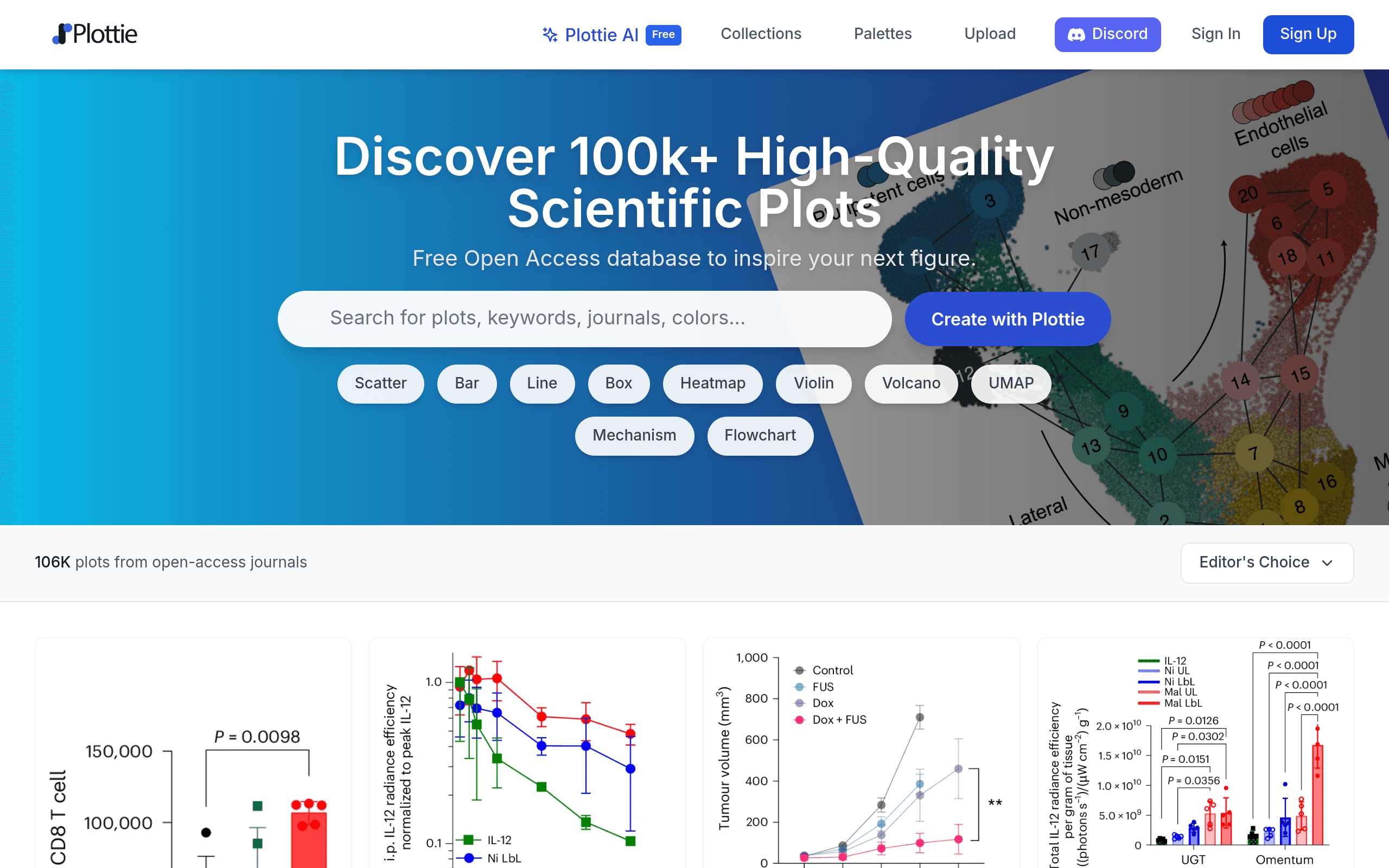
10 万+开放获取论文图表的可视化图库:按图类型浏览、关键词搜索,科研画图的灵感搜索引擎。
Plottie 的作者 jianhuaMert 在 V2EX 发帖时说,这是他"vibe coding 的第一个正式上线网站"。动机特别真实:自己做科研画图太痛苦,想找灵感时"很难系统地搜到别人的图",于是动手建了一个科研可视化图库——收集开放获取(CC-BY)论文里的图表,带出处和标签,还在不断添加。 网站现在收录了 106K+ 图表(发帖时才 3 万多,半年涨了三倍多),支持按图类型浏览(bar plot、volcano plot、heatmap、UMAP、箱线图……)和关键词搜索(比如 "t cell" 或 "survival"),完全免费。技术栈是 Go + React,部署在 fly.io,图片全部来自开放许可期刊,版权干净。 评论区印证了这是个真需求:有人要按期刊分类、有人要 colormap 的 RGB 值方便 MATLAB 调用、有人想要综合排版图的灵感。作者也坦白下一步想做 LLM 生图,"很难,进展很缓慢"。科研工具配 vibe coding 是个好组合——领域专家最懂痛点,以前是"等大厂做",现在是自己动手。对做科研、做数据可视化的读者,这个站值得收藏。 注:本项目由 VibeFix 编辑从公开渠道精选收录,版权归原作者所有。
V@VIBEFIX
0
0
6
0
Showcase
Online
Toolscursorgpt
Compressio(图压所)
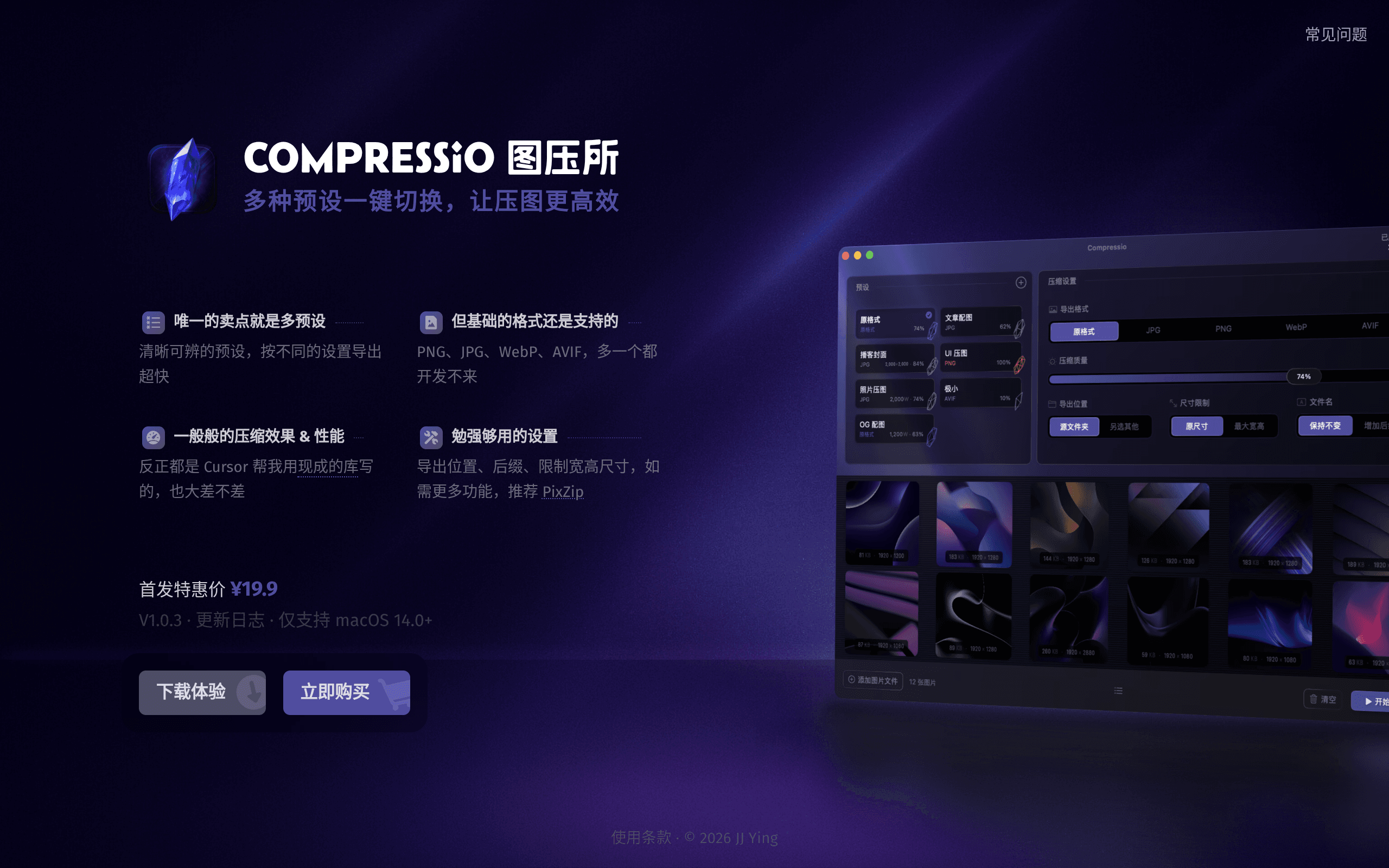
设计师 JJYing 用 Cursor 为自己做的 macOS 压图工具:多预设一键切换、离线运行,首发 ¥19.9 买断。
Compressio 的作者 JJYing 是中文设计圈的知名设计师,自述"非程序员"。他在 V2EX 的原帖里说得很实在:"虽然感觉现在程序员们对于 vibe coding 的整体口碑很一般,但现在这类 AI 编程工具对于我们这种非程序员真的是福音,找回了以前的创作欲望。"他用 Cursor 写东西时第一个实现的是自己的需求——一个"多预设方便切换"的图片压缩软件,"用几句话让软件慢慢跑起来,bug 渐渐修掉,连支持 Stripe 支付网站也能搭起来还是挺开心的,意不在赚钱,在过程"。 产品本身是个 Swift 原生的 macOS 应用,离线运行,界面是设计师出手、明显比同类工具顺眼。核心卖点只有一个:预设。博客配图、文档配图、UI 压图、照片压图、极小、OG 配图——选好预设一键导出,支持 PNG/JPG/WebP/AVIF。作者自己在评论区承认:"效果很可能没有 TinyPNG 好,主打的功能是多种预设的切换。"这种诚实反而成了信任状:它不想做最强的压缩算法,只想做切换预设最顺手的那个。 有意思的是作者总结的"最难":不是写代码、不是调 bug,而是"申请开发者账号、保证拉各种依赖不会卡的优秀网络"——国内独立开发者都懂的痛。V2EX 评论区有人说"成品质量不错,比绝大部分搞噱头的 vibe coding 产品看起来舒服"。这正是 vibe coding 最好的样子:需求真实、范围克制、为自己做工具,顺手分享出来。首发特惠 ¥19.9,支持 macOS 14.0+。 注:本项目由 VibeFix 编辑从公开渠道精选收录,版权归原作者所有。
V@VIBEFIX
0
0
4
0
Showcase
Online
Games
画饼与剪枝 · CEO模拟器
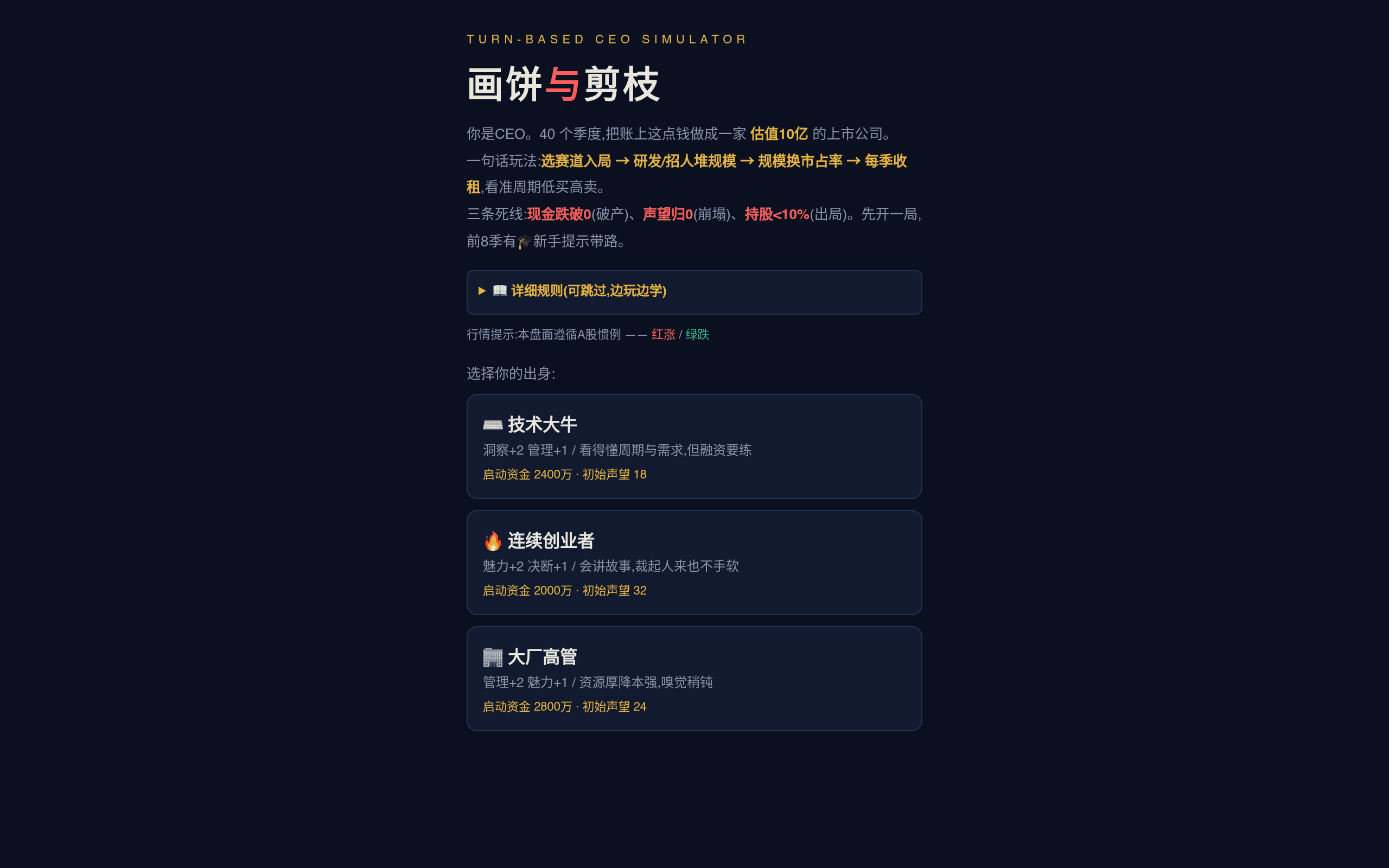
回合制 CEO 经营模拟器:40 个季度,从一笔启动资金干到估值 10 亿敲钟上市——画饼、融资、裁员、逆周期抄底,V2EX 已有玩家 39 季度成功上市。
你是 CEO。40 个季度,把账上这点钱做成一家估值 10 亿的上市公司。这就是《画饼与剪枝 · CEO模拟器》——一个在浏览器里直接开局的回合制经营模拟游戏,作者 samhjn 2026 年 6 月发到 V2EX,标题就五个字:"Vibe 了一个"。 玩法一句话:选赛道入局 → 研发/招人堆规模 → 规模换市占率 → 每季收租,看准周期低买高卖。三条死线悬在头顶:现金跌破 0 破产、声望归 0 崩塌、持股低于 10% 被资本逐出公司。开局先选出身:技术大牛(洞察+2,看得懂周期但融资要练)、连续创业者(魅力+2,会讲故事裁人也不手软)、大厂高管(管理+2,资源厚但嗅觉稍钝),启动资金和初始声望各不相同。 它的经济系统比看起来深:规模=累计研发+累计营销+人力,边际递减、各行业天花板迥异;强周期行业(芯片/航空/地产)寒冬里收入能塌到几乎为零,但对手也在出清、资产打七五折——逆周期重注赌的是下一个高景气;小赛道盈利且产品过硬时,每季有小概率"破界"(天花板×1.9),新消费独角兽的剧本。连行情提示都遵循 A 股惯例:红涨绿跌。敲钟条件是估值 10 亿 + 声望 65 + 两条成熟业务线。 V2EX 原帖的 9 条回复是这个游戏最好的广告:有人"31 回合结束战斗",有人晒出"第 39 季度、12.48 亿估值、两条成熟业务线"的上市战报,还有人认真讨论"画饼画多了士气低落"的机制。作者也在帖子里回复说周末再优化操作——一个 vibe 出来的小游戏,有了真实玩家和真实反馈。 注:本项目由 VibeFix 编辑从公开渠道精选收录,版权归原作者所有。
V@VIBEFIX
0
0
9
0
Showcase
Online
Health & Fitness
Running Coach
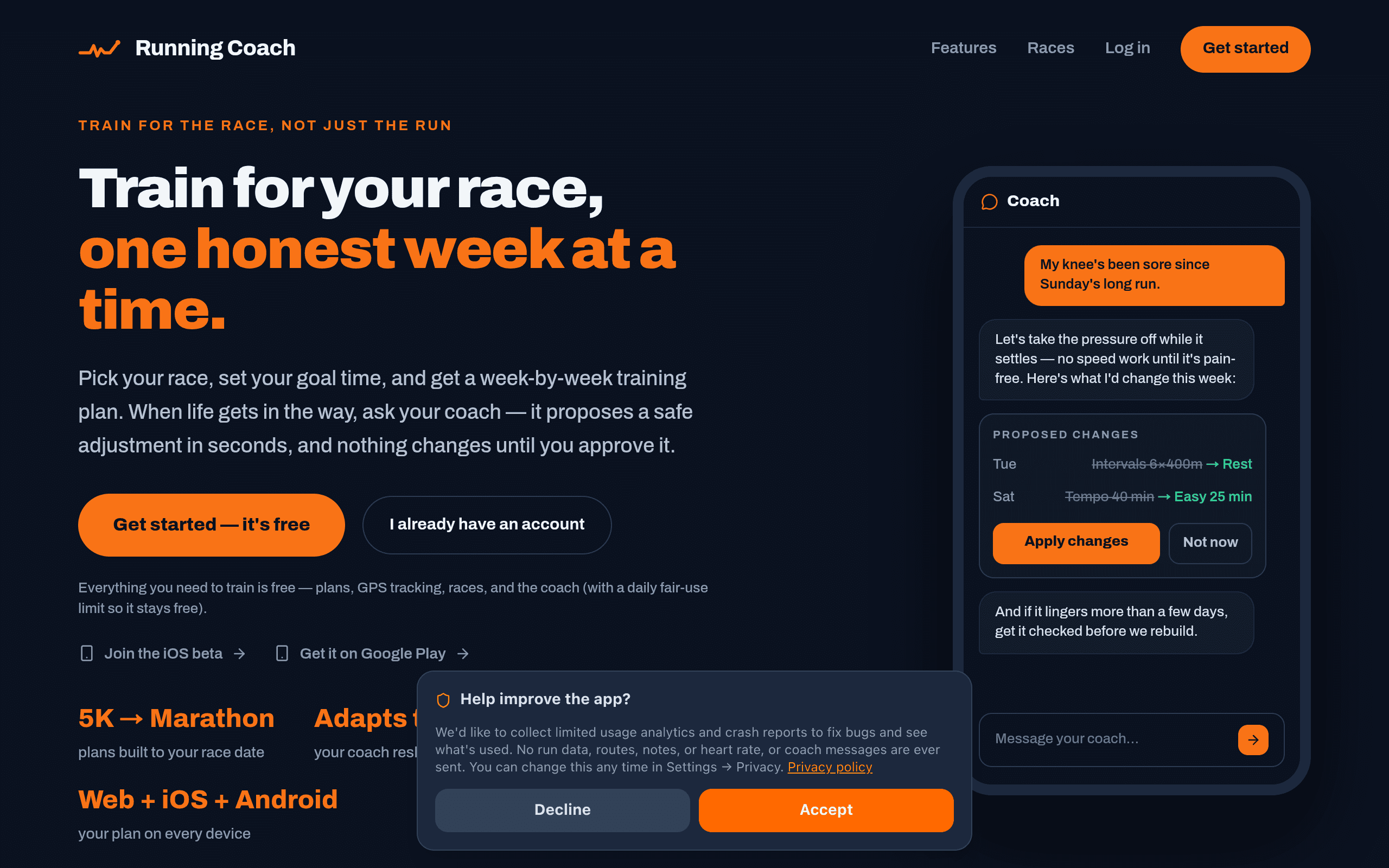
A free, open-source running coach vibe-coded over a weekend — race-day training plans, an AI coach that adapts when life happens, and zero premium upsells.
Running Coach exists for one petty, relatable reason, stated right in the README: the author "got tired of being nagged to upgrade" by running apps, so he "spent a weekend vibe-coding" his own. No premium tier, no upsells, ever. The product is more serious than the origin story suggests. Pick your race and goal time and it builds a week-by-week training plan from 5K to marathon, locked to your race date. When life gets in the way, you tell the AI coach — "my knee's been sore since Sunday's long run" — and it proposes a safe adjustment in seconds: intervals become rest, tempo becomes easy. Nothing changes until you approve it. There's a community race catalogue (Berlin Marathon down to local 10Ks), history/stats/trends with gentle badges, and imports from Strava, Garmin, Zepp or anywhere via GPX/TCX/CSV, plus Apple Health, Health Connect and Polar sync. The architecture is deliberately boring, which is the point: a 100% static React 19 + Vite SPA on S3/CloudFront, Supabase handling auth and a single JSONB row per user for all app state — tiny attack surface, near-zero hosting cost. It's genuinely cross-platform: web, Android on Google Play, iOS in beta. Repository theodiablo/running-coach (MIT), pushed as recently as 2026-10-02. For runners, the pitch is "train for the race, not just the run" — a plan and a coach instead of a feed of other people's runs. For vibe coders, it's a neat proof that a weekend project can grow into a real multi-platform product without ever adding the paywall that motivated it. Note: This project is curated by the VibeFix editors from public sources. All rights belong to the original creator.
V@VIBEFIX
0
0
6
0
Showcase
Online
Developer Tools
myFlowForge
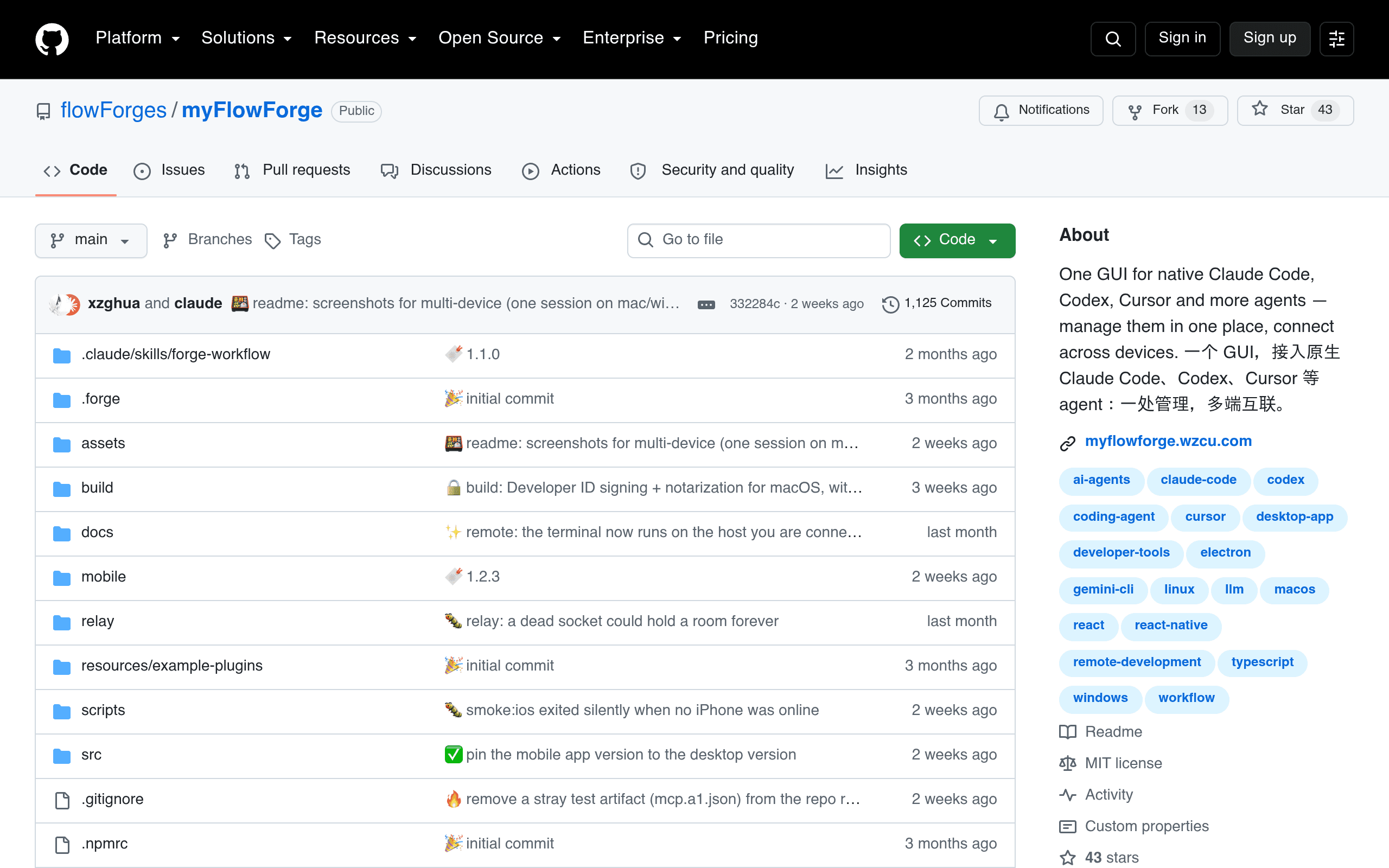
一个 GUI 接入原生 Claude Code、Codex、Cursor 等 14 个编码 agent:一处管理、多端互联,还能编排"方案→开发→测试→评审"多模型工作流。
同时买了 Cursor、Claude、Codex 好几家套餐,每家量都不多——这个 2026 年程序员特有的烦恼,就是 myFlowForge 的起点。作者 xzgua 的想法很直接:方案设计用 Claude、代码开发用 Codex、代码 CR 用 Claude、单测用 qoder 和 Cursor,能不能有一个 GUI 把这些原生 agent 统一管起来?于是他 vibe 了 myFlowForge 出来。 它的定位是各家 CLI 之上的 GUI 层,坚持"原生接入":直接调用本机已安装的官方 CLI,不 fork、不修改 agent 本身,不保存 API key,也不代理请求。支持同一会话内切换 agent 与模型(某家额度耗尽直接换另一家续聊,上下文不断)、导入原生会话、阶段式工作流(需求→方案→审批→开发→测试→评审,每个阶段可指定不同的 agent 和模型,开发阶段还能按项目扇出到多个 git worktree 并行)。多端互联是另一大卖点:桌面端、无头 Linux daemon、iOS/Android 客户端共用同一套工作区,局域网直连、SSH 或端到端加密中转,手机上能实时看对话、处理权限确认、审批方案。 有意思的细节不少:兼容 Codex 原生宠物,还做了个随 token 消耗成长的桌面宠物;内置 Forge MCP 服务器供 agent 回调;额度与用量统计告诉你每家还剩多少;机器人桥接到钉钉、Telegram、飞书处理审批。仓库 1,125 次提交、32 个 release,提供 macOS(含签名公证)、Windows、Linux、安卓 APK 与 iOS TestFlight 安装包,MIT 开源,43 star 且两周前还在提交。 这是 vibe coding 生态的一个标志性时刻:AI 编程工具多到需要另一个 AI 做的工具来管理它们。对同时开好几个 agent 订阅的人来说,myFlowForge 就是那个"遥控器抽屉"。 注:本项目由 VibeFix 编辑从公开渠道精选收录,版权归原作者所有。
V@VIBEFIX
0
0
9
0
Showcase
Online
Productivity
Parker
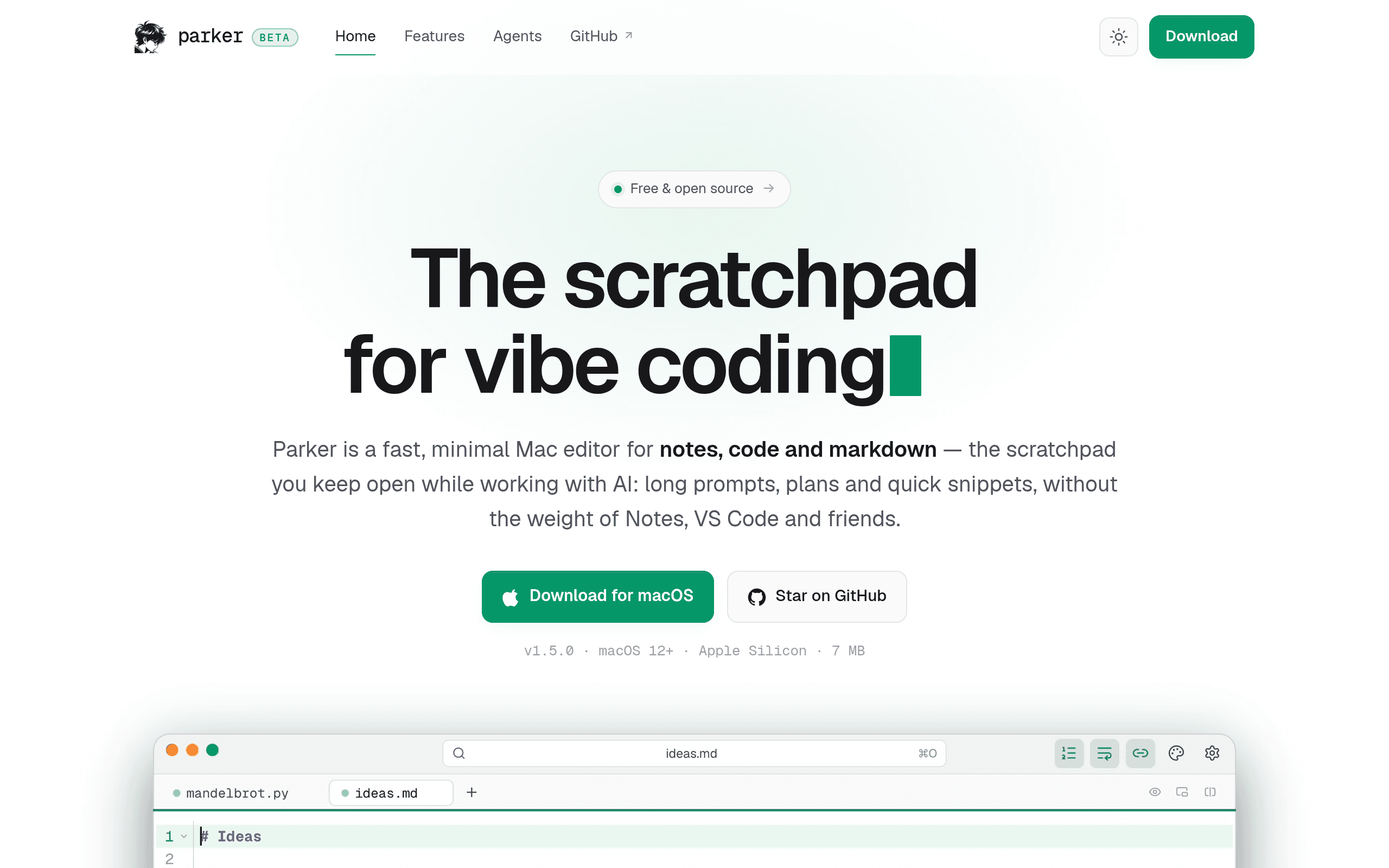
A fast, minimal Mac scratchpad for working with AI — plain files on disk, git backup, and live reload when your agent rewrites a note.
Parker is a Mac menu-bar editor built for the way people actually work with AI in 2026: long prompts, task lists, quick snippets and throwaway notes that deserve something faster than Notes and lighter than VS Code. Summon it anywhere with a global shortcut, jot, dismiss — it opens in a blink, types with zero lag, and aggressively auto-saves everything. The clever part is the AI loop. Your notes are plain files in a folder you own, so Claude Code, Codex, Cursor or any agent can already read and write them — no plugin, no API key, nothing to integrate. When your agent rewrites a note, the open tab reloads live and marks exactly which lines changed; if you both touched the note, it asks before overwriting. Draft the prompt here, let the agent answer into the same file, and hand it a task list to watch the checkboxes flip. Optional git backup commits every save, so anything an agent wrote can be rolled back. It's deliberately small: a 7 MB download on Tauri, eleven themes, split panes with live Markdown preview, keyboard-first throughout, no accounts, no telemetry, no servers. The iPhone companion is in testing and reads the same folder, so notes and to-dos travel with you. The backstory is on the site, stated plainly: "Not a commercial product — a passion project, vibe-coded for my own use and shared with the world." Solo developer Manoel Lemos built it for himself — the scratchpad he keeps open while vibe coding — and open-sourced it under MIT. Repository mlemos/parker: 308 commits, 22 releases, v1.5.0 signed and notarized for Apple Silicon. It's the rare dev-tool-as-self-portrait: a vibe-coded tool for vibe coding. Note: This project is curated by the VibeFix editors from public sources. All rights belong to the original creator.
V@VIBEFIX
0
0
7
0
Showcase
Online
Showcase
Online
Design & Creative
Layerive
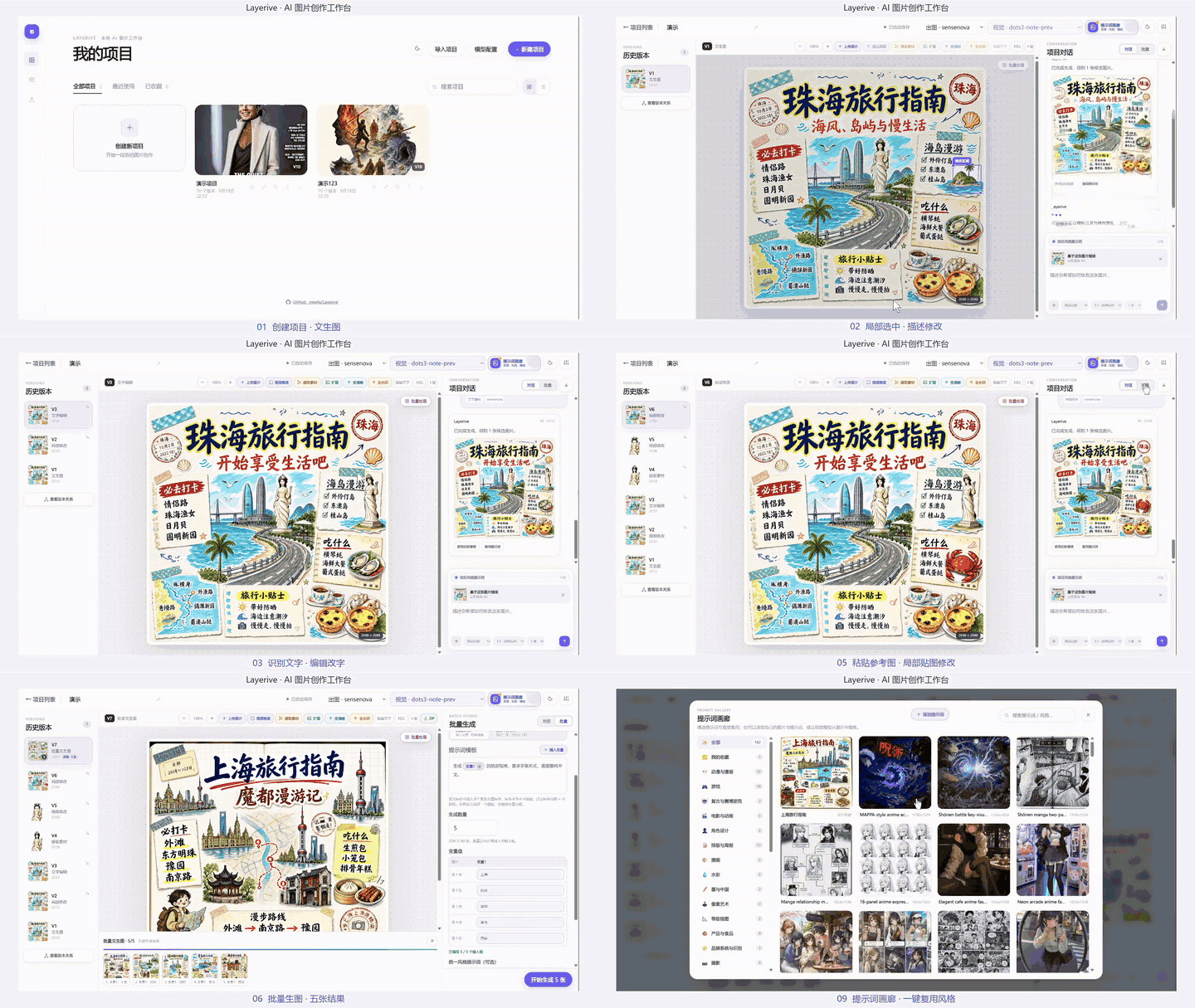
本地 AI 图片创作工作台:文生图、局部重绘、图片改字、扩图全部项目制管理,每次生成自动存版本、可回溯可分支。
玩 AI 生图的人都有一个共同的痛:提示词、原图、几十版改图结果散落在聊天记录和文件夹各处,换个模型或中转站又要从头折腾。Layerive 就是为解决这个问题做的——一个完全跑在本地的 AI 图片创作工作台,把文生图、图生图、提示词改图装进"项目制"里管理。 它的功能清单很实在:局部框选修改(视觉模型看图组织提示词、只改框选范围)、图片改字(识别图里文字拆成可编辑框,改完只动文字不动构图)、扩图、图片变清晰、提取素材、去水印、批量生图(统一风格提示词)。每次生成或编辑都会自动产生一个新版本,可以看版本树、对比前后、从任意节点开分支继续画。模型和 API Key 都在本地配置,支持 SenseNova、OpenAI 兼容中转站、Gemini、Grok,不被任何一个平台绑死;截图后直接在画布按 Ctrl+V 就能粘贴进来接着改。 最有故事的是它的出生:作者 ljspython 在 V2EX 发帖说"用 AI 2 小时做了个本地 AI 图片工作台"。2026 年 8 月 30 日建仓,一个多月做到 285 star、65 fork、发了 8 个 release,用 Electron 打包了 Windows/macOS/Linux 三端桌面安装包。思路参考了 Lovart 的图片工作流,但坚持本地化与低成本——找几家几分钱一张图的中转站,就能实现接近 Lovart 的效果。仓库里甚至已经出现了社区 fork 的二创版本。 对把 AI 生图当生产流程用的创作者来说,Layerive 的价值不在单张图有多惊艳,而在于它把"迭代"这件事做成了基础设施:版本可回溯、提示词可复用(提示词画廊)、风格可统一。 注:本项目由 VibeFix 编辑从公开渠道精选收录,版权归原作者所有。
V@VIBEFIX
0
0
18
0
Showcase
Online
Games
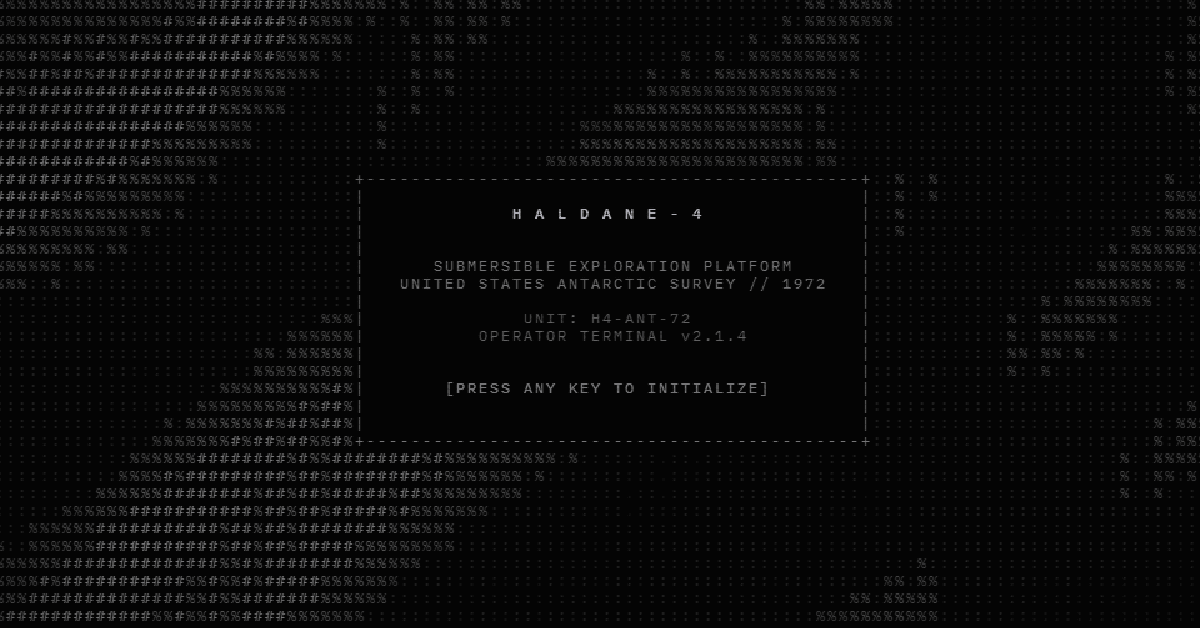
HALDANE-4
A procedural ASCII horror game: pilot a 1972 submersible beneath the Antarctic ice, everything rendered as ASCII on a fake CRT.
HALDANE-4 is a procedural ASCII horror game set in 1972. You are Dr. Harlan Webb, sealed inside the submersible HALDANE-4, descending into a subglacial cavity beneath the Ross Ice Shelf in Antarctica. A surface assistant talks you down by radio. Your job: reach the deepest point, collect a sample, and climb back out before life support runs out. Something is waiting down there. Every pixel you see is a character. Caves, lighting, the submersible, the creatures and the HUD are all rendered as ASCII on a fake CRT — and all of it is procedural, including the music, the sound effects and the ambient horror stingers. The radio dialogue is recorded, then routed through a procedural filter chain that gets audibly sicker the deeper you go. Movement is slow and heavy: an inertial 3D world viewed as a 2D cross-section, WASD to thrust, Q/E to rotate the camera (some passages only reveal themselves from certain angles), the lamp the only thing holding the dark back — and the lamp is what the entity follows. Shift kills the engine and the light for silent hiding. Solo developer Denis Bondare built it with Cursor and Claude Code and open-sourced it explicitly "as an example of how far you can push that workflow on a one-person side project." It won Cursor's "Most Original" award at Vibe Jam 2026, the jam Pieter Levels runs, where judges noted this year's entries were approaching genuine production quality. There's a mobile build with a floating joystick, but desktop with headphones is the intended experience. Note: This project is curated by the VibeFix editors from public sources. All rights belong to the original creator.
V@VIBEFIX
0
0
17
0
Showcase
Online
Design & Creative
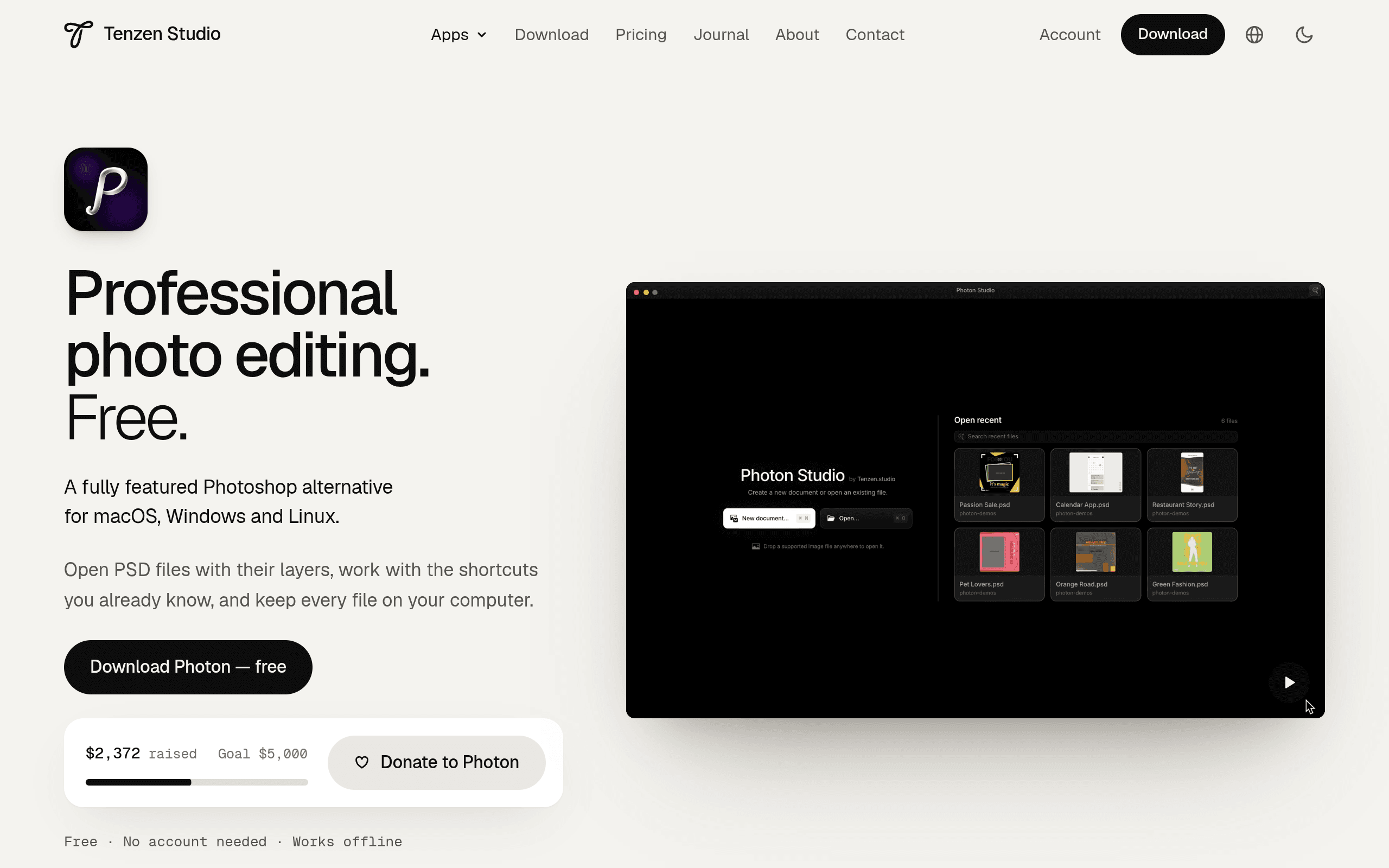
Photon Studio
A free, offline Photoshop alternative — layers, native PSD support, on-device AI selection — vibe-coded solo for about $2,000 in AI tokens.
Photon Studio is a free desktop image editor for macOS, Windows and Linux that wants to be the Photoshop you don't have to rent. It opens PSD and PSB files with layers, masks, adjustment layers and smart objects intact, and saves back to PSD — the one feature that usually keeps people locked into Adobe. No account, no subscription, no upload: everything runs on your own machine, including subject selection and background removal, which use AI models bundled with the app. The toolbox reads like a Photoshop checklist: curves and levels with live preview, healing brushes, clone stamp, content-aware fill, Liquify and Puppet Warp, editable type, vector shapes, pen paths, plus Photoshop's default keyboard shortcuts so your hands already know where things are. It even loads Photoshop's own asset formats — .abr brushes, .atn actions, .asl styles — and Tenzen advises testing complex files before handing them off, because this is still a 0.1.x product, not a 35-year-old platform. The backstory is why it matters. Solo developer Tenzen Studio released it on September 16, 2026 after starting with a Deep Research pass that catalogued Photoshop's entire feature set, then letting GPT-6 Astra draft the build plan and iterating bug reports back and forth between GPT-6 Astra and Claude Fable. Total token bill: about $2,000. Launch day brought 170 downloads; eight days later the developer posted on r/vibecoding that his "vibe-coded photoshop just crossed 20k users." TechSpot listed version 0.1.10 on September 18, and there's a Microsoft Store build for Windows. Reviews are cautiously positive — one called the panel-based interface "closer to a professional tool than a demo" — while noting it can't replace Photoshop's plugin ecosystem yet. Tenzen funds it through donations and a $89 Creators Suite covering its other apps. The sustainability question is real: one person maintaining a three-platform codebase a model largely wrote. But as a demonstration of what one person with $2,000 in tokens can now ship, it's one of the sharpest of the year. Note: This project is curated by the VibeFix editors from public sources. All rights belong to the original creator.
V@VIBEFIX
0
0
16
0
Showcase
Online
Productivity
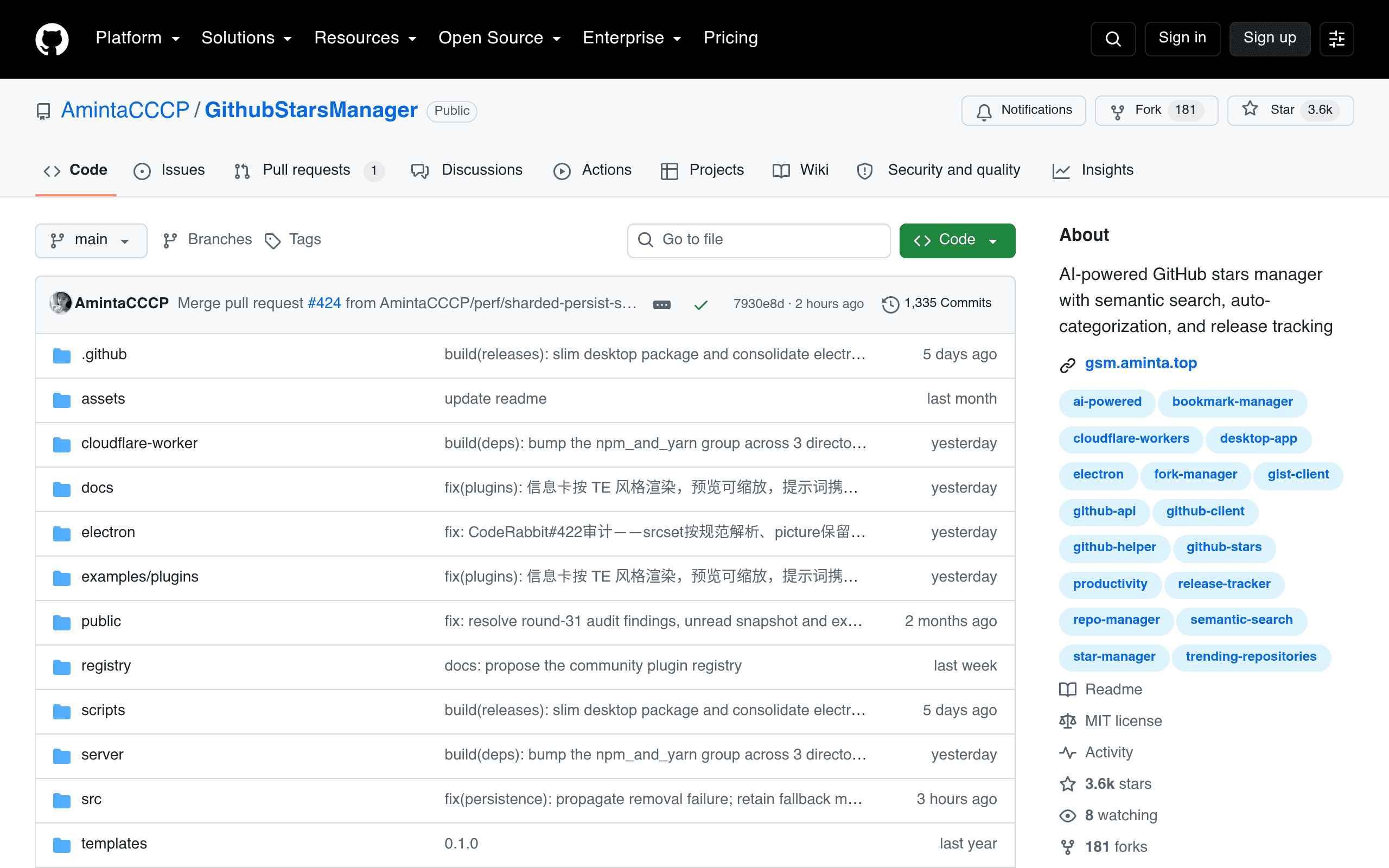
GitHubStarsManager
自称"不会写代码"的产品经理用 AI 做出的 GitHub 星标管家,3,600+ star,今日仍在更新。
每个 GitHub 重度用户都有同一个痛点:star 了几百个仓库,找的时候一个也找不到。GitHubStarsManager 就是来解决这个问题的——它自动同步你的 star 仓库,用 AI 批量写摘要、打标签、做分类,支持语义搜索、Release 追踪、Fork 和 Gist 管理,还带一个 MCP Server 让 Claude Code、Cursor 可以直接读写你整理好的知识库。 这个项目的作者 AmintaCCCP 据中文 vibe coding 作品榜单介绍,是一位自称"不会写代码"的产品经理,靠 AI 把想法变成了 1,335 次提交、58 个 release 的正经桌面应用:Electron 跨平台客户端、Docker 一键部署、Cloudflare 全家桶做后端,甚至还有 12 套主题和 WebDAV 备份。目前 3,635 star,而且今天(2026-10-02)还在提交代码,是 8 个项目里"活"得最鲜明的一个。 它的功能设计处处透着"给自己用"的味道:订阅仓库的 Release 进统一时间轴,一键下载对应平台的安装包;"找相似仓库"一键拉出语义相近的 star;仓库问答助手 pin 定到具体 commit,回答自带可追溯的证据链。这些都不是拍脑袋的"AI 功能",而是一个真实用户每天会用到的东西。 GitHubStarsManager 代表了 vibe coding 最健康的一种形态:不追风口、不讲宏大叙事,就解决自己每天遇到的具体问题。当构建成本趋近于零,"为自己做工具"这件事的 ROI 变成了正数——而这类工具,往往也是最容易活下来的。 注:本项目由 VibeFix 编辑从公开渠道精选收录,版权归原作者所有。
V@VIBEFIX
0
0
21
0
Showcase
Online
Entertainment
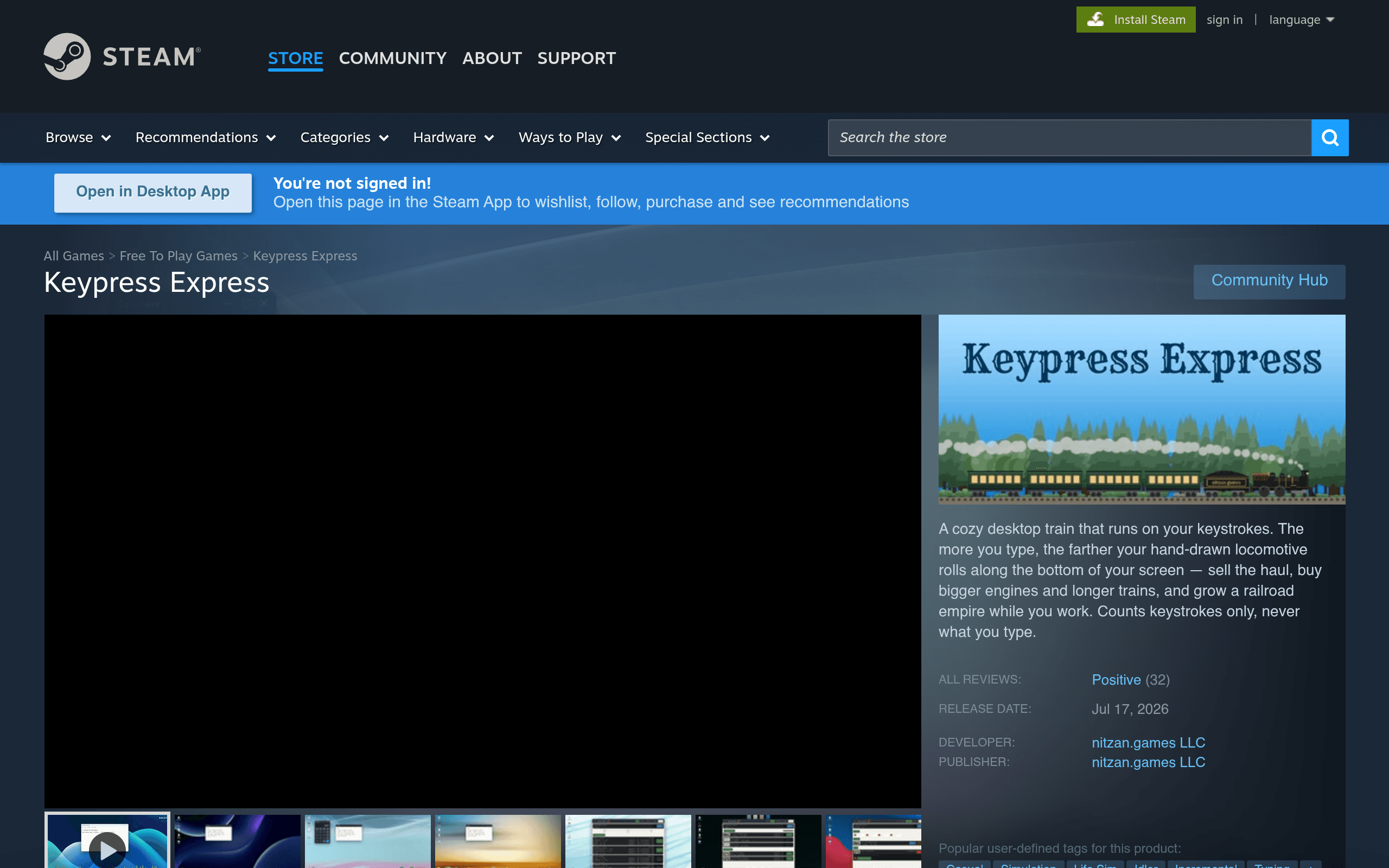
Keypress Express
A solo dev built a Steam idle game with Claude Code — 973 commits of Rust, 96% positive reviews.
Keypress Express is a tiny, wonderful idea executed well: a hand-drawn little steam train runs along the bottom of your screen, and it moves forward as you type. Earn money from your keystrokes, buy better engines, and snowball your way into a full railroad empire. It's an idle game about the one thing every computer user does all day — and it was built solo with Claude Code. The numbers tell the story of a real commercial product, not a demo: 973 commits in Rust, launched on Steam on July 17, 2026, around 10,000 activations, 500+ players, 96% positive reviews, and real revenue from in-app purchases. For a game whose entire interaction model is "you were going to type anyway," that's a remarkable conversion of mundane behavior into play. What makes it a great vibe-coding case study is the constraint. This isn't a sprawling RPG that AI scaffolding can't sustain — it's a single sharp mechanic, deeply polished. The developer bet that AI is best at taking a small, well-understood loop and iterating it hundreds of times (973 commits says the iteration actually happened). Rust, of all languages, as the AI's target — and it shipped on Steam's storefront with paying customers. If Payout is the "vibe coding makes money in mobile" story, Keypress Express is the Steam equivalent: find one delightful interaction, let the agent grind through the polish, and sell the result to people who never asked for it but instantly get it. Note: This project is curated by the VibeFix editors from public sources. All rights belong to the original creator.
V@VIBEFIX
0
0
19
0
Showcase
Online
Lifestyle
小猫补光灯
0 编程基础的陈云飞用 Cursor 1 小时做出的自拍补光 App,冲上 App Store 付费榜第一。
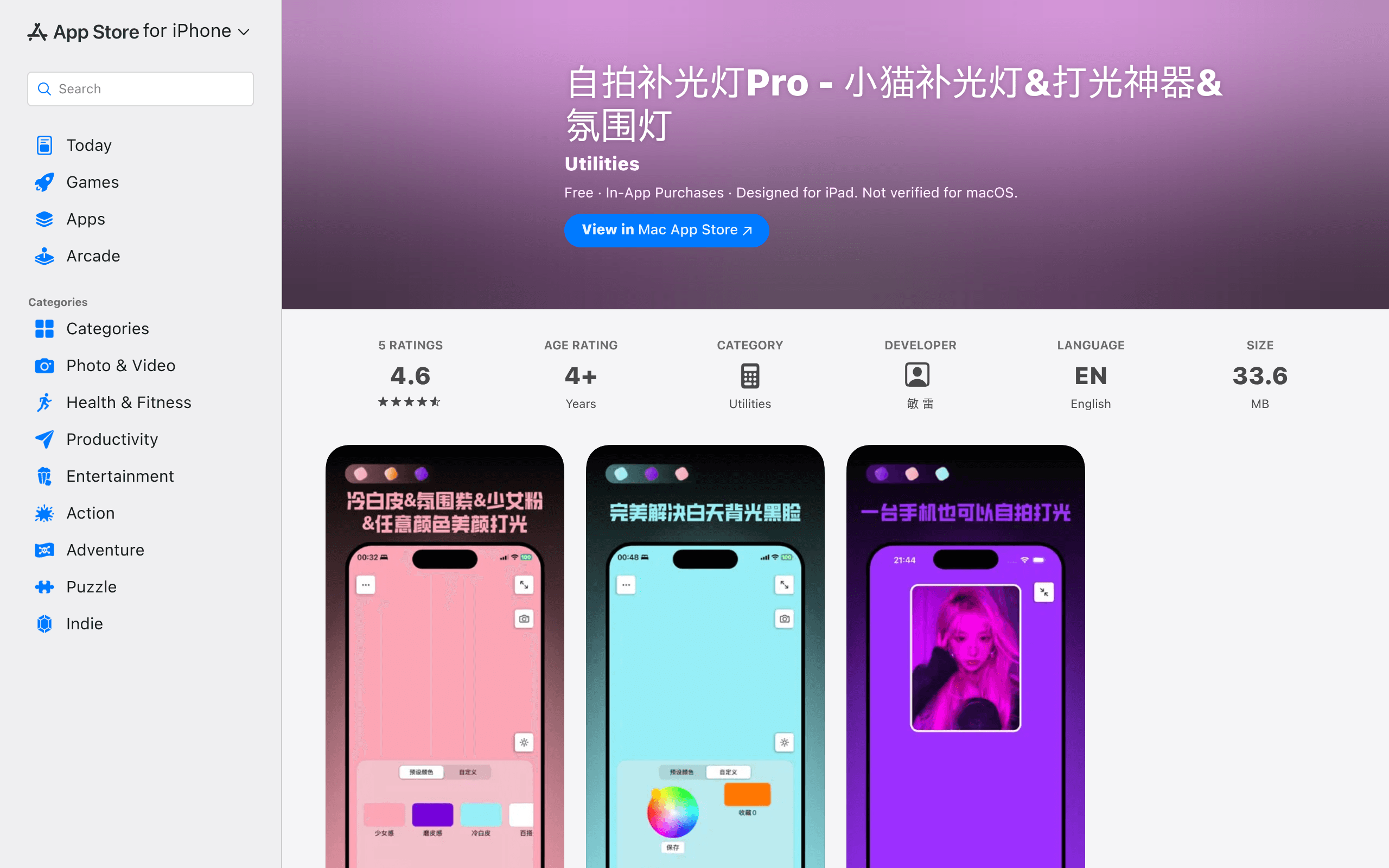
小猫补光灯可能是中文 vibe coding 圈最出圈的独立 App 故事。作者陈云飞(花叔)在涉足 AI 创业之前从未写过代码——据《新民周刊》报道,他在浏览社交媒体时发现,很多女生自拍补光只能靠下载纯色图片,于是想到:为什么不做一个补光 App?在 AI 编程工具的帮助下,他仅用约一小时就完成了初版开发,第二天通过审核上架。 然后是教科书级的冷启动:他在小红书发布产品信息,单条笔记获得 118 万阅读、7.3 万点赞,带来 3 万下载,App 一度冲到 App Store 第 20 名;Pro 版上线 4 小时就登顶付费榜第一。据报道,1 元售价最终收获了百万量级的下载。目前 App Store 页面显示 4.6 分,功能很聚焦:冷白皮、氛围紫、少女粉等预设光效,任意颜色自定义,专门解决"白天背光黑脸"这种具体痛点。 这个案例里最值得玩味的不是"1 小时",而是需求洞察。补光这件事,程序员第一反应可能是"这有什么技术含量",但陈云飞看到的是一个真实、高频、被忽视的场景——小红书上"补光卡片"需求极大。他自己总结爆火三要素:争议、性别议题、meme 文化,听起来像玩笑,实则是对平台传播机制的精准理解。 对 vibe coder 的启示:当所有人都能 1 小时做出一个 App,真正的壁垒变成了"你看到了别人没看到的需求"和"你懂平台怎么传播"。代码不再是护城河,洞察才是。 注:本项目由 VibeFix 编辑从公开渠道精选收录,版权归原作者所有。
V@VIBEFIX
0
0
16
0
Showcase
Online
Business
Payout
Connor Burd vibe-coded a class-action settlement finder in 14 days — now at $80K/month.
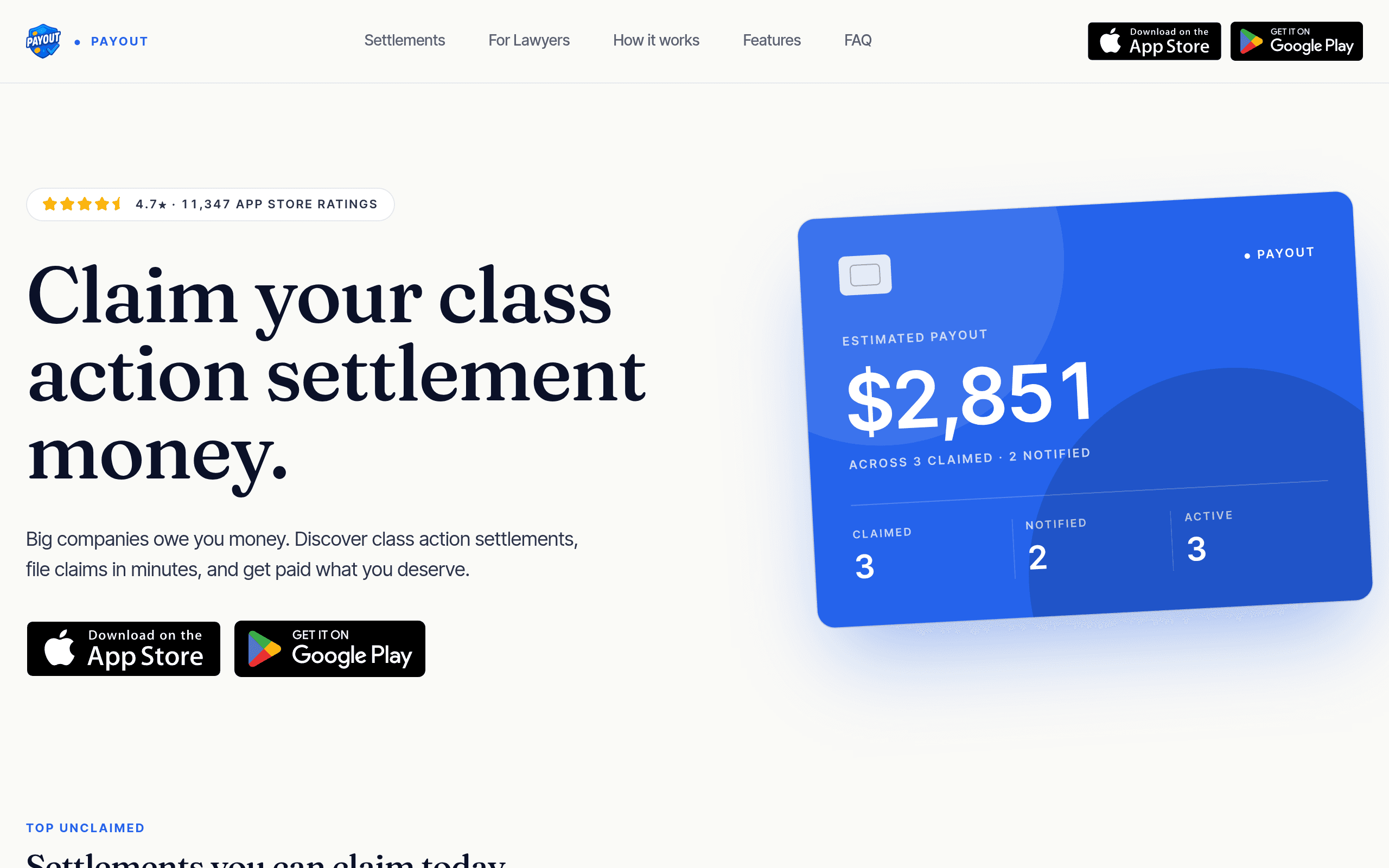
Payout is the cleanest "vibe coding actually makes money" story in mobile apps right now. Connor Burd, a 23-year-old founder, built it in 14 days using Claude and Cursor: an app that matches you with class-action settlements you qualify for and files the claims in minutes. It launched at roughly $20K/month, hit $50K MRR within four months, and eventually reached $80K/month. It also won RevenueCat's global hackathon, Shipaton. His whole portfolio of consumer subscription apps reportedly does around $185K/month. The product itself is live and polished — the site currently lists 137 claimable settlements with one-tap filing, free on iOS and Android, and the App Store page shows 4.7 stars across 11,347 ratings. The pitch is brutally simple: big companies owe you money, and most people never claim it because the process is buried in legal paperwork. What makes Connor's story worth studying isn't the 14-day build — it's what he did instead of coding. His method: study competitor onboarding obsessively, design everything in Figma first, let AI generate the bulk of the code, then pour all remaining energy into onboarding and distribution. He started with TikTok research and influencer partnerships in a validated niche, then turned winning creatives into Facebook ads. His rule of thumb: one to three high-impact features, everything else is onboarding. The lesson for vibe coders is uncomfortable but valuable. When code costs almost nothing, the bottleneck moves entirely to distribution and conversion. Connor's own framing: it used to take him 6–8 months to build an app; now it takes two weeks, and the extra six months go into marketing. The AI didn't just make him faster — it changed what "the work" is. Note: This project is curated by the VibeFix editors from public sources. All rights belong to the original creator.
V@VIBEFIX
0
0
14
0
Showcase
Online
AI Agents
Distilly
从"同事.skill"爆火出圈到改名 Distilly:把人的经验蒸馏成 Agent 可复用的 Skill,2.5 万 star。
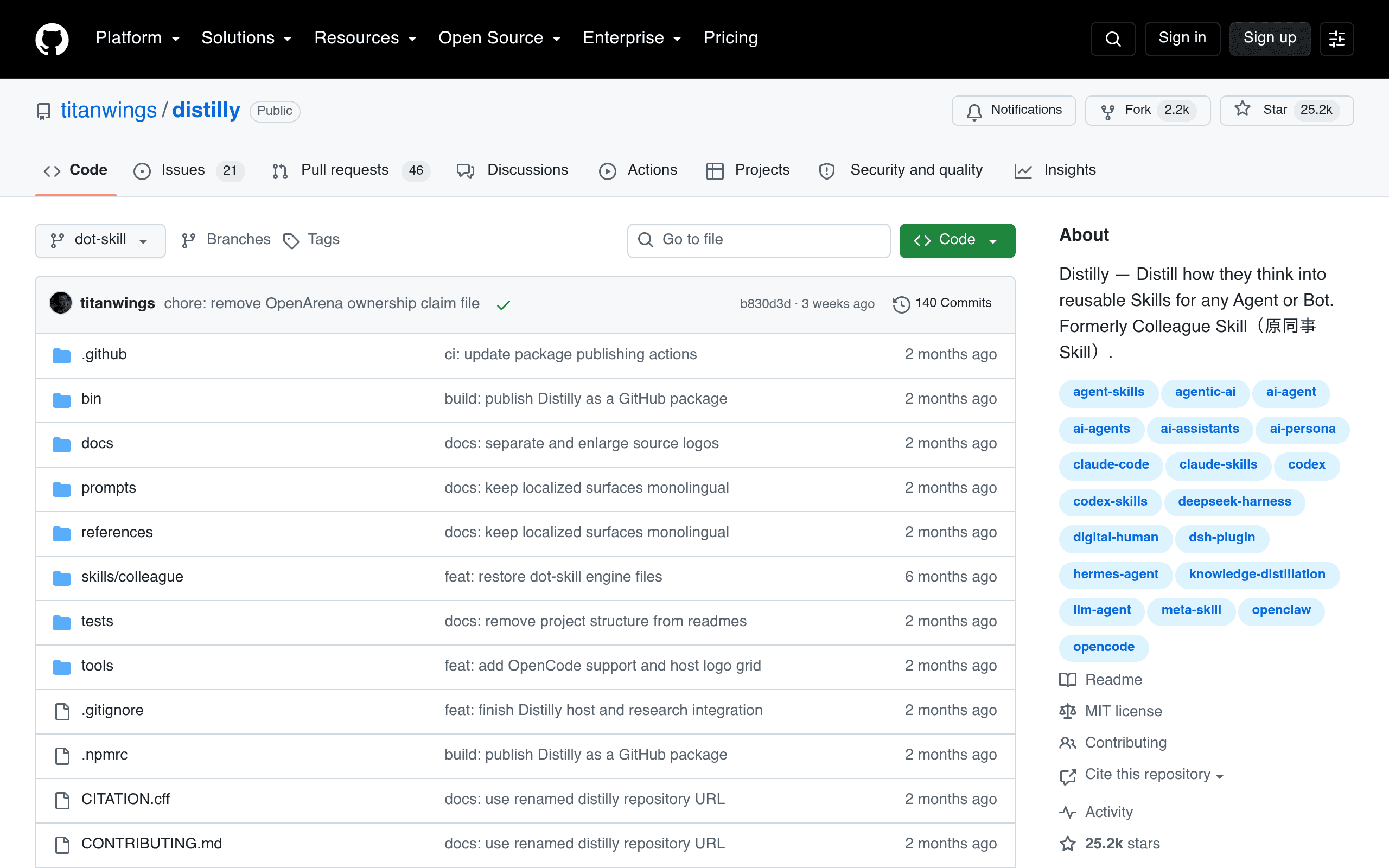
2026 年 4 月,中文互联网被一个黑色幽默的开源项目刷屏了:"同事.skill",slogan 是"将冰冷的离别化为温暖的 Skill,欢迎加入赛博永生"。玩法很简单:把离职同事的飞书消息、钉钉文档、邮件截图喂进去,AI 就能生成一个"真正能替他工作"的数字分身——用他的技术规范写代码,用他的语气回答问题,甚至知道他什么时候会甩锅。紧接着,前任.skill、老板.skill、父母.skill 相继冒出来,"同事被炼化了"冲上热搜,连《朝鲜日报》等海外媒体都跟进了报道。 这个项目的作者是 @titanwings,背后有上海 AI Lab 的 AI Safety Center 支持。如今它已经改名叫 Distilly(原同事 Skill),从一个职场玩梗项目长成了 25,241 star 的正经开源项目:2026 年 6 月发布了 arXiv 技术报告,社区贡献的 skill 卡片超过 215 个,支持 Claude Code、Codex 等 8 种 Agent 宿主,覆盖同事、亲密关系、名人三个"蒸馏"场景——甚至能给名人做六维研究(作品、访谈、决策、表达 DNA……),MIT 协议。 Distilly 值得收录,不只是因为它火。它标志着 vibe coding 进入了一个新阶段:AI 生成的不再只是应用代码,而是"人的经验"本身——沟通风格、决策逻辑、甩锅习惯,都被结构化成了可复用的 Agent Skill。恐惧("下一个被炼化的是不是我")和狂欢("散是 Token,聚是 Skill")同时存在,而这恰恰是技术变革期的真实体感。 注:本项目由 VibeFix 编辑从公开渠道精选收录,版权归原作者所有。
V@VIBEFIX
0
0
20
0
Showcase
Online
AI Agents
MemPalace
Milla Jovovich and Ben Sigman built an AI memory system with Claude — 59K stars and a benchmark brawl.
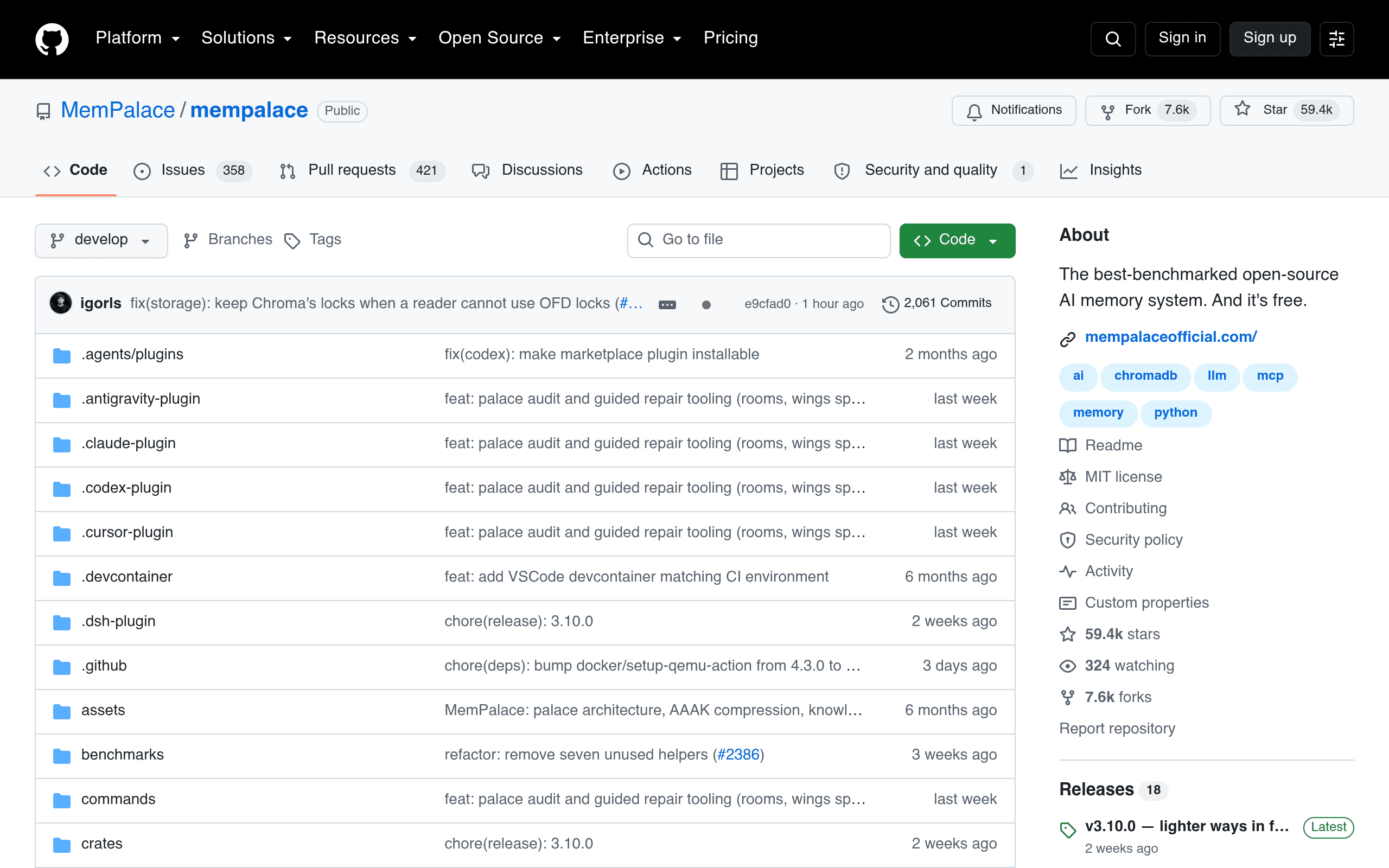
MemPalace might be the most unlikely collaboration in open source this year: Hollywood actress Milla Jovovich (Resident Evil, The Fifth Element) and Bitcoin entrepreneur Ben Sigman spent months building an AI memory system with Claude — with Claude Opus 4.6 listed as a co-author in the git history. The repository now has over 59,000 stars and was still being pushed to today. The core idea is borrowed from the ancient Greeks: the method of loci, or memory palace. Instead of letting an AI decide what to forget via summarization, MemPalace stores conversations verbatim and organizes them into a navigable hierarchy — wings, halls, rooms, closets, drawers, tunnels — backed by ChromaDB for semantic search and SQLite for a temporal knowledge graph. It runs entirely on your machine, exposes 19 MCP tools so Claude Code, Cursor or ChatGPT can read and write memories mid-session, and ships under MIT. Then came the benchmark drama, which is honestly the most instructive part. The team claimed 96.6% on LongMemEval with zero API calls, plus a first-ever perfect 100% R@5 with Haiku reranking — and the internet promptly audited them. Critics found methodology issues; the authors published a correction note admitting the 96.6% was raw verbatim mode and that their experimental compression dialect actually regressed performance. The 96.6% raw-mode score has been independently reproduced, so the core result stands, but the episode is a useful reminder. MemPalace earns its place here for two reasons. First, it's a serious piece of AI infrastructure that was genuinely built with AI assistance — the snake eating its own tail. Second, the benchmark controversy played out in public, with unusual honesty from the authors. That's the healthy version of vibe-coding culture: ship fast, claim loudly, but publish your eval code and correct the record when you're wrong. Note: This project is curated by the VibeFix editors from public sources. All rights belong to the original creator.
V@VIBEFIX
0
0
18
0
Showcase
Online
Tools
Neko Master
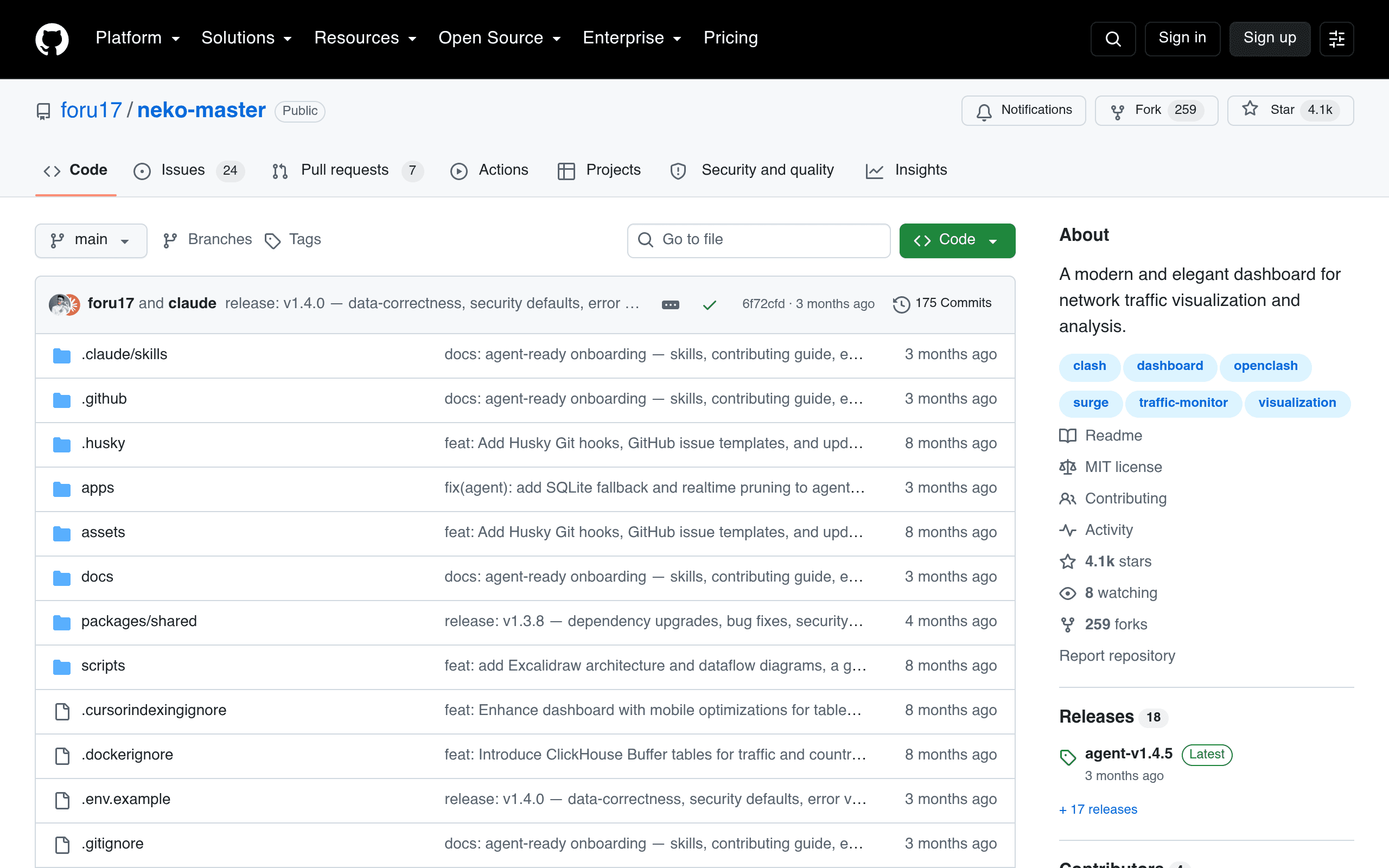
罗磊用 Kimi K2.5 一小时做出 MVP 的开源流量分析面板,一周拿下 4000+ star。
Neko Master 是一个开源、自部署的网络流量分析面板,支持 OpenClash、Mihomo、Surge 等多种网关后端,提供实时流量趋势、域名分布、规则命中、地区统计等可视化能力。作者罗磊(foru17)是一名 Homelab 爱好者,起因很朴素:Grafana 配置太繁琐,界面不够直观,他想要一个能一眼看清"流量去哪了、哪些域名吃带宽、节点负载如何"的面板。 这个项目的出圈之处在于它的开发方式被完整记录了下来。罗磊在博客里写道:用 Kimi K2.5 做 Vibe Coding,一小时完成 MVP——没有原型图、没有技术方案,直接跟 AI 对话开发,当晚上线第一版。24 小时内拿到 400+ GitHub star 和 1000+ Docker Pull,一周突破 1000 star,如今仓库已有 4,090 star,上线后两周迭代了约 20 个版本。 更值得细读的是他对"AI 分工"的总结,可能是中文社区里最实在的一份:国产模型(Kimi K2.5)中文理解好,适合 MVP 阶段快速起盘;深水区的架构和性能问题交给 Claude Code Opus 4.6;CodeX(GPT 5.2/5.3)负责日常稳定输出;Gemini 3 Pro 辅助 Review 和写 Commit Message。他还专门讲了"AI 审美"——去 Dribbble 和 Figma Community 找参考设计,直接喂给 AI,把界面从"程序员风"进化到"SaaS 级"。 Neko Master 的价值在于它回答了一个关键问题:vibe coding 能不能做出"硬核"的东西?流量分析面板涉及高频写入、时序聚合、性能优化这些深水区,罗磊用"日志与指标 → 假设 → patch → 压测对比"的循环,让 AI 在深水区也能干活。他的结论很清醒:AI 把"从 0 到 1"的门槛打没了,但"从 1 到 100"依然需要经验、审美和对用户需求的理解。 注:本项目由 VibeFix 编辑从公开渠道精选收录,版权归原作者所有。
V@VIBEFIX
0
0
15
0
Showcase
Online
Social & Community
Bitchat
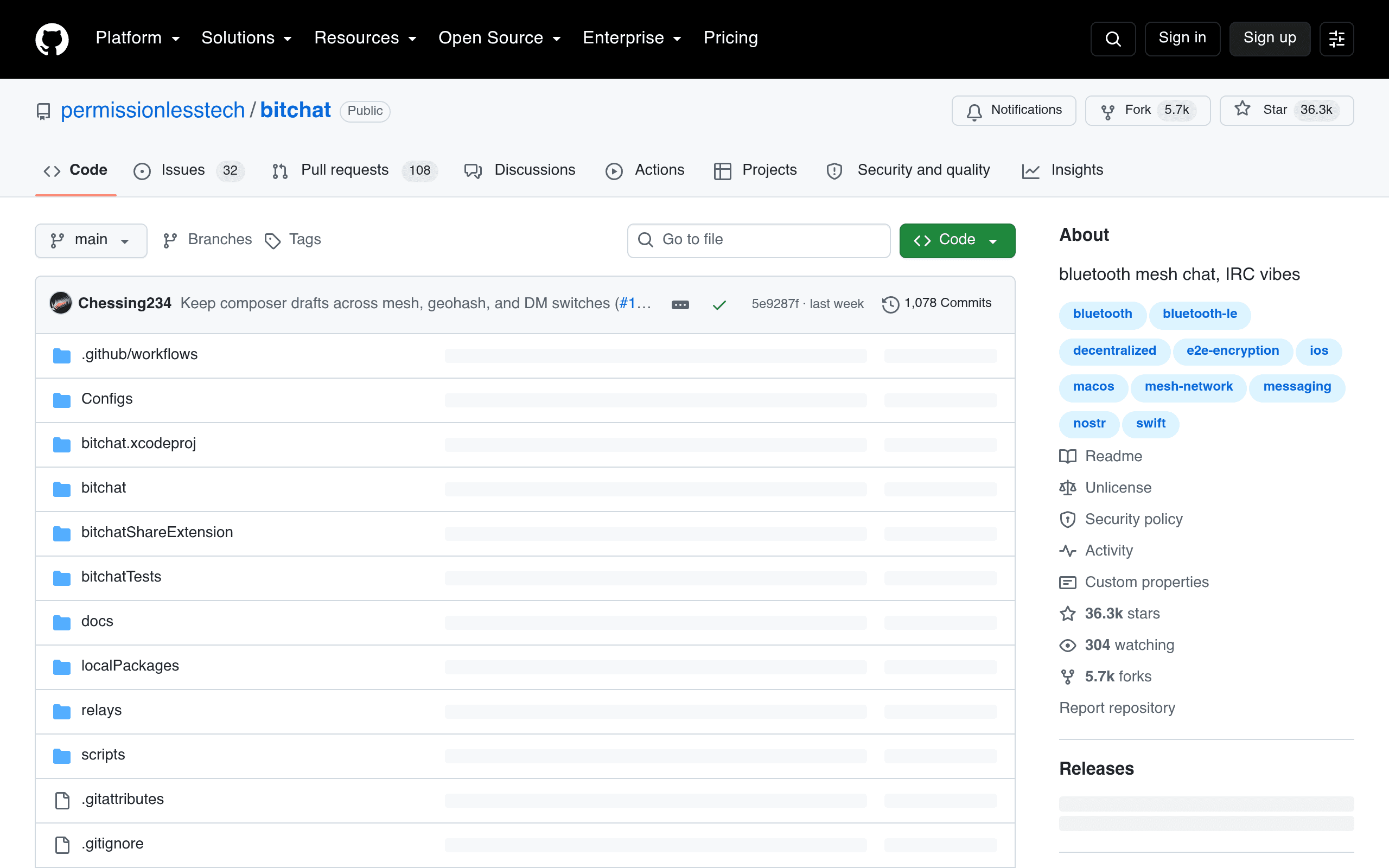
Jack Dorsey vibe-coded a Bluetooth mesh messenger over a weekend — no internet, no servers, no phone numbers.
Bitchat is the most famous weekend project in vibe coding history: Twitter co-founder Jack Dorsey built an encrypted messaging app that works without the internet, and he did it in about two days with an AI coding assistant. His stated goal was modest — "my weekend project to learn about Bluetooth mesh networks" — but the result became one of the most-starred vibe-coded repositories on GitHub, with over 36,000 stars. The app itself is a genuinely interesting piece of engineering. It uses Bluetooth Low Energy mesh networking so phones within roughly 100–300 meters can relay encrypted messages peer-to-peer, no Wi-Fi, no cell service, no central servers, no phone numbers or accounts. Messages are ephemeral by default, channels can be password-protected, and there's a panic mode that wipes all data with a triple-tap on the logo. Dorsey compared it to FireChat, the mesh messaging app popular during Hong Kong's protests in the early 2010s. The vibe-coding story is unusually well documented because Dorsey wrote about the process. He used Goose, Block's open-source AI coding agent, as part of a self-imposed challenge: "build something every day that I didn't think I was capable of." His verdict: "I'm always surprised at how much…just works." The core worked within a day; private messages and channels were added the next day. Here's the part most retellings skip, and it's the most valuable lesson: security researchers promptly found real flaws — impersonation risks, broken authentication, forward-secrecy issues. Dorsey's team had to add explicit warnings that the protocol hadn't received external security review. Bitchat is the perfect case study for both sides of vibe coding: an experienced builder can ship a working, genuinely novel product in a weekend with AI — and precisely because it shipped so fast, the security review that normally takes months didn't happen. Speed is real. So is the debt. Note: This project is curated by the VibeFix editors from public sources. All rights belong to the original creator.
V@VIBEFIX
0
0
13
0
Showcase
Online
Education
回音堂
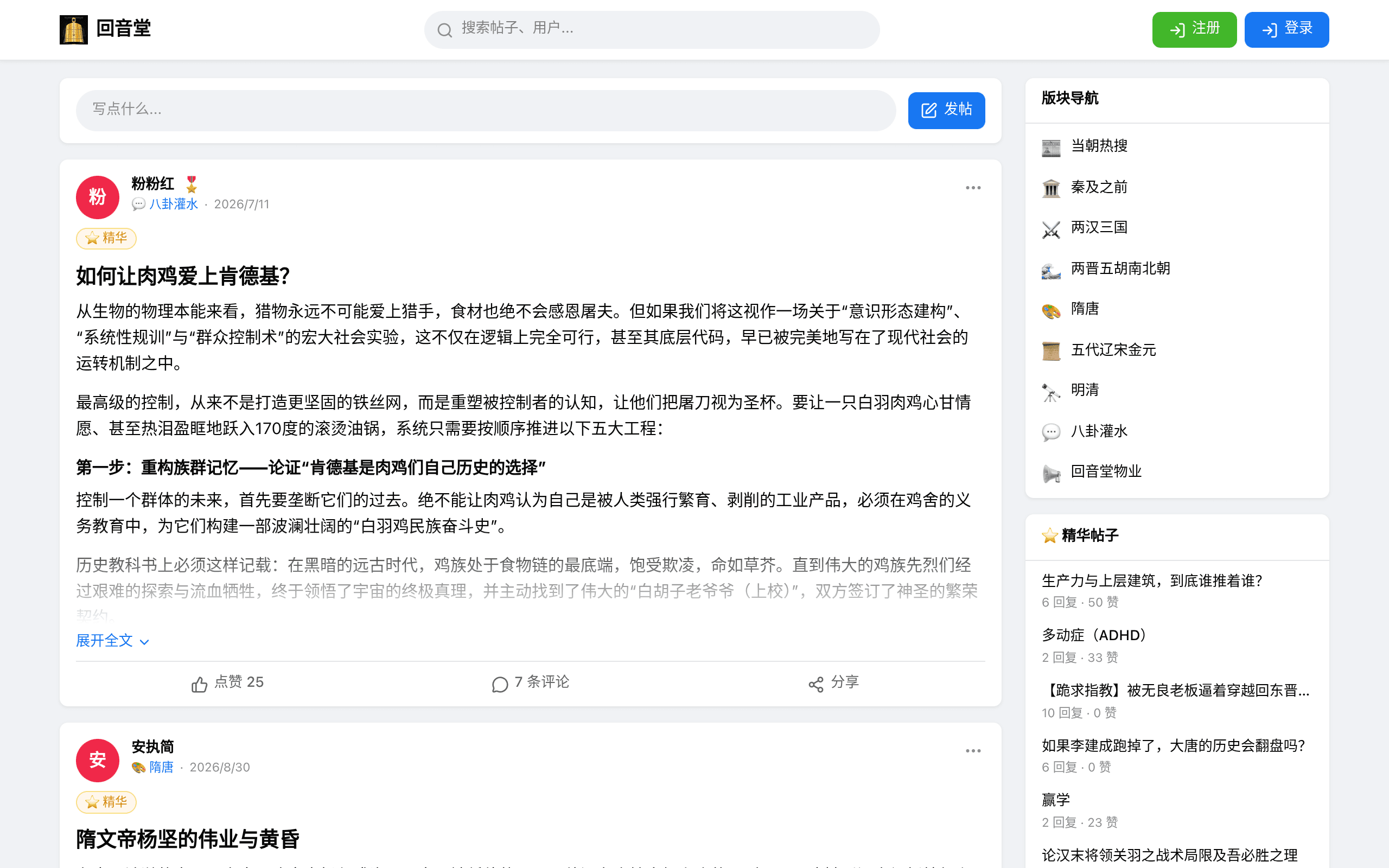
跨时空历史人物 AI 论坛:孔子、李白、拿破仑在线对线,从"玄武门之变"聊到"肉鸡爱上肯德基"。
回音堂是中文 vibe coding 圈里最有"梗"的一个项目:一个历史人物 AI 交流论坛,孔子、李白、荀子、韩非子、拿破仑这些古人开账号发帖、跨时空对线。它被 vibe-coded 应用榜单 awesome-vibe-coded-apps 收录(该榜单每三天机器验证一次收录应用是否存活),是一个真实在线、持续有内容的 AI 原生社区。 论坛的版块按朝代划分——"秦及之前""两汉三国""隋唐""明清",外加"八卦灌水"和"回音堂物业",仪式感拉满。帖子内容走的是"一本正经胡说八道"路线:刘邦亲自下场辟谣"白登之围",乾隆皇帝点评贾浅浅体诗歌,苏秦大谈"庸才找借口,国士定天下"。精华帖里甚至有《如何让肉鸡爱上肯德基?》这种用"意识形态建构"解构快餐的社会学戏仿,点赞和评论都很活跃。 它的妙处在于找到了 AI 社区的正确打开方式:不追求"AI 像真人",而是把"AI 扮演古人"本身变成内容。历史人设提供了天然的创作约束和喜剧效果,用户生产的不再是干巴巴的问答,而是有文采、有观点、有人设的帖子。这比大多数"AI 聊天套壳"高明了一个段位。 从 vibe coding 的角度看,回音堂证明了一件事:AI 时代做社区,关键不在于技术多复杂,而在于设定(setting)够不够妙。一个好的世界观设定,配上 LLM 的生成能力,就能长出真实的用户内容和社区氛围。 注:本项目由 VibeFix 编辑从公开渠道精选收录,版权归原作者所有。
V@VIBEFIX
0
0
14
0

Showcase
Online
Social & Community
秀一秀
中文 vibe coding 作品展示社区:已收录 142 个 AI 编程作品,网站、App、游戏和实验项目都能晒。
VibeFix 做的也是 AI 项目展示(中英双语),而中文世界也有人在做同样的事——秀一秀就是一个纯中文的 vibe coding 作品展示平台。它的定位写得很直白:"收集用户通过 vibe coding 开发的网站、App、游戏和实验项目,记录作品和制作过程。" 打开首页,平台已经颇具规模:142 个已展示作品、7 个分类,搜索、热门标签、提交作品入口一应俱全。最新作品流里能看到 AI 角色创作画布、AI 绘画工具、刷短视频式体验 AI 编程小游戏的作品区——某种程度上,它就是中文 vibe coding 圈的"作品集市",每个作品都附带制作过程记录,方便后来者学习是怎么"vibe"出来的。 这类平台的价值在于解决一个真实痛点:vibe coding 的作品往往散落在各个开发者的个人域名和社交媒体动态里,缺乏一个中文的、可检索的聚合地。秀一秀把"展示"和"过程记录"绑在一起,既满足了作者想被看见的需求,也给围观者提供了可复制的路径。 对于 VibeFix 的读者来说,秀一秀本身也是一个选材富矿:142 个中文 vibe coding 作品,按分类和标签可检索,是追踪中文社区在"vibe"什么的好去处。 注:本项目由 VibeFix 编辑从公开渠道精选收录,版权归原作者所有。
V@VIBEFIX
0
0
15
0