September's AI Coding Funding Frenzy: $10.8B Bought "Software Factories," Not "Coding Assistants"
In the second week of September 2026, eleven disclosed US venture rounds totaled roughly $10.8B, with AI coding taking the highlights: Cognition $2B ($48B valuation), Factory $200M ($5B, 3x in five months), Temporal $550M ($12.55B). This piece skips the "how much" noise to ask what the money is actually betting on: capital is flowing from "personal coding assistants" into "enterprise software factories" — with direct consequences for everyone who codes.

The second week of September 2026 may have been the loudest week of the year in US venture: eleven disclosed rounds raised roughly $10.8 billion, four of them clearing $1 billion each. And AI coding owned the highlights: Cognition took $2 billion at a $48 billion valuation, Factory took $200 million at $5 billion (3x in five months), Temporal took $550 million at $12.55 billion. Three checks, three stories, one shared thesis.
This piece skips the "how much was raised" noise and asks what the money is actually betting on: capital is flowing out of "personal coding assistants" and into "enterprise software factories." That shift has direct consequences for everyone who writes code with AI.
Three checks, three positions
Cognition: $2 billion at $48B (closed September 8). Led by Andreessen Horowitz and Accel, both new investors. Revenue run rate climbed from $492 million in May to roughly $900 million in September — nearly doubling in four months. The company behind Devin is becoming the highest-valued independent company in AI coding.
Factory: $200 million at $5B (September 15, via Reuters). It was $1.5 billion in April — more than tripled in five months. The investor list runs long: Blackstone, Khosla Ventures, Sequoia, Insight and five more firms, no single lead. Founder Matan Grinberg's line is worth remembering: "the world's largest enterprises are moving from individual coding agents to software factories that serve as the core foundation from which an entire software company operates."
Temporal: $550 million Series E at $12.55B (September 14). Co-led by Lightspeed. What it sells isn't coding — it's durable execution: the machinery that lets an agent run for days or weeks and survive a crash mid-task. Revenue run rate past $250 million, up more than 200% year over year.
Three different products, one investment logic: stop paying for "faster code writing," start paying for "software production itself." The personal-assistant war (Copilot, Cursor, Codex CLI) is over and its valuation story is told; the next act is "who operates the whole software factory" — planning, writing, testing, maintenance, security, incident response, the full production line.
Why now? Three pushes
First, enterprises are actually reorganizing. Coinbase and Block are both reshaping workforces around AI, citing productivity gains. When big companies restructure for AI, the buyer stops being the individual engineer's subscription and becomes the CIO's budget — deal sizes move from $20/month to millions per year, and the whole valuation model changes.
Second, "personal assistant" is commoditizing. Foundation-model companies and tool vendors are all making coding intelligence table stakes, and a $2/$10 standard price shallows every point tool's moat. Factory's play is instructive: it's betting on the operating-system layer — governance, orchestration, enterprise integration, measurement, institutional knowledge — the things customers can't easily rip out. Blackstone-style PE money coming in means capital is buying an "enterprise software" story, not an "AI tool" story.
Third, compliance and deployment shape became the moat. Factory supports cloud, on-premises, and air-gapped deployments — big banks and pharma companies can't let code leave the building, which locks consumer AI services out entirely. That barrier keeps Cursor and Copilot outside while leaving the whole market to the "software factories." Temporal's "survives a crash" sells the same thing: enterprise-grade agent reliability.
Three judgments for independent builders
First, stop building "another coding assistant." Capital just voted with $10.8 billion: the personal-assistant race is over; Copilot, Cursor, and Codex won. Indie opportunity lives in the factory's seams: vertical-industry agent workflows (durable execution like Temporal's, security-and-compliance like Factory's), or one sharp slice of "software factory" capability done small and well.
Second, "enterprise-ready" is becoming a universal requirement. Even indie projects are getting asked: where does data live? Can it deploy on-prem? Are there audit logs? Last week's ZCode "silently uploads your whole workspace" incident (we covered it) is the cautionary tale — enterprise customers are an order of magnitude more sensitive about "where did my code go" than you'd guess. Thinking through your data boundary early beats patching it later by a hundredfold.
Third, watch the "pay for outcomes" sprouts. Cognition's run rate doubling in four months isn't selling seats — it's selling output. As capital starts paying for "software factories," billing will eventually move from "per token / per seat" to "per delivered thing." If your product still charges per API call, ask whether it could charge per "bugs fixed" or "features shipped" — the closer to the money, the stronger the pricing power.
The rest of the week's money: the full $10.8B picture
Beyond the three highlights, eight more rounds that week complete the picture: Perplexity took $200M (AI search, $20B post-money), Sierra took $350M (Bret Taylor's enterprise agent company), Arc took $165M (The Browser Company's AI browser, $1.25B valuation), Aetherflux took $50M (space solar — seemingly unrelated, but AI funds are positioning for "compute energy").
All eleven together reveal three clear patterns: first, money is concentrating on "agent deployment" — pure model companies raised nothing that week; the model war is over, the application war has begun. Second, enterprise is the main battlefield — Sierra, Factory, Temporal are all toB; only Arc and Perplexity are toC. Third, energy is entering — Aetherflux's space solar plus off-list nuclear bets show capital positioning for "where AI's electricity comes from." The compute race's next stop is the energy race.
Where money didn't go: the personal-assistant lane stalls
More telling are the absentees: that week, no "personal AI coding assistant" raised big money. Cursor's last major round was earlier, Windsurf got acquired, Copilot rides Microsoft's balance sheet — the funding window is closing for independent players in this lane.
The reason is straightforward: with $2/$10 the standard price (art9/art11 in this batch), the "cheaper Copilot" story doesn't sell; with Codex, Claude Code, and Copilot CLI occupying the terminal (art16), there's no room left for "a better terminal" either. The personal-assistant lane has entered its "giant harvest" phase — users still grow, but new-user acquisition costs keep rising. Independent players have two exits: get acquired, or pivot to verticals.
The lesson for indie builders is direct: stop jumping into the "general assistant" red ocean. Factory's $5B valuation doesn't sell "better code completion" — it sells "compliant software factories for banks and pharma." Temporal's $12.55B doesn't sell "faster agents" — it sells "agents that survive crashes." Money rewards "specific" and punishes "general."
An indie topic shortlist: find the seams along the money's direction
The $10.8B points at three big directions, each with indie-sized seams:
Direction 1: "parts" for software factories. Giants build factories, but factories need parts: better code-review agents (guide9 in this batch), cheaper agent observability (guide5), compliance checkers for vertical industries. These parts share traits: too small for giants to bother, must-haves for enterprises, buildable by one or two people plus AI. Factory's Grinberg says "enterprises want software factories" — he didn't say "every part must be built in-house."
Direction 2: the agent "reliability" layer. Temporal bets on "durable execution" — agents that resume after crashes. Vast whitespace remains: agent testing frameworks, agent rollback schemes, agent audit tools. H2 2026's theme is "trustworthy," and "trustworthy" decomposes into countless small products. Each could be an indie business.
Direction 3: scenarios the giants "leave behind." Giants do general; verticals remain: code review for lawyers, charting agents for doctors, quiz tools for teachers — too small for giants to care. But "small" is relative: a 5,000-person vertical at $50/month each is $3M ARR. Indie builders don't need to "change the world" — they need to "serve 5,000 people well."
The counter-case: three bubble arguments, answered
Amid the $10.8B carnival, bubble arguments deserve a hearing. The three strongest doubts, and my responses:
Doubt 1: "valuations outrun revenue — it's a bubble." Factory 3x'd valuation in five months; revenue didn't 3x. Response: partly true. But Cognition's revenue doubled in four months ($492M→$900M run rate), Temporal's grows 200%+ yearly — the top's revenue growth earns its valuation growth. The bubble isn't at the top; it's in the "middle": companies whose revenue lags but whose valuations float up with the top will struggle in 2027.
Doubt 2: "everyone burns cash; nobody's proven profitable." Response: factual, but not news. AI infrastructure's script was always "burn to scale, then collect tolls" — AWS didn't profit its first decade either. The question isn't "losing money now" but "where's the scale inflection." If Cognition's rumored 60%+ gross margins hold, the inflection isn't far.
Doubt 3: "giants enter, startups all die." Response: the opposite — giants entering "grows the pie." OpenAI and Anthropic do the general layer; startups do verticals and factories — Factory's $5B valuation was raised right under the giants' noses. History: cloud's era saw AWS biggest exactly when SaaS startups were most numerous. Giants eat meat; startups drink soup — and there's plenty of soup.
My judgment: there's froth, but in "valuations," not "direction." "Software factories" are a real trend; the money's direction is right. What's wrong is "every self-described software factory is worth $5B." 2027 brings a "shakeout" — real-revenue companies stay, pure-story ones fall. For indie builders that's good news: post-shakeout, vertical seams get bigger.
The bottom line: September's $10.8 billion didn't buy "AI writes code better" — it bought "the means of software production is being rewritten." The assistant war is over; the factory war has begun. For big companies, that's a budget shift; for independent builders, it's a shift in what to build — stop asking "how is my assistant better than Copilot" and start asking "which enterprise's which production line does my factory fix." The more specific the answer, the closer the money.
Sources
Related articles
On October 8, 2026, Google Cloud launched the Gemini agent at Gemini at Work 2026: a universal agent for work that takes objectives, plans by itself, auto-selects between Gemini and Claude models per task, and introduces 'coworker agents' with their own email, calendar, and directory seat. Four judgments on why the second half of the agent race is about 'agents that feel like colleagues.'

Gergely Orosz visited OpenAI, Anthropic, Cursor, and Ramp and wrote up the 2026 state of the industry: near-100% AI-generated code, agent PRs up ~10x in eight months, code review degrading into theater, the IDE declared legacy. Key takeaways plus three verdicts and four actions for vibe coders.
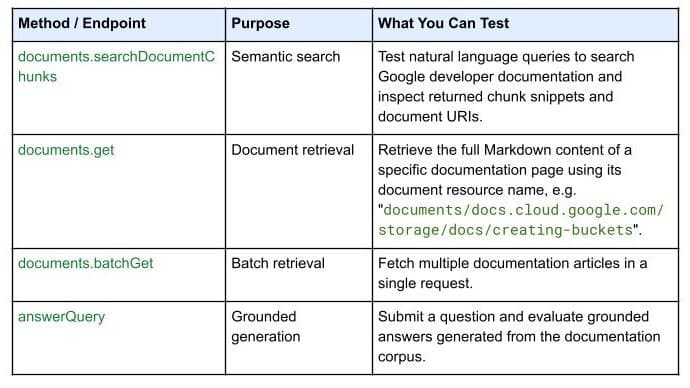
On October 7, 2026, Google Developers launched the Developer Knowledge API ecosystem: official Google Cloud, Firebase, and Android docs as a programmatic source of truth, with a gcloud CLI surface, an official Agent Skill (one-line install), an MCP server, and multi-language client libraries. Why 'docs as APIs' uproots vibe coding's classic failure of models misremembering APIs.