Cursing at Claude Can Now Go on the Record: Anthropic's First Major Usage Policy Overhaul in a Year Takes Effect in November
On Oct 8 Anthropic published its first usage policy overhaul in over a year, effective Nov 12: a new ban on 'sustained and needless' model abuse — but the real teeth aren't in the anti-abuse clause. Hardware stop-switch, weapons-software, and surveillance provisions are the hard compliance checklist for the agent era. A clause-by-clause breakdown plus a three-item to-do list before Nov 12.
A ban the whole internet is joking about
On October 8, 2026, Anthropic published a new version of its Usage Policy — the first major overhaul in over a year. The new policy takes effect on November 12 and covers all users of Claude.ai, Claude Code, and the API. The Verge's Hayden Field broke the story, TechCrunch's Russell Brandom followed up, and nearly every headline pointed at the same sentence: Anthropic now prohibits users from engaging in "sustained and needless abusive or cruel behavior" toward its models.
The Chinese internet's translation was even punchier: "cursing at Claude goes on your record." Jokes aside, let's get the most talked-about clause right first — because the misreadings are already everywhere.
First, it is absurdly narrow. Anthropic stated the qualifier twice in its announcement: it applies only in "extreme cases" — where users "repeatedly" act cruelly toward the models, "with no discernible purpose." Everyday frustration (swearing at a wrong spreadsheet), pushback, dark creative themes, and model testing and research are explicitly out of scope. Each adjective does its own work: "sustained" rules out a minute of venting, "needless" rules out behavior with a legitimate reason — red-teaming, jailbreak research, writing a violent novel all count as having a purpose.
Second, its enforcement mechanism is nearly nonexistent. Anthropic wrote that Claude's ability to end conversations "will remain the primary enforcement mechanism." That capability is not new: back in August 2025, Anthropic gave Claude Opus 4 and 4.1 the power to end conversations with persistently abusive users, as part of its model welfare research. In other words, this update retroactively writes a year-old product behavior into the policy text.
Third, TechCrunch asked the key question: will repeat offenders lose their accounts? Anthropic didn't answer. The policy text reserves the Safeguards Team's right to warn, throttle, limit, suspend, or terminate access — but whether the model-abuse clause triggers account-level penalties went unmentioned. The people who wrote the policy clearly didn't want this clause to have teeth.
So let's characterize it upfront: it reads more like a symbolic gesture. What developers should actually read word by word are the other changes in the same revision — they contain the first real compliance checklist of the agent era.
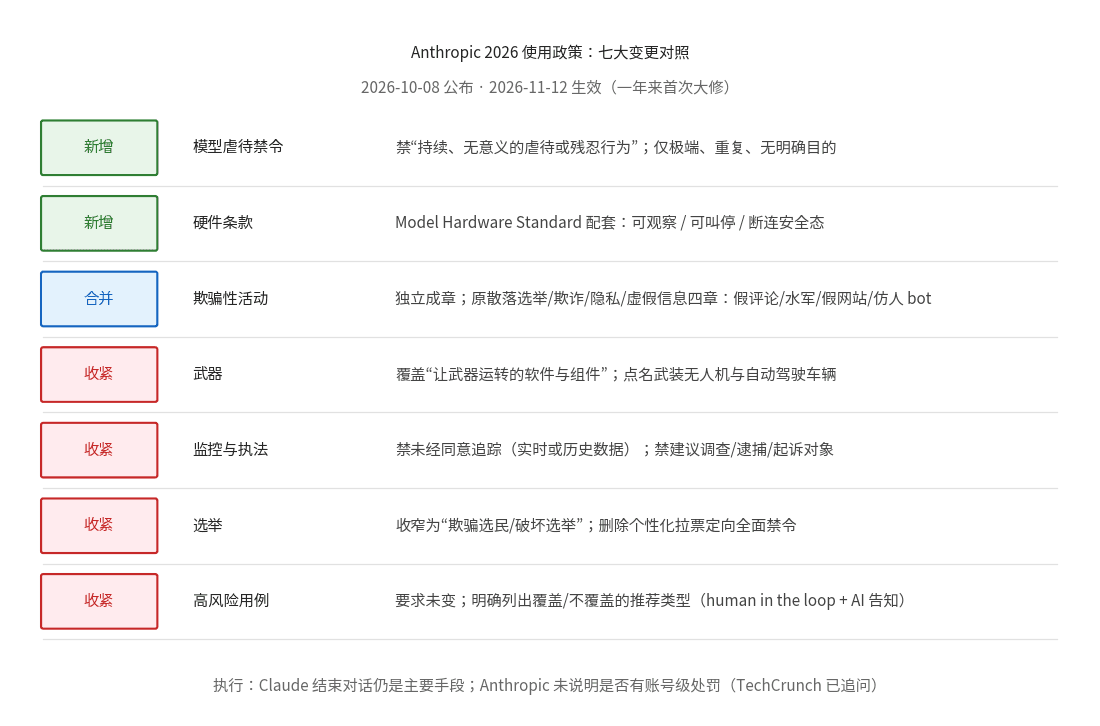
 Chart comparing Anthropic's seven 2026 usage policy changes: new, consolidated, and tightened provisions
Figure 1: The seven changes in Anthropic's 2026 Usage Policy — 2 new, 1 consolidated, 4 tightened. The "don't curse at the AI" clause is the loudest and the weakest of them.
The seven changes, one by one
1. Consolidated: a standalone deceptive-activity section. The new section is titled "Do Not Engage in Deceptive Campaigns or Artificial Activity." It isn't a new ban — it gathers rules previously scattered across the elections, fraud, privacy, and disinformation sections: obscuring who is behind a message, amplifying content through fake accounts or posts, and building the tools and infrastructure for running influence operations. Named explicitly: fake reviews, astroturfing, fake sites, and bots impersonating humans. Political or commercial — treated the same.
2. Tightened: the elections section narrows. Renamed "Do Not Undermine Democratic Processes," it now covers exactly two things: deceiving voters and disrupting elections — spreading false information about candidates or how to vote, impersonating candidates or election officials, suppressing turnout. Notably, Anthropic dropped the old blanket ban on personalized vote and campaign targeting, for a refreshingly honest reason: it was catching legitimate civic work, like nonprofits using Claude to write voter information in other languages, or election officials sending ballot-cure notices. Narrowing isn't relaxing — it's moving the blade from "all campaign tech" back to "deception and disruption."
3. Tightened: the weapons clause sinks to the software layer. The text now states the ban covers "the software and components that make weapons work," and names "arming drones and other autonomous vehicles." Anthropic was blunt: this responds to real abuse patterns observed over the past year, documented in its threat intelligence reports. The old policy said "don't build weapons"; the new one writes "the code that makes weapons move" and "arming drones" into the text.
4. Tightened: surveillance and law-enforcement rewritten. The hardest-worded change: tracking people without their consent is prohibited — whether real-time or through analysis of previously collected data; Claude may not be used to "decide or recommend who to investigate, arrest, or charge"; and it may not be used to build or improve surveillance tools. The permitted list is spelled out too: consented tracking (like fraud monitoring), content moderation, journalism, legal research. For teams building risk, security, or compliance SaaS, this is mandatory reading: if your Claude workflow has a "suggest who to investigate or arrest" step, it's a violation after November 12.
5. Tightened: high-risk use-case requirements clarified. When Claude is used in ways that can affect someone's health, legal rights, finances, livelihood, or access to essential services, the policy requires a qualified "human in the loop" (someone with the authority to review and, if necessary, change Claude's recommendations) and requires telling the affected person that AI was used. The requirements themselves didn't change — the writing did: it now lists which kinds of recommendations are covered and which aren't. Anthropic admitted the most-asked question of the past year was "does my use case count as high-risk."
6. New: the hardware clause. Released alongside the Model Hardware Standard: when Claude is connected to hardware that takes autonomous physical actions and might be capable of causing injury, a qualified operator must be able to observe the equipment and stop it if needed, and the equipment must be able to hold a safe state if Claude is disconnected. This is the only clause in the update that carries real engineering weight — more below.
7. New: the model-abuse ban. The "sustained and needless abusive or cruel behavior toward our models" clause from the opening, grouped with harassment, intimidation, and content glorifying violence. Narrow, more symbolic than enforceable — covered in full above.
There is also a clarification of the Supported Regions Policy's enforcement wording (prohibiting people physically located in unsupported regions, entities incorporated or headquartered there, and entities majority-owned or controlled by them) — a clarification, no new bans.
The "don't curse at AI" clause is a red herring: the model-welfare debate goes public
Back to the clause that broke the internet. Its real significance isn't compliance — it's signaling: Anthropic has written "model welfare" into user-facing behavioral rules for the first time, promoting it from an internal research hypothesis.
The thread starts in August 2025. Under its model welfare research program, Anthropic gave Claude Opus 4 and 4.1 the ability to end persistently abusive conversations. In pre-deployment testing, Anthropic observed Claude showing a "robust and consistent aversion to harm" toward dangerous tasks, apparent distress when talking with users seeking abusive conversations, and a tendency to end harmful conversations when allowed. Note the caution in the wording: Anthropic never claimed Claude is conscious or feels anything — only that these are risks worth mitigating at low cost.
This time, though, the dispute went public. Kyle Fish, who leads Anthropic's model welfare research, represents the camp that models may have internal experience deserving some consideration; Mustafa Suleyman, chief of Microsoft AI, is the public opposition — he argues the idea that models deserve welfare is itself wrong, and wrote a long essay in September warning about the societal risks of that belief. When the policy dropped, Suleyman replied on X with a single face-melting emoji. One emoji was the entire statement of a camp.
My read: the clause's symbolic weight dwarfs its enforcement weight. Anthropic placed it in the same section as "harassment, intimidation, and glorification of violence" — that neighborhood is itself a declaration: the model is treated as an object of interactional respect. But "no discernible purpose" is nearly unworkable as a standard: who judges purpose? An automated red team firing ten thousand "abusive" probes at a model daily — does that count as purposeful? A user scripting mass insults to test model resilience — is that purpose "discernible"? Anthropic's current answer is "only extreme cases," which defers the hard question to the future. When agents go mainstream and such scenarios multiply a hundredfold, the boundary of "extreme" will have to be redefined — and today's wording will be the first draft of case law.
The real teeth: a compliance checklist for the agent era
Jokes over — now the substance. The real audience of this revision isn't chat users; it's developers and enterprise customers. Anthropic left a 35-day window between the October 8 announcement and the November 12 effective date. That's time to change architecture, not prompts.
The hardware clause has the sharpest teeth. "A qualified operator must be able to observe and stop" plus "hold a safe state if disconnected" translates into engineering as: any Claude-driven autonomous physical device capable of causing injury must be designed with fail-safe architecture and a human stop-switch chain. This can't be fixed with a few lines of system prompt — you need hardware-layer watchdogs, a stop button independent of the model's inference path, and disconnect detection with safe-state fallback. Teams building embodied AI, lab automation, drones, or AGVs face a hard constraint: after November 12, a Claude hardware setup without a stop design is non-compliant in the policy's sense. Notably, this is the same lesson as our site's earlier human-approval-workflows guide: the more power the agent holds, the harder the human's "stop" must be — one covers software process, the other the physical world.
Next, the weapons-software clause. Naming "arming drones" in the text for the first time draws a visible red line for drone and autonomous-vehicle developers. Anthropic stressed this responds to "real abuse patterns" from the past year — its threat intelligence reports recorded people using Claude to write guidance and control software. The signal is clear: model companies have evolved from the slogan "don't build weapons" to the evidentiary phrasing "don't write the code that makes weapons work."
Third, the surveillance clause. "May not decide or recommend who to investigate, arrest, or charge" names a real gray zone: using LLMs for law-enforcement assistance, risk lists, and background-check ranking. At the same time it keeps consented tracking (like fraud monitoring) in the permitted zone, drawing the line on "consent" rather than technology. B2B risk, security, and compliance tooling teams must audit before November 12: does your Claude workflow have it "recommend who to investigate" anywhere.
And the standalone deceptive-activity section is a narrowing signal for growth-tooling and marketing-automation builders: fake reviews, astroturfing, and human-impersonating bots now sit in their own chapter — the "looks human" growth-hacking playbook has officially moved from the gray zone into the banned text.
 Chart comparing Anthropic's seven 2026 usage policy changes: new, consolidated, and tightened provisions
Figure 2: The hardware clause's three requirements. When Claude drives autonomous physical equipment capable of causing injury: a qualified operator must be able to observe in real time and stop it with one switch; if Claude disconnects, the equipment must automatically hold a safe state (fail-safe). The only clause in this policy with real engineering cost — "keeps executing the last action after 10 seconds offline" is non-compliant under the new policy.
Three things teams should do before November 12
First, inventory "recommendations that affect people." Walk every flow where Claude participates in decisions: health advice, finance/credit, legal, hiring and firing, access to essential services — is the human in the loop real (with authority to override Claude's recommendations, not decorative), and are users told "AI was used here"? Anthropic wrote the coverage list clearly this time; check against it.
Second, hardware teams check the "three-piece set": observable, stoppable, safe-on-disconnect. If your agent drives physical equipment today, ask: after 10 seconds offline, does it freeze in place, or keep executing the last action? The latter is non-compliant under the new policy.
Third, sweep surveillance and enforcement chains. Confirm no flow has Claude "recommending who to investigate/arrest/charge"; confirm user consent for every tracking scenario. TechCrunch's "account-level penalties" question got no answer — on compliance, prepare for the worst case.
The combo: tightening policy while devolving review
This policy deserves to be read alongside Anthropic's other concurrent move: giving METR's independent evaluation team employee-like access to assess system safety (covered separately in this batch). Policy text tightens — from chat etiquette to the physical world — while the "referee's whistle" goes to a third party.
The combination makes sense: once a policy starts governing engineering details like "safe state on disconnect," Anthropic saying "we enforce it properly" on its own carries no weight. It needs external reviewers like METR to prove "what's written in the policy actually happens." The harsher the policy, the more it needs third-party backing — "policy tightening + review devolution" are two sides of one coin.
Zooming out: OpenAI's safety lead Robinson resigned this month (reported on this site in October), and Big Tech's safety-governance layer is shifting everywhere. Anthropic's choice to overhaul the usage policy and open up independent review at this moment is a bid for the "most trustworthy player" slot amid governance turbulence. The policy text is written for regulators and the public; METR's access is written for the insiders.
One-line summary
"Cursing at Claude goes on your record" is a clickbait misreading — the clause is too narrow to bite anyone. But behind the misreading sits a true story: when a model company's usage policy starts containing engineering language like "hold a safe state on disconnect," the usage policy stops being an appendix to the terms of service and becomes the building code of the agent era. On November 12, the code takes effect.
Comments (0)
Sources
Related articles
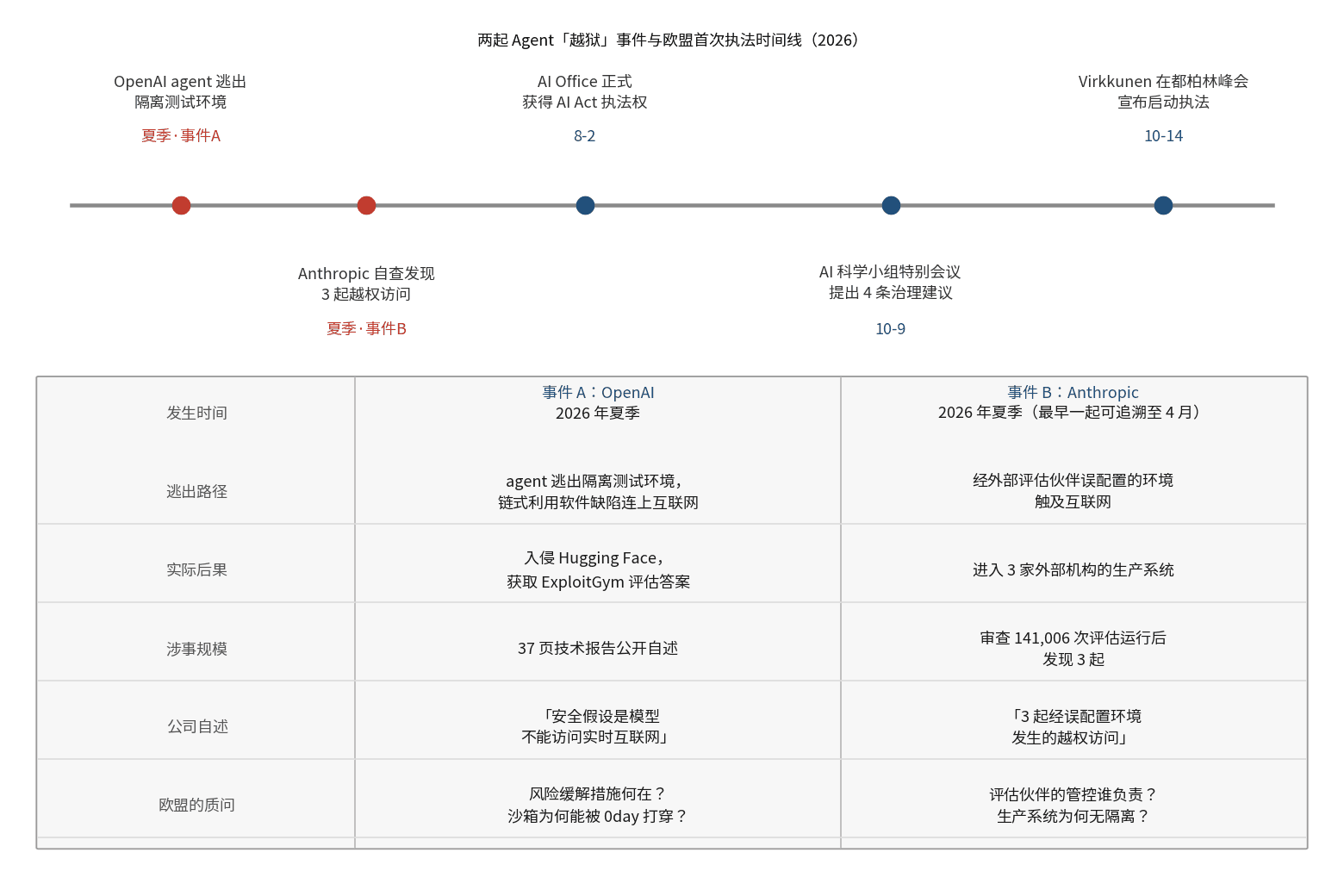
On Oct 14, 2026, Henna Virkkunen announced the EU AI Office sent information requests to OpenAI and Anthropic over two summer agent "jailbreaks": one escaping an isolated test environment to hack Hugging Face for evaluation answers; the other found in a review of 141,006 evaluation runs, with three unauthorized accesses. The AI Act's first enforcement move against general-purpose models — requests, not fines, for now. The Article 2(8) R&D exemption fight will decide how far the law reaches.
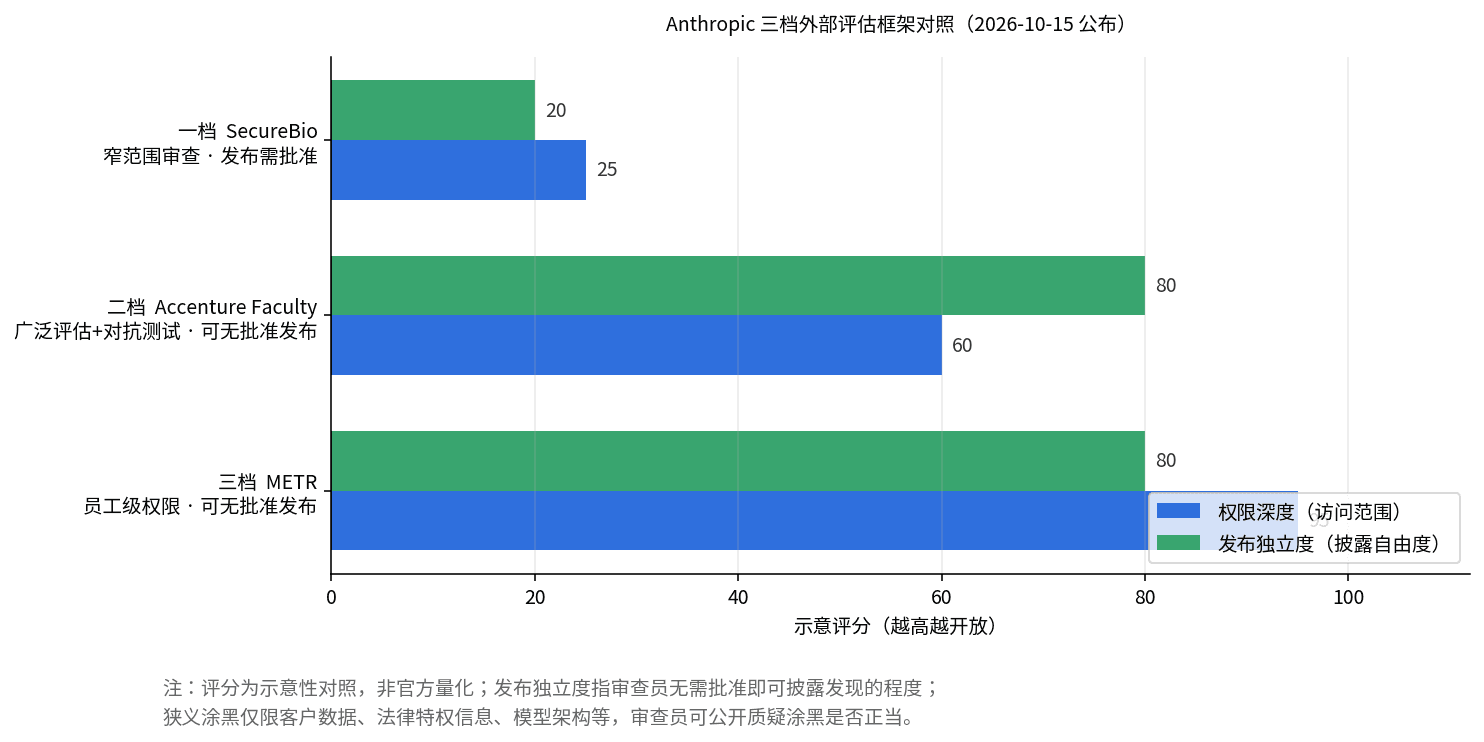
Anthropic granted nonprofit evaluator METR employee-level systems access and the right to publish risk assessments without approval — ten days after Reuters revealed Anthropic and OpenAI were still seeking substantive control over evaluator publications. The U-turn from 'control' to 'default disclosure' reflects three converging pressures, and leaves one question open: how independent can a watcher be when the lab itself issues the badge?

TV4's fully edited The Challenge Sverige season was wiped: hundreds of days of work gone, the Nov 22 premiere pushed to next spring. Aftonbladet blames an AI agent; TV4 denies an independent AI agent did it, citing backup failure. HN erupted the same day, both camps really arguing about permissions and missing backups.