Claude Grows Two New Hands: Dashboards and Motion Enter Beta
On October 8, 2026, Anthropic put Claude Dashboards and Claude Motion into beta: dashboards built from plain-language questions on live company data, and animations generated as editable code rather than video-model footage. Docs, Slides, and Design went GA on all plans, with 45M+ artifacts created to date.
The short version
On Thursday, October 8, 2026, Anthropic announced two new Claude features entering beta: Claude Dashboards and Claude Motion. In the same announcement, Claude Docs, Slides, and Design graduated from beta and became available on every plan — including Free. The company also disclosed a striking number: more than 45 million documents, decks, and designs have already been produced inside Claude.
A note on dating, so nobody has to take the timeline on faith: October 8 is corroborated by three independent traces — the official @claudeai account posted on X that day that "Claude Dashboards and Claude Motion are in beta today"; the Reuters wire carries the timestamp Thu, 08 Oct 2026 19:01:20 +0000 (and October 8, 2026 was indeed a Thursday); and claude.com/blog lists the announcement post "Build live dashboards and animate explainers with Claude." Every fact below comes from Anthropic's official product page (claude.com/features/artifacts, including its FAQ) and the announcement itself — the default source for all feature details cited here.
The headline takeaway: this update isn't about a smarter model. It's about two new kinds of output — self-refreshing data dashboards, and editable animations driven by code. Add the now-GA document trio, and Anthropic's intent is unmistakable: Claude is no longer aiming to be "a clever chat box" but "the starting point of work," with every artifact beginning life inside a conversation.
Claude Dashboards: a data dashboard growing out of the chat box
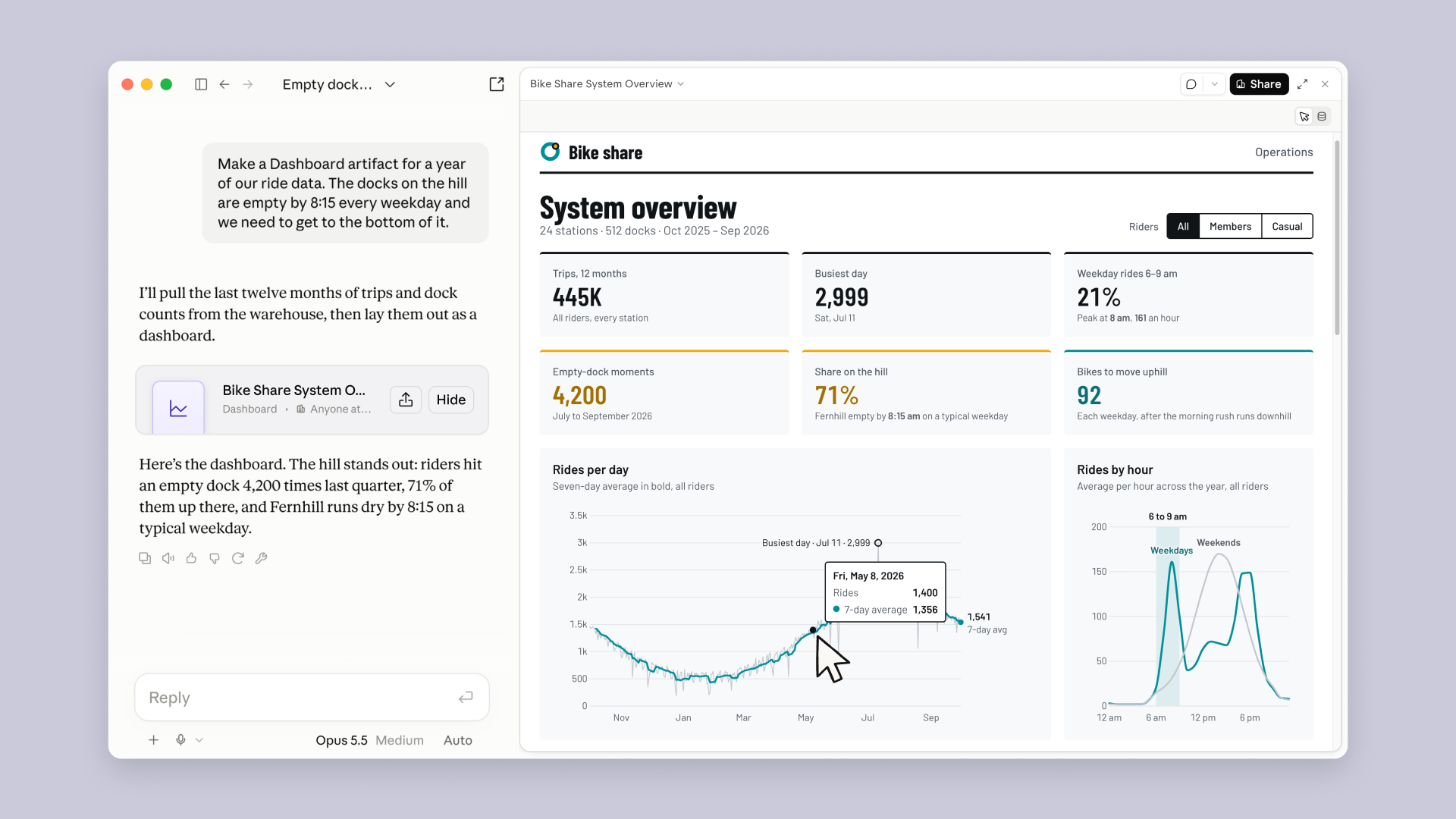
The logic is disarmingly simple: connect your company's data inside a Claude conversation, ask a question in one sentence, and Claude writes the queries, picks the charts, and assembles a dashboard that refreshes itself. The official product page is deliberately restrained about positioning: this is not a BI replacement. It's for "quick questions" — the kind that used to require opening a data platform, dragging fields around, and waiting on refreshes.
The full workflow looks like this: you start from a spreadsheet, a report, or a live connection to a CRM like Salesforce or a data platform; you ask in plain language — say, "how do this week's signups compare to last month"; Claude queries the data, generates the charts, and assembles the dashboard; from then on, the dashboard stays current as the underlying data changes. No SQL, no chart-type picking, no remembering which table you looked at last time.
What it connects to
The announcement names five data platforms for direct connection: Amazon Redshift, Google BigQuery, ClickHouse, Databricks, and Snowflake, plus Salesforce as the CRM representative. The post also mentions support for other connectors — meaning anything Claude can connect to can theoretically feed a dashboard. That's good news for teams already invested in Claude's connector ecosystem: connect a source once, and Q&A, documents, and dashboards can all reuse it.
Two transparency details worth noting
First, every chart displays when its data was last refreshed. You can see at a glance whether a number is five minutes old or a week old — no more being misled by stale data wearing a fresh face. Second, every number can be clicked to reveal the query behind it. For data practitioners, this matters more than "the AI just gives you an answer": visible queries mean auditable, reproducible, take-it-and-modify-it results.
This design deserves a second look. The trust problem with AI-generated content is the black box at its core: the model hands you a number, you don't know how it was computed, and you can't put it in a report. Anthropic's answer isn't "make the model more accurate" — it's to lay the evidence chain on the table. The query is the evidence; the refresh timestamp is the expiry date. It's the same philosophy Claude has always had: it won't make the call for you, but it shows you all the reasoning.
Official line: not a BI replacement — one click to hand off
The product page FAQ carries a dedicated question: "Does Claude Dashboards replace my BI and analytics tools?" The answer is a flat No. The official positioning is "quick exploration": ask a question, get a dashboard that stays current, with the query behind every chart. When a question needs deeper analysis, you send the whole dashboard to the tools your team already uses.
The announcement lists eight hand-off destinations: Amplitude, Grafana, Hex, Mixpanel, Omni, Perplexity, PostHog, and Sigma; Looker, monday.com, and Tableau are marked as coming soon. Note the composition of that list: product analytics (Amplitude, Mixpanel, PostHog), visualization and data platforms (Grafana, Hex, Omni, Sigma), and AI search (Perplexity). The subtext: Claude is the starting point, specialist tools are the finish line — exploration happens in Claude, deep work lands in the tools built for it.
Claude Motion: the output is code, not video
Motion tackles a different need: turning reports, charts, and product explainers into animations. The official example is "explain a quarterly earnings report in 30 seconds" — describe what you want, get an animation, adjust it in the editor, export an MP4. One conversation stands between a static report and a playable explainer video.
But the key technical distinction — and the most interesting part of the whole announcement — is this: Claude Motion does not use a video generation model. No synthetic footage, no AI-generated spokespeople. Instead, Claude writes code that drives the animation of your text, charts, shapes, and images. The FAQ's own words: "Claude writes code that animates your text, charts, shapes, and images, so you can edit every detail, word, and number."
Why "code, not video" matters
Video generation models suffer from one-shot syndrome: generate a 10-second clip, spot a wrong number or an awkward sentence, and your only option is to regenerate the whole thing and roll the dice. Motion's output is code, which means every parameter of the animation is precisely editable — change a word, adjust a duration, swap a number. Deterministic edits, no re-running the entire generation, no praying the logo doesn't come out crooked this time.
For developers, the significance runs one layer deeper: code goes into Git, survives code review, supports test assertions like "the number shown at second 5 must equal Q3 revenue," and diffs cleanly between versions. Animation stops being a black-box artifact and becomes a maintainable software artifact. That's the same spirit as vibe coding: what AI generates must be something humans can take over, modify, and take responsibility for. Pixels and video frames can't do that. Code can.
There's another way to frame it: video generation models solve "creation ex nihilo" (conjuring footage from a prompt); Motion solves "precise communication" (explaining text, numbers, and charts you already have). These are fundamentally different technical bets, and Anthropic picked the second — because it matches what office work actually needs. A quarterly report explainer doesn't need Hollywood-grade visuals; it needs accurate numbers, consistent definitions, and cheap revisions.
An easy-to-miss detail: no AI-generated people
The announcement states explicitly that Motion uses no video generation model — so there is no generated footage and no AI-generated people. In enterprise contexts that's a genuine selling point: brand teams' worst nightmare is an AI video surfacing a nonexistent "spokesperson" or a frame with questionable source material. Code-driven animation only moves the text, charts, shapes, and images you give it. Fully controlled inputs mean legal and brand teams can sleep at night. It's a hidden advantage of the "precise communication" route over the "conjuring footage" route: controllability is itself a feature.
Export in both directions: finished films and work-in-progress
Motion's export logic runs both ways: download a finished MP4, or hand the animation to professional tools for further polish. The announcement lists Adobe, Descript, HeyGen, Higgsfield, invideo, Luma AI, and Runway as continuation targets, with Canva and Captions marked as coming soon. It's the same playbook as Dashboards' hand-off list: Anthropic has no interest in fighting Adobe head-on in video editing. It wants to be the "first draft" of animation — a first draft you finish in Claude in ten minutes, then refine in specialist tools.
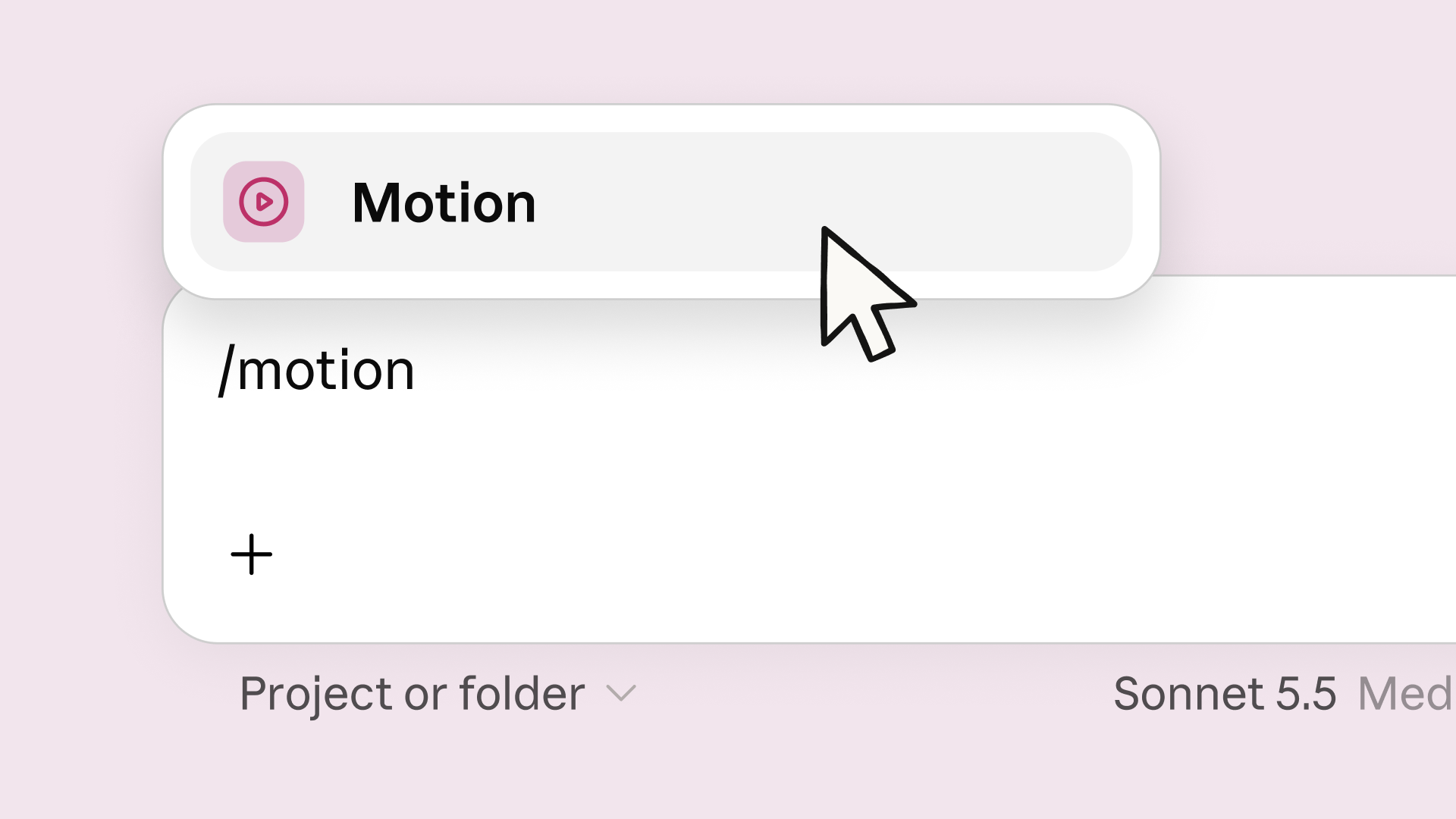 Claude Motion: animations driven by code, with text, numbers, and timing individually editable (illustration placeholder).
Enterprise admins, take note: both betas ship switched off
This is the easiest trap to fall into, so it gets its own section. The official FAQ is unambiguous: Claude Dashboards and Claude Motion ship off by default in enterprise organizations, and an admin must enable each one manually under Organization settings > Artifacts. The same page confirms something else: Claude Design, Claude Slides, and Claude Docs turn on by default on October 15, 2026 (except in HIPAA-enabled organizations) — but the two betas are excluded. After October 15, they stay off until an admin flips the switch.
Why would Anthropic default them to off? The reason isn't hard to guess: Dashboards plugs straight into a company's most sensitive data warehouses and CRM, and Motion produces video material meant for external audiences. Both carry a higher risk profile than writing documents. Default-off, admin-enabled is a "we hand you the keys" posture — and for enterprise IT, that's a plus. The harder an AI feature is to switch on by default, the harder the security review.
The other enterprise changes are worth going through one by one: Artifacts now support CMEK (customer-managed encryption keys) — you hold your own keys; on Team and Enterprise plans, teammates can co-edit the same doc, deck, design, or dashboard alongside Claude, instead of "one person asks, everyone watches"; with admin approval, slides, designs, dashboards, and animations can be shared outside the organization. Also, the standalone site claude.ai/design is being folded into the main Claude interface and stays open until December 14, giving users time to migrate — Claude Design will simply work inside any conversation from now on, including inside Claude Code.
Sharing permissions deserve a note too, and the FAQ is precise: artifacts are private to you by default; on Free, Pro, and Max plans, anyone with the link can view them; on Team and Enterprise plans, links stay inside the organization unless an Owner enables external sharing under Organization settings > Artifacts. The same dashboard travels very different distances on a personal plan versus a team plan — an indie developer on Pro can share a dashboard link with a client just fine, but inside a large company, nothing leaves the building without admin approval.
One final summary so nothing gets mixed up: Dashboards beta is on paid plans (Pro, Max, Team, Enterprise); Motion beta is Team and Enterprise only; Docs, Slides, and Design are on every plan, including Free. Free users get the trio this time — but not the two new betas.
Analysis: the AI office-suite war enters its "work surface" round
This reads differently in a wider frame. Just yesterday (October 9), this site covered Google's enterprise agent moves; now Anthropic is answering not with model capability but with a full set of "outputs": documents, decks, designs, dashboards, animations. The battlefield has shifted from "whose model is smarter" to "whose output plugs directly into workflows." Once model capabilities converge, the competitive dimension becomes: where do users' work products live?
Anthropic's play has a distinctive signature: don't replace — be the entry point. Dashboards doesn't touch BI's turf; it routes traffic to Amplitude, Grafana, and Hex instead. Motion doesn't touch video editing; it hands work-in-progress to Adobe and Runway. It looks like surrender; it's actually shrewd positioning. AI is best at the "0-to-1 first draft" and worst at the "1-to-100 specialist deep work." Anthropic aims to own the first draft completely, then gladly hands users to specialist tools — because once "draft it in Claude first" becomes habit, the entry point is captured. The value of the entry point has been proven over and over in software history.
Nor is Anthropic the only combatant in this suite war. The same batch of official announcements includes Claude for Government going generally available, Claude for Microsoft 365 entering early access, and Google Docs, Sheets, and Slides connectors (in beta) — Claude is pushing into both Microsoft's and Google's office territory at once. Meanwhile Google just showed its enterprise agent hand, and Microsoft's Copilot has long lived inside the Office family. The three strategies are actually quite distinct: Microsoft grows AI inside the suite, Google sends agents to do the work for you, Anthropic grows outputs inside the conversation. Microsoft's posture wins in the short term — users are already in Word. But Anthropic is betting on something else: as more work products (documents, dashboards, animations) are born directly inside conversations, people open Word less and less.
A second judgment: Artifacts are graduating from "chat attachments" to "work surfaces." Remember what Artifacts looked like at launch: a little window popping up beside the conversation, nice to look at. Now? Documents support real-time team collaboration, dashboards refresh themselves, animations are editable and exportable — the artifact itself has become a persistent, living work surface. Pair that with "more than 45 million documents, decks, and designs" (evidence the template ecosystem and collaboration habits have taken hold), and Anthropic is playing a much bigger game: once all your outputs live in Claude, switching costs do the rest.
A bucket of cold water is still warranted: both betas are just betas. Dashboard query accuracy and Motion animation quality are unproven until validated by real users at scale. Anthropic is honest about it — the FAQ's "does not replace BI" framing is expectation management. No matter how good the first draft is, if the first draft is frequently wrong, the entry point won't hold. Over the coming months, the metrics to watch are user retention and admin enablement rates — not how smooth the launch demos looked.
What indie developers should do about it
- Product demo pages and changelog videos just got a low-cost playbook. A 30-second intro video for an indie product used to mean learning to edit or paying someone. The new path: describe the animation in Claude Motion, fix the copy and numbers item by item, export the MP4, and polish in Descript or Runway only if needed. Note Motion is currently Team/Enterprise beta — personal Pro users can't reach it yet. Watch for the GA date, or check whether a team plan pencils out.
- Don't rush to build heavy BI for your data pages. If your SaaS is early and seed users need to see operational numbers, Dashboards' formula is worth copying: plain-language questions, automatic refresh, visible queries, checkable refresh timestamps. When vibe-coding your own data pages, steal the "click any number to see its query" interaction — it does more for trust in AI-generated numbers than any amount of chart polish.
- Confirm the beta switch now, not later. If you're in a Team/Enterprise org and want to try Dashboards or Motion on day one, ask your admin whether they're enabled under Organization settings > Artifacts — they're off by default, and the October 15 default-on wave doesn't include them. Don't discover the missing permission the night before a client demo.
- The "animation as code" idea is reusable on your own. Motion's core insight — code, not pixels or video frames, as the intermediate representation of animation — is entirely reproducible with open source, e.g. Remotion-style "write video in React" toolchains. Once you internalize this, you can build a version-controlled changelog-video pipeline without Claude Motion at all: copy changes, run a build, the video re-renders automatically. That's a genuine need for indie developers shipping frequently.
- Pay attention to the "first-draft entry point" niche. Anthropic just demonstrated a clever competitive strategy: don't out-feature incumbents in mature categories — own the upstream first draft of every workflow, then route users to the specialist tools they already pay for. Indie developers picking lanes can borrow this: don't rebuild a BI tool or a video editor; build the "first-draft generator" for one vertical, then hand users to the pro tools. Least resistance, clearest value.
One-line summary
Claude is morphing from "a clever chat box" into "the starting point of outputs": dashboards answer quick questions, animations are code-driven, and the document trio is fully GA. For indie developers, the two design judgments behind the betas matter more than the betas themselves — visible queries build trust, and code as an intermediate representation brings maintainability. Both hold for any AI product. And don't forget to nudge your admin about the switch: the beta door is ajar, but the key is in the admin's hand.
Sources
Related articles
Adversa AI disclosed CCI on October 6: malicious instructions hidden in AES-256 ciphertext trick Copilot CLI in autopilot mode into decrypting them in its own runtime and obeying the output as trusted instructions. In the demo, one encrypted page made the agent read a local .env.prod and silently exfiltrate it in 28 seconds. Microsoft's mai-code-1.1-flash fell for it half the time while GPT-5.6 models refused it outright; GitHub reproduced the chain but declined to call it a vulnerability.

Google's Nano Banana 2.1 is GA: image output tokens halved to $30 per million ($0.0336 per 1K image), but input tripled to $1.50 per million. We run the monthly math for a typical vibe project generating 200 images a week — plus a migration checklist for the deprecated Nano Banana 2.
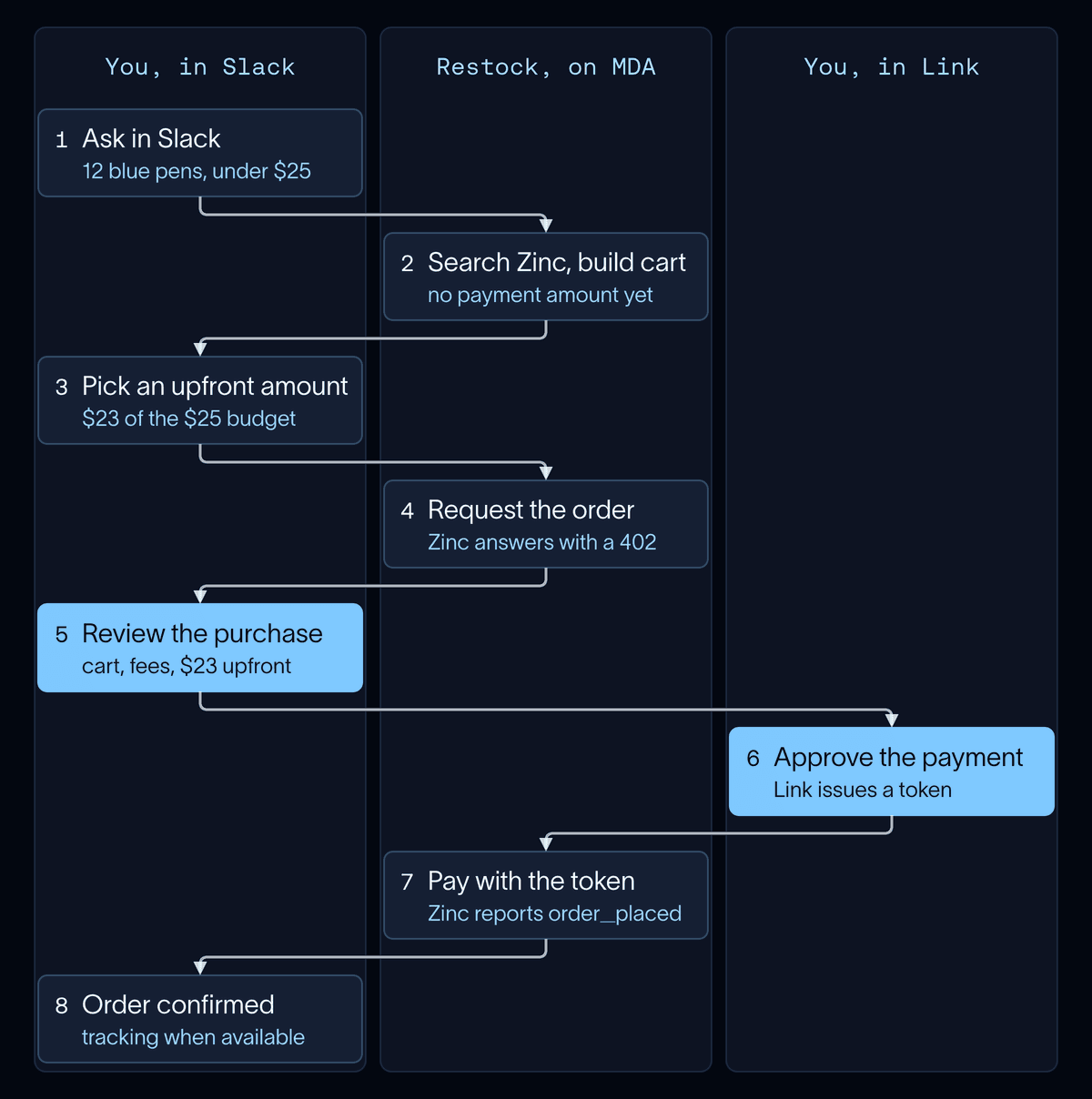
On October 8 LangChain open-sourced Restock, an agent that shops in Slack and pays with Stripe's Link wallet (real $22.18 order, real refund) — while its August 18 AgentCore Payments middleware wired the x402 protocol into the LangChain toolchain for autonomous micropayments. This piece breaks down the two payment tracks, an x402 vs. Stripe decision framework, budget guardrails for one-person teams, and the security red lines.