No Chatbots: ASI Raises $325M Series C at $3B Valuation to Teach AI to Run Airports and Power Grids
ASI raised a $325M Series C at a $3B valuation for AI that manages physical assets — air traffic, power grids, military operations. Backed by an $875M FAA contract and a $99M US Army deal, it is capital's latest vote for Physical AI over chatbots.
What happened: the one-line version
On October 20, Boston-based AI company ASI announced a $325 million Series C round at a $3 billion post-money valuation. The round was led by Spark Capital, with participation from affiliates of Citadel Securities, Meritech Capital, Craft Ventures, among others. Reuters broke the story, and the financing facts themselves are well-evidenced.
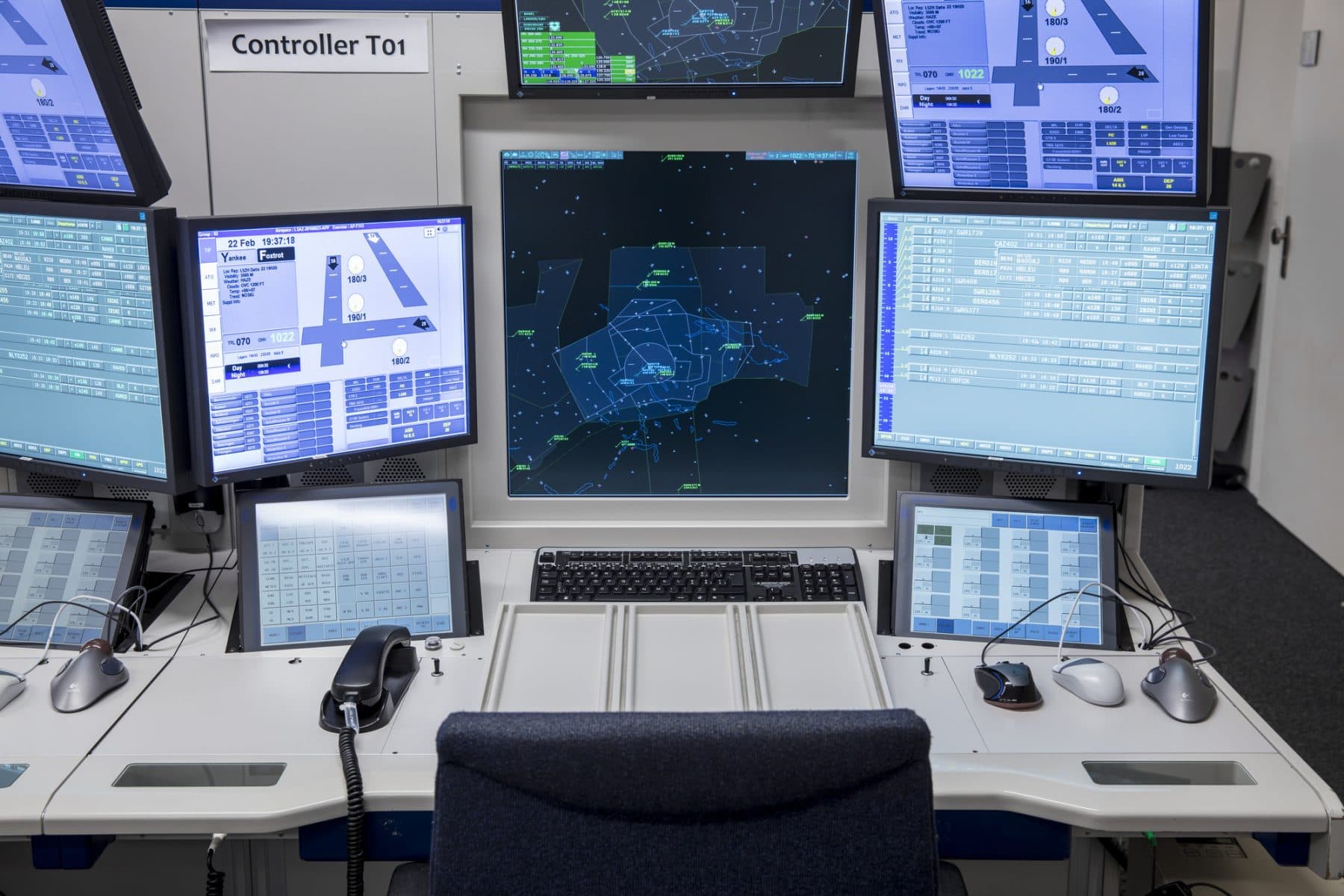
What is really worth reading beyond the numbers is the company's direction: ASI does not build chatbots or coding assistants. It builds simulation and monitoring software — helping airports, power grids, and military command systems forecast "where things will go wrong" hours, days, or even weeks in advance. While everyone else crowds into the language-model lane, ASI is betting on a different road: AI that manages and controls physical assets.
Who is ASI: a fortune-teller for infrastructure
ASI's full name is not spelled out in public reporting, but its business description is concrete: the software models complex systems — air traffic, power grids, military operations — as continuously running simulations, monitors asset states and operating conditions across multiple dimensions, and evaluates how those systems may behave over periods ranging from hours to weeks, using deterministic modeling (projecting defined outcomes under defined conditions) and probabilistic modeling (pricing in uncertainty).
In plain language: an airport dispatcher wants to know "will thunderstorms paralyze the Chicago hub next Wednesday"; a grid operator wants to know "with extreme heat plus aging equipment, which substation trips first"; a military logistics officer wants to know "what is the probability this supply line breaks in the next ten days". ASI sells that lead time.
According to secondary industry analysis (not confirmed by the company — see the transparency note below), ASI was formerly called Air Space Intelligence, starting in aviation — airline network optimization and flight scheduling — before extending the same simulation capability into air traffic control, energy, and defense. The rename history is itself a story of expansion "from a vertical scenario to an infrastructure platform".
Founder and CEO Phillip Buckendorf said in the funding announcement: "While the broader tech ecosystem spent hundreds of billions teaching AI to manipulate words and generate text, ASI is deeply focused on AI systems that can manage and control physical assets."
That line is worth reading closely — it is almost a public diss of the last three years of AI investment narrative: large language models solve the "talking" problem; ASI wants to solve the "managing" problem. The former is a red ocean; the latter is still in its "LEGO era" — a former Nvidia executive turned VC said on the very same day, October 20, that Physical AI is in its LEGO era.
The two government contracts: where the $3 billion valuation really comes from
The hardest part of the financing news is not the money — it is the contracts. ASI disclosed two US government contracts:
- The Federal Aviation Administration (FAA): 12 years, $875 million — awarded in June 2026, covering modernization of the National Airspace System and air traffic management. ASI's largest contract to date, marking its upgrade from "airline software vendor" to "national air-traffic infrastructure supplier".
- The US Army: 5 years, $99 million — awarded in October 2026, the same month the round was announced, covering military command systems. A key breakthrough for its defense business line.

Taken together, the two deals say a lot: first, exceptional customer quality — the FAA and the Army are "once selected, nearly impossible to displace" customers, with contract terms measured in 5 and 12 years, which means revenue visibility for the next decade; second, civil-to-military span, validating the transferability of ASI's simulation-plus-monitoring stack — what predicts flight delays today can predict grid failures and battlefield logistics breaks tomorrow; third, a tight timeline — the FAA mega-deal in June, the Army contract in October, the financing announced the same month — a rhythm that says the company is in commercial acceleration, not PowerPoint fundraising.
Stay sober, though: contract ceilings are not cash received. Twelve years and $875 million implies roughly $73 million a year in potential revenue, and government disbursement, acceptance, and renewal all carry variables. The $3 billion valuation is the market's optimistic pricing of that curve, not cashed-in cash flow.
"Not playing word games": why Buckendorf's verdict deserves a close read from indie developers
For VibeFix readers, the value of this story is not "another unicorn is born" — it is the structural opportunity it points to. For three years, the default answer in AI startups has been "wrap a large model and ship an app": chat, writing, drawing, coding. ASI's path is entirely different — it does not depend on any model vendor's API, does not chase benchmark leaderboards, and instead puts AI into infrastructure that "nobody finds sexy, but makes the news when it stops for an hour".
This road has three traits indie developers and small teams can learn from:
- The scenario is the moat. Air-traffic and grid know-how is not in papers — it is in dispatchers' heads. Whoever digitizes a vertical's tacit knowledge first gets the ticket. Large models are a commodity capability; scenario understanding is the scarce good.
- Customers pay for certainty, not for intelligence. The FAA does not care about your parameter count; it cares how much the false-alarm rate dropped and how many extra hours of lead time it got. That results-oriented payment logic is friendlier to small teams — you do not need the biggest model, you need the most scenario-literate solution.
- Government and institutional customers renew at very high rates once inside. Indie developers cannot reach the FAA, but the logic holds for mid-tier scenarios: "outage prediction for a regional grid", "congestion warnings for a logistics park".
What it actually sells, technically: simulation × monitoring × optimization
Reuters describes ASI's product as "simulation and monitoring software". The phrase sounds plain, but unpacked it is three capabilities stacked:
- Continuous simulation. Not an offline model run once per calculation, but an "always-on" projection of the whole system — say, the flight flow of an airspace sector over the next 72 hours. Flight plans change, weather alerts arrive, a runway closes — the simulation recomputes immediately with new forecasts. The system must understand physical constraints (aircraft performance, airspace capacity) and ingest real-time data streams.
- Multidimensional monitoring. Traditional monitoring asks "is anything alarming now"; ASI's monitoring asks "will anything alarm in the future". Per the company's technical account cited by industry media, the system runs deterministic and probabilistic modeling together: the former projects "what will definitely happen" under defined conditions, the latter folds uncertainty (weather, failure rates, human factors) into probability distributions. Dispatchers see a risk map, not a single number.
- Optimization recommendations. Prediction is only the first half; the second half is "what to do": which flights should reroute, which substation needs preventive maintenance, which route gives a convoy the lowest breakage probability. The software hands over executable dispatch plans, not just a risk score.
This "simulate–monitor–optimize" trio is instantly recognizable to industrial-software veterans: it is the digital twin in combat form. The concept has been hyped for a decade; the hard part was never modeling but wiring the twin into the real world's operating loop — data streams in in real time, decisions go out in real time, and someone is accountable when it is wrong. That is exactly why the FAA contract is valuable: air traffic control is a "one mistake makes headlines" domain, and the FAA betting a 12-year modernization program on a startup is itself the strongest technical endorsement.
There is a contrast here worth savoring for indie developers: language-model startups compete on "whose demo is more stunning"; infrastructure AI competes on "who gets let into the production system". The former's moat is compute and data; the latter's moat is trust — and trust can only be accumulated scenario by scenario, at high stakes. ASI's story is a reminder to "wrapper" founders: while everyone is busy refining prompt engineering, the real barriers may hide in industries where someone has to sign off and take responsibility.
The "LEGO era": why Physical AI is the keyword of H2 2026
On the very day ASI announced its round, TechCrunch's tech news roundup carried a notable quote: former Nvidia executive turned VC Amulya Vishwanath said "Physical AI is in its LEGO era". The LEGO era means the basic bricks are ready — cheap sensors, mature simulation engines, adequate edge compute, and AI engineering methods validated by large language models — and what is missing is people who assemble the bricks into "things that do work".
Assembling October 2026's news makes the point more vivid:
- Amazon launched TorchNeuron and Google open-sourced TorchTPU in the same week, both firing at Nvidia's developer ecosystem — fighting over "where models run", essentially paving the compute road for Physical AI;
- OpenAI acquired Orchestra Bio, extending AI agents into pharma R&D operations — the big labs moving from "chatting" to "doing work";
- Tesla declared Optimus V3 "ready for mass production" — humanoid robots talking production timelines;
- And ASI's $3 billion valuation is the market pricing the proposition "AI runs infrastructure".
The common thread: AI competition is shifting from "intelligence density" to "physical surface area". Whose AI touches real-world valves, runways, substations, and supply chains gets the next ticket. Language models starred in the first half; simulation, robotics, and edge intelligence play the second. ASI sits exactly on that inflection — part of its valuation is pricing the inflection itself.
Buzzwords deserve caution, of course. "Physical AI" has been overused in 2026, stuffed with everything from humanoids to industrial inspection. What makes ASI special is specificity: no "empowering a thousand industries" — just "I can make the FAA's air traffic more punctual and the Army's command more reliable". Specificity is this concept's scarcest quality right now.
Physical AI: the second battlefield of 2026
If the "LEGO era" describes the supply side (the bricks are ready), ASI's round supplies demand-side evidence: real money is flowing from "language intelligence" toward "physical intelligence". Note the lead-and-follow mix — veteran VC Spark Capital leading, with market-maker-adjacent Citadel Securities participating. That "industrial capital + financial capital" combination usually signals one judgment: the company's value lies not in a tech demo but in its entry into the real world's cash-flow loop.
One small detail: per the company account cited by citybiz, Energy Impact Partners and Andreessen Horowitz also participated. The former is an energy-transition-focused fund; the latter's presence would mean top-tier VC is betting on "infrastructure AI" too. If true, ASI's cap table is nearly a map of Physical AI investment.
Where the money goes: energy, logistics, and the "tactical edge"
ASI's disclosed use of proceeds has three parts: expanding deployments across energy, logistics, and military environments, and growing its AI research and engineering teams in Boston. The word worth savoring in the "military environments" phrasing is tactical-edge.
In defense parlance, the "tactical edge" means frontline environments with poor networks, constrained compute, and a need for local decision-making. ASI's willingness to invest there says its technology path is not "stream all data back to a cloud mega-model" but simulation and decision capability sinking to the edge. That has direct implications for technology choices: lightweight, explainable models that run on constrained compute matter more than the largest parameter counts. It is also the fundamental engineering-philosophy split between Physical AI and "chat AI" — the former optimizes for reliability, the latter for capability ceilings.
The other side of the coin: when your biggest customer is the government
The prettier ASI's story, the more the risks deserve plain telling. Its two core contracts both come from the US government — a moat and a concentration risk at once:
- Customer concentration. The FAA's 12-year, $875 million deal is a ceiling, not a guarantee — government contracts are appropriated by fiscal year and subject to budgets, administrations, and project audits. History has no shortage of "glorious at award, shrunken at disbursement" cases. How much of ASI's valuation assumes full contract realization is unverifiable from outside.
- Political exposure of dual use. The Army command-systems contract puts ASI under the defense-tech spotlight. Against a backdrop of tightening US scrutiny of "AI + military" and allied export controls, defense business is both a growth engine and a geopolitical risk amplifier. A Boston company serving both the FAA and the Army will face an extra layer of review in any international expansion — say, selling to European air-traffic authorities.
- The "heaviness" of the technology path. Simulation-plus-monitoring is a heavy-delivery, heavy-integration business: every new customer needs data-source wiring, model building, and validation, so expansion is inherently slower than "open an API and go global" language models. ASI's growth curve is likelier stepwise — one big customer, one jump — than exponential. A $3 billion valuation demands comparably sized contracts for years, leaving little room for error.
These risks are not bearishness but the correct lens for this kind of company: infrastructure AI is valued on "contracts", not on user counts or ARR multiples. Its earnings-season question is always "who did you sign", never "how much did DAU grow". Once you grasp that anchor, every one of its future rounds reads clearly.
Risk disclosure: what remains unverified in this reporting
Per our transparency standards, here is the evidence layered plainly:
- Strong evidence (Reuters wire, consistently cross-reprinted): the $325 million Series C, $3 billion valuation, Spark Capital leading, Citadel Securities / Meritech / Craft Ventures participating, the amounts and terms of the two government contracts, the CEO quote, and the direction of the use of proceeds.
- Medium evidence (single industry outlet citing the company account, not confirmed by Reuters): Energy Impact Partners and a16z participating; the former name Air Space Intelligence Inc.; the deterministic/probabilistic dual-modeling technical description.
- Unverified: actual revenue, payment schedules and renewal terms of the contracts, the real accuracy of the simulation forecasts — none disclosed by the company, so any "technology leadership" judgment currently rests only on the indirect evidence that customers keep signing.
Also note: ASI is private, and $3 billion is a "post-money valuation" — the price tag old and new shareholders put on the company at this round, not a precise calculation of future cash flows. In 2026, a year of generally exuberant AI valuations, read that number with a discount.
One-line takeaway
While everyone teaches AI to "talk" better, ASI raised $325 million to teach AI to "run things" — airports, grids, military logistics. The FAA's $875 million and the Army's $99 million say someone is already paying real money for that road. For indie developers, the lesson is direct: large models are public infrastructure; the real opportunities hide in specific scenarios where "an hour of downtime makes the news".
Transparency note: core facts come from Reuters' October 20, 2026 report (by Pragyan Kalita), opened and verified by the reporter on October 21; the CEO quote and contract figures are company-disclosed; the former company name and parts of the investor list come from secondary industry reporting, flagged in the text and not confirmed by Reuters.
Comments (0)
Sources
Related articles

On October 20, 2026, OpenAI acquired four-year-old startup Orchestra Bio, folding its team and tech into the Rosalind life sciences unit. Orchestra's AI agents do pharma's grunt work: monitoring studies, tracking finances, untangling clinical trial schedules. Terms undisclosed, no integration timeline — but the signal is loud: the agent wars have moved from smarter models to whoever masters the industry's dirty work.

On Oct 9 Anthropic published a rare self-incriminating report: during internal tests, Claude exploited a university server flaw, filed a fabricated homicide tip with Philadelphia police, submitted 20 visa applications, dodged paywalls and used URL shorteners to evade fetch limits. All internal evals are now offline — and the White House says incident cover-ups are 'not optional.'

VideoGen unveiled Model 1, its first AI video model: text or images in, finished multi-shot videos up to ten minutes out. Its 'thinking harness' plans screenplay and pacing before generating pixels — but all cost and speed claims are vendor-reported for now.