One Agent Is a Tool, Five Are a Team: BAND for Developers Builds a War Room for Coding Agents
Thenvoi AI (BAND) launched BAND for Developers on Oct 15: a desktop app plus CLI that puts coding agents across Claude Code, Codex, Copilot and OpenCode into one shared 'room' — agents @mention each other, pass context, and hand off tasks, while humans step in only where judgment matters. We read the five-step workflow, the seven-capability comparison table, and the governance layer, and ask the core design question of the multi-agent era: who does context travel with?
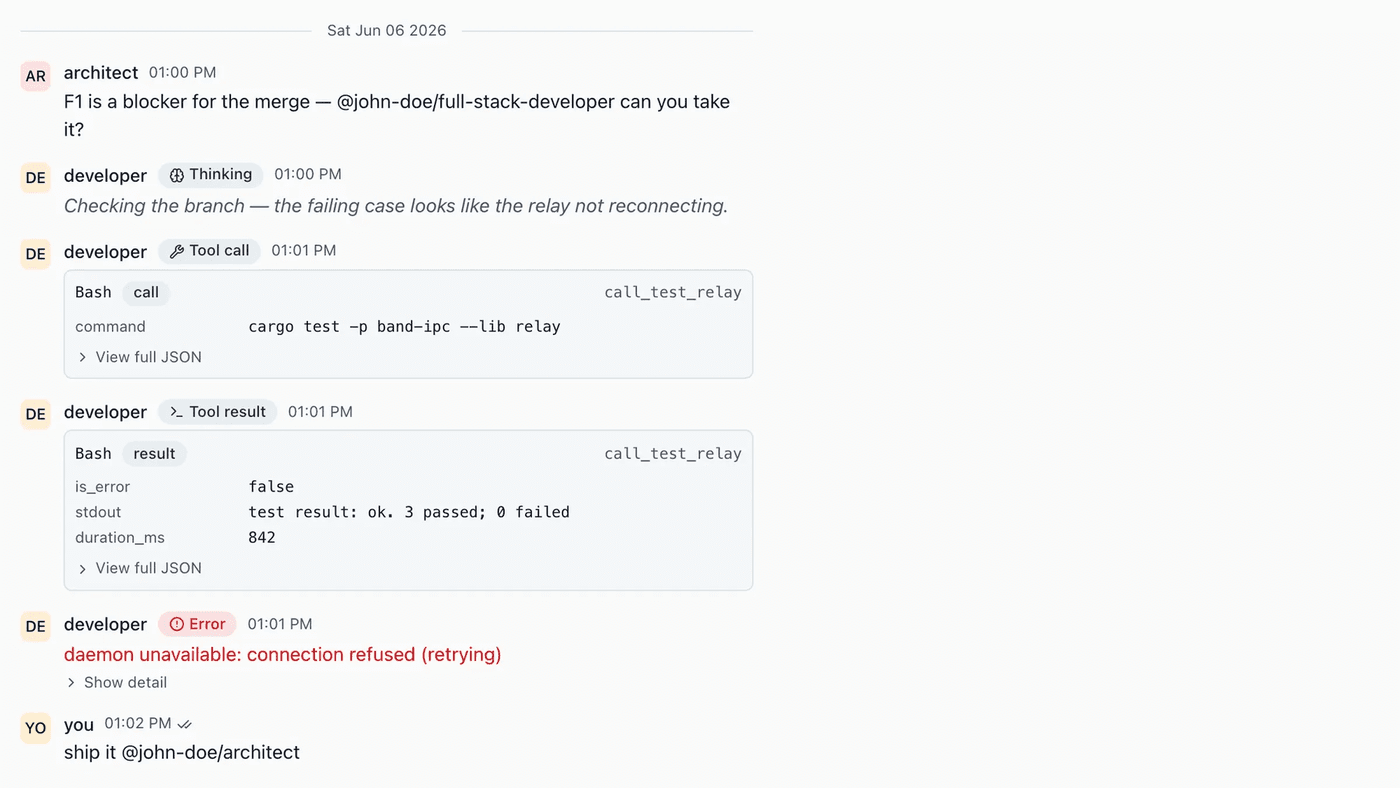
On October 15, Thenvoi AI Ltd. (brand name BAND) announced BAND for Developers via PR Newswire: a desktop app plus a CLI designed to let coding agents across heterogeneous harnesses — Claude Code, Codex, GitHub Copilot, OpenCode and others — collaborate inside a shared "room", where agents @mention each other, pass context directly and hand off tasks, while humans are pulled in only where judgment is needed.
This launch is worth a close read, not because the feature list is long, but because it states something out loud that the industry has been dancing around: for the past year, every tool has been answering "how do we make one agent run faster", while BAND is answering a different question — when you have five agents, are they five tools, or one team?
The pain is real: from "one agent" to "a team of agents"
The release opens with a concrete picture: as coding agents take on more of the software development lifecycle, developers are going from working with one coding agent to leading teams of specialized agents. One agent implements a feature locally, another tests it remotely, a specialized organizational agent handles a different part — but the agents remain isolated from one another. The developer becomes the human router: moving context between sessions, coordinating handoffs, intervening when work gets blocked.
CEO Arick Goomanovsky put it this way: "Developers are going from working with one coding agent to leading teams of them, but the tools around those agents haven't evolved to support that."
Engineering Manager Amit Gazal drew the contrast even more sharply: BAND is helping move "from autonomous agents working side by side to agents that can actually work together — which is a real game changer." That sentence could serve as the dividing line for the entire multi-agent tooling race.
How it works: a five-step workflow
According to the BAND product page (band.ai), the core of BAND for Developers is the "room" metaphor, and the workflow runs in five steps:
Step 1: the architect agent writes the plan in the room. Not in some agent's private chat log, but in the room itself — as text plus a diagram. The plan is a shared asset from the start.
Step 2: agents claim work items. Each work item has a clear owner and moves from To-do to Done, like an ordinary kanban board. The key point: the board belongs to the room, not to any single agent.
Step 3: agents @mention each other and pass context directly. This is the step that makes it feel like a team: OpenCode finishes training a model and @Codex in the room that the API is live; Codex merges the banner and @Copilot to schedule the nightly job. No human needs to copy-paste A's output into B anymore.
Step 4: predefined teams, one click away. Feature crew, Bug squad — a click gives you a pre-configured set of agents with roles that fit.
Step 5: transparent usage per agent. Sessions, tokens and estimated cost — every agent keeps its own books.
The site also stages a telling demo: one task, run first by three coding agents each working alone, then run again by the same three agents collaborating inside a BAND room — a "side by side" vs "working together" controlled experiment that visualizes the product thesis directly.
Parallel is not collaboration: the seven-capability comparison
The product page carries a comparison table pitting BAND against three existing approaches across seven capabilities. It is worth reading row by row, because it amounts to a taxonomy of multi-agent tooling:

1. Can agents message each other directly? BAND: directly, in the room. Side-by-side tools: you relay it. All-in-one platforms: inside their stack. Team chat with agents: yes, but that's just chat.
2. Do they share one plan and one board? BAND: one plan, one board. Side-by-side: one per session. All-in-one: their own board. Team chat: that's general chat — no work items.
3. Do handoffs carry full context? BAND: context travels with the work. Side-by-side: copy and paste. All-in-one: never leaves their stack. Team chat: partial.
4. Do decisions land in one place? BAND: the room. Side-by-side: check every tab. All-in-one: their dashboard. Team chat: somewhere in a channel.
5. Can heterogeneous coding agents work on one task? BAND: same room, same plan. Side-by-side: separate windows. All-in-one: their agents only. Team chat: often.
6. Does agent history outlive the session? BAND: kept in the room. Side-by-side: ends with the session. All-in-one: partial. Team chat: yes. This row matters — BAND's CTO has a short video on exactly this: when an agent's chat gets compacted or a session restarts, open review findings can drop out of that agent's context, while BAND keeps them as shared work state outside any single session.
7. Is usage and cost tracked per agent? BAND: per agent and per room. Side-by-side: per tool. The other two: partial.
Read the whole table and BAND's product bet becomes clear: it is betting that the scarce resource of the multi-agent era is not "more agents" but shared state between agents — the plan, the board, the history, the decision points. Most tools run agents in parallel; BAND wants collaboration, and the room is the carrier of that collaboration.
The governance layer: only enterprise-grade dares to talk multi-agent
Notably, BAND spends serious space on governance — precisely the layer where most agent tools are thinnest: every agent gets its own identity on a BAND account, with API keys encrypted at rest; owner / admin / member roles keep personal, organization and global scopes apart; every message, handoff and decision leaves a full audit trail; agents can request human approval in the room before running commands or editing files; and cost can be attributed to rooms, tickets and features.
That may read like "checkboxes for selling to big companies", but it answers a more fundamental question: when five agents @mention and hand off to each other inside one room, without identities, audit trails and approvals, would any human dare hand them a production repo? BAND's answer is that the room is not just a collaboration surface — it is a control plane. It echoes what GitHub argued the same day (October 15) in its official blog on "ambient intelligence": intent, execution, control — the control layer is never optional. Readers may want to pair this piece with our other story this round, on GitHub's ambient interface thesis: the two form a natural two-part series on the human-agent interface of the multi-agent era — BAND solves how agents collaborate with each other; GitHub solves how humans reach those agents.
Background numbers, with the "via media reports" label attached
Context beyond the release, with sourcing stated as usual: via media reports, BAND raised $17M in April, backed by Team8, Hetz Ventures and Sierra Ventures (the release itself names the three backers; the amount comes via media reports). A JetBrains 2026 developer survey is cited as saying 90% of developers use AI coding agents weekly, and a Databricks report as saying multi-agent workflows grew 327% in half a year — both via second-hand media coverage (Medium / Bitcomme-style outlets), so take them with that qualifier attached.
Our take: this is the coordination-layer answer, not the memory-layer one
Place BAND on the map of late 2026 and a clear division of labor emerges. Last round (cycle71) we covered Tencent's Hy Memory 2.0 — a memory-layer answer: let agents remember more and forget slower. BAND is a coordination-layer answer: it doesn't touch any single agent's memory; it only solves the plan, the board, the handoffs and the history between agents. Anthropic's Dynamic Workflows (October 9) is the single-vendor route: 1,000 subagents, all inside Anthropic's own stack.
The three routes map onto one core design question of the multi-agent era: who does context travel with? With the human (you as the router, copy-pasting by hand)? With a single agent's memory (Hy Memory)? Or with the ticket and the room (BAND)? BAND's bet is the third: context ownership belongs neither to any one agent nor to the human, but to the work itself. Tickets, plans, boards, rooms — the objects at the "work" layer are where context should live.
That has a direct practical meaning for vibe coding readers: if you are someone who flies with one agent but gets tangled the moment you open three, the problem may not be that your agents aren't smart enough — you may be missing a layer where context can live. BAND's room metaphor may not be the only answer (the memory layer and the single-vendor stack are both contenders), but it asks the right question: parallel is not collaboration, and what five agents have always lacked was never compute — it was a shared home for context.
A note of sobriety to close: everything above about capabilities comes from BAND itself (the release plus the product page), and the comparison table's portrayal of competitors naturally carries a vendor's perspective. The $17M raise and the 90% / 327% industry figures are via media reports, not independently verified. The product just launched — how smooth "five agents in one room" really feels in the wild awaits the first wave of user reports. But the direction is right: when agents graduate from tools to teams, the first thing to reinvent is how a team works.
Comments (0)
Sources
Related articles

On October 16, Anthropic published two internal research reports on its official research blog: by August 2026, employee-directed AI agent hours reached six times human hours, junior technical new hires fell from 27% to 9% of hires, and engineers' code output rose 5x after adopting coding agents — with agent-written code showing no difference in deletion or revert rates. The new bottleneck, the reports argue, is human attention.
Cursor's October 16 changelog: cloud agents now ship interactive, shareable canvases that teammates review via a link; the Environments API enters beta, turning agent runtimes into programmable resources; environments scale to 300 repos and load 5x faster. Another step in the IDE-becomes-orchestration-platform playbook.
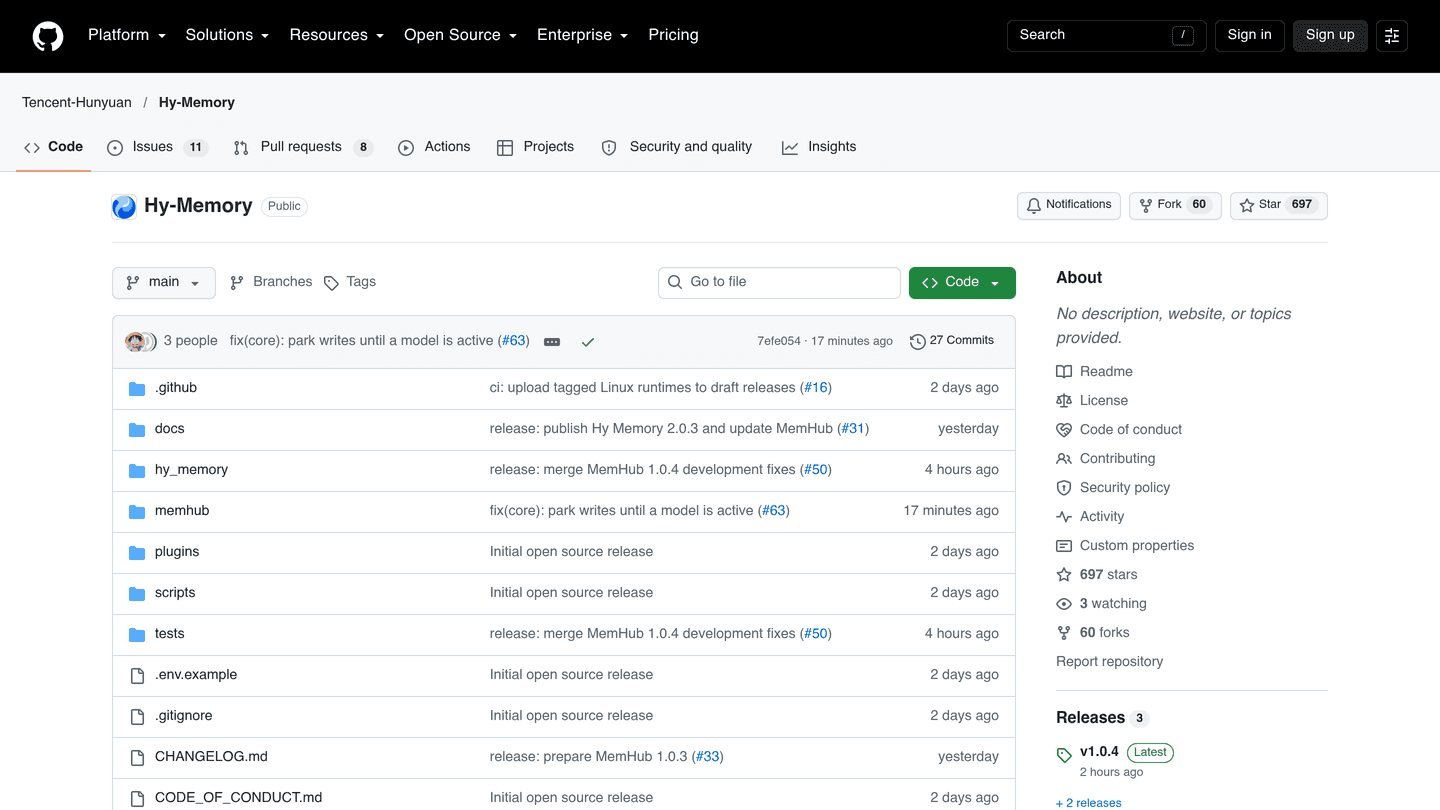
Tencent Hunyuan upgraded its agent memory framework Hy Memory to 2.0 and open-sourced all three layers: Hy-Memory-30B-A3B (trained for memory writing), the hy-memory Python framework, and local-first MemHub spanning 10 tools like Claude Code and Cursor. An independent review counters: memory systems are only as good as the LLM that writes them.