Cline Goes Free for 10 Days: 560B-Parameter Ling 3.1 Flash Until Oct 13, and a Nudge Toward Its Desktop App
On October 3, Cline announced on X that Ling 3.1 Flash is free until October 13 — a 560B-parameter MoE model with 25B active parameters that Vercel launched on September 30. Cline is also funneling users toward its desktop beta. The free model is the bait; the real product is the harness you keep when models change.

What happened: 10 days free, plus a desktop push
On October 3, open-source coding agent Cline announced on X that Ling 3.1 Flash is free until October 13, directing developers to try it in Cline for Desktop, its desktop beta.
Ling 3.1 Flash is a fresh face: a 560B-parameter mixture-of-experts model with 25B active parameters, positioned for coding, multi-step analysis, and tool-using agents. Vercel listed the model in its September 30 announcement (262K context on its AI Gateway), with specs matching Cline's. In other words, this is a model less than a week old, and Cline moved immediately to promote it for free.
Cline for Desktop is Cline's other product line: a standalone desktop app (macOS/Windows/Linux, currently version 0.0.43) that opens a project workspace without an editor window. Users can bring their own API key or sign in with a Cline account, with features like queued follow-ups, session history across Cline products, and the ability to rewrite an earlier prompt and rewind the workspace.
Cline's calculus: the shovel seller doesn't argue about models
One key fact: Cline doesn't build models. It builds the agent "harness" — the runtime that inspects codebases, edits files, and runs commands, with models as swappable parts.
That positioning defines a business logic unlike anyone else's. Model vendors want you locked into their model; Cline is the opposite — the more models compete, the cheaper they get, and the faster generations turn over, the better for Cline. Because users choose Cline precisely for "swap the model, keep the workflow": Opus today, Ling tomorrow, a new open model next week, while prompt history, tool integrations, and habits all stay in Cline's layer.
So these 10 free days are fundamentally user acquisition: try a new model inside Cline's environment. When the free window ends, the model may change, but what stays is your workflow inside Cline. Founder Saoud Rizwan's long-running pitch — developers should freely choose models and see the true cost of every inference — is the same story; a free trial is the cheapest acquisition channel for that philosophy.
The desktop app deserves its own note: agents are leaving the editor
Funneling traffic to the desktop app isn't incidental — it's a trend: coding agents are leaving the editor. The path is clear: VS Code extensions first (how Cursor and Cline both started), then terminal-native (Claude Code), now standalone desktop apps.
Why does it matter? Because "leaving the editor" decouples the agent workspace from the code editor. Long tasks, background tasks, multi-project parallelism — all awkward in an editor plugin, all native in a standalone app. Cline for Desktop's "queued follow-ups" and "rewrite prompt, rewind workspace" are clearly designed for the "let the agent run a while" usage pattern. It's the same direction as Devin's async cloud and OpenAI Codex's cloud tasks: the agent's workplace is shifting from "you watch it write" to "you come back later to review."
Advice for vibe coders: treat these 10 days as a comparison test
The free window runs to October 13. My advice: don't just grab the freebie — treat it as a cheap model comparison test. Take 2-3 real tasks you know well (fix a known bug, add a small feature, refactor a function) and run each in Cline with both Ling 3.1 Flash and your usual model, comparing quality, speed, and token burn. One of Cline's genuine strengths is visibility into per-call cost — a comparison you can't do inside flat-rate subscriptions.
Two caveats. First, Cline only announced an end date — it said nothing about usage caps, so don't assume it's unlimited; go easy on heavy workloads. Second, don't migrate your production repos just to chase the freebie: new model plus new environment means compounded risk of things going wrong. Test on side projects; let others step on the rakes in production first.
One last thought: Cline is betting that "the harness outlasts the model." With models turning over every six months in 2026, that bet looks increasingly right. For vibe coders the takeaway is practical — anchor your workflow on open, model-swappable tools, not on any single model. Models go stale; your habits and integrations don't.
Sources
Related articles
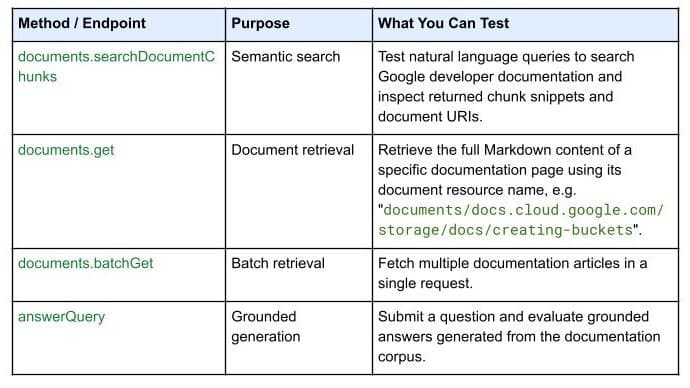
On October 7, 2026, Google Developers launched the Developer Knowledge API ecosystem: official Google Cloud, Firebase, and Android docs as a programmatic source of truth, with a gcloud CLI surface, an official Agent Skill (one-line install), an MCP server, and multi-language client libraries. Why 'docs as APIs' uproots vibe coding's classic failure of models misremembering APIs.
On October 8, 2026, Google Cloud launched the Gemini agent at Gemini at Work 2026: a universal agent for work that takes objectives, plans by itself, auto-selects between Gemini and Claude models per task, and introduces 'coworker agents' with their own email, calendar, and directory seat. Four judgments on why the second half of the agent race is about 'agents that feel like colleagues.'

On October 7, 2026, GitHub announced via Changelog: starting with CLI 1.0.94-0, the /model command discovers models in your local Ollama instance, listed alongside configured and cloud models. Discovery doesn't auto-enroll — each model needs manual confirmation — and models must support tool calling and streaming. GitHub also teased intelligent routing, and clarified: a local model neither enables offline mode nor disables telemetry.