Cloudflare Open-Sources Void: One-Command Deploys for Full-Stack Vite Apps, With Admins in Control
On October 15, Cloudflare's official blog published 'Deploy with Void', open-sourcing three products at once — Void Platform, Void SDK, and Void CLI. One npm install turns a Vite app into a full-stack Cloudflare Workers app; 'void deploy' infers resource bindings and provisions databases and AI bindings automatically. Companies self-host one platform: employees self-serve deploys while admins centrally govern access.

One boundary to draw up front: this is not a Void getting-started tutorial. It will not walk you through npm install void, and it will not benchmark Void against Vercel or Netlify on deploy speed. It answers a single question: now that everyone in a company can vibe-code a working app with an agent, who gets to decide it goes live — and who owns it afterward? On October 15, 2026, Cloudflare published Deploy with Void on its official blog, open-sourcing "deployment governance" as a product. And it is aimed squarely at the one hurdle every company hits in the vibe coding era.
Picture the scene that repeats at hundreds of companies right now. A designer spends a Friday afternoon with a coding agent and produces a genuinely useful internal tool — a campaign asset browser, a copy review queue. It runs beautifully on localhost. On Monday she asks engineering to put it online, and the request dies in the backlog: no one wants to provision a database for a side project, wire up auth, or be on call for it. Multiply by every non-engineer with an agent subscription and you get the quiet crisis of the vibe coding era: creation has been democratized, deployment has not. The backlog of "works on my machine" keeps growing, and IT's answer is still, mostly, "not yet."
On October 15, 2026, Cloudflare's official blog published Deploy with Void, open-sourcing three products at once, bundled as a single npm package and Vite plugin: npm install void and you are in. The three pieces:
- Void Platform: a shared deployment platform for teams. Built on Workers for Platforms. A company installs one instance, and everyone's apps deploy into the company's own Cloudflare account — no more one cloud account per employee. Admins control access, set resource limits, and inspect deployments and usage through the CLI or an admin dashboard. In the blog's words, the platform provides guardrails "so everyone else can ship serious and vibe coded apps to the same shared platform."
- Void SDK: turn a Vite app into a full-stack Cloudflare Workers app. A composable JavaScript SDK shipped as a Vite plugin, with file-based API routing, pre-rendering, caching, islands, and end-to-end type safety from the database to the UI. React and Vue get first-party adapters; you can also keep using Vinext, React Router, SvelteKit, Nuxt, TanStack Start, or Astro for routing and rendering while Void handles resource APIs (via Hono), migrations, deployment, and authentication with Better Auth. Everything is optional and composable — it does not hold your framework choice hostage.
- Void CLI: the main interface for deploying and managing.
void deployautomatically infers resource bindings and provisions databases, queues, and AI bindings during deployment. It is also the platform's control plane: manage users and project access, inspect deployments, logs, and rollbacks, monitor platform health and usage. And the blog states it plainly: the CLI "works well with agents." An agent can read deployment logs, debug failing requests, analyze how an app is performing — or take over "the full lifecycle," from building to deploying to managing resources and projects.
Getting started is deliberately boring, which is the point. You add Void as a Vite plugin alongside your framework's plugin — the blog's example pairs voidPlugin() with voidReact() in a standard vite.config.ts — and from there the SDK takes over the parts frontend developers historically dread: server routes become files in a directory, database access becomes a typed import, and deployment becomes one command. The interop story is unusually honest for a vendor launch: instead of demanding you adopt Void's router and rendering, the blog explicitly blesses Vinext, React Router, SvelteKit, Nuxt, TanStack Start, and Astro for routing and rendering, with Void handling only resource APIs, migrations, deployment, and auth. That is a land-grab strategy disguised as humility — Void does not need to win the framework war, it needs to sit underneath all of them at deploy time.
The most telling details are the two imports that carry the "zero-config infrastructure" philosophy: import { db } from 'void/db' gives your app a local database during development, and void deploy provisions D1 automatically in production. import { ai } from 'void/ai' wires your app straight into Cloudflare's AI Gateway, everything set up automatically. The developer — or the agent — writes business logic; the SDK absorbs the infrastructure differences.
 The
The void deploy pipeline: Vite app → resource inference → automatic provisioning of D1, queues, and AI bindings → live on Workers. Developers write business code; the SDK and CLI absorb the infra differences.
The self-hosting checklist, quoted straight from the blog, is refreshingly concrete: a Cloudflare account with Workers for Platforms and R2 enabled, a PostgreSQL database, an account with your chosen login provider, and a domain for your apps. Once installed, team members connect with void connect https://api.your-domain. If you do not need the team-management features, you can skip the Platform and deploy a Void SDK app straight to your own Cloudflare account.
The backstory deserves its own paragraph: this is the first major open-source move from VoidZero — the team behind Vite, Vitest, Oxc, and Rolldown — since joining Cloudflare. The blog says the SDK, CLI, and Platform have been running in production inside VoidZero for "the past several months." Flagging this clearly: that is a vendor claim, unverified by any third party. Its real weight gets examined in the analysis section below.
And the enterprise pain point, in the blog's own words: "companies want to encourage vibe-coded internal apps, but are concerned about security and do not want to give cloud access to every employee." In plain terms: companies want to encourage vibe coding, but they dare not hand every employee a cloud account. That is exactly the problem Void is built to solve.
Why it matters: the bottleneck moved from "writing code" to "who deploys"
Vibe coding drove the cost of producing code close to zero — and the bottleneck did not disappear, it just moved one step downstream. It used to be "we can't write it." Now it is "we wrote it, but we dare not ship it, and nobody owns it once it's up." A designer vibe-coded an internal dashboard with an agent; someone in ops stitched together a data tool over a weekend. The code exists. But will IT let it touch the company database? Who is on call when it breaks at 2 a.m.? Whose budget does the bill land on? At most companies the honest answer is: not yet. So a huge share of vibe coding output rots on localhost — great demos, zero production deployments. The cruel irony is that the better agents get at writing code, the larger this backlog grows: every improvement in code generation is simultaneously an improvement in backlog generation, until the deployment bottleneck is fixed.
Void names precisely this target. It does not solve "how to write," it solves "after writing, who approves the launch and who holds the bag." Note the fundamental difference from Vercel and Netlify: those products solve "make individual deploys faster"; Void solves "make the organization brave enough to let everyone deploy." One is a personal productivity tool; the other is an organizational governance tool. The market is not short on one-click deploys. It is short on the governance layer for "dare to let 500 people one-click deploy" — and Cloudflare just productized exactly that.
 Two governance models side by side. Left, "a cloud account for everyone": scattered permissions, runaway bills, no audit trail. Right, "Void platform under central control": admins own access, quotas, and auditing; employees self-serve their deploys.
The second shift: "deploy" is becoming an agent skill. The CLI's "works well with agents" is not marketing fluff — the blog lists concrete agent capabilities: debug failing requests, read deployment logs, analyze how the app is performing, take care of the full lifecycle. Deploying is turning from a human ritual (click the button, watch the pipeline, wait for the notification) into an agent capability. This is the same storyline as our earlier piece on the Cursor SDK — background subagents you can steer mid-run: agents are gaining infrastructure operation rights. The difference is scope. Cursor handed agents code-execution rights; Void hands them production-resource rights. The blast radius is an order of magnitude larger — a wrong move deletes a production database, not a local file.
The third layer is platform engineering trickling down. Internal developer platforms, multi-tenancy, quotas, auditing — things only big-tech platform teams could previously afford — are now bundled into an open-source product. A mid-size company without a platform team can still give its company-wide vibe coding effort real "governance." Cloudflare's arithmetic is transparent: the Platform is open source, but the resources run on D1, R2, and Workers — the classic "open source for acquisition, cloud resources for monetization" model. And Vite is the de facto frontend standard; stuffing deployment into a Vite plugin plants a Cloudflare entry point inside the toolchain developers open and close every day. Remember: the VoidZero team is Vite. This is a move only Cloudflare could make — not even Vercel could.
The fourth layer is the competitive picture, and it is less comfortable for incumbents than it looks. Vercel, Netlify, and Railway all sell some version of "push to deploy," and the self-hosted crowd has Coolify and a long tail of internal developer platforms. None of them, however, combine three things Void puts in one box: the Vite toolchain team itself (VoidZero is Vite, Vitest, Oxc, Rolldown), a multi-tenancy primitive designed for exactly this problem (Workers for Platforms lets one Cloudflare account host thousands of isolated customer apps — it was built for SaaS vendors reselling hosted apps, and an internal vibe-coding platform is the same shape), and an explicitly agent-operable CLI. Vercel's moat is workflow and mindshare; Cloudflare's bet is that the deploy layer gets absorbed into the build tool developers already run. If void deploy becomes as reflexive as npm run build, the question "where should this be hosted?" stops being asked — and the answer is always Cloudflare's network. That is the deepest play here: not winning deployments one by one, but making the deployment question disappear into the toolchain.
Our take: facts and judgments, labeled separately
Analysis zone below — facts and judgments are labeled separately.
Judgment 1 (opinion): "deployment governance" is being sold as a standalone product for the first time, not as a permissions page inside a cloud console. The old answer to "who can ship to production" was IAM policies, approval tickets, and platform teams doing it by hand — all cost centers. Void productizes it: install one platform, encode the rules, let everyone self-serve. That is a paradigm shift from "process governs people" to "platform governs people." The factual basis: the Platform's admin capability list (control access, set resource limits, inspect deployments and usage) is stated explicitly in the blog — not interpretive reading.
Judgment 2 (opinion + fact): good news for mid-size companies; a reference implementation for big-tech platform teams. Companies without a platform team get an internal developer platform starter kit for free. Enterprises with homegrown platforms will likely never migrate wholesale — but the "Vite plugin + resource inference + agent-readable logs" design will get copied. The fact: the blog explicitly says you can fork the platform and keep only the features you need. Cloudflare anticipated the "copy half of it" usage and wrote it into the open-source strategy.
Judgment 3 (opinion): the real test is not technical — it is procurement and compliance. The heaviest item on the self-hosting checklist is PostgreSQL. A product whose pitch is "let non-technical teams deploy too" requiring you to operate a Postgres first is a narrative tension worth noting. More importantly, here is what every security team will ask: how does multi-tenant isolation actually work? Where is the isolation boundary in Workers for Platforms? Can one employee's vibe app read another project's D1? The blog says not a word about any of this. On an enterprise procurement checklist, those are the deciding items; a working demo is just the ticket to enter.
Judgment 4 (opinion): agent-deployable means agent-breakable, and permission granularity decides whether this is efficiency or incident. The CLI hands agents the power to "read logs, roll back, manage users" — note: manage users. What credential does the agent hold? Can it delete someone else's app? Can it raise a resource limit? The blog is vague. The first day you hand an agent the deployment lifecycle, you must answer the blast-radius question. Cloudflare chose to ship first and fill in the answers later — very much its house style — but enterprise users should wait for the homework to be done before going to production.
Judgment 5 (opinion): open-sourcing the Platform is a distribution strategy, not a charity. Cloudflare gives away the control plane and keeps the data plane — every app deployed through Void still consumes Workers requests, D1 reads, R2 storage, and AI Gateway calls, all metered by Cloudflare. The open-source move neutralizes the two objections that kill enterprise platform deals: "what if we need to customize it" (fork it) and "what if we want to leave" (self-host it). Both answers keep the workloads on Cloudflare's network, which is where the money is. It is the same playbook as the Workers ecosystem itself, now pointed at the vibe coding wave. The losers in this framing are not other clouds — it is the "we'll build our own IDP" platform teams whose build-vs-buy math just got worse.
What remains unsaid
- Pricing: not a word. How is Workers for Platforms billed, and on whose tab do the R2 and D1 charges land? If the company foots the bill centrally, who absorbs the resource waste of a thousand vibe apps? Are resource limits soft or hard circuit breakers — and when one trips, does the app stop or just alert? Unsaid. Pricing is part of governance for a governance product; its absence is telling.
- Enterprise identity support is unclear. The login provider is "your choice," but do SSO, SAML, and SCIM — the enterprise table stakes — work? Can the user directory plug into existing systems? Unsaid. Without SSO, large companies cannot even walk in the door — and they are precisely Void's target customers.
- The relationship with Pages is unaddressed. Cloudflare already has Pages for frontend deploys, and the Void SDK can also "deploy to Cloudflare directly" into your own account. Will the left hand fight the right? Or will Pages get quietly absorbed into Void? No roadmap given — existing Pages users should watch this space.
- No license mentioned. The word "license" never appears in the blog. Forking freedom assumes a permissive license; worth one look at the repo before building on it. Do not assume MIT.
- The weight of "several months in production." VoidZero's internal load is not the same as a 500-person company's flood of vibe apps. Multi-tenancy, real scale, real incidents — Void has not faced those trials yet. Take the vendor claim with a discount applied.
- The migration story is missing. The blog shows the greenfield path beautifully — new Vite app,
void deploy, done. But most companies' vibe-coded sprawl already exists: a Next.js app on Vercel here, a Streamlit dashboard on an EC2 box there, a Replit prototype somewhere. How does any of that move onto a Void Platform? Without a migration story, Void risks becoming the platform for new vibe apps while the existing sprawl stays where it is. - "Non-technical teams building" meets the checklist. The blog's most democratic claim — a designer or an ops teammate shipping their own app — sits one section away from a checklist demanding PostgreSQL operations, a login provider account, and a domain. Someone technical still has to stand up and maintain the Platform itself. That is fine and honest, but it means Void democratizes deploying, not platform ownership. The company still needs at least one person who knows what a Postgres backup is.
- The observability story is unwritten. An agent that can read deployment logs and "analyze how your app is performing" needs telemetry worth reading — traces, structured logs, error grouping. The blog mentions logs in passing but says nothing about dashboards, alerting, or how an agent distinguishes a real regression from noise. Notably, this is the exact gap our earlier groundcover piece covers from the other side: agent-to-agent observability piping production telemetry back to coding agents. Void and groundcover are describing the two ends of the same loop — deploy governance on one side, operational telemetry on the other — and neither works without the other.
Related reading: Cursor SDK gives agents a steering wheel: background subagents you can steer mid-run — the step where agents gained code-execution rights; this Void piece is the next step, where agents gain production-resource rights. groundcover launches agent-to-agent observability, MCP straight into production telemetry — when agents operate production systems, observability is the mandatory companion. Figma Code Layers opens public beta: specs let agents work to your design system — the other side of agents working to spec: Void is deploying to infra spec. Friday Payroll's MCP server: Claude Code and Cursor plug straight into official API docs — the standardization of the agent toolchain continues: MCP standardizes data interfaces, Void standardizes the deploy interface.
There is a longer arc worth naming. Every previous wave of "democratized creation" — blogging, mobile apps, no-code — eventually hit the same wall: creating is easy, distributing and governing is hard, and the winners were the platforms that owned the layer where governance lives. App stores governed mobile distribution; Void wants to govern vibe-coded distribution inside the enterprise. The open question is whether companies adopt it fast enough to matter, or whether the sprawl routes around it the way shadow IT always has.
In one sentence: with Void, Cloudflare is not selling yet another one-click deploy — it is selling the governance that lets a whole company ship vibe-coded apps with confidence. The vibe coding bottleneck has officially moved from "writing code" to "who deploys and who governs permissions" — and "deploy" itself is becoming an agent skill.
Comments (0)
Sources
Related articles

PostgreSQL 19's GA is delayed to around November 19 and 8–10 major features are cut to PG20 — because LLM-assisted code review surfaced more defects than humans could fix. Core committer Peter Eisentraut: the cut features had architectural defects unfixable in the beta window, plus ~40 edge-case reports landed at once. The lesson for vibe coders: bug-finding capacity now exceeds bug-fixing capacity — wire AI review into your process.
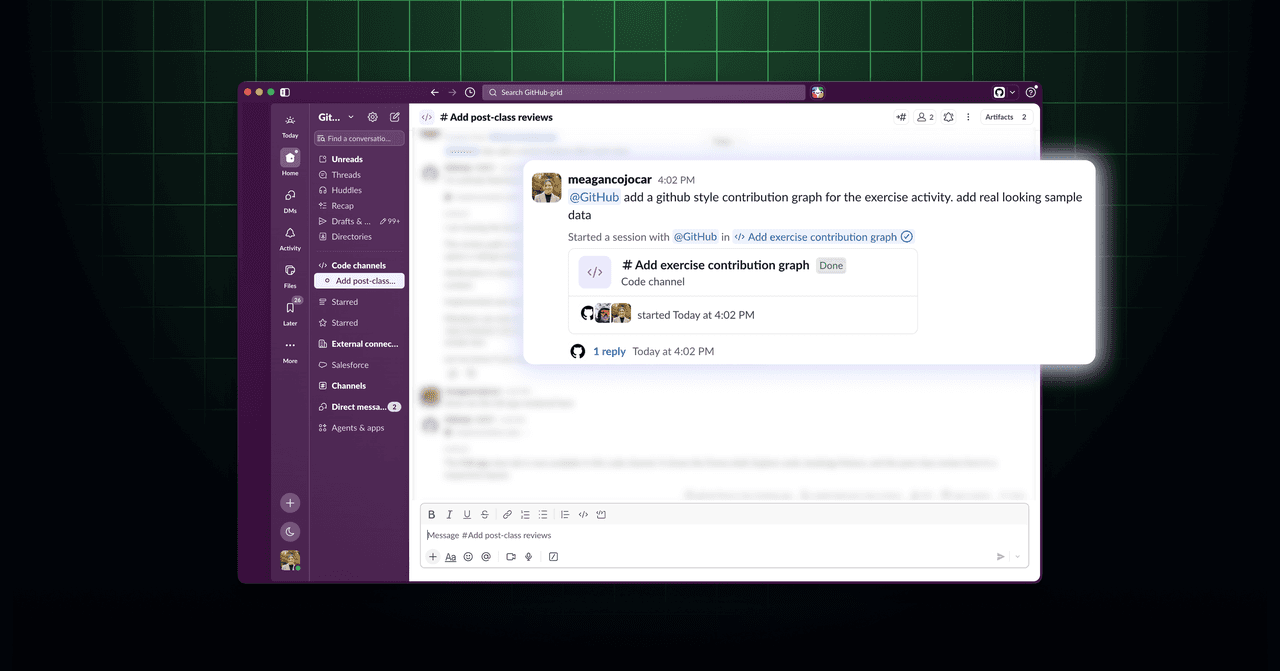
On October 15, GitHub gave Copilot in Slack and Teams multi-repo support: one conversation now sweeps open PRs, weekly merges, and issues across all your repositories. @GitHub works anywhere in a message, shared threads become context — while cloud agent code changes stay locked to one repo, one branch, one PR.
On October 13, Ramp launched Glass, its internal vibe coding platform, as a public AI workspace product: 323 employees produced 6,500+ edits of reusable Skills — one account manager's prompt took feature-request intake from 300 to 20,000 a month — and after the CEO admitted burning $1.5M in tokens in one week, every project now ships with a taxi-style meter plus a Router that picks the cheapest adequate model.