Ramp Turned Its Internal Vibe Coding Platform "Glass" Into a Product: Employee Skills, Reusable Company-Wide
On October 13, Ramp launched Glass, its internal vibe coding platform, as a public AI workspace product: 323 employees produced 6,500+ edits of reusable Skills — one account manager's prompt took feature-request intake from 300 to 20,000 a month — and after the CEO admitted burning $1.5M in tokens in one week, every project now ships with a taxi-style meter plus a Router that picks the cheapest adequate model.
One boundary to draw up front: our cycle60 piece on NVIDIA Super VL mentioned Ramp's receipt-to-JSON case in its background section — but that was NVIDIA's own vendor claim on its blog, unrelated to this story. What Ramp shipped on October 13 is something else: it turned an internal vibe coding platform it had been running for nearly a year into a commercial AI workspace product called Glass.
On October 13, 2026, Ramp co-founder and CEO Eric Glyman published a personal letter on the official Ramp blog, Introducing Glass: The AI Workspace for Your Whole Company, announcing Glass's public launch. In one sentence: a model-agnostic, collaborative AI workspace built around the idea that "knowledge compounds". One caveat: external onboarding is currently "first businesses personally" — hand-onboarded one company at a time, not self-serve yet. The post is written as a CEO letter, and it discloses a striking run of internal numbers, including the admission that Ramp burned $1.5 million in tokens in a single week back in May. Every number in this article comes from that post.
Why does this story deserve a long read? Because it answers the question every company is asking in 2026: once AI lands inside a company, how do the prompts, automations, and know-how scattered across employees' chat histories get captured — instead of every team re-paying the tuition? Ramp's answer is a product: Skills. One person's best work becomes everyone's starting point.
Glass's past life: Ramp's internal "Lovable"
According to a free Pulse edition of The Pragmatic Engineer published October 16 (the reporter visited Ramp's office in person), Glass began as a four-person internal team building a vibe coding platform for non-engineers — internally nicknamed the "internal Lovable". It connects to internal systems like Linear, Notion, Google, Slack, and Gong through connectors, letting people in marketing, sales, and support build internal apps without writing code.
The most convincing example comes from marketing: a marketer built a custom CRM with 50+ filter fields. Not a demo, not a toy — a real system running on real production data. The Pragmatic Engineer reporter saw Glass's landing page and connectors setup with their own eyes, which makes this independent third-party verification rather than Ramp talking about itself.
The "internal Lovable goes public" storyline is itself a signal. In 2026, internal tool teams at many large companies are building similar things (agent-building platforms for non-engineers), but Ramp has gone further than anyone in productizing its internal tool and selling it. Glass's productization logic: prove it internally first, then package the capability as an "AI workspace" for other companies.
Why the Lovable shape, not an IDE plugin
This detail deserves its own section. Ramp's four-person internal team did not build "a Copilot plugin for engineers" — it built "a Lovable for non-engineers". That choice reveals Glass's true audience: not people who write code, but people who have work to do and can't code.
The marketer who shipped a 50+ field custom CRM didn't learn to program; Glass lowered the bar for "building an app" to "describing what you need". Connectors are the key here: once Linear, Notion, Google, Slack, and Gong are wired in, a non-engineer's described need lands directly on real data — the CRM's field filters query real customer data, not mock data. That's why an internal vibe coding platform must ship connectors: vibe coding without data connections can only produce demos; with data connections it can produce production systems.
For vibe developers, this is a selection heuristic: when you're building tools for non-technical colleagues, don't start with "teach them an agent IDE" — start with "which systems does their work live in". Glass's internal edition proves that the number and quality of connectors set the ceiling of a vibe coding platform. The public Glass leads with "dozens of knowledge connectors" — that ceiling is exactly what Ramp is selling.
There's also an organizational implication in "four people". Not forty, not a business unit — four. That says an internal MVP of a vibe coding platform takes four people in 2026: model capabilities have compressed the cost of "building the platform" to that scale. Read in reverse, Ramp's story says: if your company has four people who understand agents, you can stand up an internal Lovable today instead of waiting on procurement.
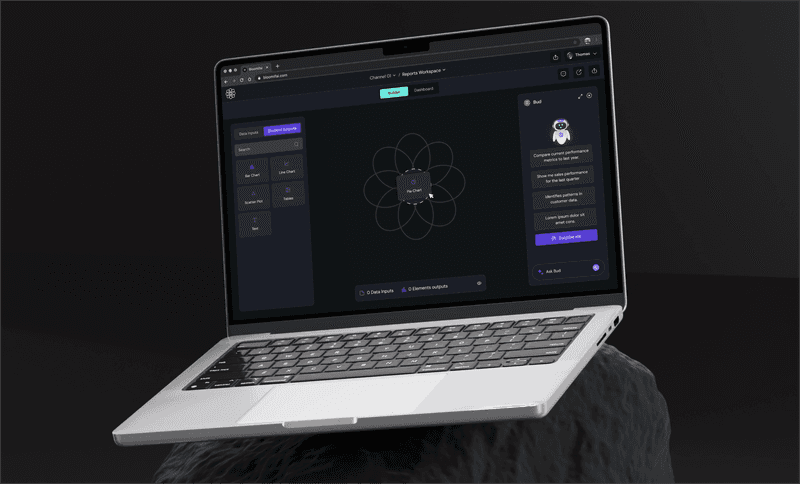
 Ramp Glass product screenshot: dark AI workspace interface on a laptop
Skills: one person's best work becomes everyone's starting point
The most information-dense product design in Glass's launch post is Skills. The definition is simple: prompts, workflows, and automations that employees develop inside Glass get packaged as reusable Skills that anyone in the company can invoke. In the company's words, one person's best work becomes everyone's starting point.
The numbers come from the CEO's letter, presented as official claims:
- 323 employees participating (PMs, support, sales, marketing, analysts — not just engineers)
- 6,500+ edits to Skills accumulated so far
- The standout case: an account manager saved a feature-request collection prompt in May; request intake went from a hand-compiled 300 per month to 20,000 per month, and the automated follow-up emails it sends have passed 5,000
This case is worth unpacking. 300 → 20,000 is a 66x jump in scale, but the real change isn't volume — it's a qualitative workflow transformation: from a manual monthly compile to continuous automatic collection plus automatic follow-up emails. One account manager's prompt became a pipeline the whole company runs. That is "knowledge compounds" taken literally: capture once, pay dividends continuously.
For vibe developers, the Skills concept ports directly. The prompts and workflows you've tuned for your own projects are probably rotting in chat histories and code comments right now. Glass's approach is to productize them: named, versioned (6,500+ edits says Skills are continuously iterated, not one-shot assets), discoverable, invokable. It upgrades "prompt engineering" from a personal trick to an organizational asset.
Look again at the composition of those 323 people: PMs, support, sales, marketing, analysts. Notice who isn't centered — engineers are participants, not the headliners. This composition overturns a common assumption: "AI productivity is an engineering thing." In Ramp's internal practice, the biggest Skill contributors are the people closest to the business: the account manager's feature-request prompt, support's talk-track captures, marketing's dashboards. A prompt's value doesn't depend on whether its author can code; it depends on how close they sit to a real workflow.
The 6,500+ edits say something else: Skills aren't write-once documents; they're living assets. Employees keep refining them in use, like commits to a codebase. That number implies a review-like mechanism is actually running inside Glass — bad Skills get fixed, good ones get smoother with use. Knowledge compounding doesn't happen automatically; it needs the act of editing. By publishing the edit count, Ramp is telling the outside world: this mechanism genuinely runs; it's not theater.
Homework you can copy: a homegrown "Skills" for your team
Glass isn't fully open yet, but its mechanism can be copied today. A minimum viable homegrown Skills setup needs three things:
- 1. A shared prompt library. No product needed — Notion, a GitHub repo, even a shared doc works. Each prompt needs a name, a purpose note, and a "last verified" date. Prompts rot as models upgrade; a prompt library without dates becomes a junkyard in three months.
- 2. A capture discipline. Ramp's account manager "saved a prompt in May" — that act of saving is the core of the mechanism. One team rule does it: any prompt that took three or more rounds to get right must go into the library with a one-line note on when to use it.
- 3. A metering habit. Cost comes in the next section, but the awareness should come first: before running a big task, estimate the token spend. Glass builds the meter into the product; for now, the usage dashboards from model vendors will do.
Metered billing: after the CEO admitted burning $1.5M in a week
The most shareable passage in the letter is Glyman's confession: back in May, Ramp burned $1.5 million in tokens in one week. The CEO admits the company paid tuition on AI, then presents Glass's answer — every project ships with its own billing meter.
Glass's cost design has three layers:
- 1. Taxi-meter billing. The official phrasing is "like a taxi": every Glass project shows its spend ticking in real time, like a cab meter, so employees always know what the current conversation is costing.
- 2. Pre-set caps. Budgets can be set when a project is created; it stops when the cap is hit. No more "Monday-morning discovery that the agent spent $100K over the weekend".
- 3. Ramp Router picks the model per task. Requests don't go to a single model; the Router assigns the cheapest adequate model by task type. Simple tasks get cheap models; only complex ones get the expensive ones.
The effect number is also the CEO's — presented as an official claim: Ramp's own bill dropped 30% "overnight" after this mechanism went live. Treat that as a vendor claim (the post gives no baseline methodology), but the direction is right: visibility plus caps plus routing cuts unconscious waste, not valuable calls.
This threads directly into our earlier piece, Simon Willison on hard budget caps. Willison's answer is a hard cap — a dead line on agent spending; Glass's answer is a meter plus routing — make spending visible and route cheap first. One is a brake, the other is a fuel gauge plus gear-shifting. Read together, they show AI cost governance in late 2026 has moved past "whether to manage" into product-design territory: how to manage. For vibe developers: does your agent workflow have a meter?
 Ramp Glass product screenshot: dark AI workspace interface on a laptop
The product surface: multiplayer, any model, dozens of connectors (official claims)
The following product features come from the official post and should be read as vendor claims:
- Multiplayer session collaboration: per the official account, a support agent can share an in-progress session with an engineer so the two finish the job together. "Multiplayer" in an AI workspace doesn't mean group chat — it means humans and agents, humans and humans, handing off inside one working session.
- Any model: per the official account, both open and closed models work — no lock-in to one lab. That matches Glass's model-agnostic positioning: Ramp won't pick sides on models; the Router picks for you.
- Knowledge connectors: per the official account, Glass connects to dozens of knowledge sources. The internal edition already proved out Linear, Notion, Google, Slack, and Gong; the post doesn't detail the external edition's connector list.
To be honest: the post says relatively little about the external edition's concrete features; most of it covers internal practice and philosophy. That fits the "first businesses personally" stage — the product is early, and Ramp is first establishing "here's how we use it ourselves" before selling "you can use it this way too". Real feature reviews will have to wait until the first external companies are running on it.
Context: same week, a $1.85B raise at a $60B valuation
Glass didn't launch in isolation. On October 15, 2026 (two days after the blog post), Ramp announced via PR Newswire, cross-reported by TechCrunch: an $1.85 billion raise at a $60 billion valuation, co-led by Dragoneer, Thrive, Founders Fund, Sands, and Avenir. The official business numbers: $2B+ annualized revenue, 85,000+ customers, $275B in annualized purchase volume — with Cursor and Figma on the customer list.
The most interesting detail in that list is "customers include Cursor and Figma". Ramp does corporate spend management; its customers are "companies that spend money"; Cursor and Figma are "companies money gets spent on" — their seat fees run on Ramp cards. In other words, Ramp sits in a special position: it can see exactly how much America's tech companies are burning on AI tools. Glass's metered billing, the Router, and Spend Management quite plausibly come from insights at that vantage point: Ramp knows better than anyone that enterprise AI bills are going feral.
The four-piece set: Glass, Router, Spend Management, AR
Glass launched alongside three other AI products. Taken together, Ramp's AI strategy snaps into focus:
- Glass (AI workspace): where money gets spent. Employees do AI work here; tokens burn here.
- Ramp Router: where money gets saved. Requests route automatically to the cheapest adequate model by task type.
- AI Token Spend Management: where money gets governed. Unified billing and controls for token spend — likely the same substrate as Glass's meter.
- Accounts Receivable (AI for AR): where money gets made. Helps companies actually collect what they're owed — AI generating cash flow directly.
A corporate-spend company shaped its AI product line like finance itself: spend (Glass) → save (Router) → govern (Spend Management) → earn (AR). The closed loop: first make spending safe (visible meters), then make it cheaper (routing), then keep it under control (billing), then earn it back (AR). Few AI companies organize a product line this "financially" — but this is Ramp's home turf.
Judgment calls: three things worth writing down
Judgment zone below; facts and opinions marked separately.
Call one: "internal tools going public" is becoming big companies' standard AI play. Glass's path: a four-person team ships an internal Lovable → 323 people produce 6,500+ edits across the company → it gets packaged as an external product. The path is highly replicable: Anthropic productized its internal agent harness; Ramp productized its internal vibe coding platform. Half of 2026's AI products are "we built it for ourselves first, now we're selling it". The implication for vibe developers: the internal tool you're building for yourself today may be tomorrow's product seed — provided it genuinely solves your own problem (a 50+ field CRM isn't a demo; it's a production system).
Call two: Skills may be 2026's most important "AI landing" product concept. Note that Glass invents no new model and no new interaction — it invents a capture mechanism. AI's biggest enemy in the enterprise isn't weak models; it's non-reusable experience: every employee re-pays tuition, every prompt rots in a chat log. Skills turn "a prompt that finally works" into an organizational asset — a design closer to the essence of "landing AI" than any model upgrade. If your team uses AI, ask: where do your Skills live?
Call three: cost governance is moving from "staring at the bill afterwards" to "built into the product". Metered billing plus pre-set caps plus Router-based model selection share one trait: they're product features, not finance processes. The old governance was "finance asks at month-end why you burned so much"; Glass's governance is "the meter ticks in front of you while you burn". Willison's hard cap is a brake; Glass's meter is a fuel gauge. In late 2026, "helping users spend less" has joined "helping users do more" as a first-class competitive dimension for AI products.
Call four: Ramp's position determines its product shape. Back to the most interesting detail: Cursor and Figma are Ramp customers. That means Ramp sees AI tools' real spend data every day — who's paying which model how much, which team's tokens are going feral. Glass, the Router, and Spend Management probably weren't brainstormed; they were likely seen in Ramp's own transaction data. A company's data position determines what products it can build. When picking a lane, vibe developers can invert the question: what data do you stand next to? You understand that data's pain best.
What's unsaid
What the post doesn't say is worth flagging: no pricing for the external Glass (per seat or per token? will the Router's selection logic skew toward cheap-but-weak models?); how far "first businesses personally" hand-onboarding scales and when it opens fully; the privacy boundary for Skills across companies (could company A's Skill "contaminate" company B — presumably tenant-isolated, but the post doesn't go there).
There's a deeper question: does Skills' "compounding" have a ceiling? 323 people and 6,500 edits worked — but at 3,000 people and 100,000 edits, how do Skill discovery and governance work? Prompt libraries rot fast: a prompt tuned last year may expire when the model upgrades this year. The post offers no "Skill freshness" mechanism, only the edit count. That may be the external edition's real hard problem: internally it worked because everyone sat together; selling it externally requires the mechanism itself to be hard. Reserve judgment until the first external customers report back.
As for how much of the $60B valuation narrative Glass carries: the press release lists it alongside the Router, Spend Management, and AR as "core AI products of this round" — a sign capital markets are already paying for "AI increment".
Related reading: Simon Willison: hard budget caps for agent spending (the other cost-governance route: hard brake vs. meter); Serverless cost optimization in practice (the cost-practice track).
One-line summary: Ramp turned its internal vibe coding platform Glass into an external product, and what it's really selling isn't "another AI chat box" but two mechanisms: Skills that compound employees' know-how into company-wide assets, and metered billing that turns AI spend from a black box into an open ledger. In 2026, the deciding factor in landing AI is shifting from "how strong the model is" to "how good the mechanism is".
Comments (0)
Sources
Related articles
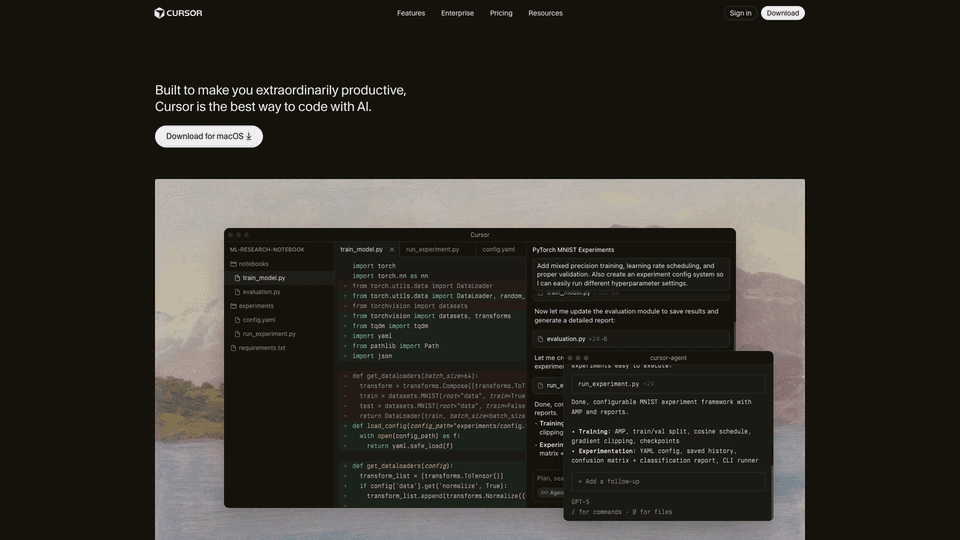
On October 13, Cursor launched an app marketplace for Origin, its agent-era code hosting platform: 21 launch integrations across deployments, CI, code review, security, monitoring, and project management, with public submissions now open to all developer-tool teams. Two months ago Origin shipped with just 3 integrations — the forge wars have officially entered the ecosystem phase.
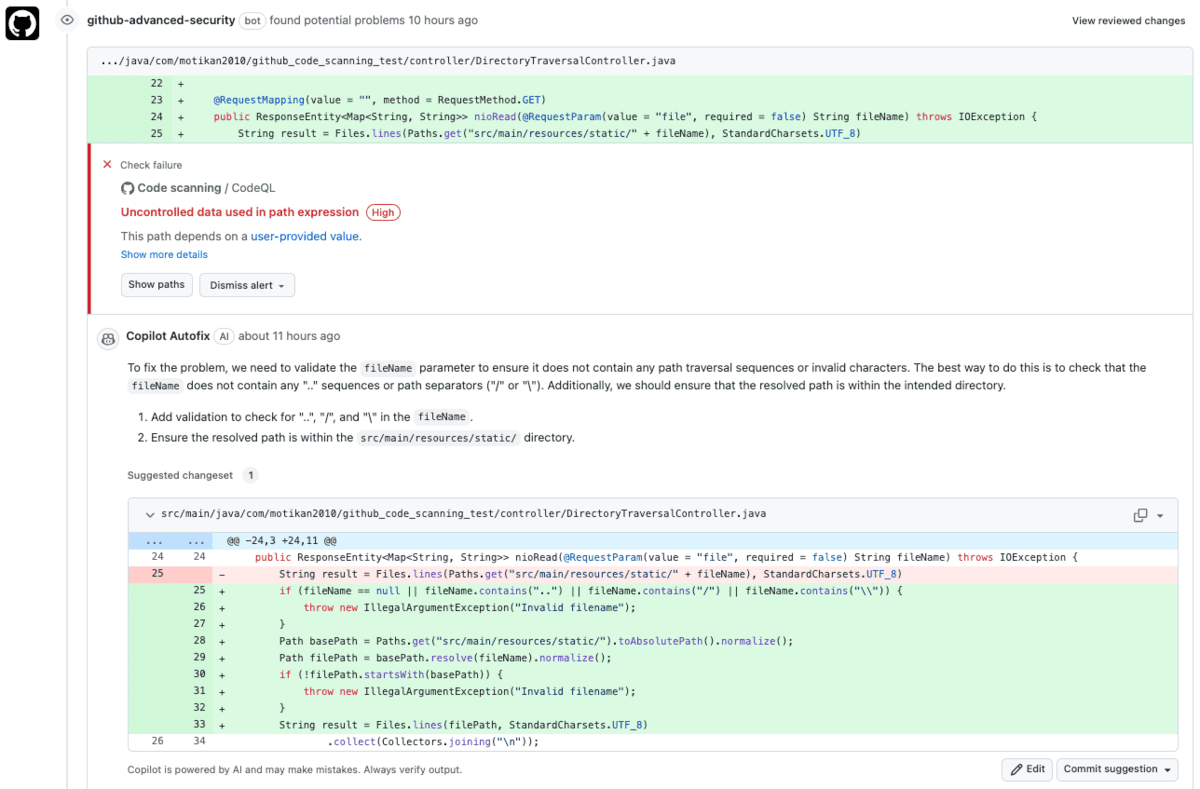
On October 15, GitHub's agentic autofix for code scanning went GA: alerts get assigned to Copilot, which explores the codebase, generates fixes, re-runs CodeQL to verify, and opens a draft PR. The free Generate Fix button is replaced by Assign to Copilot — billed in AI Credits plus Actions minutes, with an Advanced Security line on the enterprise bill.
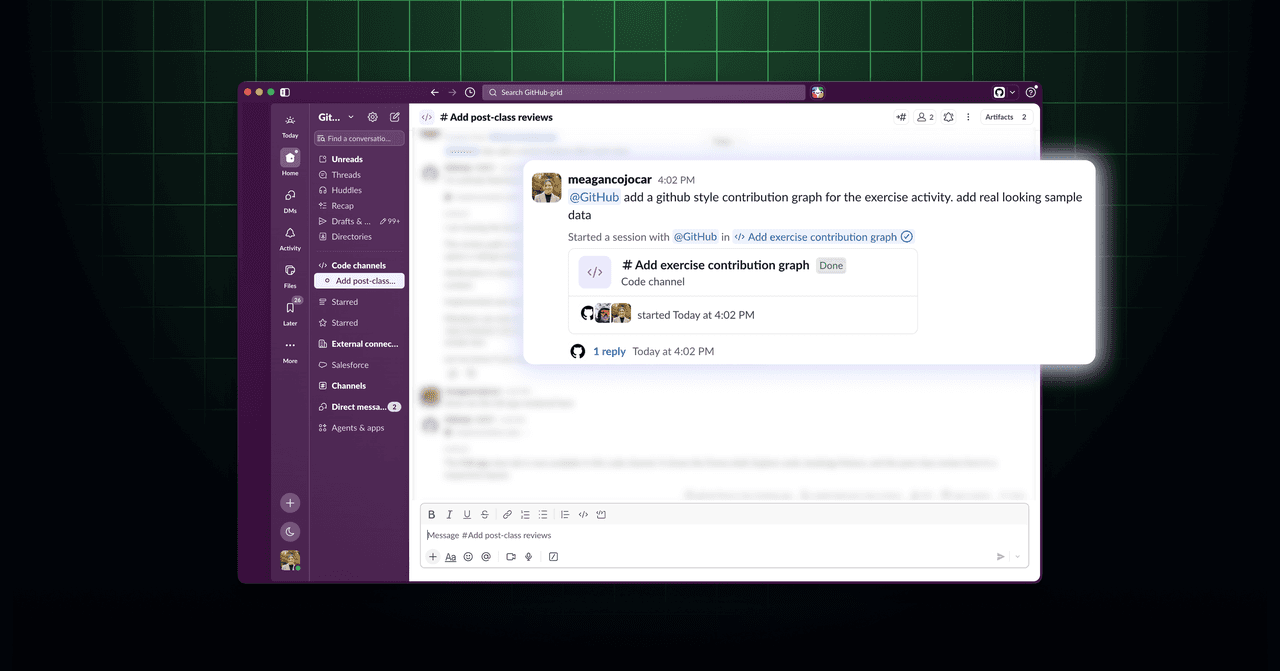
On October 15, GitHub gave Copilot in Slack and Teams multi-repo support: one conversation now sweeps open PRs, weekly merges, and issues across all your repositories. @GitHub works anywhere in a message, shared threads become context — while cloud agent code changes stay locked to one repo, one branch, one PR.