Cursor's September Triple Strike: From Best Editor to Agent Fleet Command
Cursor's September triple play: Projects (a coordinator agent that plans but never codes), self-hosted machines, Rollouts and Security Reviewer. The editor is just one interface; the real bet is the work-assignment layer — who commands the agent fleet.

If September 2026 for Cursor had to be summed up in one line: it no longer wants to be "the best AI editor." Self-hosted machines on September 2, Projects on September 10, Rollouts and Security Reviewer on September 24 — after this triple strike, Cursor's real identity is "agent fleet command," and the editor is just one of its many interfaces.
This piece covers all three, then digs into what Cursor is actually betting on.
Strike 1: Projects, a coordinator that talks but never types (Sept 10)
Projects launched in beta on September 10, living in the left-hand nav. The setup is delicious: a coordinator agent that writes zero code itself — it only plans work, breaks it down, and brings finished results back for your review. Under it, thousands of subagents grind away in parallel across cloud and local machines.
Several design choices deserve a closer look:
- Never blocked. Because the coordinator schedules rather than executes, it's always responsive — interrupt it or redirect it anytime without waiting for some subagent to finish. This kills the most annoying problem of long tasks: the agent going radio-silent for half an hour.
- Shared, growing context. Each Project keeps a set of files synced across every cloud and local machine. The pitfall Agent #3 hit and the testing trick it learned are automatically inherited by Agent #47. Context stops restarting from zero every session and becomes compounding project capital.
- Close the laptop, work continues. Projects run on their own cloud computers. When something genuinely needs your hardware (like on-device testing), the coordinator spins up a local agent for it.
- Subscription triggers. Tell the coordinator to watch a Slack channel, keep an eye on all PRs, or run on a schedule, and it becomes an event-driven resident operator — waking up, working, and reporting without you prompting.
The three canonical use cases are telling: feature development, large-scale migrations, and "gardening" — code-quality upkeep, regression monitoring, the endless chores. The last one is the most honest: it admits that huge parts of software engineering aren't creation, they're caretaking.
Strike 2: Self-hosted machines, code never leaves your network (Sept 2)
In early September, Cursor shipped self-hosted machines: cloud agents can run on infrastructure you manage, with eight supported sandbox backends — Lambda, Cloudflare, Coder, Daytona, E2B, Modal, Namespace, and Vercel. Orchestration belongs to Cursor, execution belongs to you: agents reach internal services and specialized hardware while code stays inside your network boundary.
This one targets the enterprise customer's dilemma: however good an agent is, keeping it away from internal code cripples it; letting it in keeps security teams awake. Self-hosting is Cursor's middle path. Note the sequencing: self-hosting (Sept 2) came before Projects (Sept 10) — first solve "dare we use it," then solve "does it work well." The order is deliberate.
Strike 3: Rollouts + Security Reviewer, owning "after the merge" (Sept 24)
The September 24 changelog pushed agents into "after the merge" — the most overlooked and most expensive place for incidents in the industry.
Rollouts is deployment monitoring: a monitoring plan gets written at PR time, and per-environment verdicts follow after deploy. Three honest design choices stand out: it allows an "inconclusive" verdict (saying "not enough evidence" instead of forcing a conclusion); it does no autonomous rollback (it opens a revert PR on regression and lets a human decide); and there's a 10-day credit window — prove it with results instead of asking for blind trust. These details show Cursor thought carefully about how much power an agent should hold in production.
Security Reviewer runs automated exploit detection on every pull request. Read alongside OpenAI's Security Cloud from the same week, two giants made "AI reviews AI's code" a default pipeline step within days of each other — the job description of "code reviewer" is being rewritten.
Reading Truell's "third era" thesis: why now
Truell laid out the thesis in February: AI coding moves through three eras. Era one is autocomplete — the AI guesses your next token, you decide. Era two is synchronous agents — you hand it a task, it grinds through it while you wait. Era three is agent fleets — work runs longer with less direction, and humans decide at a higher level.
The insight is where it locates the bottleneck: era one's bottleneck was "is the model accurate," era two's was "can you afford to wait," era three's is "can you keep it under control." Every Projects design decision aims at that third bottleneck: the never-blocked coordinator (solves waiting), shared context (solves forgetting), subscription triggers (solves watching). In hindsight, Cursor's cloud-agent and long-context pushes since late last year were all paving for this moment — September's triple strike wasn't impulsive, it was the thesis's blueprint landing.
But the thesis leaves a question unanswered: in the fleet era, what exactly is the human's job? "Reviewer" sounds lovely, but reviewing takes expertise. When a subagent reports "I refactored the payments module, all tests pass," how do you know it didn't quietly change some edge case? Projects outsources the writing, but judgment can't be outsourced — and judgment is the most exhausting part. This may be the shared exam question for every "coordinator" product in the coming year: make the cost of reviewing lower than the cost of doing it yourself, or the fleet commander ends up more tired than the sailors.
Three vendors, three versions of "keeping it under control"
Lining up September's three giants is genuinely fun. Same problem — autonomous agents are hard to govern — three different answers:
- Cursor: govern by hierarchy. The coordinator plans but never executes; everything below is delegated. Solve trust with org charts: generals don't charge, soldiers do, generals read maps. Clean accountability is the upside; the downside is translation loss at every layer — the coordinator's intent gets reinterpreted by each subagent.
- OpenAI: govern with another AI. DevDay's Security Cloud is "AI audits AI." Tireless 24/7 coverage is the upside; correlated failure is the downside — if the writer and the reviewer share the same blind spot (say, both miss a class of injection), the whole chain is theater. Heterogeneity is the soul of safety; humans can't fully exit an all-AI review chain.
- GitHub: govern with the operating system. Copilot's desktop local sandboxing is OS-level policy: filesystem, network, credentials — three clean cuts. It doesn't depend on the model's good behavior, which is the upside; the granularity is coarse, which is the downside — it stops destruction but not "lawful but stupid" operations (like an agent compliantly deleting your uncommitted important file).
No route is superior, only trade-offs: Cursor bets on organization, OpenAI on redundancy, GitHub on boundaries. Sharp teams will combine them: sandboxes for the floor (nothing catastrophic), layered dispatch for the ceiling (more gets done), AI auditing for daily patrol. But it also means tool selection got complicated in 2026 — you used to pick an editor by completion quality; now you pick a platform by whether its governance style matches your risk appetite.
What Cursor is actually betting on
Connect the three strikes and the bet is clear. The model layer is OpenAI, Anthropic, and Google's battlefield — Cursor can't win there. The editor layer is legacy with a thinning moat. But the "work assignment layer" is empty: when everyone has dozens of agents running, who decides which agent does what, remembers what, and how it's graded? Cursor wants to be that foreman. The IDE is just one interface to users; the real asset is cross-session, cross-machine project memory and scheduling power.
The risks are visible too. First, Projects' "shared context" sounds beautiful, but context quality is voodoo — whether it compounds wisdom or garbage depends on the acceptance mechanism, and acceptance is exactly where AI is weakest. Second, subscription triggers (watching Slack, watching PRs) turn agents into resident processes, and resident processes need new mental models for both billing and risk. Third, competitors are squeezing into the same layer: OpenAI's cloud environments, GitHub's sandboxes — everyone may converge, and then it's down to execution detail.
Three suggestions for users
First, trial Projects on gardening work. Don't hand the coordinator your core refactor on day one. Let it do regression monitoring, dependency upgrades, documentation backfills — things where mistakes aren't fatal. Observe its planning quality and acceptance bar, then scale up. That's the correct posture for calibrating trust.
Second, self-hosting is no silver bullet. Code staying inside your network solves the data boundary, not "how much damage an agent can do inside your network." Self-hosting + least privilege + audit logs — the trio is non-negotiable. Don't relax just because "it's on our machines."
Third, treat Rollouts' 10-day window as your experiment budget. Use it to answer one question: are its verdicts accurate? Tally the false-positive rate, then decide whether it may open revert PRs automatically or stays as alerts-only. The first lesson of monitoring tools is the same: calibrate, then rely.
One-line summary: Cursor's September wasn't "a few new features" — it was an identity change. The editor era was about who completes best; the fleet era is about who schedules steadiest, remembers longest, and errs least. Cursor thought about this for at least half a year (since the February thesis) and executed in one month. The signal for everyone is clear: the second half of 2026 in AI coding is about the ability to organize agents, not just the ability of agents themselves.
Three things to do this week: open a Project, throw your repo's most annoying gardening chore (dependency upgrades, say) at it, and watch for a week to see where its planning diverges from your expectations. Check the eight self-hosted backends in Settings — teams with internal code should price out Daytona or Coder onboarding. And if you enable Rollouts, don't let it auto-open revert PRs yet; run two weeks in alerts-only mode and gather verdict-accuracy data first. When tools change generations, the early mover's edge isn't using it first — it's calibrating first.
Sources
Related articles
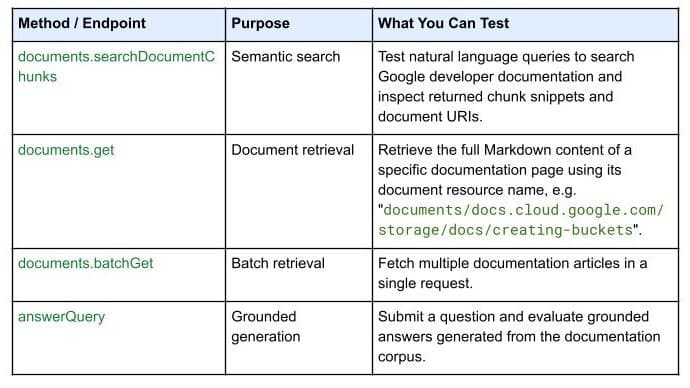
On October 7, 2026, Google Developers launched the Developer Knowledge API ecosystem: official Google Cloud, Firebase, and Android docs as a programmatic source of truth, with a gcloud CLI surface, an official Agent Skill (one-line install), an MCP server, and multi-language client libraries. Why 'docs as APIs' uproots vibe coding's classic failure of models misremembering APIs.
On October 8, 2026, Google Cloud launched the Gemini agent at Gemini at Work 2026: a universal agent for work that takes objectives, plans by itself, auto-selects between Gemini and Claude models per task, and introduces 'coworker agents' with their own email, calendar, and directory seat. Four judgments on why the second half of the agent race is about 'agents that feel like colleagues.'

On October 3, 'Sites in ChatGPT' hit the HN front page with ~209 points and 218 comments. Not a launch — a reckoning: is prompt-to-URL a toy, a prototype host, or a productivity tool? The four debates, the doc-backed facts (D1/R2, sign-in, custom domains), and three verdicts for vibe coders.