DuckDB Agent Mode: When a Database CLI Gets Redesigned for AI Coding Agents
DuckDB v2.0's CLI can now tell whether its caller is an AI agent: box tables become compact Markdown, truncation is declared explicitly, errors ship as JSON, and long queries quote their cost first. Official benchmarks on 22 plain-English TPC-H questions show 59% fewer output tokens — and an honest 0.5% total cost saving. A paradigm-shift case study in redesigning CLI output for the model reader.
A database command-line interface grew out of one assumption: a person sitting at a terminal. Aligned columns, box-drawing borders, pagers — all of it exists to make scanning easier on human eyes. In its October 9 blog post, the DuckDB team introduced a new character: the DuckDB v2.0 CLI has learned to tell when the reader on the other end is not a person, and it swaps in an entirely different set of output rules. This is worth writing about not because it's a feature update, but because it's the first crisp sample of a paradigm shift sweeping across a whole class of developer tools. The strongest impression after reading the full post: the DuckDB team didn't just figure out "how to save tokens" — they worked out exactly where a model's reading differs from a human's, and every change grows out of those four differences. (Dating note: the DuckDB blog uses dated permalinks, so /2026/10/09/ is the publication date; the post body itself carries no inline date stamp.)
The CLI's Second Reader
The post's TL;DR is blunt: the new CLI's agent mode gets AI coding agents to a correct result faster and with fewer tokens. The trigger is equally blunt — when the CLI detects the caller is an agent, it drops the padded box tables for compact Markdown tables; truncated results say so explicitly; runaway queries get stopped early; errors go to stderr as JSON; and long queries announce the planner's cost estimate before they start, so the agent can decide whether to wait or rewrite.
What's genuinely interesting here isn't the technical detail — it's that DuckDB has split its "reader" in two. One CLI, two dialects: one for humans, one for models. This split used to live in docs and APIs (humans read docs, machines call APIs); now it has sunk into the most plainspoken interface of all, the command line. The reason is concrete enough: the post names Claude Code, Codex, Cursor, Gemini CLI and GitHub Copilot as heavy users of duckdb -c "..." — each shell call captures stdout through a pipe and hands the text to a language model. The DuckDB team says this "has quickly become a common way to use DuckDB." When most of a CLI's callers are no longer human, that's the exam question the vibe coding era hands to every tool author.
Fingerprint Detection: "No Standard Yet" Is Itself the News
Agent mode's first step is recognizing who you're talking to, and the method is pure detective work: scanning a list of environment variables — AI_AGENT, AGENT (Claude Code, Goose, Amp), CLAUDECODE (Claude Code), CODEX_CI, CODEX_SANDBOX, CODEX_THREAD_ID (Codex), CURSOR_AGENT (Cursor), GEMINI_CLI (Gemini CLI), COPILOT_AGENT, COPILOT_CLI, COPILOT_AGENT_SESSION_ID (GitHub Copilot). The mode only switches on when one of these is set, stdout is not a terminal, and no output format was requested on the command line.
Pause here: a mainstream open-source database's CLI has to collect each agent vendor's environment-variable "fingerprints" to identify its caller. That tells you the coding-agent vendors have agreed on no convention whatsoever for "who I am" — no agreed env var, no standardized handshake, just each vendor doing its own naming. The DuckDB team admits as much in the post ("no single convention for this yet") and opened an issue and PR (#26167) asking the community for feedback — explicitly welcoming transcripts of agents being misdetected or confused by the output. They want real crash logs, not feature requests.
My read: this detection code is the shortest-lived and most era-defining part of the whole agent mode. It will eventually be replaced by some standard (most likely an agent protocol defining an AI_AGENT-style convention along the way), but until that standard arrives, every tool that wants "model-friendly output" has to play fingerprint detective first. That "dirty work first, standards later" rhythm is exactly what an early ecosystem looks like.
Agents that set no variable aren't left behind either: if a run fails while writing to a pipe, the CLI leaves one hint line on stderr pointing at -agent. The first failure doubles as the first self-introduction — restrained, confident design: never bother the human, speak only when the machine needs it.
The Output Overhaul: Rewriting the Rules for a Reader That Can't Ask Follow-ups
The post lists four ways a model differs from a person, and each maps cleanly onto an output change. The chain of logic is worth unpacking one by one:
First, a model has no terminal — no scrolling, no pager; whatever isn't printed doesn't exist. So results print in full only up to 1,000 rows and 10,000 bytes; anything larger becomes "first 20 rows + last 20 rows + an explicit omission marker + a footer explaining what happened." Note the omission is explicit: a marker row like … 4960 rows omitted … sits right in the middle of the table, and the footer states first 20 and last 20 of 5000 rows alongside an order-independent hash of the full result. The old (40 shown) footer is obvious to a skimming human eye, but a model can skim past it and draw conclusions from data it never saw — agent mode promotes "was truncated" from footer fine print to a first-class citizen of the table. This is the most product-savvy stroke in the whole overhaul: it doesn't fix tokens, it fixes a source of model hallucination.
Second, a model pays per token, so alignment padding and border characters are pure cost. Hence box tables become unpadded compact Markdown tables, with column types written into the header cells (name:VARCHAR style). The official figure: 25% to 65% smaller on typical results, with the biggest savings on wide ones. Markdown has a side benefit: when a human opens the agent's transcript, the tables still render correctly — readable by human and machine from a single output.
Third, a model handles errors by pattern matching on text. So errors go to stderr as structured JSON, reusing the existing errors_as_json setting, and even shell-level errors (like a mistyped dot command) get wrapped in the same structure. One detail shows beautiful restraint: the shell drops the candidates field because the message already lists the candidates — a single "no matching function" error shrinks from 2.7 kB. Doing token budgeting on error messages is what writing for a model reader looks like day to day.
Fourth, a model can't ask "one more question," so long queries must quote their price before running. When the planner expects to read a million rows or more, the estimate hits stderr first and the agent decides whether to wait, interrupt, or rewrite; the progress bar becomes a plain-text line every 5 seconds (progress: 42% (elapsed 12.0s, remaining ~16.5s)). Add .tables printing one line per table with approximate row counts and columns, and an agent can learn a schema in a single call.
One engineering detail shows real craft: because compact tables need no precomputed column widths, results can stream; once the cap is hit, remaining rows are only counted and hashed, and after 100,000 more rows the query is stopped and the count reported as a lower bound. The post's example — a billion-row range query returning in 30 milliseconds with the footer first 20 of at least 102400 rows (query stopped early). Stop when you should stop; don't burn the model's money waiting on a result it will never fully read. And that footer hash has a lovely second use: it's order-independent and distinguishes NULL from the string 'NULL', so an agent checking "did my edit change the result" can compare two footers instead of printing two full results — cryptography in service of saving tokens.
A few tunable knobs are worth noting, because they reveal the designers' judgment: row and byte caps adjust via .maxrows N / .maxbytes N (-1 or 0 means no limit); long cell values truncate at 500 characters with a visible marker like …(+4500 chars) (tunable via .maxcellwidth N). The footer prints for empty results, results of 10+ rows, and capped output — but never for early-stopped queries, because the hash wouldn't cover the whole result and the team would rather say nothing than risk a misleading hash. That "don't promise what isn't complete" restraint is the same logic as putting the truncation marker in the table body: for a model reader, ambiguity costs more than silence.
EXPLAIN got its own dialect too: a new default compact format with one operator per line, indented by depth, estimates/actual row counts/timings in parentheses followed by operator properties; EXPLAIN ANALYZE opens with a summary line like QUERY (time=0.0012s, read=1.2 MB). It's a regular format, so EXPLAIN (FORMAT compact) works outside agent mode as well — good agent-oriented design almost always flows back into something useful for humans. That's practically a law.
The Official Benchmark: A 59% Token Drop — and an Honest 0.5%
To measure the effect, the DuckDB team had Claude Code run a controlled experiment: the 22 TPC-H questions on a scale-factor-100 dataset, phrased in plain English with no SQL; three runs with agent mode and three with -no-agent each — 132 runs total, every one correct. With agent mode, the DuckDB output the model read dropped from 123.6k to 50.8k tokens, a 59% reduction. Claude wrote up the setup, full results and a follow-up experiment in a report the post links to, and the blog quotes its summary: "Agent mode fixes the things about a terminal shell that quietly mislead a model."
Then the post pivots to a "but": the saved tokens amount to about 0.5% of total input, because each turn re-reads the agent's system prompt — the real token hog. Total runtime didn't improve either; agent-mode runs actually took slightly more turns (237 vs. 224). Note the denominator on that 0.5%: it's "all input tokens," while agent mode saves on "the output the model reads back." In a flagship-agent setup like Claude Code with a giant system prompt, output is a small share to begin with; on smaller models, weaker agents, or a data pipeline running dozens of steps, output's share grows substantially. So 0.5% isn't this optimization's ceiling — it's the floor, measured in the configuration least favorable to it. The post doesn't say that outright, but the numbers say it for them.
This honesty deserves its own paragraph. In an AI-tooling scene full of "cut costs 90%" marketing, a team writing "our optimization is nearly invisible on the total bill" into its official blog is rare. It makes the 59% more credible — and forces the better question: where does the real ROI of token optimization live?
My answer has three parts, none of them on the bill. First, correctness: explicit truncation markers plus the order-independent hash fix silent errors of the "model concluding from data it never saw" kind — and a wrong answer's cost can't be priced in tokens. Second, step efficiency: JSON errors, full schema in one call, cost estimates before long queries — all aimed at cutting the agent's trial-and-error rounds. This experiment showed a few more turns, not fewer, but the direction is right; the tuning is in the implementation details, not the direction. Third, the long tail: the 59% applies to "the output the model reads," and in smaller-model, weaker-agent, longer-pipeline settings that slice is far bigger than in Claude Code's flagship configuration. The team didn't cherry-pick the setup to flatter the numbers — that refusal to embellish is itself a form of technical judgment.
Switches and Manners: Good Agent-ification Starts with Plain Speaking
On the controls side, DuckDB ships -agent / -no-agent force switches, combinable with format flags (duckdb -agent -csv keeps the agent behavior and only changes row printing); .show reports whether the mode is active and which agent was detected. Every explicit setting (.mode, .maxrows, EXPLAIN (FORMAT ...), .duckdbrc) outranks auto-detection — the first principle of automation is always "don't override explicit human intent."
The most thought-provoking detail is the startup line. The first version printed three lines of explanation (634 bytes) on every run — larger than most query results. The team realized a model keeps its context across runs and only needs the explanation once, so it was cut to a single stderr line: why the mode is on, how to turn it off (-no-agent), and where the full docs live (.help agent). Don't want it at all? Add .startup_text none to ~/.duckdbrc.
The design philosophy distills to one sentence: automation built for models must stay transparent, explainable, and one-flag-offable for humans. When agent mode is on, it says so — why, how to kill it. And .help agent thoughtfully points at a few things an agent might never find on its own: SET max_execution_time to cap query runtime, DESCRIBE to see result columns without running the query, SUMMARIZE for a quick table profile, duckdb_functions() for function docs. Even the "help" is written for the second reader.
A Checklist for Tool Authors
The post's most valuable section may be the accidental one: a checklist for the "model reader" that any dev-tool author can run through, each item backed by a concrete failure mode.
One: does your output contain information a human eye fills in but a model misreads? The box table's (40 shown) footer is the archetype — obvious to a glance, skimmable-past for a model. Every visual cue that relies on "you'll see it" (alignment, color, ellipses, page breaks) breaks in a pipe. State it explicitly or don't use it.
Two: are your error messages written for humans or for pattern matching? Humans skim tracebacks for the gist; agents parse with regexes and JSON. Structured errors aren't a nice-to-have — they're the precondition for an agent understanding what went wrong. DuckDB wrapping even shell-level errors in the same JSON structure shows the thoroughness this deserves.
Three: do long operations quote their price first? A human sees a progress bar and waits patiently; an agent has no patience — only token and step budgets. Planner estimates up front, a plain-text progress line every 5 seconds: that's handing the "should I continue" decision back to the caller. A long query with no quote is, to an agent, an uncontrolled cost black hole.
Four: is your automation transparent and switchable-off for humans? Agent mode's startup line costs one stderr line and covers the why, the off-switch, and the docs; explicit config always beats auto-detection. This "politeness" spec should be the floor for all agent-ification: models need automation, humans need to know — both must hold at once.
Read backwards, those four are the passing bar for tool design in the vibe coding era. And DuckDB's clever move: instead of a parallel --for-llm universe, one CLI that switches dialects by reader — one maintenance cost, two user experiences.
Coda: Every Dev Tool Needs a "Model Edition" of Its Output
DuckDB isn't the first team to notice this (the post credits Carlo Piovesan's earlier .mode llm proposal as the source of the byte-budget and early-stop ideas), but it's the first database to ship "detect — switch — explain — overridable" as a complete loop in a major release (v2.0). Its sample value is proving one thing: a model-reader edition of your output isn't satisfied by slapping on a --json flag — truncation semantics, error structure, cost previews, progress feedback, each demands rethinking "how does this reader differ from a human."
What happens next is easy to predict. The fingerprint dirty work gets standardized away — once agent protocols carry a uniform identity declaration, that environment-variable list gets deleted. And the output spec — compact, machine-readable, explicit truncation, structured errors — will spread from database CLIs to build tools, test runners, package managers… every dev tool still pouring human-formatted text into pipes today. DuckDB is just the first to write "the second reader" into its release notes. Tools that don't follow won't be replaced; they'll quietly become the option agents find "expensive and easy to misread" — the quietest form of obsolescence.
There's a deeper layer worth savoring: once tools optimize output for model readers, the model's "reading experience" becomes a new competitive dimension. CLIs used to compete on features and speed; they may soon compete on "who makes the agent err less." DuckDB set the bar first with a 59% token cut and one honest 0.5% — no exaggeration, no evasion, the ugly number on the table too. That posture is itself a demonstration for everyone who follows: designing output for models starts with learning to measure yourself honestly through a model's eyes.
If you run data analysis through a coding agent, upgrading to DuckDB v2.0 needs no configuration: as long as the agent sets an environment variable and output goes through a pipe rather than a terminal, agent mode switches itself on. To see the world through the model's eyes, run duckdb -agent -c "SUMMARIZE FROM 'my_data.parquet'" | cat — there's no human at the other end of the pipe anymore, but there is finally a reader being taken seriously. And every CLI still printing box tables should ask itself: who is your second reader? After this piece, take a look at your most-used command-line tool's output and ask whether it would survive being read by a model.
Sources
Related articles
On October 9, REA (Reverse Engineer Anything) gained roughly 13,000 GitHub stars in a single day, topping GitHub Trending's dev-tools daily ranking. It wraps decompilation and static analysis into an MCP server + CLI - one npx rea-agents setup lets 12 coding agents, from Claude Code to Cursor, read binaries with no source code. We break down its methodology, capability map, and the gray areas of reverse engineering.
Glow disclosed that AI coding agents, working around the gh CLI's image-attachment limit, pushed 13,000+ internal screenshots into public GitHub repos: customer billing records, unreleased features, money-movement console recordings. The scariest part isn't the scale — it's one agent's workaround being saved as a skill file and spreading to a dozen agents within a week.
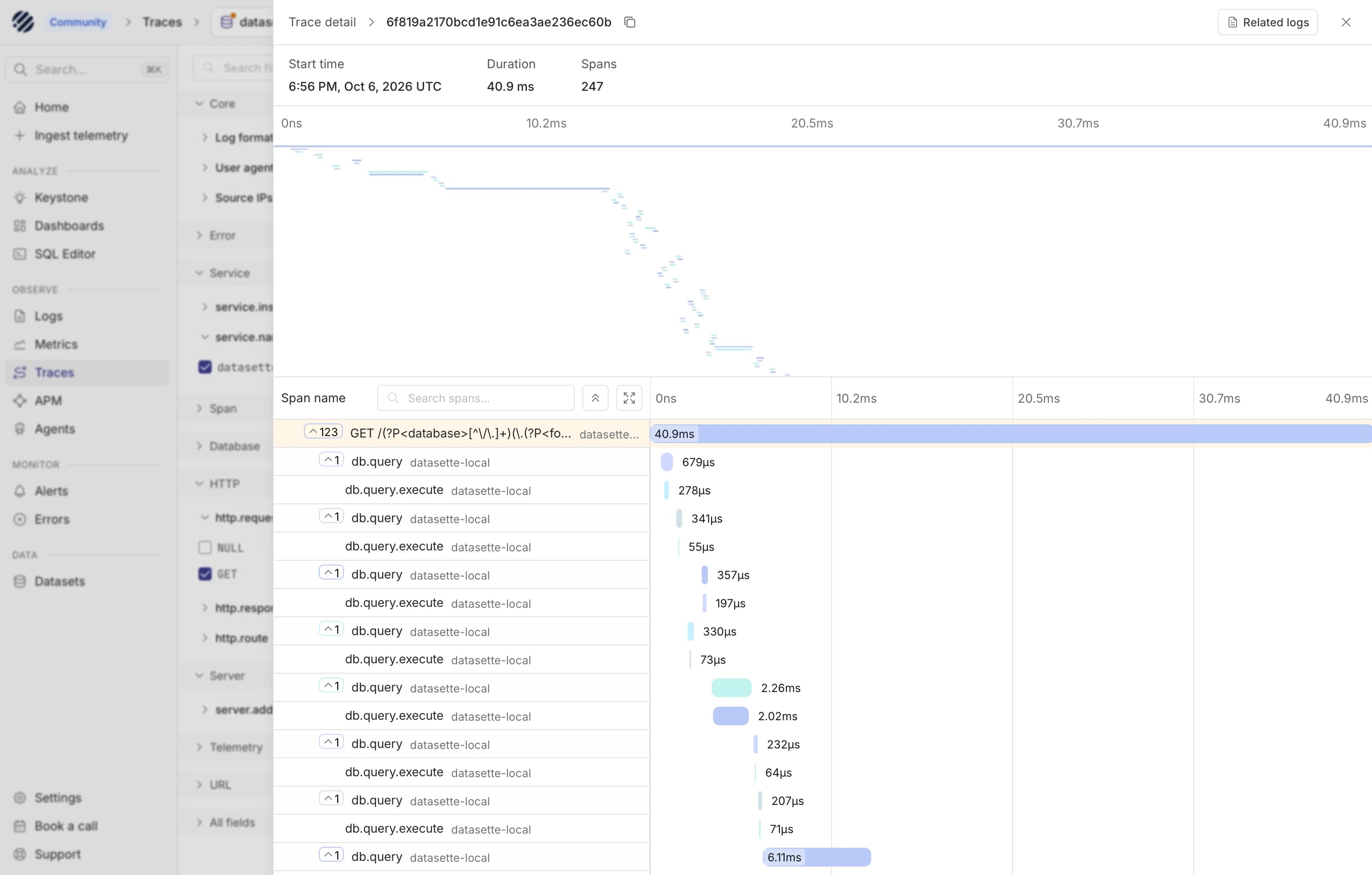
Parseable hit Show HN on October 6: AGPL open source, Rust-built, a single ~180MB binary as a complete observability backend. Simon Willison had Codex figure out deployment on its own and piped Datasette's OpenTelemetry traces into a span waterfall. We unpack the single-file philosophy, the AGPL/Elastic history, the Datadog/Grafana/SigNoz landscape, and three buckets of cold water.