Full Observability in a 180MB Single File: Parseable Hits Show HN, Simon Willison Has Codex Deploy It Live
Parseable hit Show HN on October 6: AGPL open source, Rust-built, a single ~180MB binary as a complete observability backend. Simon Willison had Codex figure out deployment on its own and piped Datasette's OpenTelemetry traces into a span waterfall. We unpack the single-file philosophy, the AGPL/Elastic history, the Datadog/Grafana/SigNoz landscape, and three buckets of cold water.
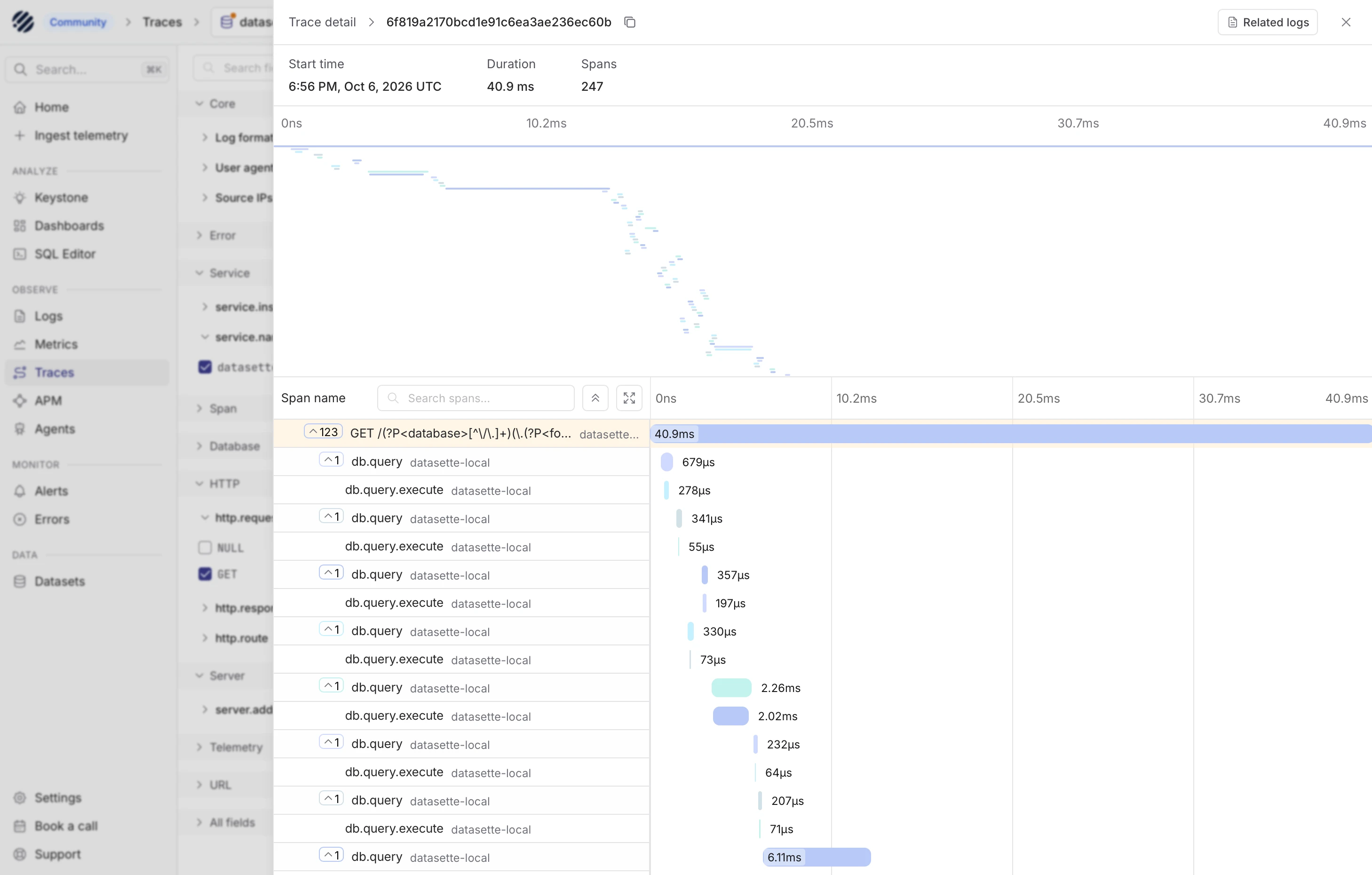
On October 6, an observability platform called Parseable hit Hacker News' Show HN. Its pitch fits in one sentence: open source (AGPL), written in Rust, a single ~180MB binary you can just run — logs, metrics, traces, dashboards, and a SQL editor, all included.
The observability space hasn't seen an exciting new player in a long time. Datadog is expensive, Grafana is sprawling, self-hosting is exhausting — this triangle has trapped indie developers for years. Parseable chose this moment to charge in with "a single file," and the timing is sharp: agent applications are shipping in bulk, and they need observability more than traditional apps ever did.
Dating note first: Simon Willison's blog entry sits under the "Tuesday, 6th October 2026" grouping, and the Show HN debut was around October 6. Date references in this piece follow that basis.
What makes this story worth 4,000 words isn't Parseable itself — it's who vouched for it and how. Simon Willison — the most respected independent observer in AI coding circles — didn't write a "yet another tool" blurb. He did a real hands-on test: his Datasette 1.0a41 had just gained OpenTelemetry support, so he had Codex figure out on its own how to get Parseable running, pipe Datasette's traces into it, and finally saw the span waterfall in the local web UI. He wrote it up as a TIL (Today I Learned) documenting the viable pattern.
Note the weight of that validation chain: an AI coding veteran used an AI coding tool (Codex) to deploy an observability platform, to observe OpenTelemetry data from another AI-friendly app (Datasette). No human wrote deployment docs, no human tuned configs — Codex figured it out alone. That is 2026 software development in miniature: agents deploying agent infra, observing agent behavior.
Tearing it down: what a 180MB single file means
Start with the product. Parseable's three core design decisions: AGPL open source, Rust implementation, single-file distribution. Each is a tradeoff.
Single-file distribution is the biggest differentiator. What's the reality of self-hosting observability today? Prometheus + Grafana + Loki/Tempo — three components, three configs, three storage backends. Or SigNoz — one docker-compose command, but still multiple containers behind it. Or just pay Datadog, metered billing, data leaves your premises. Parseable says: one 180MB binary, run it, and you have a complete observability backend. That "double-click and go" experience is scarce in the 2026 observability market — the last product to nail "single file" was SQLite, and SQLite changed the embedded-database landscape.
The Rust implementation addresses performance anxiety. Observability write pressure is notoriously brutal: hundreds of thousands of log lines per second is normal. Rust's zero-cost abstractions and memory safety let Parseable promise "a single file that survives production traffic." Promises and benchmarks are different things, of course — Simon's test was functional, with no stress testing. More on that later.
The AGPL license is the most controversial call. AGPL requires: if you modify the code and offer it as a service over the network, you must open-source your modifications. For companies that want to "grab it and hack on it for internal use," that's fine; for companies that want to "build a commercial product on it," it's a hard barrier. Parseable's business model is clear: the open-source version acquires users, the Enterprise edition (more features) and cloud hosting make money. AGPL is that model's moat — it stops cloud vendors from repackaging it as a service (the Elastic vs. AWS saga is the cautionary tale).
Why now: the agent era's observability gap
Parseable's biggest tailwind is the observability vacuum around agent applications.
Picture the vibe developer's daily life over the past year: your agent built an app, you deployed it, a user says "it's a bit slow," you ask the agent what's slow, the agent says "let me check the logs" — and there's nothing useful in them. Traditional observability assumes "humans write code, humans know where to log." Agent-written code gets logging on a whim; call chains are guesswork. Worse, token burn: an agent task burns a few dollars of tokens and you have no idea where — retrieval? retries? the model "thinking"?
That's Parseable's opening: OpenTelemetry is already standard output for agent frameworks (LangChain, AutoGen, the MCP ecosystem all emit it); what's missing is a backend "light enough to bother installing." Datadog is too heavy and pricey, the Grafana family too scattered — Parseable's 180MB single file sits exactly in that gap. Simon's test scenario — Datasette traces flowing into Parseable's waterfall view — demonstrates the workflow: agent frameworks emit OTel data, a lightweight backend catches it, humans (or agents) read the graphs to find problems.
Another trend worth noting: Parseable's official docs already have a dedicated "AI agents" ingestion section (trace guides for Mastra, OpenRouter, Temporal). An observability product making "agent ingestion" a first-class docs category knows where its growth engine is — not traditional microservices, but agent apps.
Simon Willison's validation method: why his TIL beats press releases
Simon Willison deserves a section of his own — because in AI coding circles, one of his TILs outweighs ten press releases.
Simon's format is fixed: no opinions, just records. He saw Parseable on Show HN and didn't write "this product changes observability" — he wrote "I got Codex to run it; here's what I learned." That "only write what I've personally verified" discipline made him the industry's human filter. Over two years, countless developers' decisions — from LLM prompting tricks to agent framework choices — have been shaped by his blog. Not because his takes are radical, but because he never states what he hasn't verified.
Several details of this Parseable test deserve magnification. First, his validation path was "have Codex figure it out alone." That's not laziness — it's a deliberately high bar. If deployment docs are vague, humans can guess from experience; sending an AI to explore exposes every gap. That Codex got Parseable running on its own means the onboarding path is genuinely smooth — at least for developers "with AI help." In 2026, "can an AI deploy you unattended" is becoming infra products' invisible acceptance test.
Second, his observation target was Datasette 1.0a41 — his own project, freshly OTel-instrumented. That keeps variables controlled: he knows what traces Datasette should produce, so he can judge whether Parseable displays them correctly. Had he tested some black-box app, a waterfall view would prove nothing about accuracy. "Probe with a system you know" is the gold standard of independent review.
Third, he wrote a TIL, not a review. The TIL format records "a viable pattern" (it works like this), not "a verdict" (is it good). Readers should stay sober: Simon proved "it runs," not "it runs well." But that's the TIL's value — it gives you a starting point to verify the rest yourself. Treating a TIL as a buying decision is misuse; treating it as a "worth an afternoon" signal is correct.
A reminder for content consumers: people who verify before speaking are scarce in this industry. Simon's blog, Latent Space's hands-on tests, and Bens Bites' daily brief form AI coding's information filter layer. Following these few sources beats following fifty marketing accounts — especially now, with a dozen new agent tools launching weekly. You need filters, not amplifiers.
AGPL's backstory: the Elastic vs. AWS saga
Parseable's AGPL choice wasn't whimsical. Behind it lies a bloody industry history worth unpacking, because it directly affects whether you can trust the license.
The protagonist is Elastic. In the 2010s, Elasticsearch conquered log search under Apache 2.0. Then AWS did something: took Elasticsearch, modified it, and launched Amazon Elasticsearch Service — without paying Elastic a cent. AWS made a fortune; Elastic's cloud business was hollowed out. In 2021, Elastic was forced to move Elasticsearch from Apache 2.0 to SSPL (Server Side Public License), a license stricter than AGPL, designed specifically against cloud-vendor free-riding. The cost: Elasticsearch was no longer OSI-certified "open source," the community split, and OpenSearch (the AWS-led fork) was born.
Parseable's AGPL pick stands on Elastic's shoulders: open source for acquisition, license as the wall against "cloud vendors selling it as a service." AGPL's terms are explicit — serve a modified version over the network, open-source your modifications. For the AWSes of the world, that means "modify and sell" requires either open-sourcing changes (unwilling) or hands off.
But the sword cuts both ways. Many companies' legal teams treat AGPL as "avoid if possible" — not because the terms are unreasonable, but because compliance review is expensive. The typical CTO reflex: GPL-family license = legal meetings = delayed projects. So Parseable's real customer profile is: individual developers, indie teams, and large companies with dedicated open-source compliance processes.
A judgment call: AGPL is the right choice for Parseable, but it also caps its ceiling. Growth will come from the long tail — millions of indie developers and side projects — not Fortune 500 purchase orders. That's consistent with its "180MB single file" positioning: it was never designed for big enterprise. The Enterprise edition and cloud hosting exist to convert "AGPL-anxious" users into paying ones. The model's premise: the long tail is big enough. In 2026, the year agent apps explode, that premise likely holds.
The single-file philosophy's victory: from SQLite to Parseable
Parseable's "single file" design isn't marketing fluff — it inherits software history's most successful product philosophy: keep complexity for yourself, give simplicity to users.
The philosophy's founding father is SQLite. One database, the entire implementation a single C file — link it into your program and go. No server, no config, no ops. SQLite's author D. Richard Hipp famously claimed it's the most widely deployed software on Earth — in your phone, your browser, airplanes. Its secret wasn't being the most powerful, but being "too simple to refuse."
Infrastructure history is a simplification saga from "clusters to single files." Remember early Hadoop? Three days to stand up a cluster. Then Elasticsearch — single node works, three recommended for production. Then ClickHouse — one binary runs, and the analytical-database bar dropped a notch. Every simplification wave brought new users: people who "would have used it if it weren't such a hassle."
Parseable wants to be observability's ClickHouse moment. Its bet: observability complexity is overestimated. For 90% of teams, the need isn't "a distributed architecture for ten million log lines per second" but "store logs, query them, see graphs." Single-file covers that 90% comfortably; the remaining 10% were never its customers.
Single-file has costs, of course: high availability? data loss? horizontal scaling? Parseable's current answer is "the Enterprise edition handles that." It's honest — the open-source single file solves "getting running," the paid edition solves "staying running." Indie developers and small teams usually need only the former; big companies pay when they need the latter. Same logic as the AGPL business model.
The takeaway for vibe developers: when choosing infra, first ask "do I really need distributed complexity?" Many vibe projects die of "over-engineered infrastructure" — three people maintaining K8s plus the full Prometheus stack, humans exhausted before the business takes off. Products like Parseable exist to tell you: get it running first; solve scale when you actually have scale.
Head-to-head: the lightweight camp vs. the heavyweights
Placed in the existing landscape, Parseable's position clarifies.
Heavyweights: Datadog, New Relic. Most complete features — alerting, SLOs, on-call rotations, AI anomaly detection, the full chain. The price is cost (metered billing; tens of thousands a year for a mid-size app is normal) and data leaving your premises (compliance-sensitive industries excluded outright).
Self-hosted heavyweights: Grafana (Loki+Tempo+Mimir), Elastic. Free, but high ops cost — you need someone who understands the stack, or you become that someone. For indie developers, "set it up over the weekend, still tuning it next week" is the norm.
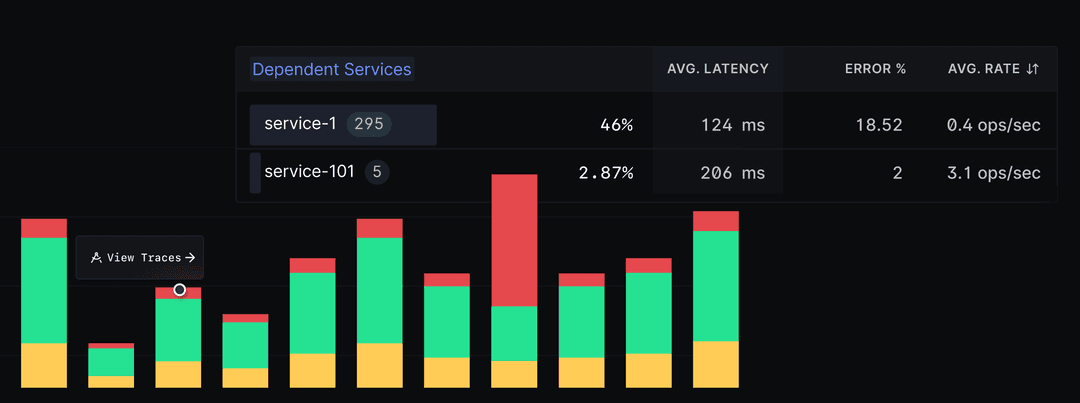
Lightweights: SigNoz (one docker-compose command, OpenTelemetry-native), Axiom (serverless logs, fast queries). Parseable wants the "lightest" slot in this camp: one fewer docker dependency than SigNoz, one more self-hosting option than Axiom.
Parseable's real rival isn't Datadog — Datadog shops won't switch to an AGPL solution to save a little money. Its rivals are SigNoz and "installing nothing." Indie developers, small teams, agent-app side projects — scenarios with "zero observability budget but real pain" — that's the 180MB single file's hunting ground.
Three buckets of cold water
Good news covered; three buckets of cold water. All are things Simon's test didn't cover but you must think through before adopting.
First: no performance data. Simon's validation was functional — "it runs, the waterfall shows." But an observability system's life-or-death metrics are write throughput and query latency: still stable at 100K log lines per second? How long to query 30 days of data? How fast does storage bloat? All unknown today. The Rust implementation inspires confidence, but confidence isn't a benchmark. Waiting for the first stress-test reports before betting production on it is wise.
Second: AGPL compliance cost. Many small teams see "open source" and assume "free to use however" — AGPL is not. The rule is simple: modify the code and serve it over the network, open-source your modifications. Pure self-use without modification is completely fine; but the moment you touch its code (say, adding a custom parser), legal questions arise. For indie side projects this is rarely an issue; for company projects, having legal glance at the AGPL terms before adopting is a necessary step. Parseable's Enterprise edition is, in a sense, the monetization of "AGPL anxiety" — pay if the hassle bothers you.
Third: the ecosystem gap. Datadog's value isn't just "pretty graphs" — it's the full chain of alerting, SLO burn rates, on-call scheduling, incident retrospectives. Parseable currently covers "collect-store-query-visualize"; the ops workflow above it you build yourself. For developers who "just want to see what the agent is doing," that's enough; for teams "responsible for production incidents," it's only the starting line.
Actionable advice for vibe developers
Down to actions. If you're a vibe developer, this story carries three concrete suggestions.
First, add OpenTelemetry to your agent apps. Datasette 1.0a41 became Simon's test subject precisely because it had just added OTel support. Whatever framework your app uses, adding OTel output costs little (a few lines of init code) and buys "any observability backend can ingest it." That's table stakes for 2026 agent apps — if you haven't, catch up.
Second, use lightweight options like Parseable to validate the "observe-driven debugging" workflow. Traditional debugging is "reproduce-add logs-reproduce" loops; the agent-era loop should be "read the trace waterfall, find the slow span, inspect its attributes and logs." Build the habit of reading traces first, then talk optimization. Parseable's 180MB single file reduces habit-building cost to two steps: download, run.
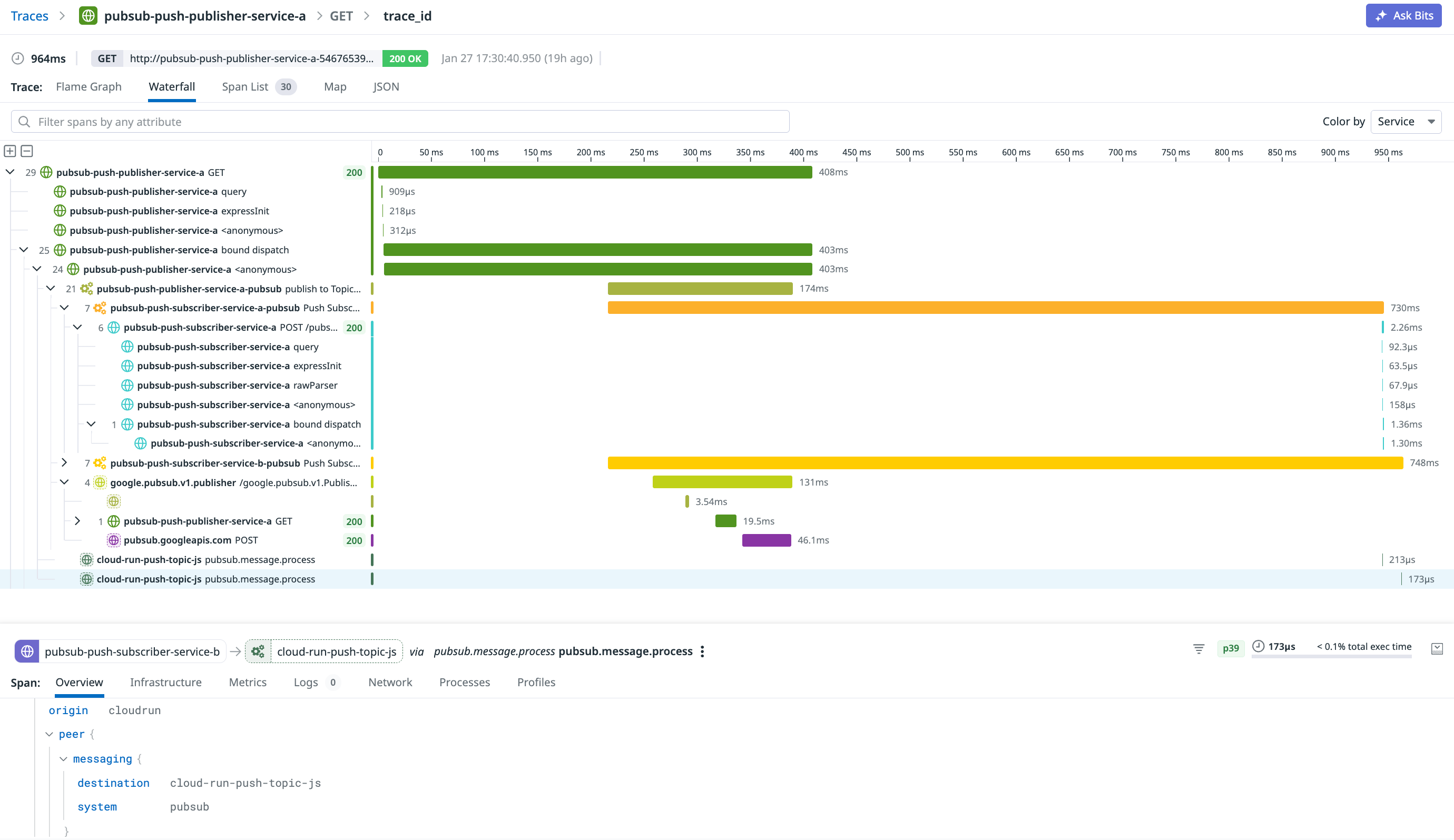
Third, watch the token-observability niche. Parseable's docs include an OpenRouter token-cost ingestion guide — someone is already watching token spend through observability backends. For token-burning agent apps, "how many tokens per task, and on which step" matters more than "is it slow." That niche is still blue ocean — worth watching long-term, even worth building in.
In one sentence: Parseable itself may never become a Datadog killer, but its direction is right — agent-era observability must be light enough for indie developers to install, cheap enough for side projects, open enough for the agent ecosystem to plug into. The 180MB single file is just the beginning; the real shift is "observation" moving from ops teams' exclusive tool to every agent developer's daily instrument. That afternoon Simon spent having Codex deploy Parseable to observe Datasette is the standard motion for debugging agent apps in the future.
(Dating note: the Show HN debut and Simon Willison's blog entry both date to around October 6, 2026; this piece is based on the "Tuesday, 6th October 2026" grouping verified firsthand. Noted here for transparency.)
Sources
Related articles
DuckDB v2.0's CLI can now tell whether its caller is an AI agent: box tables become compact Markdown, truncation is declared explicitly, errors ship as JSON, and long queries quote their cost first. Official benchmarks on 22 plain-English TPC-H questions show 59% fewer output tokens — and an honest 0.5% total cost saving. A paradigm-shift case study in redesigning CLI output for the model reader.
On October 9, REA (Reverse Engineer Anything) gained roughly 13,000 GitHub stars in a single day, topping GitHub Trending's dev-tools daily ranking. It wraps decompilation and static analysis into an MCP server + CLI - one npx rea-agents setup lets 12 coding agents, from Claude Code to Cursor, read binaries with no source code. We break down its methodology, capability map, and the gray areas of reverse engineering.
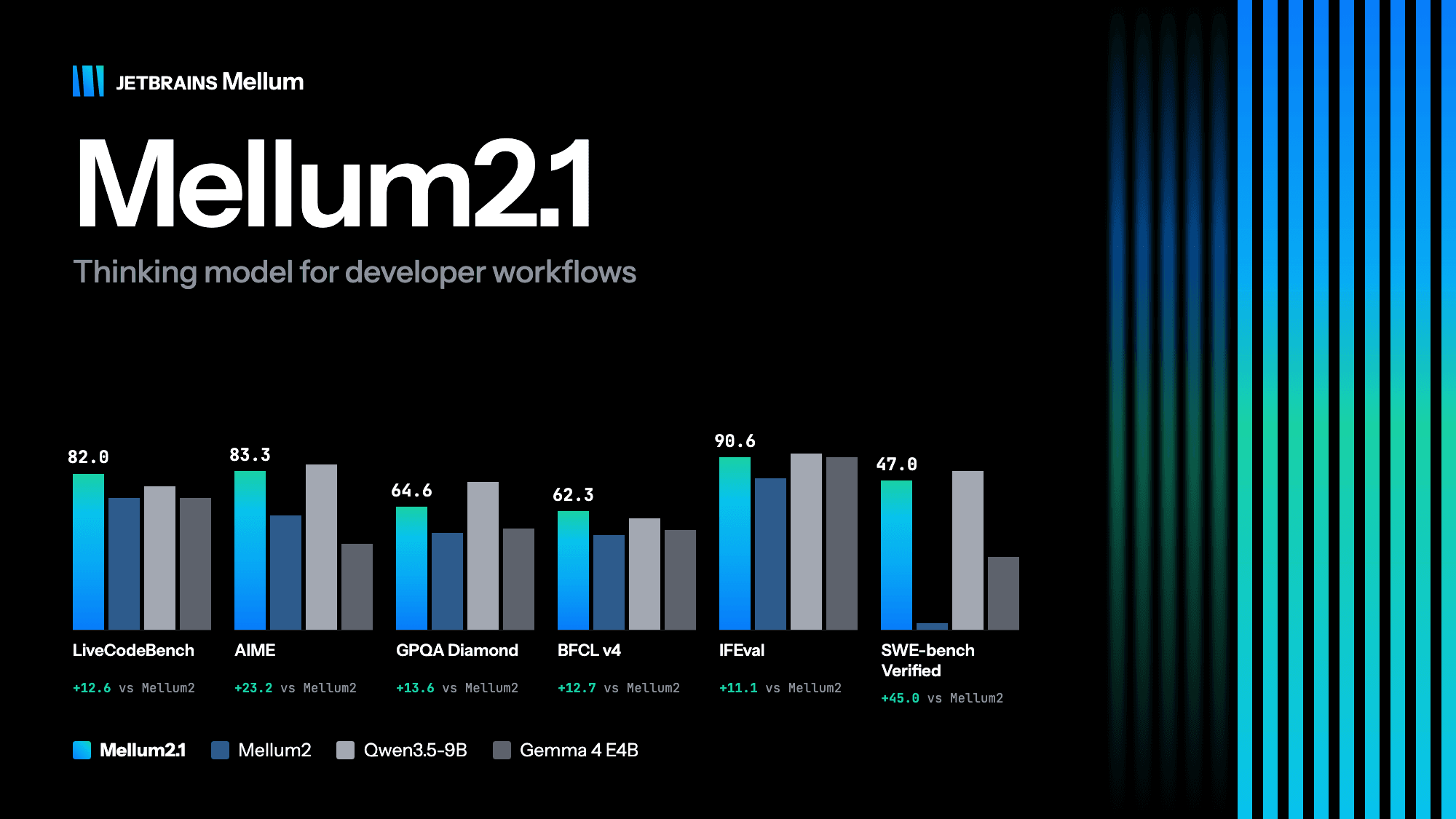
JetBrains has open-sourced Mellum 2.1, a 12B MoE model activating only 2.5B parameters per token. With its architecture unchanged since June, reinforcement learning in real environments lifted SWE-bench Verified from 2.0 to 47.0. Apache 2.0 licensed and self-hostable, it is positioned as the fast, cheap execution layer for coding agents — strong on coding and tool use, still trailing Qwen3.5-9B on the hardest agentic tasks.