GitHub Says the Next Developer Interface Is "Ambient": MX Keypad Puts Copilot Sessions on Physical Keys
On Oct 15, GitHub's VP of Developer Relations Martin Woodward named 'ambient intelligence' as the next developer interface: modality captures intent, the harness plans and acts, the control plane lets developers inspect, redirect and approve. The Logitech MX Keypad — 18 months in the making — puts Copilot sessions on physical keys. We unpack the three layers, the open engineering questions, and why a physical key is really attention routing.
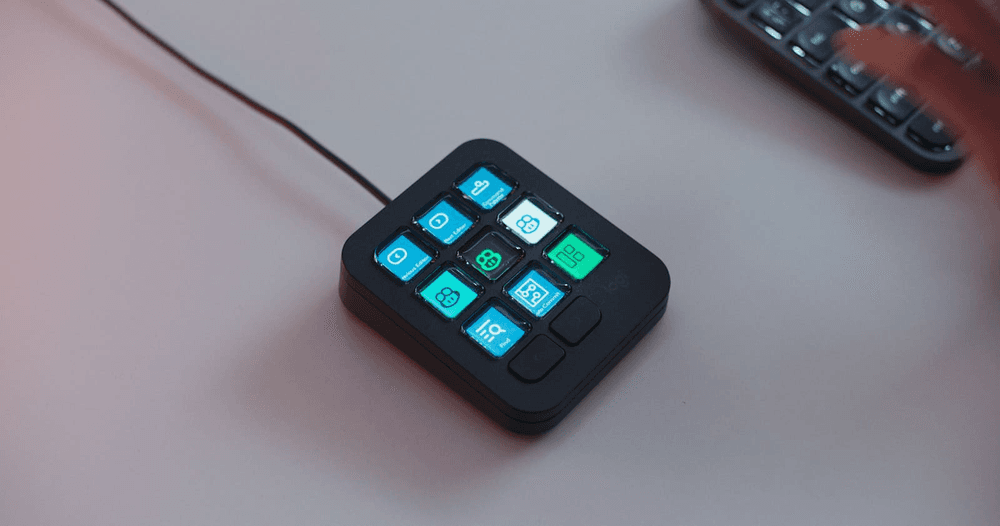
On October 15, Martin Woodward, GitHub's VP of Developer Relations, published "The next developer interface is ambient intelligence" on the GitHub Blog, officially naming ambient intelligence as GitHub's thesis for the next developer interface. The same day, GitHub announced the Logitech MX Keypad — refined over 18 months of collaboration with Logitech — deeply integrated with the GitHub Copilot app: one press of a physical key can submit a parameterized prompt, launch or resume a Copilot session, invoke an IDE command, or trigger a multi-step sequence.
The value of this post is not the hardware itself — a $99.99 nine-key LCD pad is unremarkable on its own. Its value is that this is the first time a major platform has systematized the "interface" question: now that agents can understand a repository, plan work, use tools, run tests and revise implementations on their own, what should the relationship between developer and machine actually look like?
The three-layer architecture: intent, execution, control
Woodward offers a clean three-layer model:

The modality layer captures intent. Text, voice, physical controls — however a developer expresses "what I want" belongs here. The key insight: simpler interfaces need more explicit context underneath. "Simpler interfaces need explicit context underneath."
The harness layer plans and acts. The agent understands the repository, picks a model, plans the work, uses tools, edits files, runs commands, inspects failures, and keeps going within boundaries the developer controls. This is the layer everyone has watched inflate over the past two years.
The control plane lets developers inspect, redirect, and approve. In Woodward's words: "The best products connect all three without surrendering control."
The layers are glued together by portable context: MCP connects agents to tools and services, repository instructions and skills encode team conventions, hooks enforce policy and validate output. Note the ordering — control is not a patch on the execution layer; it is a layer of its own. That converges with our other story this round, BAND for Developers: BAND makes the "room" both a collaboration surface and a control plane, while GitHub elevates control to a first-class architectural layer. The two form a natural two-part series on the human-agent interface of the multi-agent era: BAND answers how agents collaborate with each other; this piece answers how humans reach those agents.
MX Keypad: what one key can do
Back to the hardware. Inside the GitHub Copilot app, a single physical key can do four things: submit a parameterized prompt, open or resume a Copilot session, invoke an IDE command, or trigger a multi-step action sequence. GitHub and Logitech spent 18 months on this keypad — not on its looks, but on the word "ambient": a shortcut only earns its place when the friction it removes is enough to keep you in the code, without taking away your control.
Woodward includes an honest qualifier: "Not every developer needs another device on the desk, and not every interruption deserves a key." The developer decides which actions earn a shortcut, and when the keyboard, command palette, or voice is better — real use is the judge. A device's legitimacy is not "one more input device" but "giving some of that attention back" — his phrase for what a good interface does.
Price and specs, per official channels: $99.99, nine LCD keys, three months of GitHub Copilot Pro+ included. Logitech's product page adds more: each app profile supports up to 15 dynamic pages (cycled via paging keys), giving over 100 accessible actions per app from the same nine keys; the keypad detects the active window — VS Code, Zoom, Slack, Figma — and instantly switches to that app's key layout; 70+ apps ship with pre-built plugins. The community already has Claude Code and OpenAI Codex plugins on the Logi Marketplace, and compatible devices are cited via media reports at over 100 million units — keep the "via media reports" qualifier; that's a second-hand figure.
The author is a maker himself
An easily missed footnote: Woodward writes that he has been experimenting with ambient control devices himself — from inexpensive hackable picture frames to ESP32 devices with screens attached. "Agentic coding is past just a keyboard and a terminal into alternative interfaces."
Notably, last round (cycle70) we covered a community story: someone built an iPhone agent remote-controlled from an ESP32. That was a grassroots maker experiment; this is GitHub's official thesis — the same "coding agents are leaving the screen" trendline, with the community at one end and the platform at the other. Woodward writes the trendline as interface history: GUIs made software visual, the mouse made navigation easier, the web made it connected, mobile made touch natural, agents add intent and action — "The interface now includes ambient control."
The most valuable part: the open engineering questions
Woodward didn't write a product puff piece. He closes with a list of "this is still early, so the important questions are engineering questions" — and that list is worth more to multi-agent practitioners than the keypad itself:
How much repository and organizational context should an agent retain? Which tool calls can run automatically? How should credentials, network access, and secrets be scoped? What evidence should accompany a change? How do multiple agents coordinate without duplicating work or creating conflicting pull requests?
Note the last one — "how do multiple agents coordinate without duplicating work or creating conflicting pull requests" — which is exactly the question BAND for Developers tries to answer with its "room". Two companies, the same day, arriving at the same question from different doors. That's not a coincidence; it's the mandatory exam question on the road from multi-agent demos to production.
Logi Actions SDK: docs "written so a coding agent can read them"
One more detail worth savoring, vendor-reported: the Logi Actions SDK documentation is reportedly "written so that a coding agent can read it and write the integration itself". That's a vendor's own claim, with marketing seasoning — but the direction matters: when the reader of documentation stops being human and becomes an agent, the definition of "clear writing" changes. Good docs used to mean "a human can understand them"; good SDK docs may soon mean "an agent can read them and generate a working integration". If that standard holds, DevRel has to rewrite half its playbook: sample code is no longer for humans to copy-paste, but few-shot material for agents.
Our take: a physical key is attention routing
Back to Woodward's core claim: "The goal is not to remove developers from the work. It is to remove friction around the work."
That sentence deserves to be read against Anthropic's internal data: when agent hours reach 6x human hours, when engineers describe "an army of Claudes, every one asking for my attention", the scarce resource is no longer "speed of writing code" — it's human attention. A physical key's place in that coordinate system becomes clear: it is not an input device; it is attention routing — deciding which interruption deserves one physical, deliberate interruption, and which doesn't.
That's also why "ambient intelligence" is the right phrase. The opposite of ambient is not manual — it's intrusive. A good agent should exist like a good environment: within reach the moment you need it, receding into the background when you don't. The MX Keypad's nine keys are, in essence, nine "you may interrupt me" permits — and the power to issue those permits stays firmly with the human.
Woodward already wrote the practical advice for vibe coding readers; quoting once: "choose one repeated interruption, map it to a control, and see whether it preserves focus." Don't buy the keypad first — answer this first: in your workflow, which interruption most deserves a key? If you can't answer, the keypad will gather dust; if you can, you may not need the keypad at all — a keyboard shortcut might do. A tool's value always starts with an honest question.
One step back for the wider picture: this October's cluster of events — BAND building rooms for agents, GitHub handing keys to humans, Anthropic reporting agent hours at 6x human hours — are three facets of the same transformation. Agents are moving from "tools inside the screen" to "part of the environment": they live in rooms, on keys, inside your attention budget. The next chapter of interface history won't be "bigger screens, more panels" but "fewer interruptions, more precise reach". The MX Keypad is just the most photogenic footnote of that change — the real text is the relationship protocol between humans and agents being rewritten right now.
Comments (0)
Sources
Related articles

Pele, an open-source Mermaid-to-SVG renderer built for Obsidian, hit Hacker News with 460 points: zero dependencies, a 230 kB gzipped bundle, and self-reported render times of 0.05–0.3 ms. Its elegant trick is CSS-variable theming — recolor without re-rendering. All performance figures are self-reported and unverified; this piece explains the trade-offs behind them.
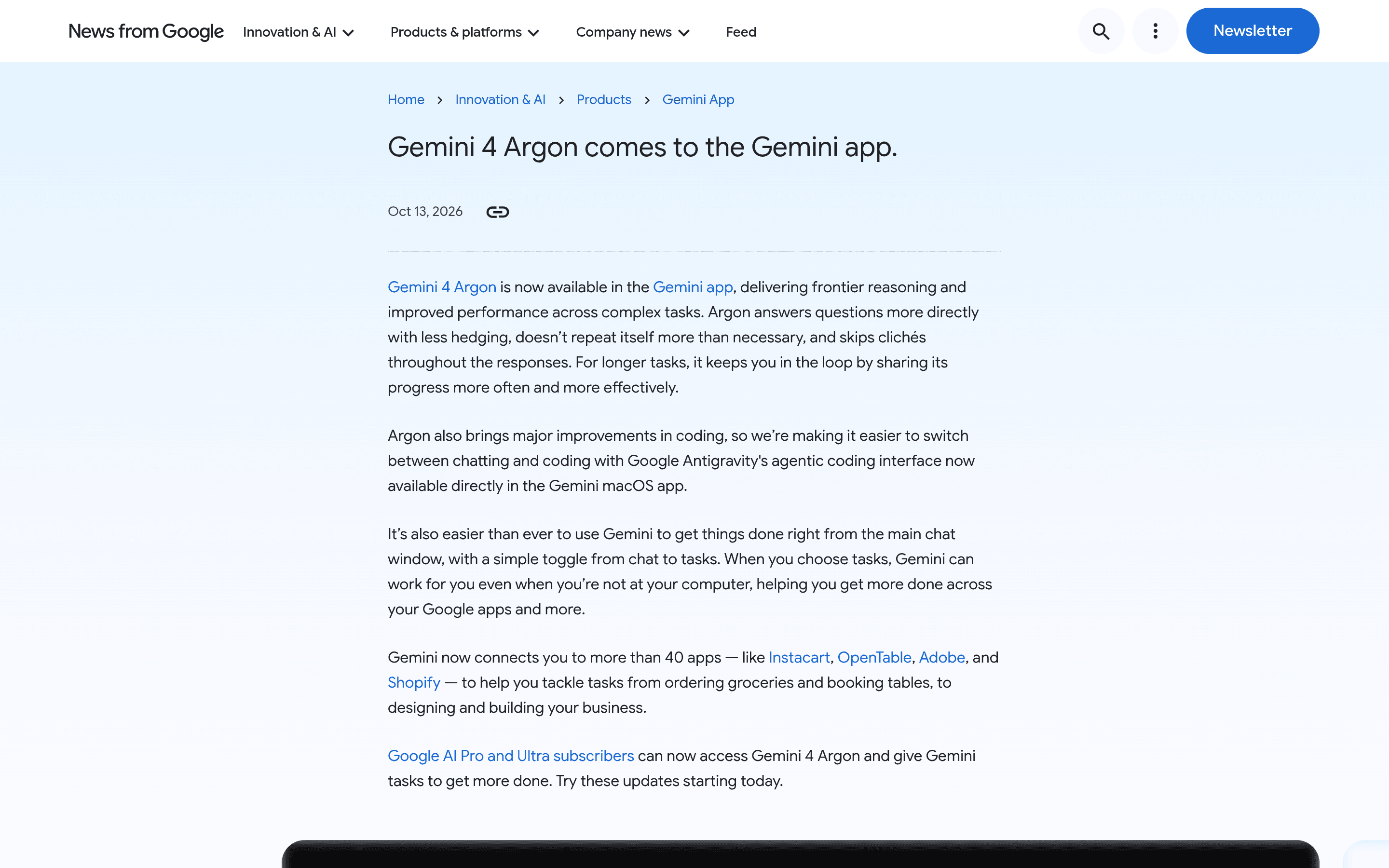
Google has embedded the full Antigravity experience into the Gemini Mac app via a Liquid Glass pill button, alongside the Gemini 4 Argon rollout. Gemini 4 Argon reaches AI Pro and above, but Antigravity access reportedly requires Ultra — the coding agent as top-tier moat, colliding with Cursor's IDE-orchestration route.

On October 17, The Verge reported that major websites are shutting out AI agents: JPMorgan Chase and Charles Schwab confirmed blocking agents from customer accounts, Yelp only admits agents that pay for data licensing, and Delta has no third-party agent partnership. We map who is closing the door and why, revisit Amazon's year-long war with Perplexity, and give vibe coders four judgments on building in the age of the 'right-of-way war.'