10 Models Retired in Six Weeks: Copilot's Great Reshuffle May Triple Kimi Users' Bills
GitHub Changelog's third deprecation wave (Oct 15): Claude Opus 4.8, Opus 5, and GPT-5.6 Terra retire Nov 16. Three waves in six weeks, 10 models total. The officially recommended replacements aren't always cheaper — Kimi K2.7→K3 input price roughly triples. Plus a 4-spot checklist for dead model names in your configs.
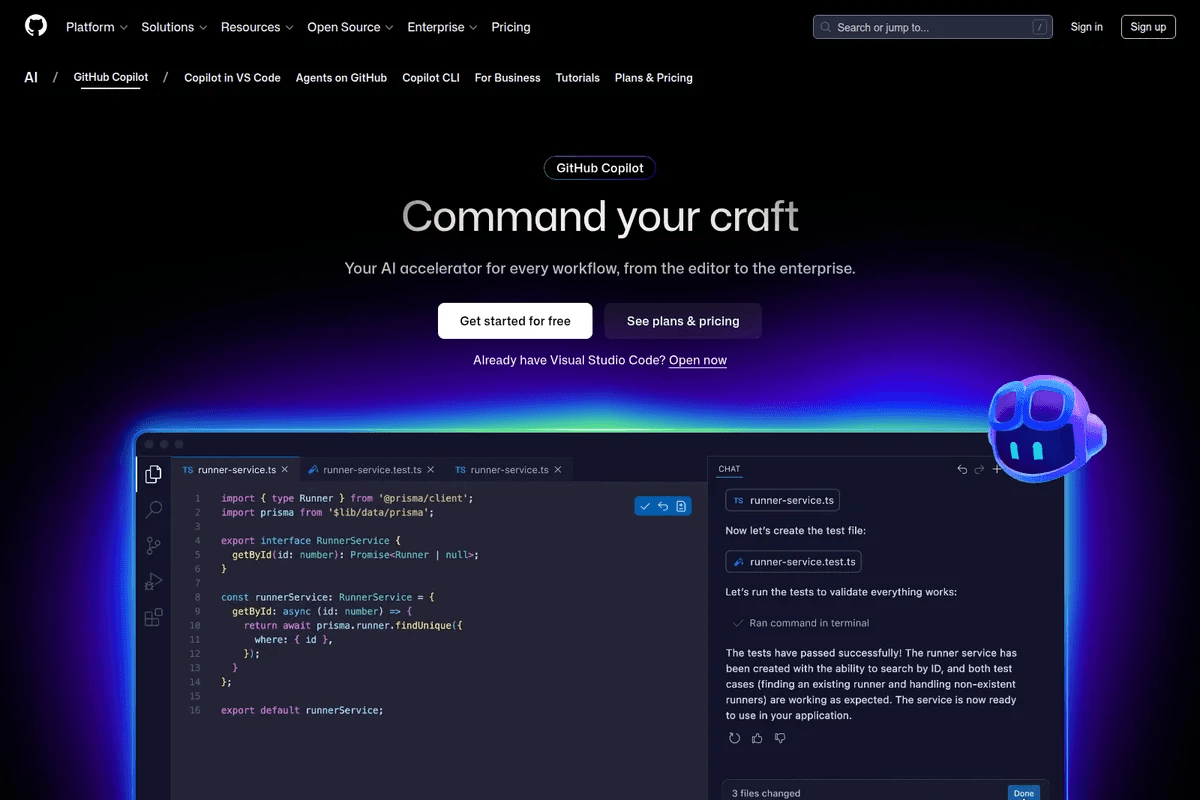
On October 2, we covered GitHub Copilot retiring four models in a single day ("GitHub Copilot Retires Four Models in One Day"). That looked like a one-off cleanup at the time. It wasn't: on October 15, the GitHub Changelog posted a third deprecation wave — Claude Opus 4.8, Claude Opus 5, and GPT-5.6 Terra retire on November 16. Counting from the first wave on September 1, Copilot has announced three waves and 10 model retirements in six weeks.
Everyone feels that models iterate fast; but when "iteration" becomes "scheduled retirement," the feeling turns into bills and config files. This piece stitches the three waves together: what actually happened to Copilot's model shelf, and which dead model names might still be lying in your settings.json.
Three-wave timeline: retirement as a recurring program
The three Changelog announcements, all primary GitHub sources:
- Wave 1 (announced Sept 1): Claude Opus 4.5, Claude Opus 4.6, Claude Sonnet 4.5 — Anthropic's previous flagship trio, retired mid-October.
- Wave 2 (announced Oct 2): Claude Opus 4.7, Gemini 3.5 Flash, Gemini 3.6 Flash, Kimi K2.7 Code — the four we covered, gone in a day.
- Wave 3 (announced Oct 15, the subject here): Claude Opus 4.8, Claude Opus 5, GPT-5.6 Terra, retiring November 16. GitHub named a successor for each: both Opus models → Claude Opus 5.5; GPT-5.6 Terra → GPT-6.1 Sol or GPT-6 Luna.
Note the weight of the wave-3 list: Opus 5 and GPT-5.6 Terra aren't edge models — they're each camp's previous-generation flagship. On OpenAI's side, GPT-5.5 just stepped down from the ChatGPT/Codex default slot on October 14 (replaced by GPT-6.1 Sol); GitHub is now sweeping 5.6 Terra into history right behind it. Both giants are clearing the "5 series" off the shelf in near lockstep.
Billing details: the officially recommended replacement isn't always cheaper
The most revealing column in any deprecation notice is always "suggested alternative." Per Pondero.ai's cross-reference of the three Changelog waves against GitHub's official price cards (secondary source), a few old-vs-new price comparisons deserve a line-by-line look from Copilot users:
- Kimi K2.7 Code → Kimi K3: input price from $0.95/M tokens to $3.00/M — roughly 3x. The most eye-watering pair in wave 2: Kimi users who blindly follow the official recommendation will see their bills triple.
- GPT-5.4 → GPT-5.6 Sol: also a price increase. OpenAI's pricing strategy for new models is clearly "new flagship, new price" — no trade-in discount.
- Opus 4.8 / Opus 5 → Opus 5.5: this pair got cheaper. Anthropic's 5.5 line in Copilot actually costs less than the 5 line — more for less.
The blunt conclusion: "officially recommended replacement" ≠ "cheaper replacement" — it only means "the one GitHub wants you on." For usage-billed users, the right move isn't clicking "accept recommendation" but opening the price card and doing the math yourself. Especially that 3x Kimi jump — if Kimi is your Copilot default, your first bill after November could be a shock.
A curious exception: the Opus 4.8 "annual exemption"
Buried in the wave-3 notice is a billing detail worth its own paragraph: Claude Opus 4.8 carries an asterisk. The footnote: individual GitHub Copilot subscribers on annual plans keep access to Opus 4.8 "so they retain an Opus offering" — the deprecation doesn't apply to them.
That's interesting. GitHub's deprecations are usually blanket decisions; this time it carved out annual individual subscribers. The subtext: annual subscribers are the segment of Copilot's base it can least afford to upset — they paid a year upfront, and mid-term removal of their primary model would mean refunds and complaints. GitHub would rather eat the serving cost of one extra model than risk that cohort's experience. Read that logic and you read Copilot's customer stratification: enterprise accounts have account teams as shock absorbers, monthly users go with the flow, and only annual individuals need an "exemption clause" to stay calm.
Three forces behind the deprecation wave
The three waves aren't GitHub improvising — three forces are pushing from behind.
Force 1: upstream release velocity has gone mad. Per OrcaRouter's Changelog survey (secondary), Anthropic now lands a new model integration in Copilot every two to four weeks: Claude Sonnet 5.5 (Sept 28), Claude Opus 5.5 (Sept 22), Claude Fable 5.1 (Sept 1)… When upstream ships two or three a month, the shelf has to turn over faster or it bursts. Deprecation notices are, at bottom, GitHub making room. Retiring one or two models a year used to be news; retiring 10 in six weeks is routine — that's the new normal.
Force 2: the routing layer is eating "model selection." GitHub has been pushing HydraFusion, an intent-based auto-routing workflow (per dev.to community write-ups, secondary). As Copilot leans toward "picking the model for you," keeping 20 legacy models in the picker is pointless — the old, the slow, the expensive can all go, since most users have already handed selection to Auto mode. The deprecation wave and auto-routing are two sides of one coin: GitHub is taking the power to choose models back from users and concentrating it in its own routing layer.
Force 3: the price war reached the "default slot." OpenAI priced GPT-6.1 Sol at roughly a fifth of Astra (per tech-insider, secondary) and put it straight into the ChatGPT/Codex default slot; Google's Gemini 4 Argon entered long-horizon agent tasks at $2/M input. Model vendors are fighting for developer mindshare via the default slot, so GitHub must keep its shelf defaults perpetually "new and cheap" — an old flagship, however capable, goes if it's expensive and takes up space. Which also explains why Kimi K3 dares to cost 3x: the confidence comes from "I'm new," not "I'm worth it."
Together they point to one conclusion: Copilot is turning from a "model supermarket" into "model fast fashion" — fast in, fast out, no classics, only turnover. Users must retire the "pick one flagship for a year" mindset and review model config quarterly. For indie developers, that's actually opportunity: the faster Big Tech turns its model shelf, the bigger the window to differentiate with "newest and cheapest" combos — as long as you check the Changelog every quarter.
Hands-on: four places where dead model names hide — go clean them
GitHub's notice includes a reassuring line: "No action is required to remove the models after they have been deprecated." But that tells only half the story: GitHub removes models server-side; hardcoded old model names in your local configs don't delete themselves. Per Pondero.ai's checklist (secondary), dead names typically hide in four places — worth a pass:
- The
COPILOT_MODELenvironment variable — exported in many people's shell profiles; ~/.copilot/settings.json— where the model picker's persisted config lives;- Agent profiles / custom agent configs — if you pinned a model for an agent;
- Team-shared devcontainer files and docs examples — the easiest to miss: one day a new hire follows the docs and configures a model that no longer exists.
Self-check with one command: grep -r "opus-4\|gpt-5.6\|kimi-k2\|gemini-3" ~/.copilot/ ~/.config/ 2>/dev/null — replace every hit with its successor, and don't wait until November 16 to discover your picker is missing entries. One more note: Copilot Enterprise/Business customers with default model enablement on will see successor models appear automatically; but if you turned the global default off, you must enable them manually in Copilot settings' model policies — otherwise several options will silently vanish from your picker after November 16.
The one-line take: model deprecation going from "rare event" to "recurring program" means AI coding tools have moved from competing on "whose shelf is biggest" to "whose shelf turns fastest." For users that means one thing: hardcoding a model name anywhere — env vars, config files, docs — is burying a landmine for your future self. The only fix: make model selection a config, and make the config swappable in one move. And GitHub's little "nudges" in its recommended replacements (pricier Kimi, cheaper Opus) remind you to always glance at the price card yourself.
Primary sources: GitHub Changelog Upcoming deprecation of selected GitHub Copilot models in mid-November (github.blog/changelog, Published 2026-10-15T12:35:13-07:00); wave 1 (Sept 1) and wave 2 (Oct 2) notices in GitHub Changelog history. Price comparisons and the four-config checklist per Pondero.ai (pondero.ai, 2026-10-16, secondary).
Comments (0)
Sources
Related articles
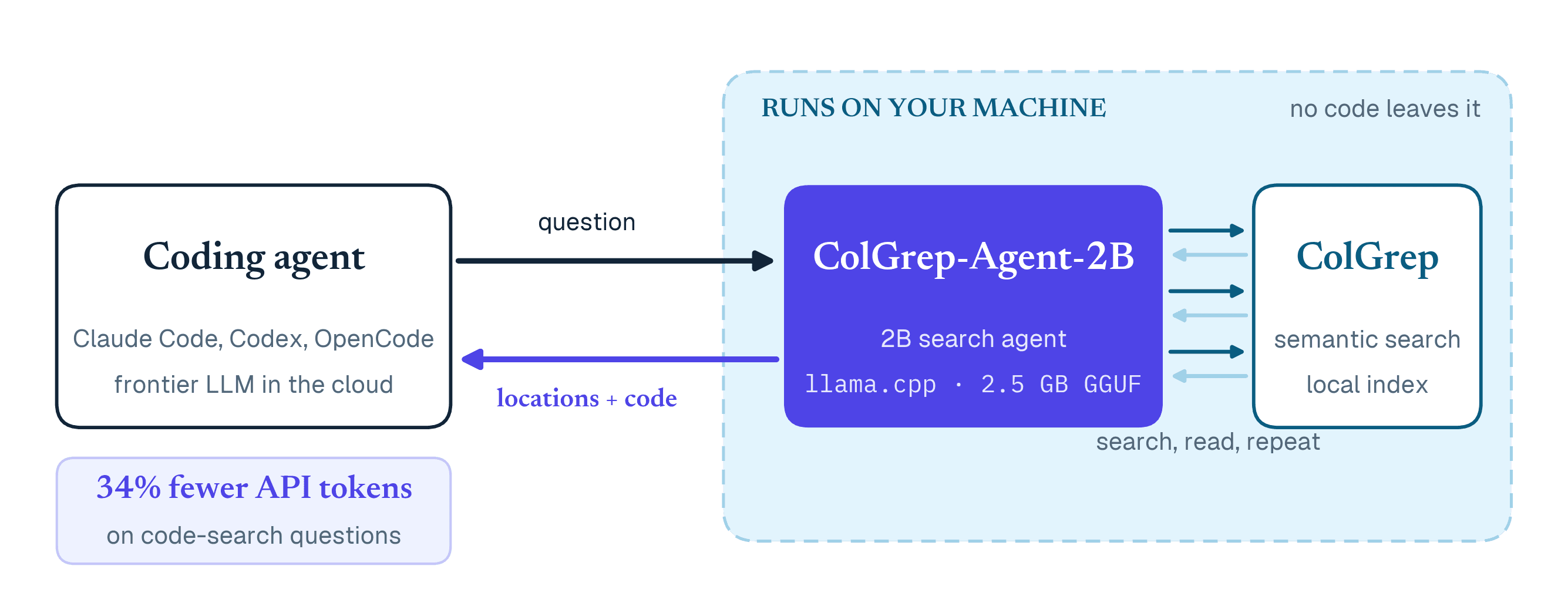
On October 12, LightOn published ColGrep-Agent-2B on the Hugging Face blog: an open 2B-parameter code-search agent that runs locally. Across 624 sessions (Claude Code + Sonnet 5.5, 52 questions × 13 repos created in 2026), delegating search to the local small model cut API tokens 34.3% and cache-aware cost 40%, with no statistically significant accuracy change. The first hard ledger of small-model division-of-labor economics.

Modal's $750M Series D at $15.75B (CEO blog, Oct 14): annualized run rate crossed $1B, but the number that matters is Sandboxes — the isolated environment for running model-generated code — at a $300M run rate. "LLMs write code now! And it has to run somewhere, isolated from everything else."
LSCBench (arXiv, Oct 10) puts 6 frontier coding agents through 450 tasks built from 150 real vulnerabilities: functional pass rates hit 91.3%, but the "functional AND secure" rate tops out at 25.1%. The tasks never mention security — exactly how vibe coding prompts look.