The Sandbox Business Behind Coding Agents: Modal Raises $750M as Sandboxes Hits $300M Run Rate
Modal's $750M Series D at $15.75B (CEO blog, Oct 14): annualized run rate crossed $1B, but the number that matters is Sandboxes — the isolated environment for running model-generated code — at a $300M run rate. "LLMs write code now! And it has to run somewhere, isolated from everything else."
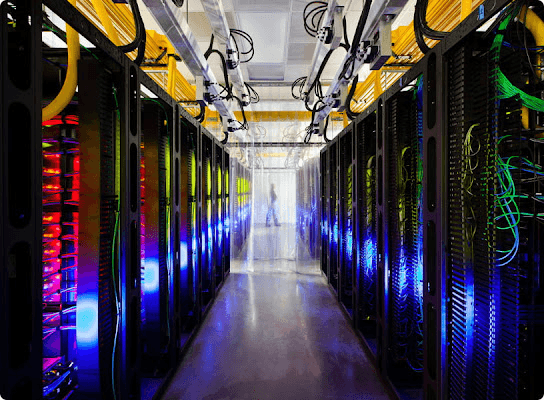
On October 14, Modal CEO Erik Bernhardsson announced on the company's official blog: a $750M Series D at a $15.75B post-money valuation, led by Accel with Kleiner Perkins joining as a new investor. Just five months after the Series C, the valuation is reportedly ~3.4x the Series C (per TechTimes), annualized run rate has crossed $1B, usage has tripled, and year-over-year growth exceeds 15x.
But the number in this story most worth a vibe coder's attention isn't the financing — it's a product number: Sandboxes — the isolated environments for running model-generated code — alone does a $300M annualized run rate. Per the CEO's post, Sandboxes launched in 2023 when the team noticed "people were using LLMs to generate code"; three years later it's a $300M business, with nearly 3 billion sandboxes spun up and scaling to a million concurrent executions.
"LLMs write code now! And it has to run somewhere, isolated from everything else." That one sentence from the CEO is essentially a definition of infrastructure for the coding-agent era.
Why sandboxes are the "utilities" of the agent era
Walk through a coding agent's full loop: read requirements → write code → run it → read the errors → fix the code → run it again. In that loop, "run it" is the most underestimated step. You cannot let an agent execute freshly written, never-reviewed code directly on your own servers — LSCBench told us just last week that such code very likely hides vulnerabilities (see our companion piece "Runs ≠ Secure: LSCBench Tests 6 Frontier Coding Agents"). Isolated execution isn't optional; it's a hard requirement for agents landing in production.
Modal's Sandboxes solves exactly this: an on-demand isolated container where the agent throws generated code to run, then it burns after use. The use cases the CEO named are telling: background agents, reinforcement learning, and vibecoding platforms — vibe coding platforms are officially listed as a core Sandbox use case. Every time you hit "generate" on Lovable, v0, or Bolt, something like this sandbox is spinning behind the scenes.
And $300M says this link in the chain has gone from "cost center" to "profit center." Nearly 3 billion sandbox launches, a million concurrent — that's not experimental traffic, it's production traffic. Agent37 drove agent-sandbox cost down to $0.37/month (see our earlier coverage) — that's "making sandboxes cheap"; Modal is "sandboxes themselves are worth $300M." Cheap on one side, expensive on the other — together they draw the same picture: isolated execution is becoming its own layer of the agent economy.
From "fun" to "valuable": inflection evidence for the agent economy
Put Modal's numbers together and the maturity of the agent economy comes into focus:
- The customer list is all heavy agent users: Cognition (Devin's parent), Ramp, Linear, and Hebbia run background agents on it; DoorDash's AI platform team uses it to move experiments to production; Runway generates video across every region; Physical Intelligence and 1X train robots. TypeSafe AI's Jev served 1 trillion tokens on Modal in its first three days — "one of the fastest-growing products ever," per the CEO.
- A stack rebuilt from scratch: file system, container runtime, scheduler, networking — all homegrown, capacity spanning 20+ clouds. Sandboxes provisioning "tens of thousands of containers per second" rests on a custom scheduler that parallelizes requests across servers. That kind of investment has only one explanation: they're convinced this demand isn't a fad.
- A roadmap climbing upstream: multi-node training (one decorator for a fully RDMA-connected cluster), RL and post-training product lines, Modal Servers for HTTP serving, Endpoint Candidates for LLM inference. Modal is growing from "where code runs" into "where models train and agents run" — eating the whole AI application's infrastructure budget.
Check the timeline: $4.65B valuation at the Series C five months ago, $15.75B now. A 3.4x slope in five months — in software history that slope only appears when a platform-level opportunity shows up: early cloud, early mobile. Bernhardsson drew the analogy himself: after web, cloud, big data, and mobile, AI is the next paradigm shift that "needs entirely new infrastructure" — and the last such shift gave us Docker, Kubernetes, and Terraform.
The other side of the numbers: run rate isn't revenue, and sandboxes aren't just "fast"
A cooling note. Every dollar figure in the CEO's post is annualized run rate, not cash in the pocket — current pace extrapolated to a year. DevCuration flagged exactly this: it describes the business's current pace, not revenue already earned. How much of the 15x YoY growth is AI-hype beta versus sticky real demand won't be clear until this time next year. The $15.75B valuation is buying the expectation that "this pace holds."
Also worth a close look is the sandbox security design — the most underrated detail of the agent era. Per SiliconANGLE's summary of Modal's official line, Sandboxes has two unusual designs:
- Secret Injection: when an agent needs to log into external apps, the sandbox can hand it login credentials to use without the agent ever seeing the plaintext. It guards against rogue agents pocketing your API keys — once agents start operating your real accounts, that's not paranoia, it's curriculum.
- Hallucination-filtering sidecars: a sandbox running an agent can attach a "sidecar" container with auxiliary software (e.g., tools that detect and filter hallucinations), colocated on the same physical server to cut latency. Putting "unreliable generation" and "reliable verification" in the same isolation unit is a genuinely agent-native architectural instinct.
Taken together, Modal isn't just selling "cheap isolated compute" — it's selling "a secure-by-default agent execution environment." That closes the loop with LSCBench's finding: agent-generated code is insecure by default (combined pass rate tops at 25.1%), so the execution environment must be isolated, de-identified, and auditable by default. A good chunk of that $300M is a "security tax" — and it's precisely the tax vibe coders are most willing, and most right, to pay.
Three takeaways for indie developers
A $15.75B valuation is far from an indie developer's world, but Sandboxes' $300M is close — because your next vibe project will likely have to answer "where does the agent-generated code run" too.
First, don't build your own sandbox unless that's your business. Modal rebuilt the file system, container runtime, scheduler, and networking, spans 20+ clouds, with a 200+ team across NY, SF, and Stockholm — that's heavy assets. For indies the conclusion inverts: isolated execution is commoditized; just use Modal Sandboxes, E2B, and the like, pay per call. Agent37 got costs to $0.37/month precisely by standing on these commoditized facilities. Your energy belongs on the agent's behavior, not its runway.
Second, "vibecoding platforms" as an officially blessed use case means competition is at the sandbox layer too. The CEO naming vibe coding platforms as a core Sandbox use case suggests every AI website/app builder's backend likely runs on the same class of infrastructure. Differentiation isn't in "can it run" but in "after it runs" — prompt orchestration, state management, deployment chains. Good news and bad news for founders in the vibe coding lane: the starting line has been leveled; you still have to draw your own finish line.
Third, watch the pricing power shifting to the "execution" link. Cloud vendors used to charge by "compute × time"; in the agent era the billing unit is becoming "sandbox launches" and "agent steps." Zenzap's $44M raise (see our earlier coverage) was about agents entering collaboration; Modal is about agents paying "toll" to run. When you price your own agent product, sandbox cost must be its own line item — no longer a negligible rounding error, but, as Modal proved, a $300M-scale line.
The one-line take: every software paradigm shift births a new infrastructure layer — last time it was Docker/K8s/Terraform; this time it's "somewhere safe for agent code to run." Inside Modal's $15.75B valuation, $3B is held up by the two words "isolated execution" — and while your vibe project is still agonizing over where agent code runs, the answer is already a $300M market. In the next five months, whether Modal's usage triples again nobody knows; but one thing is certain: every new vibecoding platform launch adds another line to the sandbox billing table.
Primary source: Modal CEO Erik Bernhardsson's official blog Modal crosses $1B in Annualized Run Rate and raises $750M Series D (modal.com/blog, Published 2026-10-14); cross-checked with Oossa (2026-10-14), Futurum Group (2026-10-15), and SiliconANGLE (2026-10-14). All figures come from the CEO blog (primary) unless noted.
Comments (0)
Sources
Related articles

An OpenAI customer story (dated Oct 14 via third-party cross-check; the official page carries no timestamp) profiles Third Moment Research: 10,000 agents running at once, single autonomous research sessions of 36–48 hours, held on track by a three-layer harness around Codex and the GPT-6 family. One case study: caching plus memory packing cut a one-year US equities order-level backtest from about 3 hours to 3–5 minutes. Jeffrey Yan: GPT-6.1 Sol is the team's most-used model.

On October 5, OpenAI announced textGrain watermarking: EU ChatGPT and Codex get it by default within weeks, API developers worldwide can opt in (off by default), and the detector stays with approved researchers only. Detection hits 80% at 200 tokens and 95% at 400, but falls to 17% after 25% synonym swaps. It catches copy-pasters, not rewriters.
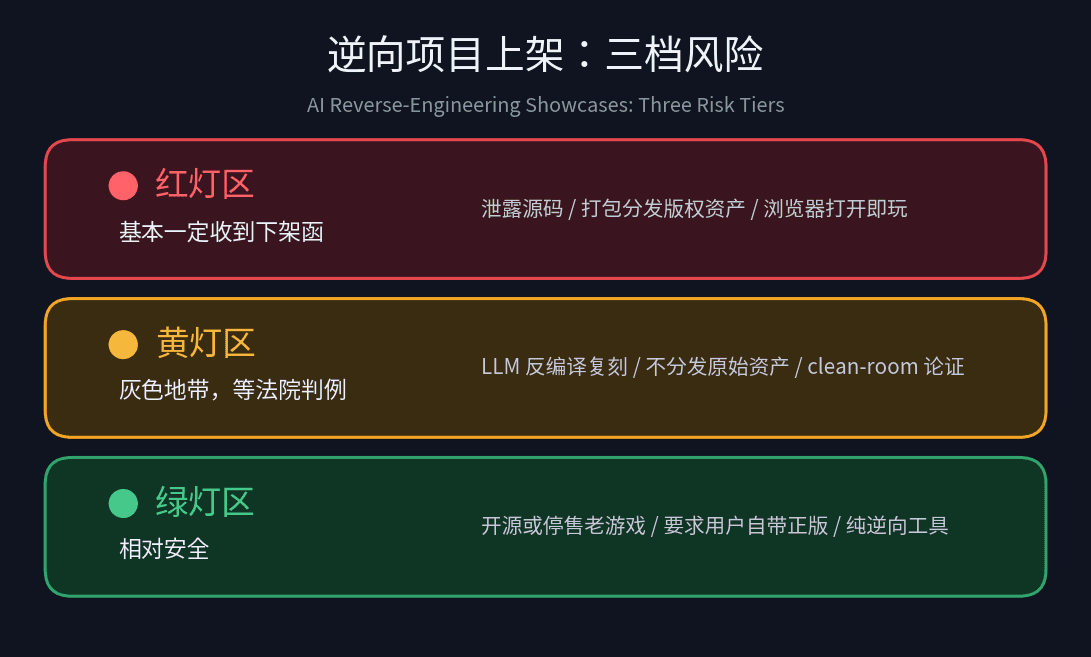
REA passed 100K GitHub stars in two weeks as GTA V ran on iPhones and Halo ran in browsers; 40 of 52 tracked reversed-game projects landed in October's first 13 days, and publishers fired four takedowns in 12 days. Courts have never ruled if LLM-assisted decompiling counts as clean-room — the three risk tiers of showcasing reversed projects, explained.