Google Kills Paid Gemini Code Assist Sales, Folds AI Coding Tools Into Antigravity
In an October 9 release-notes announcement, Google ended new sales of Gemini Code Assist Standard and Enterprise subscriptions: existing subscriptions auto-renew through 2026, with auto-renewal ending in 2027. From June's individual-tier shutdown to October's full sales halt, Google spent five months absorbing AI coding into the Antigravity enterprise agent platform. The era of standalone AI coding tools is ending; indie developers must now choose ecosystems, not single products.
This Isn't a Shutdown, It's an Absorption: What the October 9 Announcement Actually Says
On October 9, 2026, a dry announcement appeared at the top of the Gemini Code Assist release notes page on Google Cloud documentation. Three sentences long, it was nonetheless the most consequential "personnel change" in Google's AI coding product line in nearly a year: new sales of Gemini Code Assist Standard and Enterprise subscriptions are ending, effective immediately.
Existing subscribers won't be cut off overnight: subscriptions will keep auto-renewing through the rest of 2026, but auto-renewal ends in 2027. In Google's own words, "Sale of Gemini Code Assist subscriptions is ending." Plainly translated: this product is no longer accepting new customers.
An honest note on sourcing first: Google's release notes page groups entries under date headings, and individual entries carry no separate timestamp. The sunset notice sits under the "October 09, 2026" heading, so the date comes from the page grouping; third-party trackers of Google's product moves, including AI Weekly, consistently point it at October 9 as well. All dates below follow this convention.
The note also names the replacement: "For alternative AI developer tools, use Antigravity" — new customers looking for AI coding tools should go to Antigravity, available through eligible Gemini Enterprise subscriptions and through the Gemini Enterprise Agent Platform. In one sentence: the old product line is absorbed, the new product line takes the customers.
One more word on the choice of venue: Google put a decision of this magnitude — killing a flagship paid product — in a release-notes Announcement rather than a developer-blog essay. That's classic Google: frame a business decision as a routine product update to minimize noise. But for developers who live in release notes, this kind of "silent execution" is exactly the signal to watch for: when your core tool shows up in this venue, the outcome is usually already decided; only the announcement was pending.
Four Dominoes: The Absorption Chain from June 18 to October 9
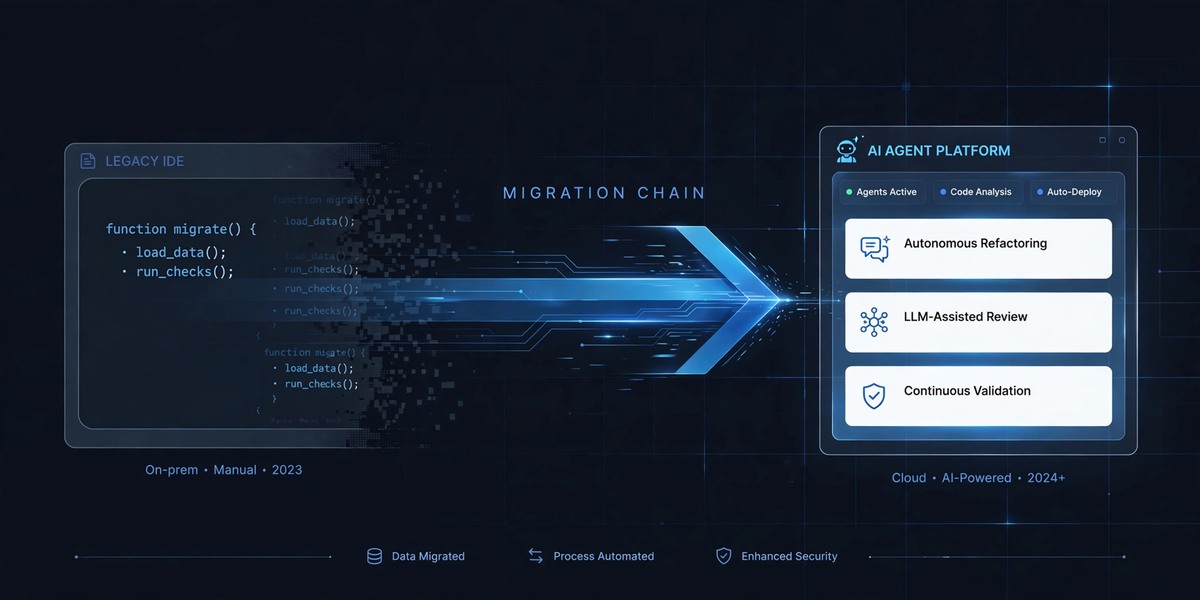
The October 9 halt to sales didn't come out of nowhere. Placed on a five-month timeline, Google's moves read as a textbook three-stage absorption — kill the individual tier first, narrow the purchase funnel, then shut off new sales. The chain even has a prologue: on May 19, 2026, Google announced on its developer blog that Gemini CLI was transitioning to Antigravity CLI, naming agy as the successor for individual users. A month before the individual tier was shut down, the replacement was already on stage. Every step follows the same pattern: build the replacement first, then dismantle the old:
| Date | Event | Signal |
|---|---|---|
| 2026-05-19 | Google announces Gemini CLI's transition to Antigravity CLI, pointing individual users to agy | The successor debuts first — "build before dismantling" |
| 2026-06-18 | Code Assist for individuals shut down: requests from free individual users and Google AI Pro / Ultra subscribers signing in with Google accounts are no longer served by Gemini CLI and the editor extensions; Antigravity CLI (agy) named as successor | The individual tier exits first |
| 2026-08-20 | First-month usage credits for new customers discontinued | Acquisition subsidies tightened; no more burning cash to grow the old SKU |
| 2026-09-04 | Purchase funnel restricted: billing accounts without an active Code Assist subscription can no longer buy through the Google Cloud console; new purchases only via sales contact | The self-serve purchase channel closes first |
| 2026-10-09 | New Standard and Enterprise subscriptions halted entirely; existing subscriptions auto-renew through 2026, auto-renewal ends in 2027 | The paid product line completes its absorption |
Note the precision of this chain: May establishes the successor; June touches the individual tier and consumer sign-in channels, with Standard and Enterprise explicitly unaffected at the time; September changes how you buy (console self-serve checkout); October changes whether it's sold at all. Google didn't flip the table in one move — it used five months and four steps to smoothly "digest" Code Assist from an independently sold SKU into a larger product system. To understand what Google is doing, you have to see this chain first.
The Control Group: Every Giant Is "Bundling" AI Coding — Just Differently
Google isn't the only giant absorbing AI coding tools. Line the three players up side by side and the picture sharpens:
| Vendor | Move | Method |
|---|---|---|
| Microsoft | GitHub Copilot folded into the Microsoft 365 Copilot pricing bundle; standalone sales matter less and less | Bundled into the office suite: you buy M365, Copilot is the intelligence layer thrown in |
| Code Assist sales halted, fully absorbed into Antigravity / Gemini Enterprise | Rolled up into the enterprise agent platform: you buy the enterprise contract, AI coding is one surface of the platform | |
| Independents (Cursor / Windsurf etc.) | Still selling standalone IDE subscriptions, surviving on product experience and model-routing chops | The standalone breakout bet: that a good enough single product always has a market |
Three routes, one shared judgment: AI coding is turning from a "tool" into an "infrastructure layer." Microsoft bets on the office-software entry point, Google bets on the enterprise agent platform, independents bet on irreplaceable single-product experience. Google's method is the most aggressive — it didn't even keep the Code Assist brand as a transition vehicle; it simply let it vanish. That says something about Google's internal assessment: the remaining shelf life of the "IDE plugin" form factor is too short to justify maintaining a brand for it.
That's not good news for the independents. When giants turn AI coding into a freebie inside the bundle, standalone vendors' pricing power gets squeezed: users will ask, why pay you $20 a month when my Google / Microsoft enterprise contract already includes agentic coding? Cursor and company must prove their experience gap is worth "paying twice." That proof gets harder to make with every passing month of 2026.
Reading the Announcement Line by Line: What It Says, and What It Doesn't
The whole note is dense enough to deserve a line-by-line unpacking:
- The halted SKUs are the two paid tiers, Standard and Enterprise. The free individual tier needed no halt — it was shut down four months ago. That means every commercial form of Code Assist as a standalone product has now officially ended.
- Existing subscriptions auto-renew through 2026. That's not kindness, it's risk management. Enterprise budget cycles and procurement processes run on yearly timescales; a sudden cutoff would trigger SLA disputes and a collapse of trust. What Google is giving old customers isn't sentiment — it's a dignified exit ramp.
- Auto-renewal ending in 2027 is the real hard boundary. "Auto-renewal will end in 2027" means that even if you're paying today, by 2027 at the latest you must choose: migrate into the Antigravity / Gemini Enterprise system, or leave Google's AI coding ecosystem.
- The word "eligible" deserves a second look. The note says Antigravity is available through "eligible" Gemini Enterprise subscriptions — eligible meaning not every enterprise subscription automatically includes it; customers need to confirm with their sales rep whether their contract qualifies. Classic enterprise-software phrasing: the door looks open, the threshold hides in the contract details.
- Three conspicuous absences: no transition pricing, no migration tooling, no word whatsoever for individual-tier users. By contrast, the June individual shutdown at least came with an Antigravity CLI migration guide and a named successor path. This time Google didn't even roll out the red carpet — because the audience is enterprise procurement, which runs through sales, where migration terms get negotiated into contracts, not announcements.
The note's only exit ramp is Antigravity, via "eligible Gemini Enterprise subscriptions" or the "Gemini Enterprise Agent Platform." Note the phrasing — it is not "the successor to Code Assist" but "alternative AI developer tools." Google deliberately severs the lineage in language: Code Assist is a product of the IDE-plugin era; Antigravity is a product of the agent-platform era. They don't belong to the same generation.
Who Is Antigravity: What Google's "Enterprise Agent Platform" Looks Like
To understand this absorption, you have to see who's doing the absorbing. Antigravity is the agentic IDE Google launched in late 2025 — a desktop environment packing the editor, terminal, browser operation, and multi-agent collaboration into one place. In 2026 it grew from an experimental product into the main channel of Google's developer-AI strategy:
- Desktop: Antigravity itself, an agent-native IDE whose default workflow is "human states the requirement, agents do the work" — not a chat sidebar inside an IDE where you ask questions.
- Terminal: Antigravity CLI (the agy command). After the June individual-tier shutdown, it formally became Gemini CLI's successor for individual users, inheriting everyone who used to sign in with a consumer account.
- Enterprise: the Gemini Enterprise Agent Platform — one of the two entry points named in this announcement. This is Google's vehicle for packing agent capabilities into enterprise contracts: models, toolchains, permission controls, audit — sold to enterprise IT in one package.
Put the three pieces together and Google's map is clear. In the Code Assist era, AI coding equaled a plugin inside the IDE, sold per seat. In the Antigravity era, AI coding equals one surface of the enterprise agent platform, sold per enterprise contract. The plugin hasn't disappeared — but it has been demoted from "product" to "entry point."
The Real Signal: Standalone AI Coding Tools Are Being Swallowed by Platforms
This is why the story deserves ten minutes of a VibeFix reader's time. Google killing Code Assist sales isn't an isolated product tweak — it's another piece of an industry-wide pivot: standalone AI coding tools are being swallowed by "enterprise agent platforms."
Look at the table over the past year: GitHub Copilot was stuffed into the Microsoft 365 Copilot pricing bundle long ago, and standalone sales matter less by the quarter; Cursor and Windsurf fought their way out with standalone IDEs, but their business model stays balanced on the tightrope of "model cost vs. subscription revenue"; Google chose the bluntest path — don't compete on plugin features at all, just absorb AI coding into the Gemini Enterprise enterprise contract.
The math isn't hard. The standalone-tool logic is "sell seats": high acquisition cost, high churn, and feature-by-feature combat with every competitor. The platform logic is "sell contracts": AI coding is just one layer of cream in the Gemini Enterprise bundle — enterprises pay for data security, permission controls, and audit compliance, and the coding agent is the dessert thrown in. Google realized that once agents can operate the browser, the terminal, and the whole desktop on their own, the IDE-plugin form factor itself becomes transitional — so why maintain a standalone SKU to compete with Cursor on completion quality?
So Code Assist wasn't killed because it was bad. Quite the opposite: Google has concluded that the category of "independently sold AI coding plugin" has no future. The execution is what's telling: no launch event, no blog essay, no "thanks for the journey" — just an Announcement in the release notes. Killing a product line was itself handled as a routine notice — which says that inside Google, Code Assist's end was a box long checked on the roadmap, not a surprise requiring explanation.
On a deeper level, this is the final verdict of the "form-factor war." The IDE plugin is essentially "humans write code, AI assists"; the agent platform is "humans state requirements, agents do the work." Once the latter crosses a capability threshold, the former goes from "main battlefield" to "compatibility layer" — the way GUI apps didn't kill the command line but turned it into a tool for the few. Google's judgment is that the threshold has been crossed, at least for its own enterprise customer base. So the plugin form no longer deserves an independent P&L; its best fate is to become an entry point into the Antigravity ecosystem.
This is a signal the whole vibe coding scene needs to face squarely. Over the past two years, countless indie developers and small teams built workflows on "some good AI plugin + some strong model" — and this event exposes that combination's fragility: the life and death of the plugin layer depends entirely on strategic calls made at the giants' platform layer, where you get no vote. Build workflows on portable assets — prompts, conventions, MCP tooling, agent-collaboration know-how — not on any single plugin's proprietary features. That's the lesson for everyone.

Independent Developers' Selection Logic Is Being Rewritten
For VibeFix readers — indie developers, small teams, vibe coders — the direct impact lands on three levels:
Level one: individual users were actually "migrated" long ago. If you're a free individual user or a Google AI Pro / Ultra subscriber, your Gemini CLI and editor extensions stopped responding on June 18, with Antigravity CLI as the successor path. This sales-halt announcement has nothing directly to do with you — but it confirms one fact: Google will never again maintain any standalone Code Assist form for individual developers. On the individual side, the only answer is Antigravity.
Level two: the "middle tier" for small teams is gone. A five-person team used to be able to buy a few Standard seats month-to-month, sign in with a company email, never talk to sales. That self-serve channel is closed — console purchasing went away in September, the SKU itself in October. To get into Google's ecosystem now, you either take Antigravity's individual/free path or negotiate Gemini Enterprise directly. For teams spending a few thousand dollars a year, the "Google" option just got meaningfully harder to enter.
Level three, the deepest: the selection logic itself has changed. For the past two years, indie developers picked AI coding tools by "comparing single products": completion accuracy, agent smarts, price — Cursor, Copilot, Code Assist, Windsurf scored item by item. Starting in 2027, that logic gets rewritten as "picking an ecosystem": you're no longer buying a plugin but an entire agent platform — models, terminal agents, desktop agents, enterprise controls bundled together. "Single-event champions" on the scorecard will get rarer; "ecosystem lock-in" will matter more.
The pragmatic advice is a single line: stop betting your skill tree on any one vendor's plugin form factor. Portable context configs like AGENTS.md and GEMINI.md, MCP toolchains, and an understanding of multi-agent workflows — those are the assets that actually travel with you across platforms. Plugins die, platforms change, but "how you direct agents to do work" doesn't expire.
A closing table to help everyone find their own situation:
| Who | Current situation | Way out |
|---|---|---|
| Free individual users / Pro / Ultra subscribers | Code Assist requests stopped being served on June 18 | Antigravity CLI (agy), or a self-built workflow on Gemini API keys |
| Small teams (once considering self-serve Standard) | Self-serve purchasing closed; the SKU itself discontinued | Evaluate Antigravity's individual path, or look at other vendors' team tiers |
| Enterprise subscribers on Standard / Enterprise | Auto-renewal normal through 2026; ends in 2027 | Complete migration negotiations toward Gemini Enterprise / Antigravity within a year |
| New teams still deciding | No "middle tier" left on Google's side | Change the selection logic to "pick an ecosystem": compare agent platforms' completeness, not single-plugin features |
For Current Subscribers: Four Things to Do Now
If you or your company are still paying for Code Assist Standard / Enterprise, the 2027 hard boundary is already in the announcement. Move in this order:
- Take inventory. Confirm your tier, seat count, and next renewal date. Renewals proceed normally through 2026 — but know exactly when your "expiration date" falls. Once auto-renewal stops, seats that don't get renewed simply go dark.
- Price the Antigravity migration. Talk to your Google sales rep or customer success manager and get answers to three questions: can the current contract convert into Antigravity entitlements inside Gemini Enterprise, how are seats priced, and is migration support on offer? No transition pricing in the announcement doesn't mean there's none at the negotiating table.
- Run a portability check. Collect the team's prompt libraries, coding conventions, and custom instructions into platform-neutral formats like AGENTS.md / GEMINI.md. Whatever you migrate to, this step never hurts.
- Set a decision deadline. Don't wait until 2027. Working backward from enterprise procurement cycles, you need a clear migration or replacement plan before Q4 2026 ends — or you'll be cut off passively in early 2027.
Epilogue: 2027 Is the Watershed
Look back at this five-month absorption chain — successor established in May, individual tier cut in June, acquisition subsidies stopped in August, self-serve purchasing closed in September, new sales halted in October, auto-renewal ending in 2027 — every step landed precisely: build the replacement first, cut individuals, then new customers, then give old customers a year of runway. This wasn't a panicked cost-cutting move; it was a meticulously executed product-line funeral.
And what the funeral really buries isn't just a plugin called Gemini Code Assist. It buries the era of "AI coding tools sold as standalone products." Starting in 2027, at least in Google's world, AI coding is no longer an SKU but a platform feature — buy Gemini Enterprise and Antigravity comes along; skip the enterprise contract and use the free CLI. The middle ground has been erased by hand.
For independent developers, the question is no longer "which AI coding tool is best" but "which ecosystem am I willing to bet my next three years of workflow on." The October 9, 2026 announcement forces everyone to start answering early. And history suggests: when giants start rebuilding a category with "platform" logic, the window left for standalone players is usually 12 to 18 months. 2027 is the year that window closes.
Comments (0)
Sources
Related articles
Codex CLI 0.161.0 ships in-session MCP login, new Bedrock capabilities, and explicit Daybreak opt-in; GPT-5.5 retires from Codex on all plans October 14. This piece breaks down the four confirmed changes and gives a pre-October-14 migration checklist — from grepping your configs to pinning models.
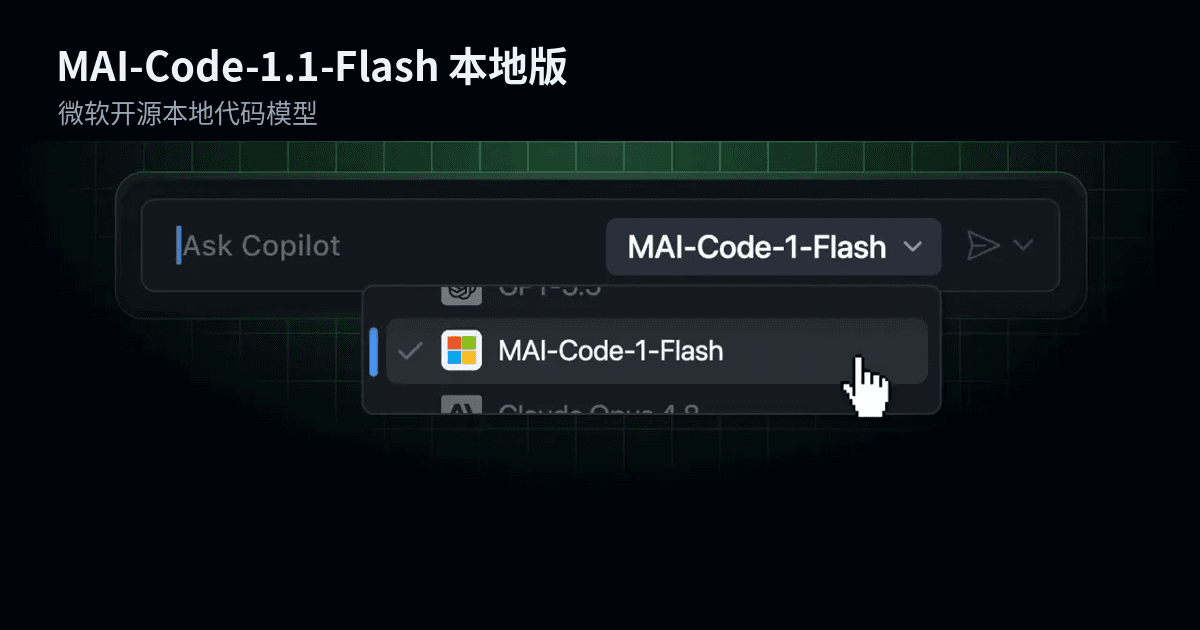
Microsoft's homegrown coding model MAI-Code-1.1-Flash now runs on-device: 3-bit quantization, full 256K context, zero inference charges for local calls — but Microsoft recommends 120GB+ RAM. Third-party measurements put the quantized build at 70.80% on SWE-Bench Verified versus 72.6% full precision. What "zero inference fees" really means for indie developers, and why Copilot's router is the actual moat.
Lenovo Tianxi AI's in-house code-agent framework TianxiCode, paired with DeepSeek-v4.1-Flash, topped the SWE-bench-Live Lite leaderboard at a 71% solve rate with official Verified certification. We unpack why this "real engineering" benchmark is harder, what "framework > model" really means, and three takeaways for vibe coding practitioners.