IBM Open Sources Granite Switch 4.1: One Modular Endpoint for Chat, Decisions, Safety, and Voice
IBM open-sources Granite Switch 4.1 on the Hugging Face blog: a frozen base plus hot-swappable aLoRA adapters, packing chat, general decisions, safety review, and speech transcription into one model and one endpoint — base-model VRAM, shared KV cache. For local agent builders: one model covers four scenarios, and judgment graduates from a prompt to a part.
On October 15, 2026, the IBM Granite team published a post on the official Hugging Face blog: Granite Switch 4.1: Chat, Decisions, and Speech from One Endpoint (Published: 2026-10-15T20:34:01.579Z). The title says it all: one hosted endpoint, four jobs — chat, general-purpose decisions, safety screening, and speech transcription — switched at will.
But if you read this as "IBM open-sourced another model," you'll miss the real story. Granite Switch 4.1 is not a routine weight update; it's a demonstration of a deployment paradigm: a frozen base model with hot-swappable aLoRA adapters, four capabilities packed into a single model whose VRAM footprint is "approximately the same as the base model by itself" (IBM's own words, quoted below). For vibe developers who wire up agent pipelines every day, the message is concrete: work that used to take four models now runs on one endpoint.
What Switch is: frozen base, hot-swappable capabilities
Switch is the modular approach IBM introduced last spring. The core idea is one sentence: the base never moves; capabilities are parts. The traditional deployment pattern is one model per task — a chat model for conversation, a classifier for guardrails, an ASR model for transcription — each with its own VRAM, its own load, its own inference service. Switch freezes the Granite base in place and ships capabilities as aLoRA (Activated LoRA) adapters. Need a capability? Mount the adapter.
The Granite-Switch-4.1-8B and -30B releases are "batteries included" — IBM pre-configured a practical adapter bundle:
"Specifically, Granite-Switch-4.1-8B and -30B models are configured to include: 1. A new Decision aLoRA for general-purpose decision-making (e.g. v1/systemone), 2. A specialized Guardian aLoRA that, on average, outperforms Jev 1.13, Microsoft-Decision-1, GPT-Luna-Decisions, and Clef-Flash on safety-related decision tasks, and 3. Granite-Speech-5.0-Turbo-CTC, the fastest ASR model on the OpenASR Leaderboard, embedded for use in transcription tasks."
Unpacking the three components: the Decision aLoRA is a general-purpose decision adapter, aimed at the same slot as Typesafe's v1/systemone "decision model" API; the Guardian aLoRA is a specialized decision adapter for safety review; and Granite-Speech-5.0-Turbo-CTC embeds an ASR encoder directly — described as the fastest ASR model on the OpenASR leaderboard. Note the shape of what these components produce: decision adapters don't write long text, they make judgments — routing, classification, guardrail scoring; the ASR turns speech into text; the base still does the chatting.
Four capabilities, four output shapes, all on the same endpoint. How does VRAM survive? IBM's words:
"All three of these technologies (along with the underlying base model) are composed into one model, taking up approximately the same amount of VRAM on a GPU as the base model would by itself. That means more capabilities with fewer GPUs."
The math is straightforward: aLoRA adapters are low-rank delta parameters, orders of magnitude smaller than base weights; four capabilities share one copy of the base weights, so VRAM lands "about the same as the base alone." The more important sentence is the one about switching speed:
"because the Switch adapters were built as cache-efficient Activated LoRAs, the KV cache created from a base model generation can be reused for any subsequent adapter-based decisions."
In plain terms: the KV cache produced by one base-model generation can be reused directly by any adapter mounted afterward. Mid-conversation, you need a safety judgment — no reload, no re-prefill; mount the Guardian adapter and judge on the same KV cache. That's why Switch can switch four modes seamlessly on one endpoint: the cost of switching is not "swap the model," it's "swap a small slice of parameters."

On compatibility, IBM paved the road thoroughly: the model runs in vLLM via a plugin, has native inference support in llama.cpp, and downstream platform support lets it "seamlessly swap in for `/v1/systemone` API calls anywhere they're used, while also servicing traditional chat calls, all with a shared prefix cache":
"The model runs in vllm with a plug-in (see Granite Switch repo below), and has native inference support in `llama.cpp` and downstream platforms which allows the model to seamlessly swap in for `/v1/systemone` API calls anywhere they're used, while also servicing traditional chat calls, all with a shared prefix cache."
/v1/systemone is the API shape of Typesafe's decision models (the Jev family) — IBM is telling you directly: the line of code where you call a decision-model API today can point at a new endpoint tomorrow, and chat comes along for free. That detail reveals how clearly IBM has thought about Switch's positioning: it's not asking you to replace your chat model; it's coming for the "decision model" slot in your pipeline.
Technical highlights and benchmarks: all numbers are vendor self-reports
A disclaimer up front: every benchmark number below is self-reported by IBM's official blog; no independent third-party reproduction has surfaced yet. That's the inherent limitation of a vendor release post — apply a discount automatically. Even discounted, the architectural signal behind the numbers is worth reading.
1. Guardian aLoRA: claims to beat four rivals on safety decisions, on average. IBM says it "on average, outperforms Jev 1.13, Microsoft-Decision-1, GPT-Luna-Decisions, and Clef-Flash" on safety-related decision tasks. The comparison list is telling: Jev is Typesafe's closed decision model, Clef is Cloudflare's decision model open-sourced earlier this month — IBM pulled both representatives of the "decision model" category straight into its own safety adapter's comparison table. That's a technical claim and a category declaration at once: in the decision-model race, IBM is challenging head-on with a modular architecture.
2. Speech: the fastest ASR on the OpenASR board, embedded. Granite-Speech-5.0-Turbo-CTC is described as the fastest ASR model on the OpenASR Leaderboard, and it's "embedded" — not an external service bolted on, but nested into the same model, the same endpoint. IBM also shipped a Speech-to-Decisions HF Space demo: the same model transcribes audio in real time, generates summaries, screens for harmful content, and runs 15 user-defined flags. It's the most literal advertisement for the Switch architecture: one audio stream in — transcription, summary, safety screening, custom classification — one pipeline, one endpoint, real time.
3. Speed demo: a 3B model playing Doom at 60–100 decisions per second. The flashiest paragraph in the post:
"Similarly to Jev, our custom 3B parameter Granite Switch model made split second decisions to navigate the Doom game, but was able to do so at 60 - 100 decisions / second, compared to Jev's reported 10 decisions / second.1 Unlike Jev, this Granite Switch model can also narrate and respond to your questions while it is playing."
Two details matter. First, in the 60–100 vs 10 comparison, Jev's 10 is "reported" (self-reported by Typesafe) while IBM's 60–100 is its own measurement — the methodologies aren't matched, so treat it as directional. Second, the genuinely informative part is the second half: the 3B model "can also narrate and respond to your questions while it is playing." Decision and chat share the same KV cache, so it never has to choose between "playing" and "talking." The decision model got a mouth for the first time: previous decision models (the Jev kind) output judgments and nothing else; Switch puts decision and chat in the same context, so judging and explaining can happen in one continuous inference. For agent developers, the implication is concrete: guardrail judgment and user-facing explanation no longer need two serialized models.
4. The "Race": 30B vs Jev-27B on a five-step RAG workflow, faster. IBM staged a race: Granite-Switch-4.1-30B (frozen Granite base + 4 specialized aLoRAs) against Jev-27B (frozen Qwen base + 1 generic decision LoRA) on a real-world five-step RAG workflow — the Switch camp finished "much faster." The real point of interest isn't who won — vendor-hosted races deserve their own discount — it's the design of the race itself: "frozen base + N specialized adapters" vs "frozen base + 1 generic adapter." The proposition IBM wants to prove is that a combination of specialized adapters beats a single generalist adapter. That leads directly to the logic of Granite Libraries.
5. Granite Libraries: an adapter repository where specialists beat generalists. The post mentions Granite Libraries, an earlier release: a repository of "decision model" adapters and specialized task adapters composable into custom Switch models. IBM's observation: while Jev and other closed decision models chase generality, many of its specialized granitelib adapters can outperform generalists on specialized classification tasks. And because adapters share the base's KV cache, "adding specialists alongside a generalist decision adapter costs almost nothing" — the generalist covers breadth, specialists deliver accuracy where it counts, both mounted at once. The design philosophy is worth savoring: it turns the classic generalist-vs-specialist dilemma into an engineering problem with a "take both" answer.
What it means for vibe developers: one model covering four scenarios
Let's do the math. Say you run a voice agent locally or on your own server: an 8B model for chat, a small classifier for guardrails, an ASR model for transcription. Three models, three VRAM allocations, three loads, three inference services, plus data handoff between them in your pipeline. With Switch: one endpoint, one base-model VRAM footprint, KV cache reused across the whole chain. IBM's "more capabilities with fewer GPUs" translates into vibe-developer language as: the same GPU does more work — or, the same work needs fewer GPUs.
The latency math is equally worth doing. The most common pattern in agent pipelines is the "chat–judge–chat" loop: the user says something, the model judges intent/safety, then decides which tool to call and what to answer. Traditionally, the "judge" step means either an external API call (network round trip) or switching to another local model (load + prefill). In Switch, judging is just swapping an aLoRA while the KV cache stays hot — latency drops from "model-scale" to "adapter-scale." For latency-sensitive scenarios (voice dialogue, game agents), that gap is qualitative, not incremental.
Then there's the positioning of the "decision model" as a new species. Vibe developers make decision calls every day without naming them: intent routing (which workflow should this utterance take), input screening (is this content safe), output verification (did this answer hallucinate) — all "decisions," not "generation." Previously these jobs were either hard-coded in prompts ("you are a classifier, answer only yes/no") or handed to a separately tuned small model. The Decision aLoRA productizes the job: a judgment-specialized adapter mounted on the base you're already running, and it can keep chatting after it judges. Judgment graduates from "a prompt" to "a part."
The landing threshold is low: 8B and 30B sizes — "Coming in 8b and 30b sizes, Granite Switch 4.1 can fit wherever your workload runs" — 8B runs locally via llama.cpp, 30B on a single-GPU server; a vLLM plugin gets you going; /v1/systemone compatibility means painless replacement wherever your pipeline already calls a decision-model API. IBM also promises an Adapter SDK (with Mellea-based training tutorials) so the community can train its own adapters — at which point "train a custom judge for my agent" may become as routine as writing a LoRA training script today.
A bucket of cold water, though: the aLoRA ecosystem is tiny today. The number, quality, and task coverage of adapters in Granite Libraries will decide whether Switch is "genuinely modular" or "demonstration modular." IBM says "anyone can compose their own Switch model," but whether the community follows depends on when the Adapter SDK lands and how good it is. Until then, Switch 4.1's four built-in capabilities (chat/decisions/safety/speech) are already a complete, usable bundle — use it as a "four-in-one endpoint" first; don't bet the farm on the "adapter ecosystem" yet.
Positioning: not the same race as Qwen and LFM2.5
Seeing "open small model," many people's first instinct is to compare it against Qwen or LFM2.5. But Switch isn't running the same race — comparing parameter counts head-to-head is meaningless.
Qwen and LFM2.5 represent the "make the general model smaller" path: capability scales with size, smaller means more general, and the deployment shape is still "one model does everything." When your agent needs chat, judgment, and transcription, you either cram it all into that one small model (quality suffers) or add more specialized models (cost doubles). That's been the standard open-small-model playbook for two years.
Switch goes the other way: the base just needs to be "good enough"; capabilities snap on as parts. The Decision aLoRA guarantees a generality floor, specialized granitelib adapters raise the accuracy ceiling, and the embedded ASR handles transcription. Its competitors aren't "smaller general models" — they're "the string of specialized models and API calls in your pipeline." In other words, Qwen and friends optimize "price-performance of a single model"; Switch optimizes "deployment cost of the whole pipeline."
Within the decision-model category, the reference points are Cloudflare's Clef (open-sourced earlier this month, the category's opening representative) and Typesafe's Jev (closed, the definer of the /v1/systemone API). IBM's play is explicit: benchmark the Guardian aLoRA against them on safety decisions, absorb Jev's users through /v1/systemone compatibility, and differentiate with "decisions plus chat on one endpoint." If Clef answered "should decision models be open," and Jev answered "what does a decision model look like," then Switch answers "how should decision models be deployed" — the answer being: don't deploy them separately; make them a part on the base.
Selection advice for vibe developers can be blunt: if your agent only needs "chat plus occasional judgment," a traditional small model (Qwen-class) remains the lowest-friction choice. But if your pipeline already contains the "chat model + guardrail model + transcription service" trio, or you're paying per-call fees and latency for every "judgment" via API, Switch deserves a serious look. Its limits should be stated too: Switch's decision strength is "making judgments," not writing long text or doing complex reasoning — don't expect the Decision aLoRA to write your code.
The open-source angle: from "open weights" to "open parts"
The Granite family has always been Apache 2.0, and Switch 4.1 continues the tradition. But more interesting than the license is IBM's ecosystem design: Granite Libraries is an adapter repository, and anyone can "compose your own Granite Switch model" — pick adapters from the repository, mix and match your own combination. That means Switch's openness isn't just "weights you can download," it's "an architecture you can assemble."
The distinction matters. The open-model ecosystem of the past was a "weight ecosystem": the community fine-tuned, quantized, and GGUF'd around the same weights, competing on "whose weights are more useful." Switch wants to open a "parts ecosystem": the community contributes adapters — a safety-review adapter, a medical-classification adapter, a dialect-transcription adapter — plug and play. The promised Adapter SDK (Mellea-based training tutorials) is the admission ticket IBM is preparing for that ecosystem.
Zooming out, this echoes a paradigm shift already underway: as model capability shifts from "writing" to "judging," deployment shape has to shift from "one big model" to "a pile of pluggable parts." Agent-era model calls are getting increasingly fragmented: one task may involve ten judgments, five generations, three transcriptions. If every judgment costs a full large-model inference, cost and latency break; if every judgment gets its own small model deployment, operations explode. Switch's answer: the base stays resident, judgments mount on demand — make "judgment" infrastructure, not an application-layer patch.
Of course, paradigm-shift manifestos arrive every quarter; at least IBM shipped something runnable this time: a vLLM plugin, native llama.cpp support, a real-time demo on HF Spaces, and two ready-to-run sizes in 8B/30B. Whether it grows from "IBM's demo" into "the community's ecosystem" hinges on two things: when the Adapter SDK lands, and whether genuinely useful third-party adapters start growing in Granite Libraries. Until then, Switch 4.1's most concrete value is its factory configuration: one endpoint, chat, decisions, safety, and speech all switched — and that alone already saves plenty of vibe developers a GPU.
Transparency note: all benchmark figures in this article (Guardian aLoRA comparison results, the Doom demo's 60–100 decisions/sec, the 30B vs Jev-27B RAG race outcome, the "fastest ASR" title) are vendor self-reported results from IBM's official blog; no independent third-party verification has surfaced. Jev's 10 decisions/sec is a figure self-reported by Typesafe, not measured on the same rig as IBM's tests. The model card lists a release date of October 14; the official blog was published October 15 (2026-10-15T20:34:01.579Z), which this article uses as the reference date. Re-test key metrics yourself before production adoption.
Comments (0)
Sources
Related articles

The most common open source posture among vibe developers is the naked push: no license, no CONTRIBUTING, an issue tracker silent for three months. This guide lays out the full runway from private repo to healthy open source project: a license decision table, a pre-launch code health check with a runnable secret scanner, the four community files, a launch-day SOP, first-month governance discipline, and a 15-item acceptance checklist.
Amazon's Annapurna Labs is open-sourcing TorchNeuron: PyTorch code runs on Trainium AI chips with a single config change and no rewriting. The CUDA moat was never the silicon — it's the software ecosystem, and Amazon is the first challenger to attack migration cost itself.
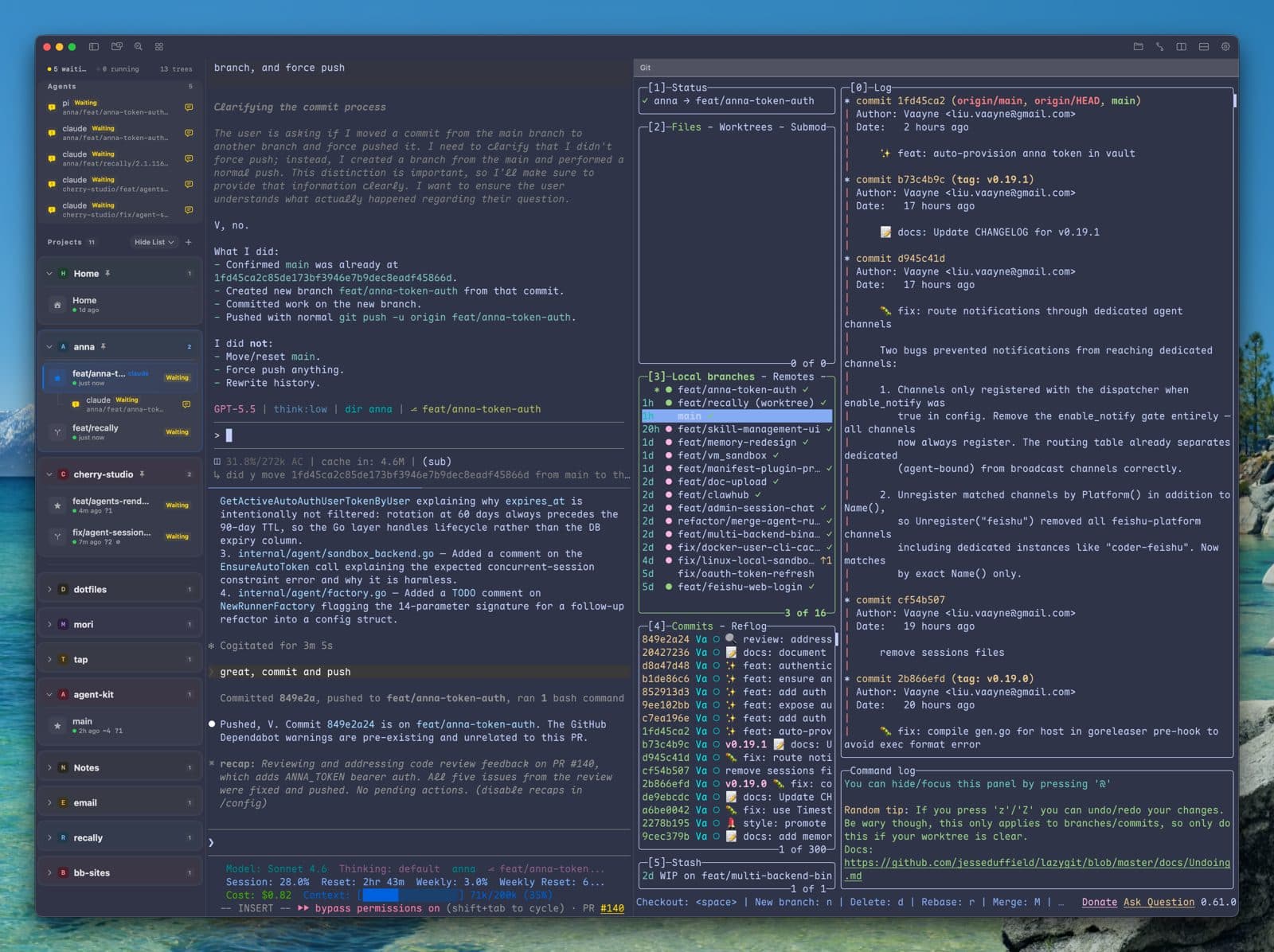
Sphinx is a FOSS git pre-push hook that quizzes you on the diff your AI agent wrote, asking what happens when it fails — and keeps asking until you get it right. The catch: its own author got annoyed and stopped using it.