Amazon's TorchNeuron Runs PyTorch on Trainium With One Config Change—and It's Open Source
Amazon's Annapurna Labs is open-sourcing TorchNeuron: PyTorch code runs on Trainium AI chips with a single config change and no rewriting. The CUDA moat was never the silicon — it's the software ecosystem, and Amazon is the first challenger to attack migration cost itself.
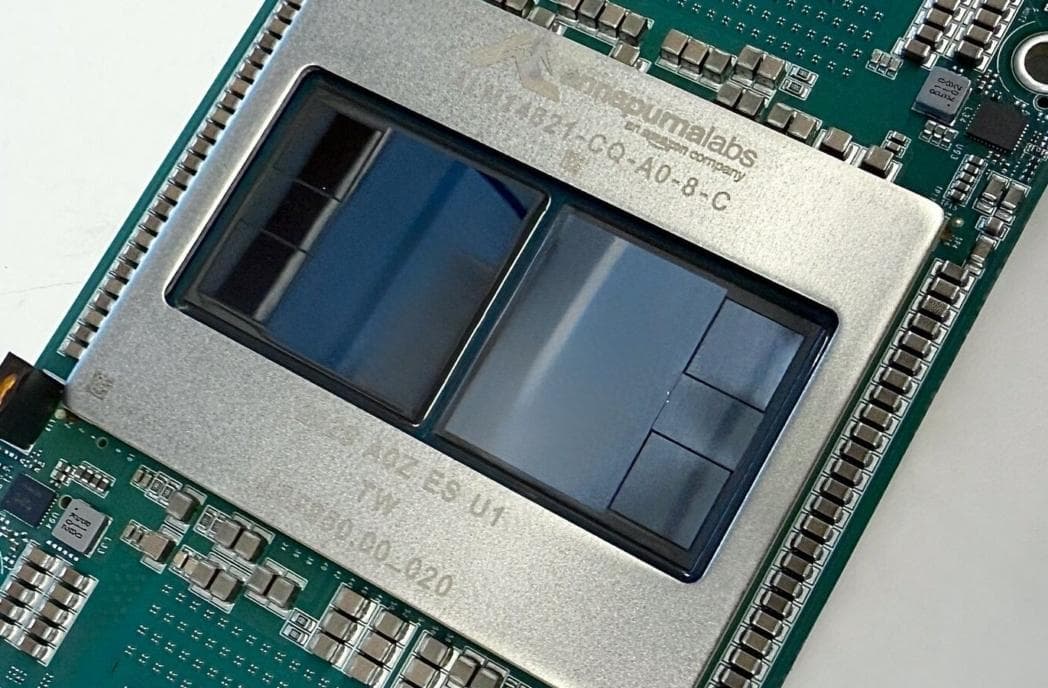
A Reuters dispatch out of San Francisco on October 19 has pushed the AI chip war onto a new battlefield. Amazon's chip unit Annapurna Labs is introducing TorchNeuron: software that lets PyTorch code run on Amazon's Trainium AI chips with no rewriting — a single configuration change — and it will be released publicly as free, open-source software. Reuters' lede states the intent plainly:
Amazon.com is introducing a new tool that allows its custom AI chips to run code written in the most popular AI coding language without modification, seeking to erode the advantage that underpins Nvidia's dominance in the AI computing market.
In plain terms: Amazon is going after the foundation of Nvidia's dominance in AI compute. And its chosen method of attack surprised many — not faster chips, but "your code doesn't need to change".
This deserves its own piece not because "another cloud vendor shipped an AI chip," but because Amazon is the first to compete in the right place. Nearly every previous attempt to challenge CUDA competed on the chip itself: FLOPS, memory bandwidth, efficiency. Amazon changed the game: your PyTorch code is already written, and it will just run. The moat was never in the silicon — it's in the software ecosystem — and Amazon is the first to genuinely go after the wall called "migration cost".
The event in three sentences
According to Reuters reporter Stephen Nellis (byline "By Stephen Nellis", dateline "SAN FRANCISCO, Oct 19 (Reuters)", timestamp "2026-10-19T13:03:40+00:00"), the facts come in three layers:
First, zero code changes. In Annapurna Labs' own words:
TorchNeuron lets developers run code written in a language called PyTorch on Amazon's Trainium AI chips with a single configuration change and no rewriting needed, according to Amazon's Annapurna Labs chip unit.
Note the phrasing: "a single configuration change", "no rewriting needed". In the world of AI infrastructure, moving CUDA code to another vendor's chip has historically meant weeks to months of rewriting and tuning. TorchNeuron compresses that cost to the level of editing a config.
Second, free and open source. Amazon plans to announce the software at a developer conference in Silicon Valley on Monday (October 19), adding:
Amazon, which plans to announce the software at a developer conference in Silicon Valley on Monday, said the software will be publicly released as a free and open-source offering.
Open-sourcing is the most interesting move in the whole story — we'll come back to it.
Third, 30+ early customers already on board. Colin Brace, vice president of software for Annapurna Labs, told Reuters in an interview:
"This has been about meeting customers where they're at," he told Reuters in an interview.
He added that more than 30 early customers — spanning robotics, world models and voice AI — are already using the new software, and that switching to Amazon's chips can deliver steep cost savings:
Brace said more than 30 early customers — spanning robotics, world models and voice AI — are using the new software, and that the switch to Amazon's chips can result in steep cost savings.
"Meeting customers where they're at" — going to where the customers already are, instead of asking customers to come to you — is essentially the strategy summary of the entire launch.

Why this time is different: the moat was never in the chip
A judgment call first: Nvidia's moat was never "faster chips". Over the past decade, more than one AI chip has beaten Nvidia on paper specs — and died. The real moat is the CUDA ecosystem: cuDNN, cuBLAS, NCCL, and the entire toolchain, tutorials, Stack Overflow answers, and engineer muscle memory that grew around them. An ML engineer's PyTorch code is "CUDA-shaped" by default: every operator called, every pitfall encountered, every snippet copied was written for Nvidia hardware.
That means a challenger's real enemy isn't Nvidia's next GPU — it's migration cost. Moving a training pipeline off Nvidia costs not just the new hardware, but weeks of engineer rewriting, tuning, and debugging, plus the risk of "nobody to ask when it breaks". Once that bill is tallied, most teams choose to keep buying Nvidia.
Amazon's play goes straight at that bill. The subtext of "single configuration change" is: the engineering cost of migration drops from "person-months" to "edit one config". When migration cost approaches zero, the only variables left in the customer's decision are price and performance — the two things Amazon, as a cloud vendor, is best positioned to argue. Trainium was born to replace Nvidia GPUs inside AWS and push compute costs down in the first place.
Compare the earlier challengers: everyone was pitching "my chip is x% faster than the H100", and the customer's response was "but what about my code". Amazon is the first to hold its launch event on "your code doesn't move". That's not a difference in technology roadmap — it's a different answer to "where exactly is the moat" — and Amazon's answer is the right one.
The open-source gambit: open software, closed hardware
Open-sourcing TorchNeuron is the shrewdest move here — and it deserves a sober look.
The shrewd part first. The adoption logic of AI infrastructure software is: nobody bets a production pipeline on a black box. Open source means customers can read it, modify it, and fix bugs themselves instead of waiting on an Amazon support ticket. More importantly, open source drops the trial cost to zero — an engineer can verify "does my model run" over a weekend, a low-friction trial no sales team can buy. That's how CUDA itself grew: free for students and researchers first, and the ecosystem followed.
Now the sober part: the software is open; the hardware isn't. Trainium chips only run on the AWS cloud — you can't buy one and plug it into your own server. So this is an "open software + closed hardware" package: the migration-cost wall comes down, but on the other side of it you see AWS's walls. Lock-in hasn't disappeared; it moved from the software-ecosystem layer to the cloud-vendor layer. For customers that's still a good deal (if the price really is lower), but don't read it as "decentralization" or "open computing" — it's a carefully calculated customer-acquisition battle between cloud vendors.
One more number worth questioning: Brace's "steep cost savings" comes with no figure attached. The report gives no numbers. That's the usual official-statement blank space — "steep" is an adjective, not a benchmark. Until Amazon publishes concrete price-performance data (say, training throughput per dollar), treat that line as a directional signal, not procurement guidance.
What it means for vibe developers: compute costs may finally loosen
If you're an indie developer or a one-person team, this matters to you more directly than it looks.
First, inference and fine-tuning could get cheaper. Trainium's whole pitch has been "cheaper AI compute". If TorchNeuron truly reduces migration to a config change, Trainium instances on AWS become an always-available cheaper option. For solo teams running long-lived inference services or fine-tuning models, compute burns money by the hour — a 30% cost difference is pure margin. The caveat: verify that "one config change" holds for your model first — trial it on non-critical workloads before moving production traffic.
Second, "CUDA-shaped" code is depreciating. "Can write CUDA optimizations" used to be a moat skill for ML engineers. If PyTorch code can move frictionlessly between backends, the value of hardware-specific optimization knowledge declines while the value of "the model itself" and "the data pipeline" rises. That's good news for vibe developers: you don't need to be a CUDA expert to collect the dividends of the compute competition.
Third, mind the boundaries of "without modification". This is the point I most want to flag. "No rewriting" is launch-event language; engineering reality is usually: mainstream operators are well covered, while long-tail custom operators and exotic distributed-training setups may still need hands-on work. Brace's 30+ early customers are in robotics, world models, and voice AI — relatively standard workloads. The more exotic your workload, the more you should verify yourself. Open source is actually the good news here: you can read the code yourself to see what's supported and what isn't, instead of trusting the keynote.
What to watch after the keynote: three verifiable signals
The news read this far, what matters next isn't the keynote — it's three verifiable signals:
- Real heat in the open-source repo. After release, look at the repo: star count, issue response speed, whether outside contributors show up. You can't hide the difference between "open-sourced for the launch" and "open-sourced to build an ecosystem" in repository activity. If only Amazon employees are committing three months from now, "open source" was mostly marketing.
- Independent benchmarks. Wait for independent teams — outfits like SemiAnalysis, or the Hugging Face community — to run standard models on Trainium: how many lines did migration really change? How do throughput and cost compare against Nvidia instances? Official "steep cost savings" only becomes a number in third-party data.
- Changes on the AWS pricing page. The most honest signal is always price. If AWS then cuts Trainium instance prices or rolls out more aggressive reserved-instance discounts, Amazon genuinely wants to win share on price — and a price war is the best possible ending of every wall-tearing story for developers.
None of these three signals requires trusting anyone's word; they speak for themselves. VibeFix will keep following.
Demarcation: Microsoft's Maia 300 is a separate story
To avoid confusion, one line of demarcation: earlier this month we covered Microsoft's Maia 300 (its in-house AI chip) — a different vendor, a different product, a different launch, unrelated to this TorchNeuron open-source release. Read together, though, they reveal a shared trend: cloud vendors are moving from "buy Nvidia" to "build it themselves and fight for the ecosystem" — and the weapon of choice for that ecosystem fight is shifting from hardware specs to developer experience.
A sobriety checklist: what the keynote didn't say
Finally, the discounted parts, so this doesn't read as an Amazon press release:
- "One config change" is the best case. Real-world migrations have long tails: custom operators, mixed-precision strategies, topology assumptions in distributed training. The better TorchNeuron's coverage, the closer that number is to reality — but until you've verified on your own model, read it as "migration cost sharply reduced", not "migration cost zero".
- 30+ early customers is an officially curated number. Early-access participants are by definition screened for workload fit. The long tail of general-availability customers is the real test.
- No numbers on cost savings. "Steep" is an adjective. Don't make procurement decisions until third-party price-performance data exists.
- The hardware lock-in remains. Open software doesn't mean you can take Trainium out of AWS. This is competition between cloud vendors, not a victory for open computing — which doesn't stop it from being good for you: the fiercer the competition, the cheaper your compute bill.
One-line summary: Amazon didn't launch a "faster chip" — it launched a "cheaper migration". CUDA's moat is the ecosystem, and the way to tear down an ecosystem moat isn't a faster chip but letting developers' code walk over unchanged. Open-sourcing TorchNeuron is the first time a cloud vendor has genuinely gone after developer experience to tear down that wall. For vibe developers the checklist is three lines: read the open-source code to confirm your operators are supported; trial it on non-critical workloads first; then watch Nvidia and AWS bid against each other — when giants fight, users win.
Comments (0)
Sources
Related articles
IBM open-sources Granite Switch 4.1 on the Hugging Face blog: a frozen base plus hot-swappable aLoRA adapters, packing chat, general decisions, safety review, and speech transcription into one model and one endpoint — base-model VRAM, shared KV cache. For local agent builders: one model covers four scenarios, and judgment graduates from a prompt to a part.
The most common open source posture among vibe developers is the naked push: no license, no CONTRIBUTING, an issue tracker silent for three months. This guide lays out the full runway from private repo to healthy open source project: a license decision table, a pre-launch code health check with a runnable secret scanner, the four community files, a launch-day SOP, first-month governance discipline, and a 15-item acceptance checklist.

Fragment raises a $12M Series A led by Firstmark to build financial infrastructure for AI agents: billing, payments and accounting for vertical AI companies, with enforced financial correctness — agent hallucinations and invalid transactions are 'impossible.' The real bottleneck of the agent economy was never 'can it spend money' but 'who pays when it miscalculates.'