Kimi K3 Enters OpenAI's Enterprise Codex Channel — the First Chinese Open Model Inside OpenAI Billing
Moonshot AI's Kimi K3 has entered OpenAI's enterprise Codex channel via US inference provider Baseten. Enterprise customers can now burn existing OpenAI spending commitments on the Chinese open model — no new supplier contract needed. Sina Finance calls it the first Chinese open model to enter OpenAI's enterprise billing system. This piece unpacks the three-way split (Baseten/Codex/OpenAI billing), the Bedrock revenue-sharing lead-up, and what billing-neutral model choice means for developers.
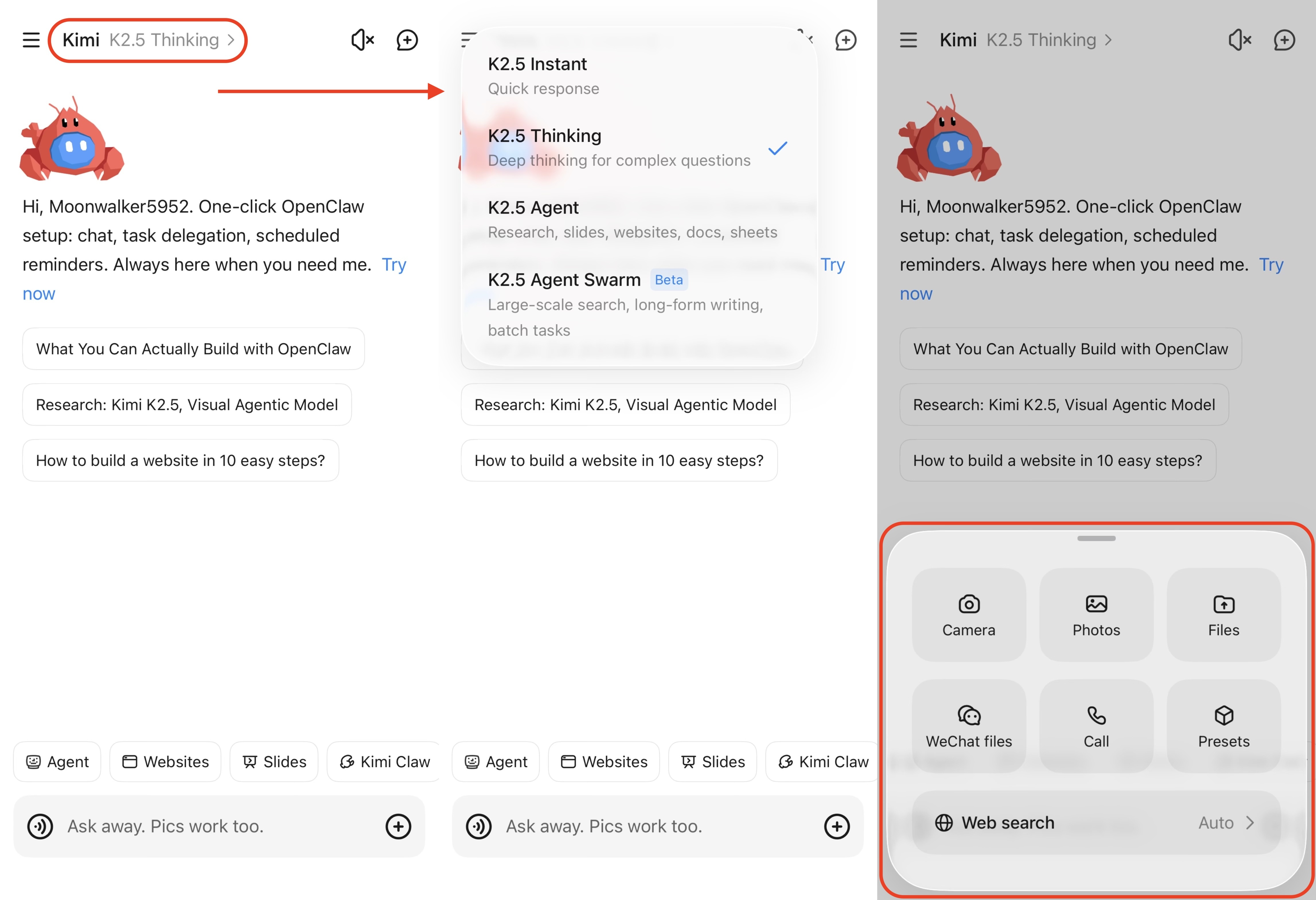
What happened: Kimi K3 just moved into OpenAI's billing system
On October 7, a seemingly low-key business story set Chinese tech media abuzz: Moonshot AI's Kimi K3 has entered OpenAI's enterprise Codex channel through US inference provider Baseten. Enterprise customers can now count their Kimi K3 usage against existing OpenAI spending commitments — drawing down the contract volume they already signed with OpenAI, with no separate supplier contract needed with Moonshot or Baseten.
The division of labor is clean: Baseten handles model inference, Codex provides the developer-facing coding interface, and OpenAI supplies the enterprise billing relationship customers already know. Kimi K3, a Chinese open model, is for the first time "hitching a ride" on OpenAI's enterprise billing system. As Sina Finance put it, this marks the first time a Chinese open model has entered OpenAI's enterprise billing system.
To put it bluntly: OpenAI has installed a Chinese competitor's model into its own enterprise developer interface and billing system. An enterprise Codex user can burn OpenAI-purchased quota on K3 to write code without ever knowing who Moonshot AI is. This is not a simple third-party model listing — it is a complete "borrowed boat" go-to-market chain: inference goes to Baseten, the interface goes to Codex, the invoice goes to OpenAI, and Moonshot only needs to license out its weights.
 Kimi K3 vs GPT-4 Turbo model comparison chart
Why the "first time" matters so much
To grasp the signal, first look at what convention it breaks. For the past two years, Chinese open models going global have followed two main paths: selling APIs directly — developers sign up, top up, and call the API on the model maker's own site — or landing on cloud vendors' model marketplaces, like Kimi K3's arrival on AWS Bedrock last month. Both paths work, but both share the same friction point: enterprise procurement.
The real bottleneck for enterprises buying models was never technology — it is procurement. Onboarding a new model supplier at a mid-size company or larger usually means legal reviewing contracts, infosec reviewing data flows, finance creating a new vendor record, and purchasing negotiating discounts. The full cycle takes three months at minimum. That is why many enterprises would rather use OpenAI's own models than sign a new supplier to save 30% on API prices: the money saved does not cover the cost of the process.
OpenAI's Codex channel tears that wall down. Enterprise customers consume K3 under their existing OpenAI contract — the supplier is still just OpenAI, the invoice is still the same one, and the security review is still the same framework. For procurement teams, this is a "zero-incremental-cost" way to bring in a new model; for developers, model choice becomes "billing-neutral" — which model you use is no longer constrained by whom you signed a contract with.
That is the real weight behind Sina Finance's "first time entering OpenAI's enterprise billing system" line: it means a Chinese open model is going global for the first time not as an "external supplier," but as "an option inside OpenAI's ecosystem." Going from "sign a contract with Moonshot" to "just spend your OpenAI quota" are two completely different levels of commercialization difficulty.
OpenAI's posture here is worth savoring. Just months ago, OpenAI was competing head-on with open models via GPT-6.1 Sol. Now it is plugging K3 into its own developer interface, and the logic is not hard to see: the enterprise Codex channel's core KPI is developer retention and quota consumption, not any single model's market share. As long as the spend lands on OpenAI's invoice, whether it flows to GPT-6.1 or K3 makes little difference to OpenAI's revenue — and because K3 is cheaper, call volumes may be larger, potentially raising OpenAI's channel income. Classic platform thinking: collect the rent, don't pick the fight.
Retracing the go-global commercial chain: from Bedrock to Codex
Zoom out and K3's moves over the past month form a one-two punch. On September 18, AWS announced Kimi K3 was available on Amazon Bedrock; on September 21, National Business Daily reported that Moonshot had confirmed an overseas cloud revenue-sharing arrangement — cloud providers host Kimi models and share usage-based revenue with Moonshot. Financial terms were not disclosed, and the previously rumored "up to 30% share" was only a negotiation-stage figure, never confirmed by either side as the final deal.
The Bedrock step solved the "compliance listing" problem: enterprise customers call the model through AWS's managed platform, data stays inside AWS's data boundary, never flows to the model provider, and is never used to train models. For enterprises with data-compliance requirements, that is the precondition for putting a Chinese model into production. Worth noting: K3 is not the first Chinese model on Bedrock — DeepSeek-R1 became a fully managed offering back in March 2025. The real novelty this time is the revenue-sharing mechanism Moonshot publicly confirmed: open weights + cloud-vendor hosting + usage-based revenue sharing forms a replicable commercialization formula.
The Codex channel step solves the "procurement friction" problem. Bedrock answered "can we use it"; Codex answers "is it easy to buy." Together, K3's overseas commercialization chain is complete: cloud vendors handle compliant hosting and revenue sharing, inference providers handle compute, OpenAI handles the developer interface and enterprise billing, and Moonshot focuses on building models.
Compare this with the traditional route: a model maker building its own global inference clusters, doing enterprise sales itself, and negotiating compliance country by country — a heavy-asset, slow-cycle playbook. K3's path is the opposite: open-source the weights and let every infrastructure partner become a distribution channel, keeping only the revenue share. It echoes the old Android playbook: don't sell the phones yourself; get every phone maker to ship your OS.
Of course, a complete chain does not mean the money has arrived. The Bedrock reporting was refreshingly honest about this: the revenue split is undisclosed, actual revenue generated through Bedrock is undisclosed — "availability creates access, but customers still have to choose K3 for production workloads." Sustained paid usage is the real test. The same applies to the Codex channel — whether enterprise quotas convert into real K3 call volume depends on how the model actually performs on coding tasks.
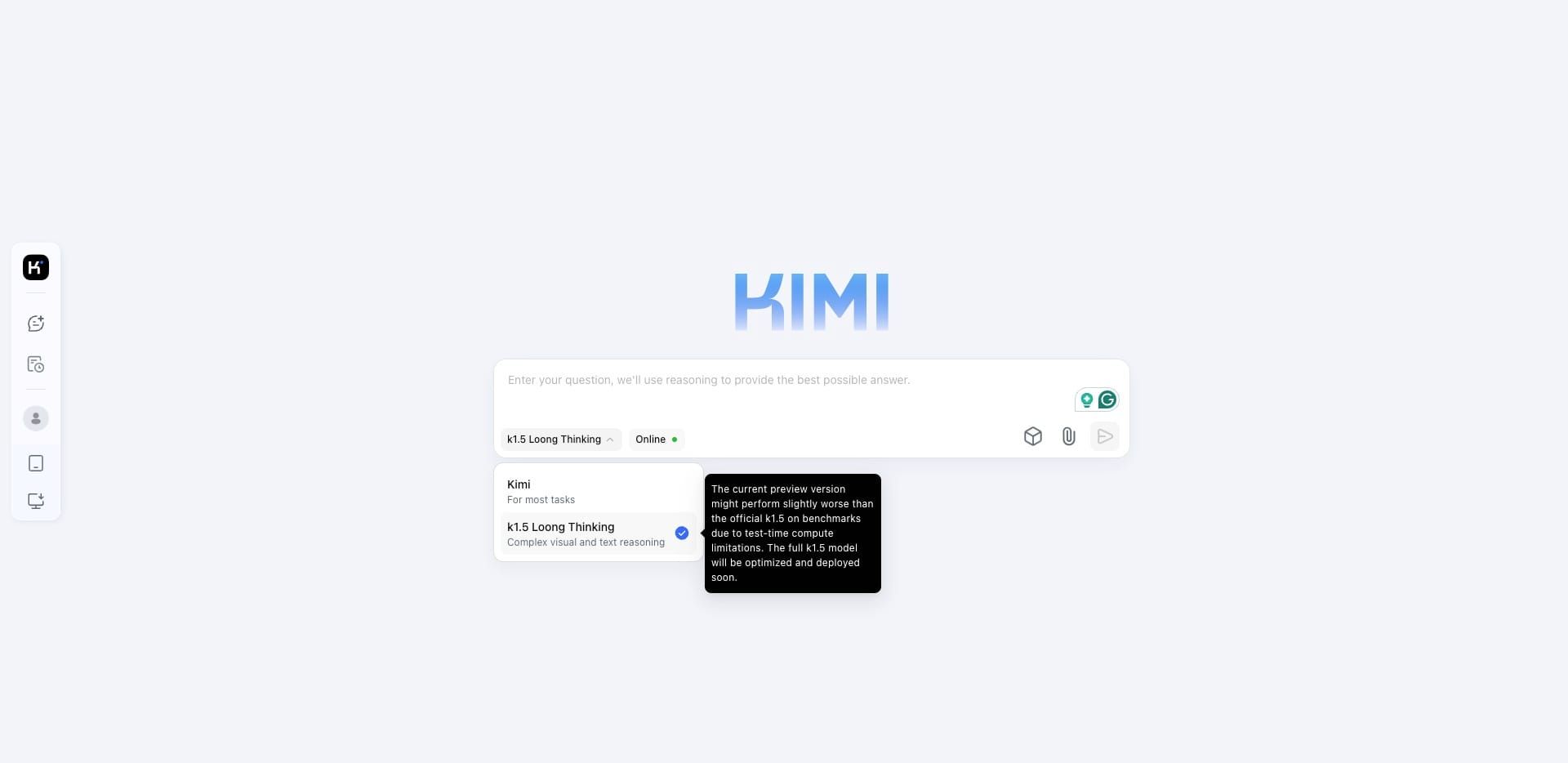 Kimi app interface in action
The model itself: why K3
Back to the model. Kimi K3 is a 2.8-trillion-parameter open-weight model with native vision capabilities and a one-million-token context window. AWS positions it for coding and knowledge work: large code repositories, long documents, and mixed text-image tasks.
Put those numbers together and the picture is clear: K3 is aimed squarely at the "coding agent" scenario. A one-million-token context means it can swallow an entire mid-size codebase in one go; native vision means it can read screenshots, architecture diagrams, and UI mockups; the 2.8T parameter scale signals a "scale wins" approach rather than a small-model value play.
Its license design is worth noting: although the weights are open, commercial use carries conditions — if a licensee or its affiliates exceed USD 20 million in aggregate revenue over any consecutive 12 months while running a model-as-a-service business, a separate agreement is required; meanwhile, internal use and access through official products or certified inference partners are exempted. This design pairs with the commercialization chain: "certified inference partners" like Baseten and AWS go through the revenue-share channel, while hyperscale self-hosted providers get negotiated separately — open source for distribution, revenue sharing for monetization, and the biggest fish get individually landed.
My read: the timing of K3's aggressive channel push is no accident. Coding agents are becoming one of the most certain paid scenarios for large models — enterprises' willingness to pay for a model that "does engineers' work" far exceeds their willingness to pay for one that "chats." K3 positions itself as a coding/agent model and layers onto Codex, one of the most enterprise-developer-dense coding interfaces in the world. Channel and scenario fit precisely.
Practical takeaways for developers: what this means for you
First, indie developers and one-person companies. In the short term, you probably do not need to change anything — K3's direct API has always been there, and its price has not moved. But two medium-term shifts are worth watching: first, as K3 enters more enterprise channels, its inference costs get amortized over larger scale, leaving room for further API price cuts; second, "billing neutralization" is a trend — today OpenAI's Codex can host K3, tomorrow other platforms may host more open models, and the switching cost of model choice keeps falling. For indie developers, this means the risk of being "locked into one model" is declining, and architectures built on multi-model routing — picking the right model per task — will pay off more and more.
For enterprise buyers and team leads: if your company already holds an OpenAI enterprise contract with Codex quota, K3 is now a "zero-procurement-cost" experiment option — no new-supplier process needed to compare GPT-6.1 Sol and K3 head-to-head on your own codebase, under the same invoice. My suggestion: take one or two real internal coding tasks (legacy code refactoring, test backfilling) and run an A/B comparison to see whether the million-token context genuinely helps at your repository's scale before deciding how much quota to shift. Don't be dazzled by parameter counts, and don't go all-in just because it is cheap — coding models win or lose inside real repositories.
One easily overlooked angle: data compliance. Calling K3 through Bedrock or Codex versus calling Moonshot's API directly are two different things in terms of data flow. The former keeps data inside AWS's or OpenAI's compliance boundary; the latter sends data across borders to the model maker. For teams with compliance requirements, channel choice is itself an architecture decision — K3's dual compliant paths through Bedrock and Codex effectively solve the "can we use it" and "is it easy to buy" problems in one stroke.
Three things to watch next. First, real call volume: what share of enterprise quota actually flows to K3 instead of sitting on the GPT-6.1 default — that decides whether the revenue-share chain turns from "story" into "income." Second, followers: whether other Chinese models already listed on Bedrock, like DeepSeek or Qwen, copy the "inference provider + Western developer interface + enterprise billing" route; if anyone follows, "billing neutralization" goes from one-off to industry trend. Third, the license's USD 20 million line: when hyperscale cloud vendors want to offer K3 as their own managed service, how those separate negotiations land will set the ceiling for the open-weight model. The answers decide whether this "moving into the invoice" is a one-time PR moment or a genuinely working overseas highway.
One final big call: OpenAI installing K3 into its own billing system may be the most emblematic event of 2026 for open-model commercialization. It proves something — the endgame for open models may not be "beating closed models," but "being absorbed into closed models' distribution channels, and splitting the revenue." For Moonshot, that matters more than selling a few more API calls: it has won, for the first time, a formal seat at the table of the Western mainstream developer toolchain. The seat is secured; now K3 has to earn real call volume inside Codex. Channels can be borrowed — reputation has to be earned. And for China's open-model camp as a whole, this event's demonstration effect may prove more valuable than K3's own commercial returns — it has drawn, for the first time, an overseas map that doesn't require building your own enterprise sales army.
Sources
Related articles

Simon Willison shipped a Newsletters index page for his blog almost entirely by voice — chatting with the Codex tab in the ChatGPT desktop app while cooking dinner in his kitchen, barely touching the keyboard. When a top-tier practitioner starts coding with his mouth, voice + agents stop being a gimmick and become real productivity. A teardown of his playbook, where this workflow breaks, and the minimal setup to copy him.
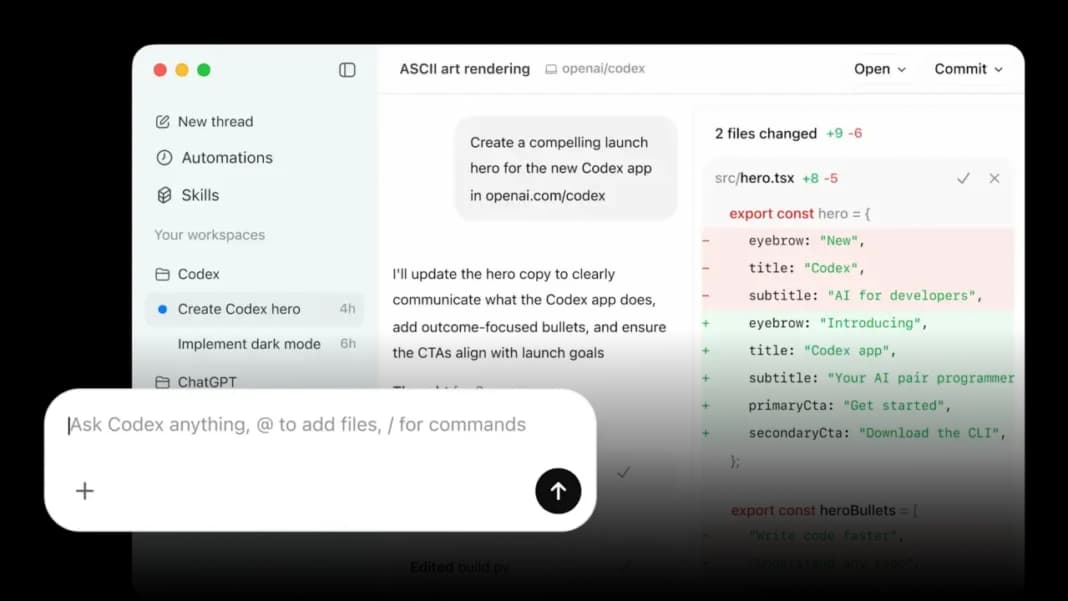
Codex desktop beta adds Composer predictions: after each response, a suggested next sentence appears in the input box. Tab to accept, review, then send. Free during beta and on by default, it shifts the cognitive load from wording intent to verifying it — but a suggestion is never an instruction.
On October 8, 2026, Harness announced the acquisition of select Augment Code assets, with Cosmos becoming the 'Harness Cosmos Software Factory Agent.' This piece breaks down what was bought, how the software factory works, Harness's agent-to-agent loop, and what it means for vibe coders.