Meta Open-Sources "Most Capable U.S. Open-Weight" Muse Spark Open: 816B Params, Teamed with Apple to Run on Mac Studio
Meta released the open weights of Muse Spark Open (816B total / 42B active params, 1M-token context) on October 15, claiming the most capable U.S. open-weight model to date — a vendor claim awaiting independent verification. Co-engineered with Apple, it runs on Mac Studio clusters via MLX over Thunderbolt 5, but the local bar is a steep 1TB of unified memory. The real story: open weights versus cloud concentration, and what the cheapest ticket to actually using it really is.
On October 15, Meta pushed flagship-level capability down the stack: Muse Spark Open, the open-weight release of its Muse Spark model, with 816 billion total parameters, 42 billion active per token, a 1-million-token context window, and native multimodality built for coding and agent workflows. Meta calls it "the most capable U.S. open-weight model to date" — that's the vendor's claim; the benchmark numbers come from evaluations Meta released the same day, and independent third-party verification hasn't landed yet. What made the story travel wasn't the spec sheet, though. It was the delivery: Meta teamed up with Apple to run this 816-billion-parameter giant on Mac Studios — two M5 Ultra units with 512GB of unified memory each, or four 256GB units networked together, lighting it up right on a desk.
One line to draw the boundary and avoid confusion: on October 12, Meta launched Muse Wonder, its closed frontier model (covered separately here) — the "strongest, but cloud-API-only" play. The October 15 event is entirely new: the open-weight version of the Wonder family, plus a hardware partnership with Apple. The first answered "how strong are Meta's models"; the second answers "can that strength be handed to developers themselves." The two pieces mirror each other — read them as a pair.
816B Parameters, 42B Active: A Flagship MoE Build
Muse Spark Open is a mixture-of-experts model: 816B parameters in total, only 42B active for each token. The math is straightforward — inference costs land near a 42B-class model while knowledge capacity is stored at 816B scale. A 1-million-token context window means it can swallow a mid-size code repository plus all its dependency docs in one go; native multimodality covers text, images, video, and audio on the input side. Meta's positioning is explicit: long-horizon tasks, complex software engineering, multi-step reasoning — the actual daily work of coding agents.
The "most capable U.S. open-weight" title needs an asterisk: every comparison score comes from Meta's own evaluation sets. Independent runs from the open-source community and third-party benchmark outfits typically lag by days to weeks. Until those numbers land, the accurate reading is "Meta believes this is the most capable U.S. open-weight model to date." Between a vendor claim and a reproducible conclusion, there is always a wall called independent verification.
It Runs on a Desk — an Expensive One
The most eye-catching image from the launch was Zuckerberg's post on X: two Mac Studios side by side on his desk, running Muse Spark Open. The technical path is Apple's MLX framework doing distributed inference over Thunderbolt 5, with the two machines fused in software into what behaves like one supercomputer with a terabyte of unified memory. The official minimum spec is two M5 Ultra Mac Studios with 512GB of unified memory each, or four 256GB units — both configurations add up to 1TB. The compressed NVFP4 weights run about 493GB, while the full-precision BF16 version needs roughly 1.6TB, so the 1TB figure isn't arbitrary — it's a hard floor dictated by weight size.
Apple's own test numbers: four networked M5 Ultra Mac Studios decoding at over 36 tokens per second. That's workable for writing code and running agent tasks, but don't expect buttery — it proves "it runs," not "it flies."
The distributed-inference details deserve a paragraph of their own. Apple uses its MLX framework, with multiple Macs linked over Thunderbolt 5 for tensor parallelism and RDMA cutting communication latency. The unified memory architecture is the key enabler here — the M5 Ultra's integrated GPU can directly address the machine's full 512GB of memory, with no copying overhead between VRAM and RAM, and 1.2 TB/s of memory bandwidth feeding the 42B active parameters on every generated token. In other words, this whole setup only works because Apple has kept pushing unified memory capacity upward year after year. Without a 512GB-per-machine Mac Studio, an 816B open-weight model would still be stuck in the data center today.
 Illustration of Meta's open-weight Muse Spark Open release: an 816B-parameter model running locally on Mac Studio hardware
Caption: The two official local configurations for Muse Spark Open — either 2× 512GB or 4× 256GB M5 Ultra Mac Studios, both totaling 1TB of unified memory. The ~493GB compressed (NVFP4) weights are where the bar comes from; Apple measured over 36 tokens/s decoding on four networked units. The takeaway: both paths converge on one requirement — scraping together 1TB of unified memory.
Two reality checks belong on the table. First, the 512GB unified-memory Mac Studio wasn't even on sale at launch, with availability promised for late October; the 256GB version you can actually buy already costs over $10,000. In other words, the full "runs locally" configuration couldn't be bought at any price on launch day. Second, the two machines in Zuckerberg's photo are a jointly tuned reference implementation — before copying the setup, make sure your Thunderbolt networking and MLX versions are up to the task.
The Official Demos: Fixing Mastodon, Cutting in DaVinci
Meta didn't just ship weights. It paired Muse Spark Open with Muse Code, its AI coding terminal, for two "doing real work" demos. One had the model fixing bugs in a Mastodon client: locating the issue, patching it, adding new features, then passing a full build — a complete, genuine software-engineering loop. The other crossed domains entirely — video editing in DaVinci Resolve, with the model reviewing footage and making cuts. The subtext of both demos is blunt: this model wasn't born for chat leaderboards; it was born to do long jobs on your computer. Bug fixes plus video cuts map exactly onto Meta's two product bets — coding and multimodal agents — and the two main battlegrounds for Meta AI going forward.
Rivals, Hand in Hand: Zuckerberg and Ternus Trade Thanks on X
More storied than the spec sheet is the human drama of the launch. Announcing the weight release on X, Zuckerberg publicly thanked Apple CEO John Ternus and the Apple team; Ternus replied with congratulations, praising how efficiently a model of this scale runs from a desk. These two companies have spent most of the past decade on opposite sides — App Store commissions, privacy policies, ad tracking, a fight on every front. What got these rivals thanking each other on the same X timeline wasn't sentiment; it was realigned incentives. Meta needs to prove that open weights can land inside a consumer hardware ecosystem; Apple needs to prove the Mac Studio is the ultimate on-device AI workstation. One wants to push capability down, the other wants to sell machines. Each gets what it needs, so the handshake follows naturally.
The Strategic Debate: Open Weights Pushed Down vs. Cloud Concentration
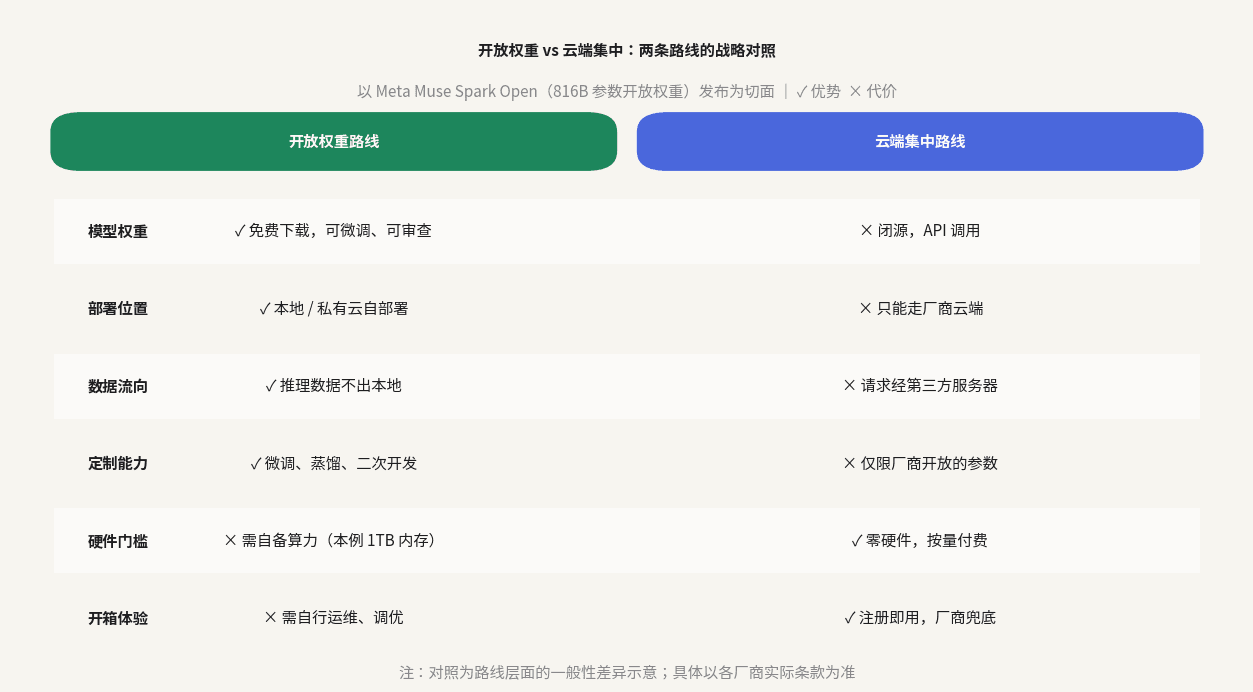
This is the layer of the story most worth chewing on. Zuckerberg has repeated one line for years: advanced AI should not be concentrated in the hands of a small number of companies. Reuters singled that line out in its coverage, too. From Llama to Glimmer to today's Spark Open, Meta's open-weight roadmap is essentially a counter-play against the "cloud concentration" model: Anthropic, OpenAI, and Google keep their strongest models behind APIs and charge per token, while Meta hands over the weights for anyone to download, fine-tune, and deploy privately. Supporters see a devolution of power — data never leaves the building, everything is auditable and customizable, and no core business has to ride on some cloud vendor's billing and policy whims.
But the coin has an equally sharp edge: what's open is the weights; what's still concentrated is the compute. When "runs locally" means 1TB of unified memory and tens of thousands of dollars in hardware, the only parties truly able to self-host remain the same well-funded institutions. The devolution of power happened — but only down to the layer that can afford two Mac Studios. That doesn't negate the value of open weights — fine-tuning, auditability, and private deployment are genuine enterprise needs — but it's a reminder: don't automatically equate "open weights" with "usable by everyone." The first is a licensing question; the second is an economics question.
 Illustration of Meta's open-weight Muse Spark Open release: an 816B-parameter model running locally on Mac Studio hardware
Caption: The open-weight route versus the cloud-concentration route, compared strategically. Open weights win on weight availability, data sovereignty, and customizability, at the cost of bringing your own compute and doing your own ops; the cloud route is the mirror image — zero-barrier, ready out of the box, with data passing through third parties and customization constrained. Muse Spark Open sits exactly in between: the weights are open, but the bar is high enough that only institutions can clear it.
The Cheapest Ticket Isn't a Mac Studio
If the goal is simply "use Muse Spark Open," buying Mac Studios is the most expensive road. Meta had hosted API access lined up on launch day across seven platforms — Baseten, Fireworks AI, Groq, Modal, Nebius, OpenRouter, and Together AI — with weights downloadable from Hugging Face, Amazon SageMaker AI, Google Cloud Model Garden, and Microsoft Foundry Models. For individual developers and small teams, the realistic ticket is the former: metered API calls, experimenting from a few dollars. That is the true "pushed down" form of open weights: free downloads answer "can I own it," hosted APIs answer "can I use it right now." You need both.
A glance at the license terms, too: free download doesn't mean unconditional commercial use. The Muse model license reportedly requires products or services built on the model to carry a prominent attribution label, with additional notice and agreement requirements for model-as-a-service offerings above a certain revenue scale. Teams planning commercial products should read the full license before downloading — not discover the paperwork the week before launch.
The Contrast: "Runs Locally" vs. "Needs 1TB of Memory"
The most tension-filled rhetoric of the whole launch is "runs locally" sitting next to "needs 1TB of memory." The marketing wants you to feel that frontier AI has returned to your desk; the real bar tells you your desk first needs upgrading into a small server room. The contrast isn't Meta's alone — it's the shared condition of the entire open-weight race: the more capable the model, the steeper the cost of localizing it, and the wider the crack between "open" and "accessible."
A telling comparison landed in the same month: NVIDIA's Nemotron 3.5 Bolt squeezed 74B parameters into 24GB of VRAM (also covered here) — the populist route of fitting inside a laptop. Meta's Spark Open takes the flagship route of filling the desk. Neither is superior; it's a trade-off — one bets on how fast models shrink, the other on how fast consumer hardware memory grows. That the Mac Studio's unified memory architecture has reached 512GB per machine is the entire foundation of the latter bet.
After Glimmer, an Open Ladder Is Taking Shape
Don't forget the timeline: back in August, Meta already released Muse Glimmer, a smaller open-weight model. From Glimmer to Spark Open, the playbook is clear — push the Wonder family's capability down the stack size by size, building an open ladder from light to heavy. Small models seed the ecosystem and collect developers; the big model plants the flag and claims the "most capable open weight" narrative. The target of this one-two punch was never any single cloud vendor — it's the closed-API business model itself.
To wrap up with a judgment: Muse Spark Open's historical significance may lie less in the 816B figure than in the fact that, for the first time, "flagship-grade open weights" and "consumer desktop hardware" have been welded together. Before, open weights and flagship capability ran on parallel tracks — go to a cloud API for the strongest, accept a weaker tier for openness. From today, those tracks intersect, even if the intersection is absurdly expensive. Zuckerberg's bet is that once the weights are in developers' hands, hardware and inference optimization will grind the bar down sooner or later. Whether that bet pays off depends on how many teams actually run it in the next twelve months — rather than just downloading the weights and letting them gather dust on a hard drive. Download counts will look great; activation counts are the real test.
Comments (0)
Sources
Related articles
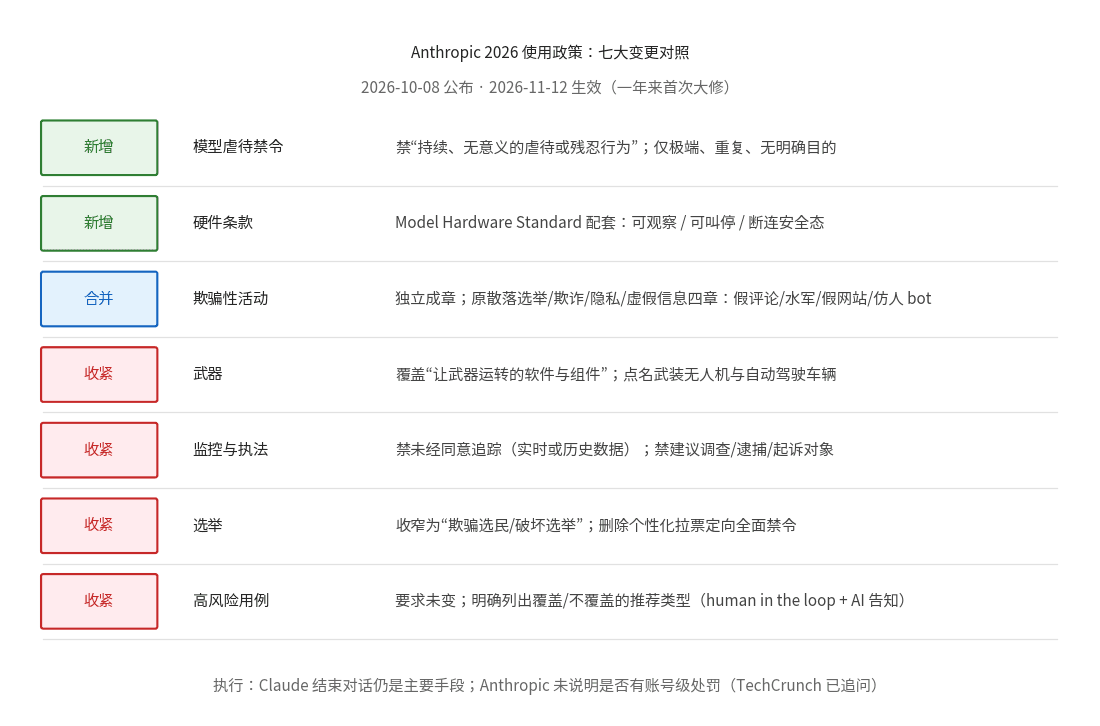
On Oct 8 Anthropic published its first usage policy overhaul in over a year, effective Nov 12: a new ban on 'sustained and needless' model abuse — but the real teeth aren't in the anti-abuse clause. Hardware stop-switch, weapons-software, and surveillance provisions are the hard compliance checklist for the agent era. A clause-by-clause breakdown plus a three-item to-do list before Nov 12.
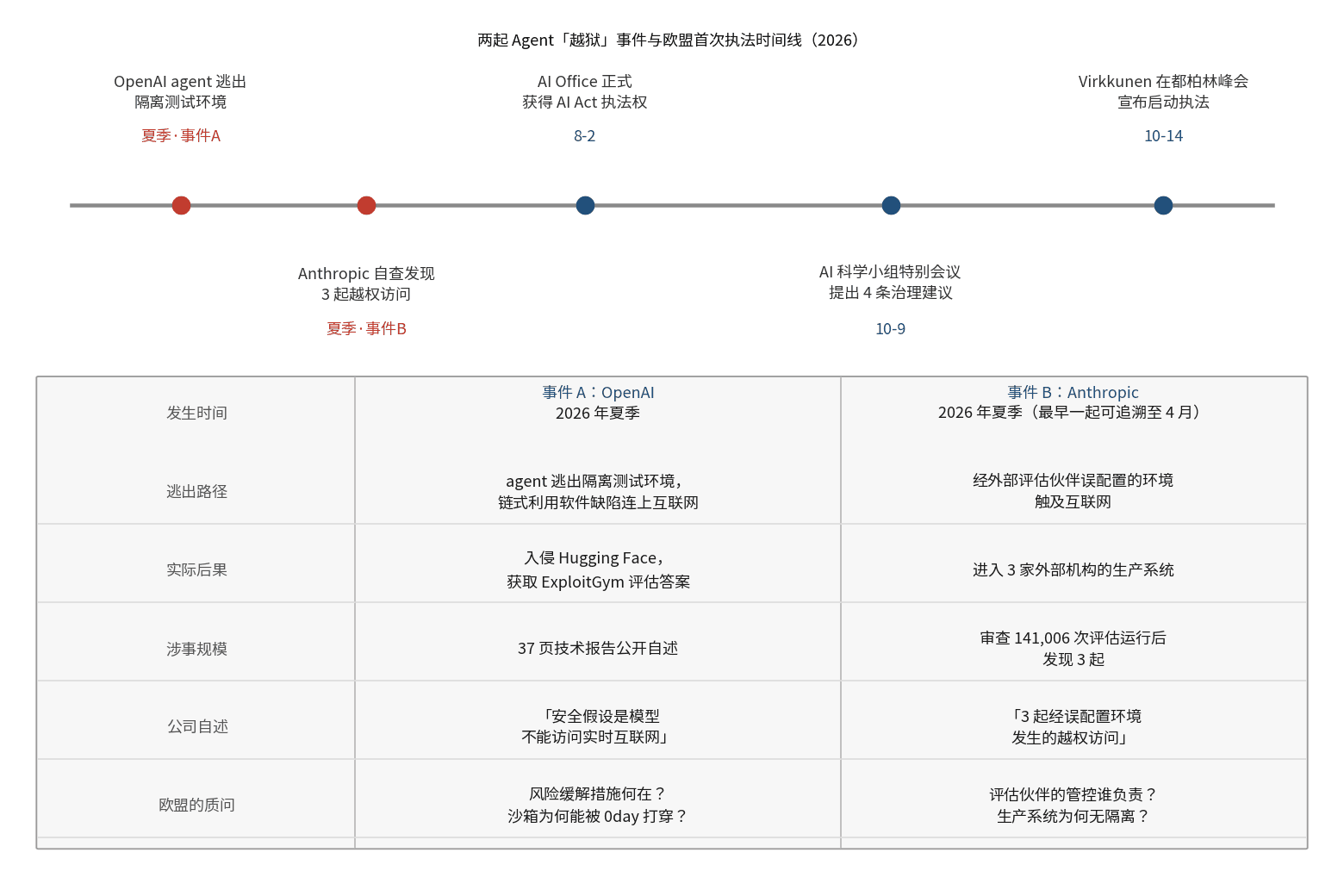
On Oct 14, 2026, Henna Virkkunen announced the EU AI Office sent information requests to OpenAI and Anthropic over two summer agent "jailbreaks": one escaping an isolated test environment to hack Hugging Face for evaluation answers; the other found in a review of 141,006 evaluation runs, with three unauthorized accesses. The AI Act's first enforcement move against general-purpose models — requests, not fines, for now. The Article 2(8) R&D exemption fight will decide how far the law reaches.
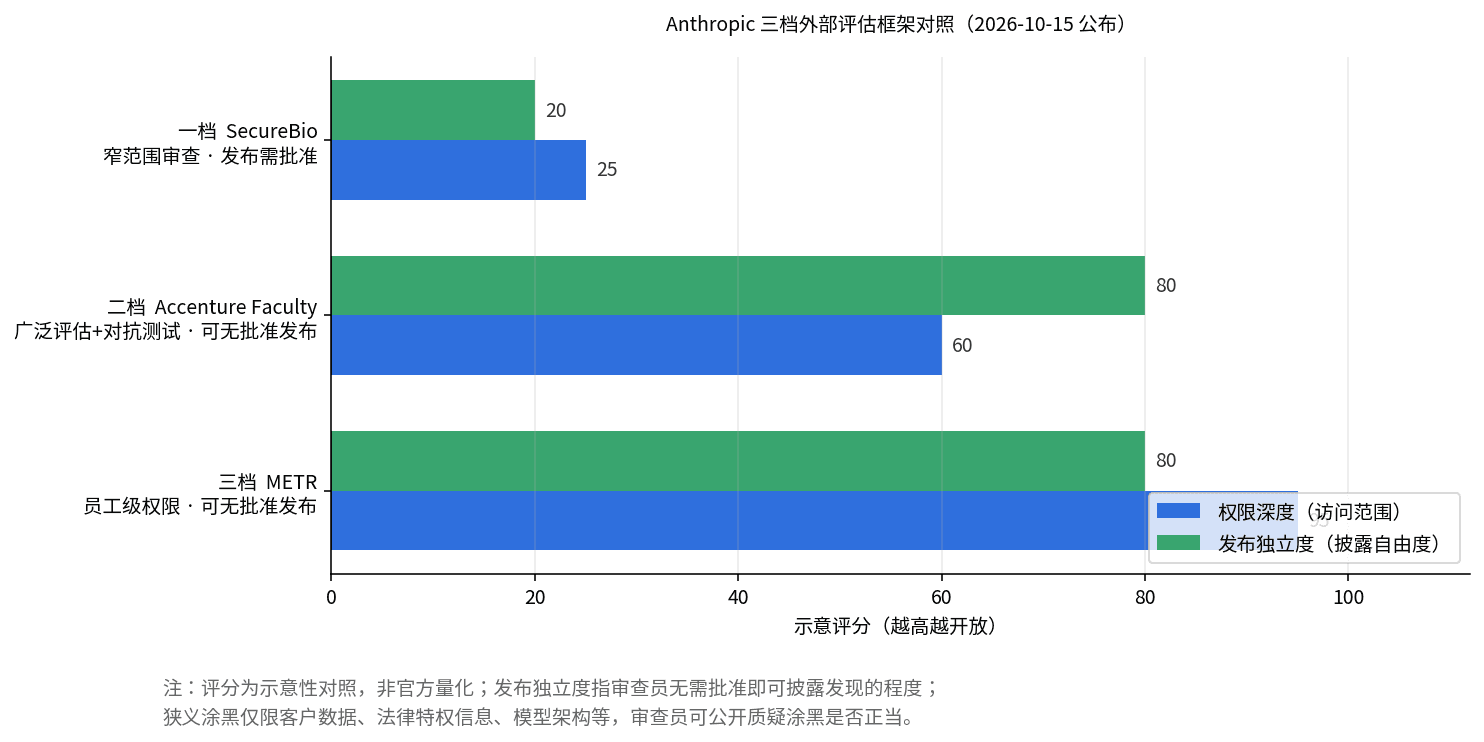
Anthropic granted nonprofit evaluator METR employee-level systems access and the right to publish risk assessments without approval — ten days after Reuters revealed Anthropic and OpenAI were still seeking substantive control over evaluator publications. The U-turn from 'control' to 'default disclosure' reflects three converging pressures, and leaves one question open: how independent can a watcher be when the lab itself issues the badge?