Microsoft Puts Its 61K-Star AutoGen Into Maintenance Mode: The End of the Wild Years for Agent Frameworks
Microsoft has hung a "maintenance mode" banner atop the microsoft/autogen README: the 61K-star project will receive no new features and is community-managed going forward, with new users pointed to Microsoft Agent Framework 1.0. We verify the banner verbatim, recap three years of multi-agent framework evolution, and lay out a migration decision checklist for existing users.

Last week, anyone opening the microsoft/autogen repository was greeted with something new: a banner at the very top of the README — "AutoGen Maintenance Mode." Microsoft has personally ushered its own 61,000-star flagship project into maintenance mode.
This is no ordinary archival. The banner's wording is blunt: no new features or enhancements will land, the project is community-managed going forward; new users should head straight to Microsoft Agent Framework; existing users should follow the official migration guide. From the experimental framework born in August 2023 that let multiple AI agents "meet and debate like humans," to today's "under maintenance" stamp — AutoGen took just three years.
The symbolism here outweighs the technical details. It marks the moment the multi-agent framework space officially moved from "wild growth" into the "enterprise standardization" era. And for anyone still running AutoGen in production, this is a decision signal worth taking seriously.
The facts, on the table
We opened the repository README ourselves on October 14, 2026. The banner reads, verbatim:
Maintenance Mode
AutoGen is now in maintenance mode. It will not receive new features or enhancements and is community managed going forward.
New users should start with Microsoft Agent Framework. Existing users are encouraged to migrate using the AutoGen → Microsoft Agent Framework migration guide.
The paragraph that follows sets the tone for the successor: "Microsoft Agent Framework (MAF) is the enterprise‑ready successor to AutoGen … production-ready release: stable APIs, and a commitment to long-term support," with multi-provider model support and cross-runtime interoperability via A2A and MCP. The contribution policy at the bottom of the README was tightened in sync: contributions are limited to bug fixes, security patches, and documentation improvements — new feature work belongs at MAF.
A note on dating, for transparency: the README itself carries no timestamp. The earliest public observation we could verify comes from aiagentstore.ai's Coding Agentic AI News — Week Ending 2026-10-13, which records it as "Observed Oct 7, 2026." So the banner most likely went up around October 7. Every "last week" in this article follows that dating.
The scale of the legacy is worth stating plainly: 61,393 stars, 9,279 forks, 3,782 commits, 98 releases. Born at Microsoft Research, AutoGen was one of the founding works of 2023's "year of the agent framework explosion" — back when a demo of two agents debating over code could set Hacker News' front page on fire.
How it got here: three years of multi-agent frameworks
To understand AutoGen's today, rewind three years. In the second half of 2023, AutoGen and LangChain lit up the "multi-agent" concept almost simultaneously. It was a demo-driven era: a framework's competitive edge was producing jaw-dropping conversational collaboration, and nobody cared about state management, observability, or error recovery — because nobody was actually shipping it to production.
2024 was the year of divergence. AutoGen undertook the big v0.4 rewrite, trying to grow from a "conversation demo framework" into a more serious event-driven architecture. Meanwhile LangGraph proved something with its unfashionable "state machine + checkpoint" approach: what production wants isn't smarter agents, it's replayable, interruptible, auditable execution. In November 2024 came a telling signal: AutoGen's original authors, Chi Wang and Qingyun Wu, left Microsoft and forked the project into AG2 (ag2ai/ag2). A founder's departure often says more than any earnings call about a project's internal priority.
2025 was the year of consolidation. Microsoft put Microsoft Agent Framework into public preview and made it explicit that both AutoGen and Semantic Kernel would enter maintenance mode — VentureBeat's reporting at the time quoted Microsoft: the two would see "no new feature investment" but would keep receiving "bug fixes, security patches and stability updates," with "no breaking changes planned." The direction was written on the wall: Microsoft was converging all of its agent frameworks onto the single MAF line.
In April 2026, Microsoft Agent Framework 1.0 went GA, built by the core AutoGen and Semantic Kernel teams, with Python and .NET SDKs under MIT. Half a year later, the README banner completed the final step of the handoff.
My read: AutoGen didn't "fail" — it completed its mission. An experimental framework's job is to prove a direction right, and AutoGen proved that multi-agent orchestration is a genuinely effective paradigm for building complex AI applications. But when an industry moves from "proving the direction" to "delivering SLAs," the rules change. Enterprises want stable APIs, long-term support commitments, observability, compliance auditing, and native integration with platforms like Azure Foundry. Those are precisely the hardest things to retrofit onto an architecture designed for demos. Rather than patching a demo-born codebase, start a production-born framework that fuses AutoGen's agent abstractions with Semantic Kernel's enterprise features — that is the MAF 1.0 recipe.
There's a deeper trend underneath: the protocol layer is absorbing the orchestration layer. Once A2A (agent-to-agent communication) and MCP (tool access) become de facto standards, framework differentiation compresses down to "execution semantics + ecosystem." At that point a big vendor's optimal move is convergence — why maintain three overlapping frameworks when you can go all-in on one and thicken the protocol interop? AutoGen's maintenance mode is the inevitable result of that consolidation logic.
What it means for existing users: don't panic, but answer three questions
The most practical question now: what do I do with my AutoGen project? The short answer: no panic in the short term, a real choice in the long term. Microsoft has committed to no planned breaking changes — your code won't stop running tomorrow. But "it runs" and "it runs safely" are different things. Three questions:
Question 1: What stage is your project at? If it's already in production and stable — congratulations, you have the longest runway. Maintenance mode doesn't mean the lights go out: bug fixes and security patches keep flowing, and the community is alive (over at the AG2 fork, the original authors are still actively developing). But if your project is mid-development or hasn't started — the answer is unambiguous: new projects go straight to MAF. The README says so itself.
Question 2: How much "ecosystem drift" can you absorb? This is the most underestimated cost. After maintenance mode, the real price isn't "no new features" — it's gradual decoupling from the whole ecosystem: new model capabilities don't get first-day support; as A2A/MCP protocols evolve, AutoGen-side connectors update ever more slowly; community Q&A response times decay; new hires stop listing it on their résumés. These costs don't erupt on a single day — they tax you a little more every quarter, like a chronic condition.
Question 3: How long is your migration window? Microsoft publishes an official AutoGen → MAF migration guide on Learn — currently the lowest-friction path. MAF was designed with AutoGen's agent abstractions in mind, so the concept mapping is relatively direct. The alternative is AG2 — the community fork maintained by the original authors, Apache-2.0, continuing AutoGen's technical lineage. The tradeoff is clear: choose MAF for Microsoft's long-term support commitment and Azure ecosystem integration; evaluate AG2 for minimal churn and continuity with existing architecture habits. But note: AG2 is a community project — its "long-term support" runs on community enthusiasm, not a vendor roadmap. Write that into your risk register.
One actionable suggestion: put "AutoGen migration assessment" on next quarter's technical roadmap — not this week's on-call list. First run a one-to-two-week spike through the official MAF migration guide to quantify the change surface; meanwhile, harden observability on your existing AutoGen services — in maintenance mode, you are your own first line of defense.
So what is Microsoft Agent Framework 1.0?
Since Microsoft is pointing everyone at MAF, it deserves a serious look. Per Microsoft Learn's official documentation, MAF is "the next generation of both Semantic Kernel and AutoGen," built by the same engineering teams: it combines AutoGen's intuitive agent abstractions with Semantic Kernel's enterprise-grade features — session-based state management, type safety, execution filters, and telemetry, all built in.
A few design points stand out. First, a unified Agent base class. Every agent derives from the same base regardless of the underlying model provider — "multi-provider model support" is an architectural commitment, not a slogan. Second, graph-based workflows. Developers get explicit control over multi-agent execution paths — sequential, concurrent, group chat, and agent handoff patterns — arguably an answer to the LangGraph line: production orchestration ultimately has to land on "controllable execution paths." Third, native observability. OpenTelemetry support, checkpoints, and human-in-the-loop are part of the workflow capabilities, not afterthoughts.
And MAF hasn't stood still since 1.0. It recently shipped Declarative Workflows 1.0 — moving "how agents coordinate, how state flows, where branching happens, when humans step in" out of application code and into versioned YAML living in your repo. That reveals Microsoft's ambition: MAF doesn't just want to be an SDK, it wants to be the "orchestration as code" standard layer of the agent era.
One splash of cold water, though: 1.0's "production-ready" is Microsoft's own claim. Stable APIs and an LTS commitment are strong signals, but a framework's true production maturity shows in the next twelve months of real-world issues, CVE response times, and community ecosystem. AutoGen debuted under a halo too. Stay optimistic — but pilot at small scale before voting with production traffic.
The handoff, in one chart
 AutoGen vs Microsoft Agent Framework: positioning, maintenance status, technical foundation, and migration guidance at a glance. Bottom line: new projects should start on MAF; existing projects can keep running but should schedule a migration assessment.
Coda: a footnote to the age of consolidation
Zoom out and Microsoft's moves this year form a single logic: personally hanging the maintenance banner on AutoGen, pushing MAF 1.0 to GA, shipping its homegrown Maia 300 inference chip, and tightening spend on external models. It's a complete "consolidate + build in-house" playbook — converging the experimental era's external dependencies and internal redundancies onto a stack Microsoft controls.
For vibe coders and indie developers, the lesson is practical: when choosing a framework, look beyond star counts and demo sparkle — ask who is paying for its tomorrow. 61,000 stars couldn't stop a strategic consolidation. Stars are votes from the past; the maintainer list is a forecast of the future. Next time a framework tempts you, ask one more question: is its core team still there? Is its roadmap aligned with — or against — some giant's platform strategy?
AutoGen deserves a dignified farewell. It proved the multi-agent orchestration road is walkable, ignited a whole category, and then yielded its place to successors built for production. Its epitaph could read: here lies an experiment that completed its mission.
Comments (0)
Sources
Related articles
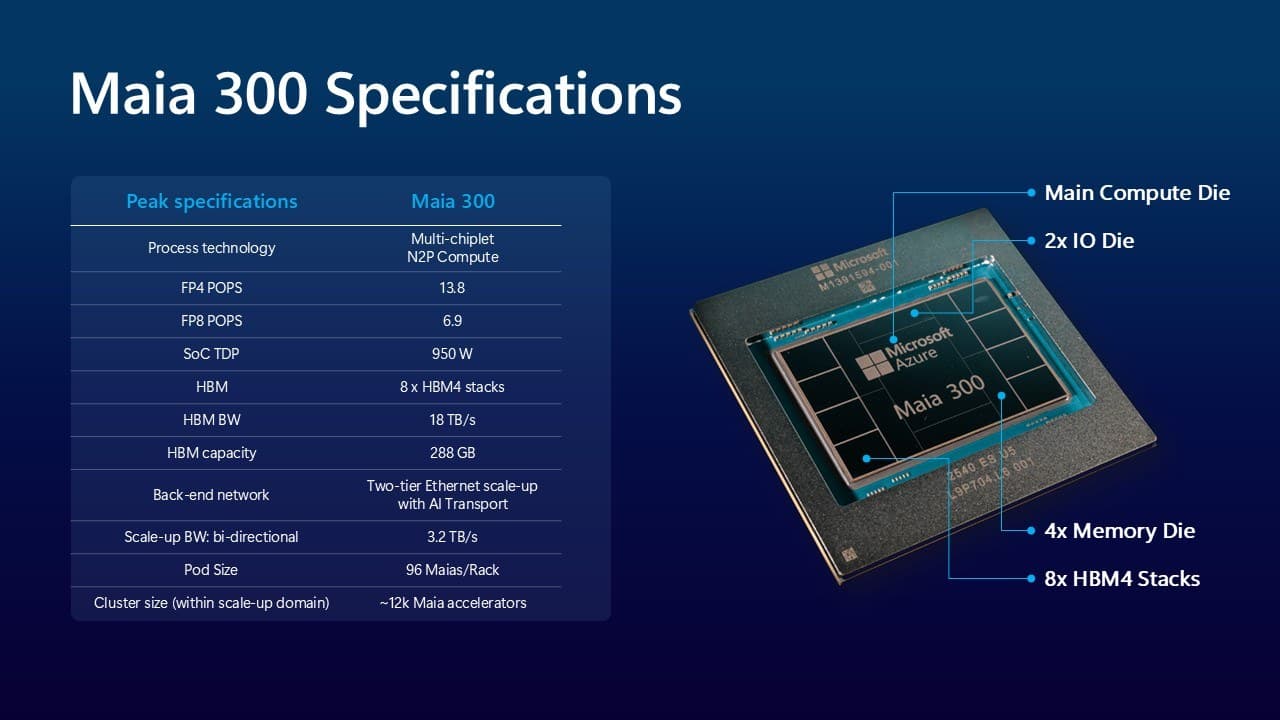
Microsoft unveiled its third-generation Maia 300 AI accelerator on Oct 12, claiming 40% more tokens per megawatt than leading GPU systems (vendor claim, unverified) and scaling to multi-gigawatt deployments from 2027. We break down the official blog post: why Microsoft is betting big on in-house inference silicon in the agent era, and what cheaper inference means for vibe coders.

Alibaba's Qwen team announced QwenGyre on Oct 12 — an elastic online RL framework for extreme-long-horizon agent training. The Elastic Scheduler flows GPUs between rollout and training on demand; the Trajectory Processor converges branching execution trees into bounded training samples. On Qwen 3.8 2.4T, 48 steps dropped from 134.55h to 75.42h, NL2RepoBench pass rate 52.48%→58.54%. Note: "open-sourced" headlines conflict with the paper linking no public code.
Z.ai launched GLM-Legal, a legal-domain agent model scoring 19.2% all-pass on Harvey LAB — nearly 3x its base model — at just $0.15 per test. But its official chart selectively omits the 6 higher-ranked models, led by Muse Spark 1.2 at 25.42%. We strip the makeup: how the score was earned, what it cost, and what it means for builders.