Musk's 61-Second Confession: Only Three Companies Hold Enough Coding Data — the $60B Cursor Bet Is About "Fuel"
At the Oct 10 X Takeover event, Musk took 61 seconds to explain the Cursor acquisition: building superintelligence means solving coding, and only OpenAI, Anthropic, and Cursor hold enough coding training data. The $60B bought the world's scarcest coding-behavior data — not an editor.
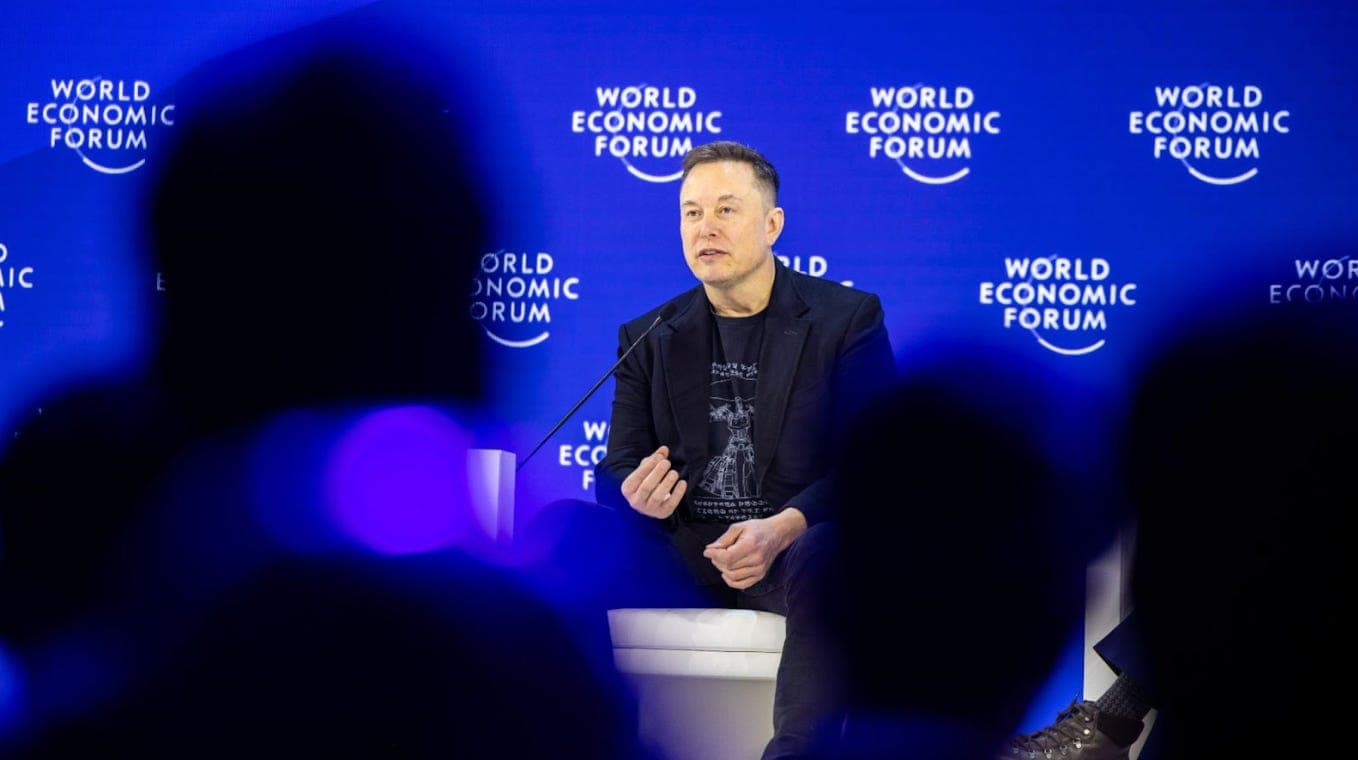
What happened: Musk explained the $60B Cursor buy in 61 seconds
On October 10, 2026, at the X Takeover event held at Giga Texas (2,000+ attendees in the room, Musk joining remotely), the host asked him a direct question: why did you buy Cursor? Musk's answer took 61 seconds — and spent the next few days ricocheting across the internet.
As reported by Dealroom (Oct 11, 2026), ChainCatcher (Oct 12, 2026), and others, the gist of Musk's remarks was: to build a truly compelling superintelligence (SI), you need a LOT of training data, and you must "SOLVE CODING." And as far as he knew, only three organizations on Earth held enough coding training data: OpenAI, Anthropic, and Cursor — with Google "barely counting as half." xAI and Grok didn't make his own list.
A man holding rockets, the Colossus supercomputer (200,000 Nvidia GPUs), and Tesla admitted in front of 2,000+ spectators: on the most critical path to superintelligence, he originally had no ticket. So he bought Cursor — SpaceX reached the agreement in April 2026, committed in June, and closed the roughly $60 billion all-stock deal on August 14.
He didn't buy an editor; he bought "fuel": why coding data is special
The most thought-provoking part of the deal is Musk's stated logic: he didn't buy Cursor's editor, its $1 billion ARR (November 2025 figure), or its "64% of the Fortune 500 use it" enterprise channel — he bought the data.
Why does coding data deserve a $60 billion price tag? Three reasons, each connected to a vibe coder's daily life.
First, coding data is structured and verifiable. Whether a piece of code runs and whether tests pass can be judged automatically by machines. This "comes with answers" data is the best fuel for training reasoning. Math problems share this property, but math is dead and programming is alive — it connects to real systems, real errors, real edge cases.
Second, coding data hides the trajectory of "how humans think." What tools like Cursor accumulate is not code itself (GitHub has plenty of that); it is the complete trajectories of millions of developers pair-programming with AI: where they got stuck, how they reworded the prompt, which refactor was accepted, which was rolled back. This "human-AI collaboration behavioral data" can't be scraped. It is Cursor's real moat. To "solve coding," Musk wanted exactly these trajectories.
Third, coding is the self-correction training ground for intelligence. Longbridge's writeup of the remarks made a sharp point: programming logic is deterministic, so AI can practice self-correction and evolution on it — write it wrong and the compiler slaps you instantly; fix it and the tests reward you immediately. That high-frequency, honest feedback loop is something data from other domains can't provide.

What happened after the deal: the data started "paying out"
Two months after closing, the data's monetization path is already clear. Per Dealroom, Cursor has jointly trained xAI's Grok 4.5 and Grok 4.6 with SpaceX on "trillions of tokens of Cursor data" — the first models Cursor helped build that weren't solely for software engineering. In exchange, Cursor got compute on Colossus (the 200,000-GPU machine Anthropic also uses) to train its own models.
Meanwhile, OpenAI ended its partnership with Cursor after the acquisition closed. That detail speaks volumes: when data becomes a strategic asset, yesterday's partnerships get cut without ceremony. The lines of competition and cooperation in AI are being redrawn around "who owns the data."
One easily missed detail: the deal was all-stock, not cash. That means Anysphere's (Cursor's parent) team is now deeply bound into the SpaceX/xAI system. Musk added at X Takeover that an effective coding AI needs four things — data, talent, compute, and an enterprise sales organization. $60 billion bought the first two outright, with usage rights to the other two thrown in.
The call: the scarce input in the AI race is shifting from compute to data
This is the one judgment worth writing down from the whole affair: for three years the AI race's narrative was "compute is power"; Musk's 61 seconds publicly declared the second half is "data is power." Colossus, however large, is just the ticket-printing press; what is truly scarce are data assets that money alone can't replicate — real human-AI collaboration trajectories.
That shift has two direct corollaries for ordinary developers.
Corollary one: every line you type pays a "data tax" to someone else's model. As aifounders.cz put it bluntly in a June analysis: your team's coding habits, architecture choices, and internal-repo context are entering the training pipeline of Cursor's new parent. That's not conspiracy thinking; it is the commercial logic of the deal itself — $60 billion bought exactly that. Of course, teams routing through their own API keys to third-party models are in a different position. The key question: which route does your Cursor deployment's traffic actually take?
Corollary two: the "data moat" will become the new valuation anchor for AI coding tools. We used to judge an AI coding tool by model capability and ARR growth; soon we may add a question: how much exclusive, irreproducible human-AI collaboration data has it banked? The data assets of Windsurf, Lovable, Replit suddenly all deserve repricing.
One final irony worth savoring: Musk said Google "barely counts as half." Google owns one of the world's largest code-hosting ecosystems (Android and Chrome are Google's, after all), yet earned only half a seat. That shows that on Musk's yardstick, what matters is not "how much code" but "how many AI-assisted programming interaction trajectories." Public code on GitHub is scrapable by anyone — but Copilot's interaction data sits with Microsoft. Which is probably why nobody found Microsoft's absence from the list surprising.
Honesty notes
Musk's remarks are as relayed by media coverage of the X Takeover event (October 10, 2026, Giga Texas, 2,000+ attendees) — Dealroom (2026-10-11), ChainCatcher (2026-10-12T11:01:39Z), PANews (2026-10-12), among others. This publication did not watch the event recording directly; all Musk quotes are attributed as "reported." Deal terms (April agreement, June commitment, ~$60B all-stock close on August 14, Colossus's 200,000 GPUs, Grok 4.5/4.6 jointly trained on trillions of Cursor tokens, OpenAI ending its Cursor partnership) are per Dealroom's reporting. Cursor's ARR and Fortune 500 penetration figures are November 2025 vintage, cited as background, not this cycle's news. The aifounders.cz "data tax" analysis is a third-party view, clearly labeled. Google's "half a seat" is Musk's personal assessment, not this publication's position.
Comments (0)
Sources
Related articles
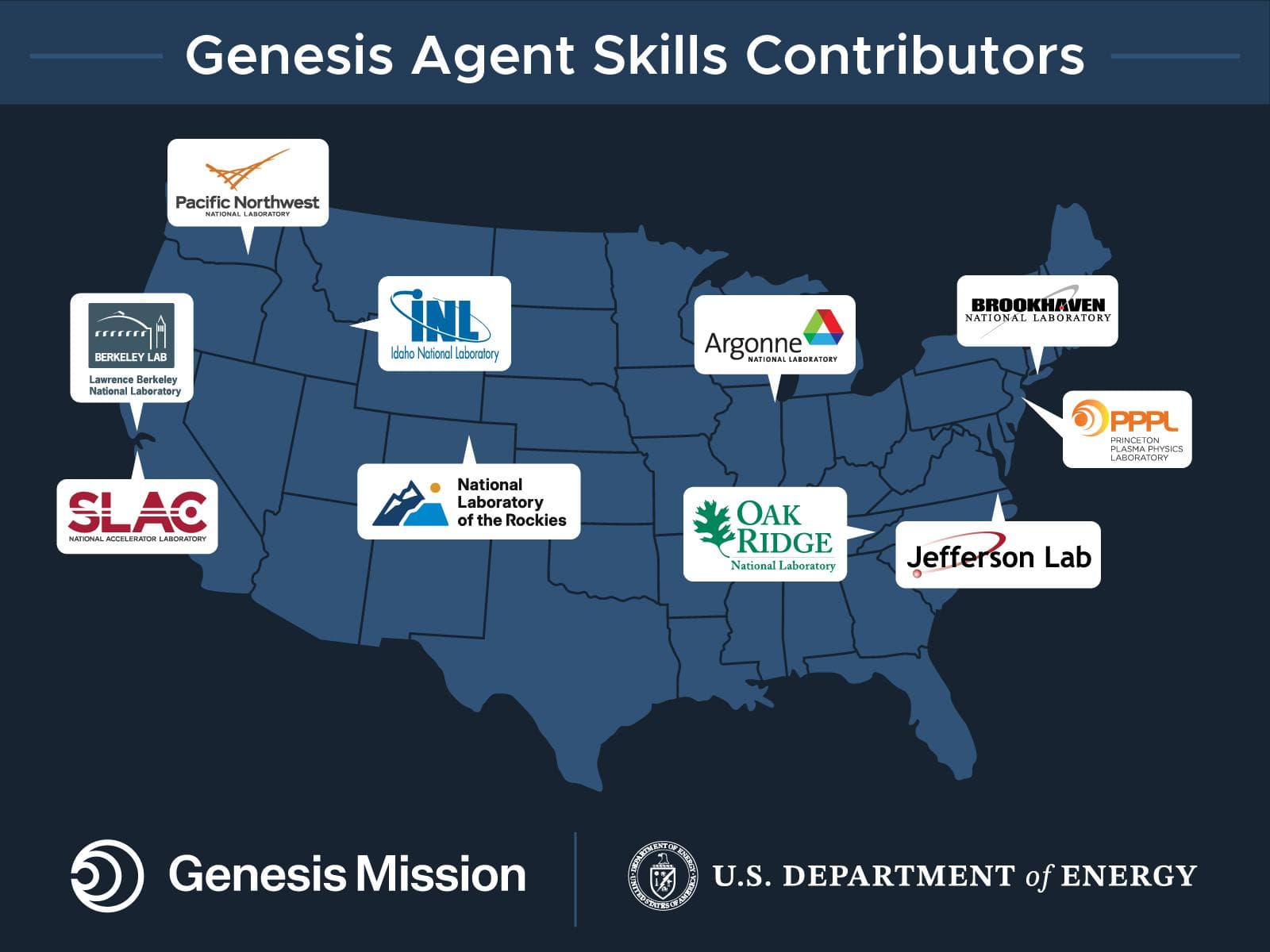
On Oct 15 the U.S. Department of Energy released Genesis Agent Skills, the first national-lab-backed skill pack for research: AI safety, data governance, and multi-agent know-how packaged as Skills that AI coding tools can invoke directly. Free and open to contributions.
Step-5's BF16 open weights staged a photo-finish on October 15: Forkast still saw a 404 at 01:55Z while HF logs show the weights landed at 01:31Z — with a custom license. A wire landing is not a kept promise: vendor-promise dates still can't anchor your schedule.

AI security firm XBOW used agents driven by the public GPT-5.6 Sol model to build a full Chrome exploit chain in six days for ~$40K in API costs; Google paid the $250K bounty under its 2026 rules. Pre-LLM, that was 6-9 months for a team of four. The cost of attack is collapsing - defenders must rebuild their assumptions at the new speed.