Anthropic's free opt-in OSS Scanner uses its strongest models, including Claude Mythos, to periodically scan open-source projects. Reports are fully model-generated with no human review. Models surfaced 29,000+ candidate vulnerabilities in six months; PostgreSQL, OpenSSL, wolfSSL, and curl all responded positively. We break down the mechanics, the data, and the controversies.
VIBEFIX NEWS
AI Coding News
Original perspectives on tools, frameworks, open source, and the creator ecosystem.
On October 6, Cursor's changelog announced Remote Control: the iOS app can now see local agents running on your computer and message them. Compute stays local; only your line of sight moves into your pocket. Within a week of Conductor's iPhone app, two vendors bet on the same interaction — agent programming is shifting from 'terminal dialogue' to 'pocket foreman,' and the workflow is becoming launch-leave-intervene.
On September 30, DeepSeek open-sourced six infrastructure components for Huawei Ascend: TileLang for Ascend, DeepGEMM, DeepEP, TileKernels, FlashMLA, DeepSelect — each mirroring a piece of NVIDIA's toolchain. TileLang wraps Ascend C so the same Python APIs run on NVIDIA GPUs and Huawei NPUs. These components already power most operators behind DeepSeek V4 training, MIT licensed. Caveats: numbers were measured on unreleased PoC hardware; some communication primitives are still being optimized.
On October 6, 2026, OpenAI and Atlassian announced an expanded partnership: GPT-6 Astra and the GPT-5.6 series power agents across Atlassian's platform and Rovo, while ChatGPT and Codex connect to Jira, Confluence, and Bitbucket enterprise context via MCP plugins. 3,000+ Atlassian developers already use Codex internally. This piece breaks down the two-way architecture, the Teamwork Graph context layer, the still-exploratory Jira agent roadmap, and three signals for indie developers.
One prompt, six unsupervised hours: GPT-6 Astra finished a three.js visualization of Calvino's 55 Invisible Cities in 53 minutes for $10, while Claude Opus 5.5 took 85 minutes, 6 parallel subagents and $74 — and declared a 'jump' for design tasks. A field report on vibe coding's limit case, model selection, and the token ledger.
Vercel added stealth reasoning model Glyph Cluster to AI Gateway (Oct 7): coding plus long-context analysis, function calling, streaming. Pro/Enterprise teams with purchased credits use it free during stealth (stealth/glyph-cluster), selectable in Claude Code, Codex, Cursor. Why indie developers should benchmark it, the gateway's failover and budget value, and the limits: text-only input, no structured outputs, no ZDR — prompts may train the model, so set a data boundary first.
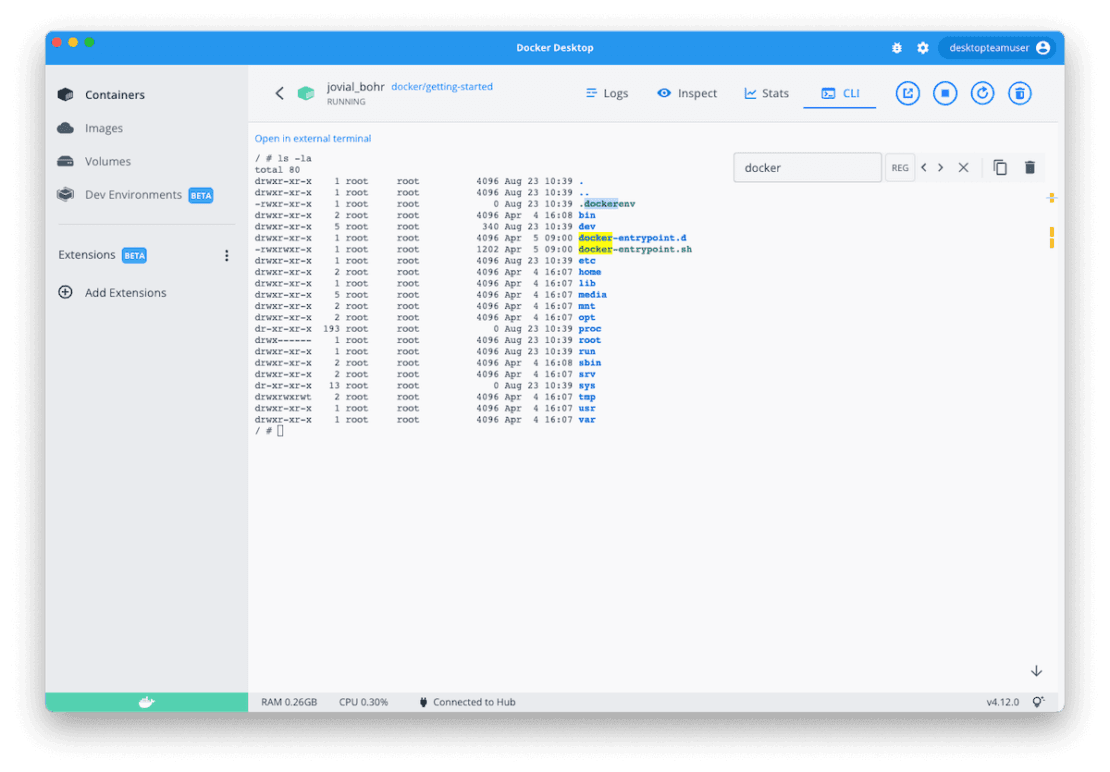
On Oct 8, Docker's docker CLI plugin Docker Agent hit the HN front page (290 points / 133 comments). It defines agents in declarative YAML (agent.yaml) — 'no code required' — with container-style commands. Model-agnostic (7 providers), native MCP tools, built-in think/todo/memory, full RAG stack, multi-agent delegation. Killer move: agents push/pull to any OCI registry like images, making definitions versionable, PR-reviewable artifacts. Repo dates to Sep 2025: 10,735 commits, 263 releases.
Theo Browne had LLMs port the TypeScript 7 compiler to Rust: 181,711 tests green, 13x faster than tsc 6 on VS Code. The real story is the bill — $400K of Codex tokens got stuck at 84%, then Claude Opus 5.5 finished it in two weeks. Plus the trust question nobody can dodge: the author has never read a line of the code.
Sigil Wen, 20, self-taught, once ran GPT-2 on an Apple Watch. On October 6 he launched Underdog, a personal AI assistant with a 27B model running fully on-device — free, ad-free, monetized via Stripe payment fees. A breakdown of the tech, the business model, and pricing lessons for indie AI builders.
ARTEX — an open-source AI pentesting agent by a Chinese developer — was used to breach 9 Korean banks and steal nearly 68,000 customer records. Its author has now shut it down and gone closed-source. We reconstruct the timeline, break down the AI attack chain, and ask the hard question: how responsible is a tool's author for what the tool does?