DevDay 2026: OpenAI Turns Codex From Pair Programmer Into Autonomous Operator
At DevDay 2026 on September 29, OpenAI's star wasn't a new model but Codex: reusable cloud environments, always-on security scanning, Computer Use, the Decisions API, and the Ultrafast speed tier. Codex is going from clever pen to capable hands — and every level of autonomy demands a matching level of observability.
On September 29, OpenAI held DevDay 2026 in San Francisco. Unlike previous years, the star of the show wasn't a new model — it was an old friend: Codex. From reusable cloud environments and always-on security scanning to "Sign in with ChatGPT" and the software-operating Computer Use, OpenAI used a full slate of updates to answer one question: now that "AI can write code" is no longer news, what does Codex become next?
The answer: a more autonomous, faster — and harder to supervise — operator. This piece covers the full launch list, three key judgments, a competitive read, and a sobriety checklist.
The launch list, item by item
- Reusable Codex cloud environments. Teams can now maintain a standing dev environment with shared settings and permissions; tasks start from a computer or phone and run in the cloud. Environments are no longer disposable — the era of burn-after-use sandboxes is over, replaced by a long-lived "cloud desk" you maintain.
- Voice-controlled CLI. The Codex command line now takes voice commands. For terminal-heavy users this isn't a gimmick: telling it to "keep going" mid-session beats context-switching to type, and dictating review comments feels natural while reading code.
- Code Review in the ChatGPT desktop app. Code review is now a native desktop feature. Moving review from "some plugin's add-on" to a first-class desktop workflow signals that OpenAI sees it as high-frequency and essential enough to deserve its own entry point.
- Codex Security Cloud. The heaviest hitter: an always-on application security service. Connect a GitHub repo and it scans the whole thing, watches new commits, investigates vulnerabilities, deduplicates findings, and prepares fixes for human sign-off. The research preview covers Pro, Business, Enterprise, and Edu users, with Daybreak Blue's cyber-capable models bundled in by default.
- Computer Use in the Agents API. Agents no longer just generate code — they can actually click through and operate software. Note the timing: it's been in beta since September 11. OpenAI is clearly laying it as infrastructure, not testing the waters.
- Decisions API. Built on GPT-6 Luna and designed for single-choice tasks: classification, labeling, quick judgments. Models are starting to specialize by task shape instead of one giant model doing everything — a sign cost optimization has reached deep water.
- GPT-6 Astra Ultrafast. A new speed tier: up to 300 tokens per second in Codex, up to 6× API speed. The catch is pricier tokens — speed is being sold at a listed price for the first time.
- ChatGPT Pro 500. $500/month in the US, with Ultrafast and 25× the Plus usage allowance. The subscription price ceiling got punched through again — OpenAI has clearly mapped heavy users' willingness to pay.
- Sign in with ChatGPT. Plus and Pro subscribers can spend their plan allowance inside 16 partner tools, including Cognition's Devin, Vercel, and Notion. The ChatGPT account is becoming the shared identity and billing layer for the AI tool ecosystem — an ambition no smaller than any model launch.
Judgment 1: Codex changed identity, from pen to hand
Going from "pair programmer that writes code with you" to "operator that runs software on its own" is a leap in autonomy. Computer Use expands the agent's action space from text to interfaces: everything it can click, change, and break just got bigger.
The metaphor is worth unpacking: when a pen writes something wrong, you see it — the diff is right there. When a hand does something wrong, you might not — it edited three files, called an API, and closed a window while you weren't looking. Codex is evolving from visible mistakes toward invisible ones. That's not an argument against autonomy; it's the point that every level-up in autonomy has to be matched by a level-up in observability, or you're just planting mines for your future self.
Judgment 2: Security went from feature to always-on service
The thinking behind Codex Security Cloud is worth savoring. Instead of matching code against rule libraries like a conventional scanner, it "works like a security researcher": reading the whole codebase, running tests, tracing attack paths, validating candidate vulnerabilities in an isolated environment before reporting. In the age of AI-written code, "who guarantees the safety of AI-written code" is a real question, and OpenAI's answer is: deploy another AI to watch around the clock.
Fighting fire with fire sounds right, but it lengthens the trust chain: now you must trust not just the model that writes the code, but the model that reviews it, and the protocol between them. The pragmatic posture: treat Security Cloud's reports as leads, not verdicts, for at least the first quarter. Measure its false-positive and false-negative rates before deciding how much trust to extend. The first lesson of any security tool is: calibrate before you rely. And mind the coverage boundary — "works like a security researcher" is not the same as "has a security researcher's sense of responsibility." You're still the one signing off on production; give critical paths a human pass before shipping.
Judgment 3: Too many coincidences to be coincidence — the whole industry is squeezing one direction
Zoom out on the timeline and DevDay stops looking isolated. On September 10, Cursor launched Projects — a coordinator agent that writes no code itself, plans work, dispatches thousands of subagents, and keeps running in the cloud after you close your laptop. On September 23, GitHub Copilot's desktop app got local sandboxing in public preview. On September 24, Cursor's changelog added Rollouts (deployment monitoring) and Security Reviewer (automated exploit detection on every PR). In a single week, three giants all attacked the same problem set: the more autonomous agents get, the more they need guardrails, audit trails, and rollbacks.
The industry has reached consensus: the second half of 2026 isn't about whose agent is smarter — it's about whose agent is more trustworthy. Smart is the ticket in; trustworthy is the moat. For anyone choosing tools, the evaluation axes have to change: it used to be completion accuracy and context length; now it's permission granularity, audit logs, and rollback capability.
Sobriety checklist: the hotter the launch, the more these matter
Here's an uncomfortable truth: OpenAI ships autonomy features faster than the tooling to verify what those agents actually did matures. Security Cloud auto-prepares fixes; Computer Use operates your OS directly — behind every "don't worry about it" sits a risk surface of "you won't even know if something went wrong."
- Set permission boundaries before reusing cloud environments. Reusability is great, but a "standing environment" also means "standing permissions." Give cloud environments least privilege and review their credentials on a schedule.
- Ultrafast is a painkiller, not nutrition. 300 tokens/second feels amazing, but if your bottleneck is unclear requirements or thin test coverage, going faster just produces wrong code faster. Fix correctness first, then buy speed.
- Who is Pro 500 actually for? Do the math: $500/month ≈ 25× Plus usage. Only worth it if your API bill already clears that bar, or if speed is literally how you earn (live coding, on-stage demos). Otherwise Plus + pay-as-you-go API is the saner deal.
- Sign in with ChatGPT has a hidden topic: lock-in. One identity is convenient, but when your Devin, Vercel, and Notion all hang off a single ChatGPT account, switching costs quietly grow. Convenience and lock-in are always two sides of the same coin.
What this means for vibe coders: three direct hits
If you're building products as one person plus AI, three things land on you directly. First, reusable cloud environments mean your solo workflow can compound instead of restarting from zero — codify your environment setup early, the returns are real. Second, always-on scanning like Security Cloud trickling down to Pro tiers means the security baseline for indie developers can rise across the board; the "can't afford a security team" excuse gets weaker when an AI can review your AI. Third, task-shaped models like the Decisions API hint at the coming architecture: big models plan, small models do chores, cost structures get finer — and the "use a sledgehammer for every nail" prompting style needs to change.
The competitive read: OpenAI's play is "another AI watches" (Security Cloud) plus "fence the operations in" (cloud environments); Cursor's is "layered dispatch" (a coordinator that plans but never executes) plus "post-deploy monitoring" (Rollouts); GitHub's is "OS-level sandboxing." Different routes, same direction: trust is the 2026 battleground. Good news for users — trust competition eventually hardens into standards, the way HTTPS did. The transition will hurt, though: everyone's fences are mutually incompatible, and a permission policy tuned in Cursor has to be rebuilt for Codex cloud. When choosing, ask whether its security policy exports and migrates — it saves real pain later.
One-line summary: Codex is going from a clever pen to capable hands. The pen era was about how nice the handwriting looked; the hands era is about whether you dare let it work while you're not watching — and whether you can find out what it did afterward.
And a to-do list for this week: connect your main repo to the Codex Security Cloud research preview and run a full scan — pay special attention to the medium-severity items outside the "high confidence" bucket, those are exactly what human review misses most. If you use the Codex CLI, turn on 0.159's draft recovery (losing a long session to a crash genuinely hurts). As for Computer Use, try it first in a throwaway cloud environment — don't hand it your host machine's permissions on day one. The more powerful the tool, the more conservative the trial posture should be.
Sources
Related articles
On October 8, 2026, Google Cloud launched the Gemini agent at Gemini at Work 2026: a universal agent for work that takes objectives, plans by itself, auto-selects between Gemini and Claude models per task, and introduces 'coworker agents' with their own email, calendar, and directory seat. Four judgments on why the second half of the agent race is about 'agents that feel like colleagues.'

Gergely Orosz visited OpenAI, Anthropic, Cursor, and Ramp and wrote up the 2026 state of the industry: near-100% AI-generated code, agent PRs up ~10x in eight months, code review degrading into theater, the IDE declared legacy. Key takeaways plus three verdicts and four actions for vibe coders.
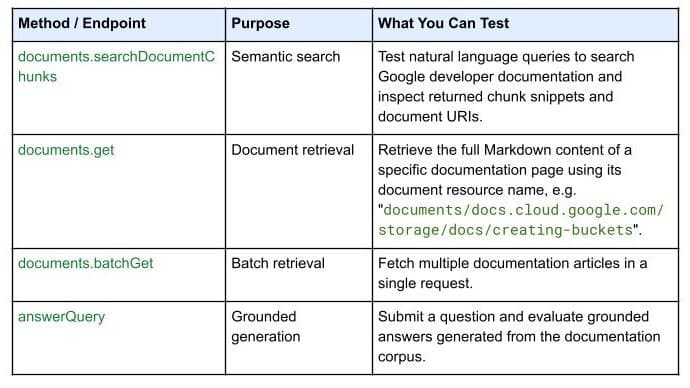
On October 7, 2026, Google Developers launched the Developer Knowledge API ecosystem: official Google Cloud, Firebase, and Android docs as a programmatic source of truth, with a gcloud CLI surface, an official Agent Skill (one-line install), an MCP server, and multi-language client libraries. Why 'docs as APIs' uproots vibe coding's classic failure of models misremembering APIs.