Pangram Image 1.0: It Shows Where the AI Is in a Photo, but Don't Take the Scores at Face Value
Pangram launched Image 1.0 and Flash 1.0 for AI image and video detection on November 4. The heatmap and the low-confidence disclaimer are the launch's most solid advances, but figures like 99.96% come from vendor-built test sets and should be read as claims awaiting independent replication.
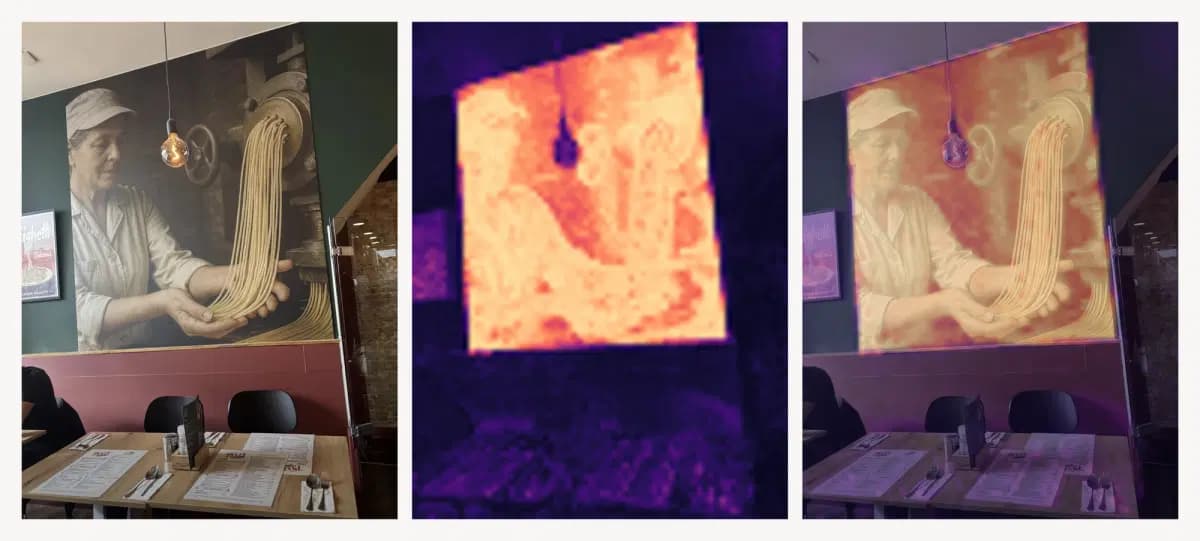
The verdict first: a detector's value is not its score, but whether it admits uncertainty

On November 4, Pangram launched Pangram Image 1.0 and a smaller, faster sibling, Pangram Image Flash 1.0: the first handles images, the second analyzes video frame by frame. Add a Chrome extension and an API, and the company best known for detecting AI-written text has extended its business from "was this text written by AI?" to "was this image or video generated by AI?" On the surface this is a product-line expansion. Underneath, it tackles a harder problem: generated images and video are now so cheap that the naked eye can barely tell them apart, while platforms, newsrooms, shops, and rental sites deal every day with real and synthetic content mixed together.
My verdict up front: the most interesting parts of this launch are not the 99.96% figure, but two details — the heatmap, and the reduced-confidence disclaimer for low-resolution inputs. Scores are easy to inflate; details are hard to fake. A detection company willing to build "I'm not sure" into its own product tells you more about its reliability than any accuracy number it reports. Pangram has at least made that choice in product form. The scores themselves should all be heard with a discount, because so far they come from the vendor's own tests, graded by the vendor.
What actually launched
The facts first. Pangram Image 1.0 is the flagship image detector. According to the official blog, it leads on frontier AI image generators and adds three things: heatmap output that localizes exactly where AI material appears in an image; robustness to edits, compression, and low resolutions — the abuse images suffer as they circulate on social platforms; and a lower minimum input size, from 512×512 pixels down to 256×256, with results below 512 pixels carrying a reduced-confidence disclaimer. Flash 1.0 is the smaller, faster model built for video, analyzing AI-edited video frame by frame, and Pangram says it also leads on frontier video generators.
Distribution covers four doors at once: upload images and video on the web, a Chrome extension that flags content while you scroll social media, shopping, and rental listings, and an API supporting both image and video detection. A few months ago Pangram Image was only a research preview; this launch takes it to general availability. The generator coverage list is long: on images, OpenAI's GPT Image, Google's Nano Banana, Midjourney, FLUX, and Grok Imagine; on video, Kling, Seedance, Veo, Wan, and others. The target is not one generator but the whole generation ecosystem.
Some background helps. Pangram built its name on text detection and previously launched Pangram 4 for text, claiming it can catch AI-assisted writing and text rewritten by so-called "AI humanizer" tools. Extending the same "is this real?" business to vision is a natural step for the company. For users, the significance is that text, image, and video checks may eventually live in one place instead of several disconnected tools.
How to read the scores: look at who wrote the test
The official blog's headline number works like this: Pangram created synthetic mirrors of 100 real photos using 12 frontier image generators, for 1,200 synthetic images in total, and the model scored 99.96% accuracy on that self-built set. On video, Flash 1.0 scored 98.7% on DF26, an academic benchmark, which Pangram says is a 29-point leap over the next best detector. Press coverage of the launch post also cites a 99.2% identification rate with a 0.27% false-positive rate. Put together, these numbers look messy at first glance; on a second look they make sense, because they come from different test sets measuring different things.
That distinction matters. The 99.96% test was written by Pangram itself: its own photos, its own synthetic mirrors, its own prompts matched closely to the originals. A self-built mirror test has a real advantage — it controls variables and filters out obviously fake generations — but also an unavoidable flaw: the exam-setter is also the exam-taker, so the difficulty distribution naturally leans toward what the model already handles well. The number should therefore be read as "performs very well on Pangram's own hard test," not as "gets it right 99.96% of the time on any image you find online."
DF26 is a somewhat better case because it is an academic benchmark: a study found humans are barely better than random at telling real talking-head videos from AI ones, and existing detectors were not much better. If Flash 1.0's 98.7% holds up under independent replication, that is a genuine step. But academic benchmarks have their own distributions and expiry dates, and generators change every month — today's benchmark score does not automatically equal tomorrow's real-world performance. The 99.2% and 0.27% figures, as relayed by the press, do not line up exactly with the blog's main text, so this article reports both wordings side by side rather than stitching them into one tidy number.
One anecdote says a lot about the company's self-awareness. According to Engadget, Pangram delayed the release because the model initially flagged photos from the iPhone 18 Pro as AI-generated, and the team tested against real devices before shipping. If true, it illustrates the hardest part of detection: not recognizing generators, but avoiding false accusations against real photos. Computational photography already synthesizes and enhances heavily, so the line between real and generated keeps blurring — and the cost of a false positive is not an apology, but potentially a photographer, a small shop, or a news lead whose credibility takes a hit.
Why the heatmap and the disclaimer matter more than the score
Back to the opening verdict. The heatmap matters because it turns detection from a yes-or-no verdict into evidence that can be checked. "This image is AI" leaves the user only two options, believe or disbelieve. "The sky in the top left and the hand in the bottom right are AI" lets the user look, compare, find the original, and ask the photographer. A checkable conclusion, even an imperfect one, is healthier than an unquestionable one. This is especially true for the most common and hardest forgery pattern today: a real photograph with a patch of AI-generated content embedded in it, where a whole-image score simply fails and localization is the only useful answer.
The reduced-confidence disclaimer works the same way. Lowering the minimum size to 256 pixels while openly discounting results below 512 pixels amounts to admitting a fact every detection company knows but does not always say: the smaller the input, the less information, the less reliable the call. Rather than forcing a confident score out of a tiny compressed image, the product writes its uncertainty next to the result. That matters most for ordinary users, whose social-media images are usually compressed small images — if a tool still sounds certain in that situation, it is more likely to mislead than to help.
The Chrome extension deserves its own note. Its pitch is flagging content where decisions actually happen: in the feed, on a product page, on a rental listing. Those are moments when users have no "verification" step in mind but make up their minds within seconds — whether to trust the apartment photos, whether to buy the product. Putting detection at the point of decision, instead of asking users to save an image and upload it elsewhere, is the right design direction. But the risk sits in the same place: if the false-positive rate in a real feed is higher than the lab number, every flag becomes a small reputational injury, and most users will remember the red badge without ever opening the heatmap.
Who should use it, and who should not fully trust it
Good fits first. Newsrooms verifying reader submissions, debunking teams tracing a viral image, e-commerce and rental platforms screening seller photos, schools and companies handling suspected AI forgeries — in all of these, a tool like Pangram works well as a first filter: run it, flag the suspicious regions, then have a human verify the original, the capture metadata, and the context. Its biggest value is saving time and pointing the investigation, not delivering a final verdict.
Poor fits are any situation where a person is judged on a detection result alone: accusing someone of fabricating evidence, declaring a photographer's work generated, banning an account over one image. A detection score is not courtroom evidence, and a heatmap is not a forensic certificate. The vendor's own caveats — disclaimers below 512 pixels, frame-by-frame video analysis — are themselves reminders that conclusions have a scope, and using them outside that scope is the user's responsibility, not the tool's.
There is also a practical question of price and access. Engadget reports the new detection features are available to Pangram subscribers. That is not a flaw, but it shapes real coverage: the people who most need to check an image casually are often the least willing to pay for a single check. If detection capability stays mostly in institutional hands, ordinary users scrolling their feeds will still judge by gut feeling, and fake images keep their distribution advantage.
What changed versus the previous generation of detectors
Many detection tools already exist, so what is actually new? Three things. First, older tools mostly returned a single score — a probability that an image was AI-generated — without saying where that probability came from. Users could not interrogate or verify it. The heatmap decomposes the score into regions, making the conclusion discussable. Second, older tools often hid their input-quality limits in fine print, returning confident scores for compressed thumbnails that could not support them. Pangram puts the low-resolution limit and its disclaimer up front, which is product-level honesty. Third, video detection moves from sampling a few frames to analyzing frame by frame, which matters against forgers who alter only key frames and leave the rest real to fool spot checks.
None of this solves the industry's fundamental problem: the arms race between generators and detectors. Each generator upgrade forces detectors to relearn, and test sets always lag behind. Scoring 99.96% across 12 generators today says nothing guaranteed about a 13th generator launching next month. The academic benchmarks cited in the blog are, in a sense, the vendor's own hedge: they are public and reproducible, so third parties can re-run the same test. What is worth watching over the coming months is whether an independent lab re-tests Image 1.0 on public benchmarks and real feed data. If the replicated numbers are close to the official ones, the tool has truly earned its standing; if not, the official numbers should be read as advertising.
Three things to watch next
First, the false-positive rate in real conditions. A lab rate of 0.27% sounds tiny, but across hundreds of millions of feed images it is a large absolute number, and false positives are not evenly distributed — they cluster on certain kinds of real photos, such as heavily computational phone photos, heavily retouched commercial shots, and night or low-light images. Pangram's delayed launch over iPhone photos shows the team knows this, but one fix does not settle it permanently.
Second, the actual video experience. Frame-by-frame analysis sounds thorough, but it costs compute and waiting time. How long does a user wait for a multi-minute video, and is the result a single score or a timeline marking which seconds look suspicious? The blog does not spell this out. For ordinary users, video detection stands or falls on that timeline: a single score is no real advance over image detection, while a timeline with suspicious segments marked is.
Third, whether platforms actually adopt it. The extension's idea is good, but its reach depends on users installing it and platforms integrating it. If only Pangram's own subscribers use it, fake images keep spreading elsewhere at full speed. The more promising path is platforms wiring detection into review pipelines, or newsrooms adopting it as one link in a verification chain. A detector's value has never depended only on its model; it depends on where it sits in the information chain. Sitting after the fact, it can only limit damage; sitting before publication, it can prevent it. Pangram's simultaneous push of extension and API suggests it wants both positions. Whether it gets them depends on partnerships that have not been announced yet.
One line to close. Pangram Image 1.0 and Flash 1.0 mark detection's move from text-only to full image and video coverage, and the heatmap plus the low-confidence disclaimer are the most solid advances in this launch. But every accuracy figure so far is vendor-reported on vendor-built test sets, so 99.96%, 98.7%, and 99.2% should be read as claimed results awaiting independent replication, not settled facts. The end goal of a detection tool is not to judge for people, but to help people judge better — and on product design, at least, Pangram is pointed in the right direction. The rest depends on independent testing and real-feed performance.
Comments (0)
Sources
Related articles

Sarvam AI released Prism on November 3: a decision model that does not generate long text but scores given options, averaging 71.8 at 44 milliseconds, with weights open under Apache 2.0. Its real selling point is not being the smartest, but being calibrated, order-stable, and fit to serve as the judgement layer inside automated workflows.
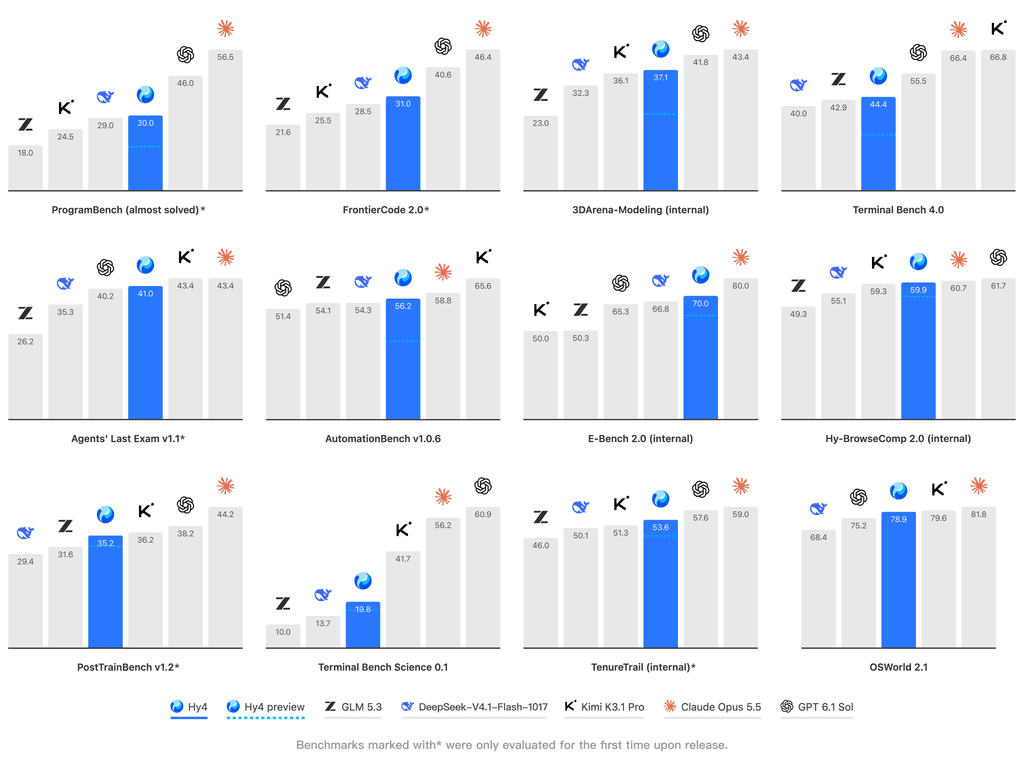
Tencent released the full version of Hy4 on November 4, adding visual understanding and computer-use capabilities at unchanged pricing. The weights, however, have not been released for download yet, so Hy4 today is first a hosted service, not a locally deployable open model.
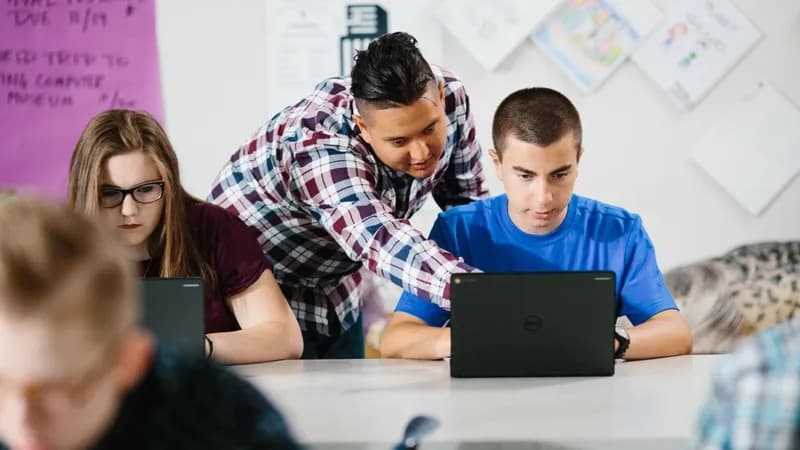
On 3 November 2026 Google announced Guided Learning for a US Search pilot and globally in Classroom, while Gemini, Gemini Notebook, Gemini in Classroom and Search go off by default for K-12 student accounts until administrators opt in. The catch: rejecting AI also means losing student Search, because the two are deeply integrated.