Tsinghua-Linked Open-Source Agent OS Ships 2.0: PilotDeck Pairs White-Box Memory with Smart Routing at 1/6 the Cost
Tsinghua THUNLP, ModelBest, and OpenBMB ship PilotDeck 2.0 (AGPL-3.0): WorkSpace isolation ends context contamination, white-box memory is auditable and rollback-safe, Always-on runs tasks in the background; "strong-lead, weak-follow" routing scores 70.6 on 7 hard tasks for $3.15, beating an $18.36 flagship-only setup.
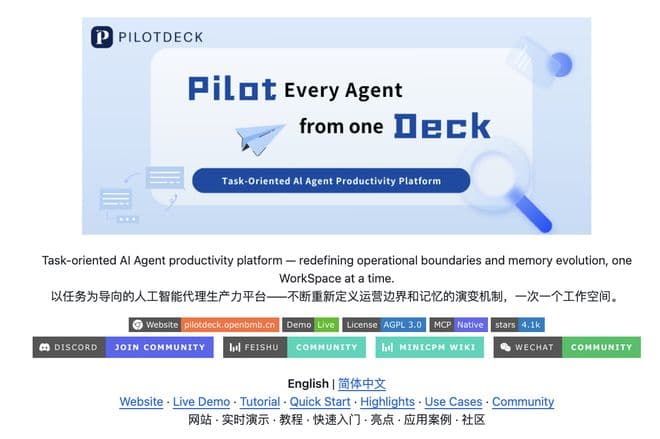
What happened: the Tsinghua-linked open-source Agent OS ships 2.0, targeting agents' three chronic pains
On October 17, 2026, Chinese tech media QbitAI reported the release of PilotDeck 2.0. The open-source agent operating system, jointly developed by Tsinghua University's THUNLP lab with ModelBest (面壁智能), OpenBMB, and AI9Stars, announced version 2.0 on GitHub (OpenBMB/PilotDeck, AGPL-3.0, 4.1k stars) — "announce PilotDeck 2.0 in README news" appears in the v2026.10.16 release notes.
PilotDeck positions itself as a "Task-Oriented AI Agent Productivity Platform" with the slogan "Pilot Every Agent from one Deck." Version 2.0 targets the three pains every heavy AI-agent user knows too well: messy memory management, long tasks that go dark halfway, and model-call bills that hurt.
The bottom line up front: this may be the most substantial move in Chinese open source on agent infrastructure in the second half of 2026. It is not another chat UI — it is a full "agent operating system": an always-on runtime, white-box memory, and smart routing, all in one box.
WorkSpace: an "independent desk" for every project
The core architectural bet of PilotDeck 2.0 is making WorkSpace the fundamental unit. Think of it as giving the AI its own physical desks: each project gets a dedicated file system, memory store, and skill set.
The official example is vivid: edit video in WorkSpace A, build an iOS mini-game in WorkSpace B — the memory and retrieval spaces are physically isolated and never fight. This attacks one of vibe coders' deepest pains: "context contamination." You ask the AI to write a technical architecture doc in a serious academic tone, then ask it for a Xiaohongshu-style marketing blurb, and it keeps talking about decoupling — that "crosstalk" is what happens when memory has no boundaries.
Here's the call: the WorkSpace-isolation design marks agent tools evolving from "a clever chat box" into "a multi-tenant operating system." Agent-OS pioneers like OpenClaw and Claude Code (both explicitly thanked in PilotDeck's README) are exploring the same direction: an agent's productivity depends on its ability to manage "multiple parallel realities," not on single-conversation IQ.
White-box memory: you get to "audit the books" on what the AI remembers
The most painkiller-grade design in 2.0 is making memory fully "white-box." Today's agent memory is mostly a black box: the AI suddenly says "I remember you prefer this style," and you have no idea where that conclusion came from, where it's stored, or whether it's wrong. If it mis-remembers a key business rule, correcting it means writing a long prompt begging it to "forget" — and usually ends with you nuking the whole conversation and starting over.
PilotDeck's answer: the entire chain — memory generation, extraction, storage, invocation — is fully visible to the user. Which preferences and facts the AI recorded can be browsed item by item in a panel; spot an error and you edit or delete it directly, or pin important items with one click. There's also a thoughtful "Dream mode": while the AI is idle, the system automatically consolidates, distills, and deduplicates scattered memories in the background — and if consolidation loses a key detail, one-click rollback restores the pre-consolidation state in seconds.
Behind this sits a sound product philosophy: memory is not the model's private property; it is a "shared ledger" between user and AI. Who has the incentive to maintain that ledger? The user. So the user must have the power to "audit and amend the books." Black-box memory treats the user as an outsider; white-box memory treats the user as a partner — long-term agent products will all go white-box.
Always-on: close the window, the agent keeps working
2.0 also introduces an Always-on mode: even with the chat window closed and you away from the computer, the agent keeps pushing long-horizon monitoring and execution tasks in the background. It finishes what was assigned, proactively discovers candidate follow-up tasks along the way, and lands everything as local files with a complete progress and summary report.
This stabs at the last missing piece of agent adoption: asynchrony. Today's agents are mostly "synchronous" — you watch, it works; you leave, it stops. But real productivity is asynchronous: you sleep, it runs regression tests; you're in meetings, it finishes the competitor-research report. Always-on turns the agent from a "pair-programming buddy" into "an employee who never clocks in." The side effect to watch, of course: an unsupervised agent running in the background needs permission boundaries and cost circuit-breakers configured, or it becomes the next "$10,000-burned-overnight" story.
Smart routing: spend 1/6 the money, "beat" the flagship model
2.0's most viral numbers come from its Smart Routing. The principle is simple: a built-in difficulty recognizer decomposes tasks and dispatches them to models of different tiers — the flagship model handles complex planning and decisions, while execution, polishing, and formatting drop down to lightweight models. PilotDeck calls this the "strong-lead, weak-follow" architecture.
The measured data cited by QbitAI tells the story. First, a social-media operations scenario: running everything on Claude Opus 4.5 cost $12.58 per run; with smart routing — lead agent planning on Opus 4.5, sub-agents polishing text on Sonnet 4.5 — the cost fell to $2.83, saving nearly 80%.
Then the harder test: 7 high-difficulty tasks (multilingual podcast distribution, multi-source data reports, domain paper surveys, codebase architecture docs, and more). Standalone MiniMax-M2.7 cost just $1.90 but scored 37.1 — judged unusable. Standalone Claude Sonnet 4.6 scored 69.1 but burned $18.36 per run. PilotDeck's "lead Sonnet 4.6 + follow MiniMax-M2.7" routing scored 70.6 — beating the most expensive standalone model at one-sixth the price.

On the Workbuddy Bench, PilotDeck with Qwen3.6-35B-A3B scored 79.1, also ahead of Claude Code's 77.3.
Here's the call: smart routing is becoming agent products' "second pricing power." The first pricing power sits with model vendors (how the API is priced); the second sits with the routing layer (how to get the most done for the least money). Projects like Claude Code Router already validated the demand; PilotDeck made it an OS-level built-in. For individual developers, this means: when choosing an agent tool, look beyond the model at how smart its router is — with a dumb router, it's your wallet that burns.
Open source and ecosystem: AGPL-3.0 + MCP-native, ambitious
On technical details, PilotDeck 2.0 is MCP-native: whether you operate from the web UI, the CLI, or IM ecosystems like WeChat Work and Feishu, backend logic and behavior stay identical. It supports macOS, Linux, and Windows, plus Docker deployment. The acknowledgements reveal its technical lineage: ClawXRouter (smart routing), ClawXMemory (memory system), Anthropic Skills (skill framework), UltraRAG, and Karpathy's LLM coding behavioral guidelines.
The license choice is AGPL-3.0 — the "hardest" of the copyleft options. The choice itself is a statement: take it, use it, modify it — but distribute your modifications under the same open terms. Teams wanting commercial customization should have legal take a look; for the community ecosystem, it's the strongest guard against "take it private after freeloading."
One more signal worth noting: its README carries a WorkBuddy badge (79.1 on Workbuddy Bench), and WorkBuddy is the AI assistant that WeChat Work integrated on October 14. An open-source agent OS and an IM-ecosystem AI assistant competing on the same benchmark — "agent productivity" is moving from everyone playing their own game to a proper race with a shared yardstick.
Honesty notes
Release facts follow the GitHub OpenBMB/PilotDeck release history (v2026.10.16 includes "announce PilotDeck 2.0 in README news") and QbitAI's October 17, 2026 report (via Sina Finance reprint). Performance and cost figures ($12.58→$2.83, $18.36→$3.15, scores 70.6/69.1/37.1, Workbuddy Bench 79.1 vs 77.3) are official benchmarks as cited in the report; this publication did not independently reproduce them. "Smart routing is the second pricing power" and "white-box memory is the long-term play" are this publication's judgments. Consult legal counsel on AGPL-3.0's commercial implications.
Comments (0)
Sources
Related articles
OpenCode 2.0 turns the 208K-star open-source coding agent into a platform: one background service shared by terminal, web and desktop, a rewritten API, Code Mode that chains MCP tools in a single script, background subagents, 80+ internal plugins, and an SDK. Breaking changes included.
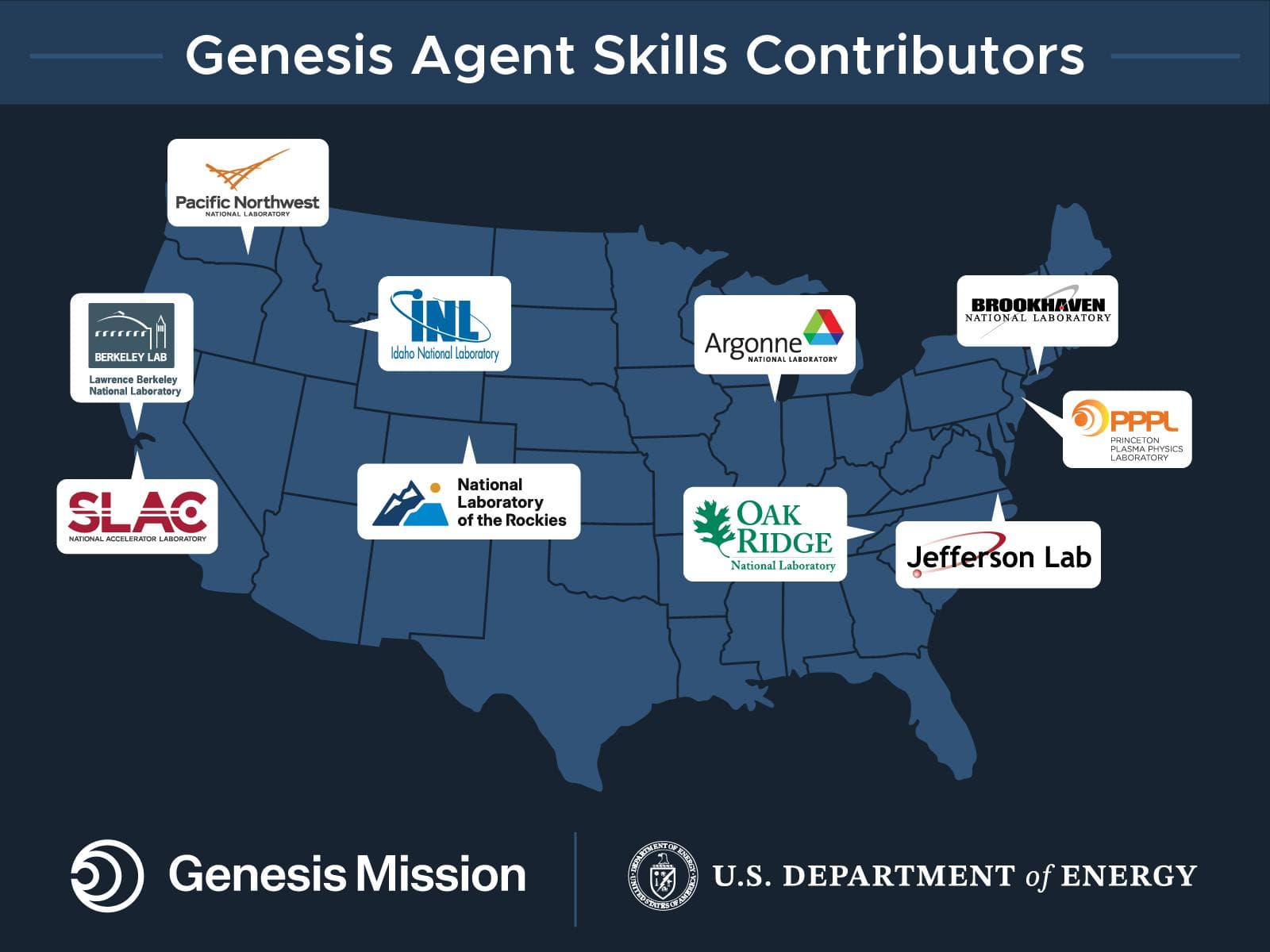
On Oct 15 the U.S. Department of Energy released Genesis Agent Skills, the first national-lab-backed skill pack for research: AI safety, data governance, and multi-agent know-how packaged as Skills that AI coding tools can invoke directly. Free and open to contributions.
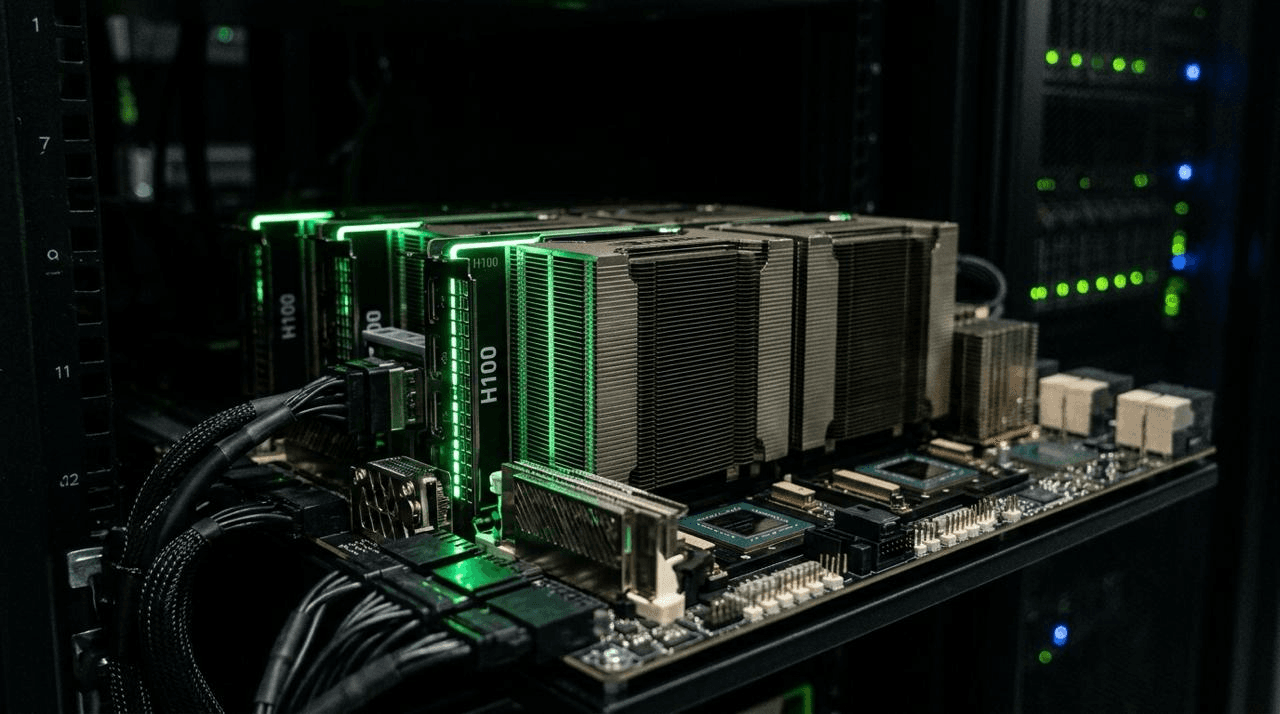
Step-5's BF16 open weights staged a photo-finish on October 15: Forkast still saw a 404 at 01:55Z while HF logs show the weights landed at 01:31Z — with a custom license. A wire landing is not a kept promise: vendor-promise dates still can't anchor your schedule.