"Prompt Engineering Is Dead" Is a False Claim: It Became Context Engineering
"Prompt engineering is dead" got repeated endlessly in 2026. I'll push back: it's a false proposition. What died isn't prompt engineering — it's "the craftsman's superiority complex." It became "context engineering." This piece dismantles the three "it's dead" arguments, clarifies what actually died (incantation prompts, craftsman mystique, one-shot prompts), and covers the four surviving fundamentals: filtering, structure, constraints, feedback loops.

"Prompt engineering is dead" — the line got repeated endlessly in 2026. The arguments sound solid: models are smarter, they understand plain speech without careful wording; agents write their own prompts now (look at all those auto-optimizing tools); OpenAI's and Anthropic's docs downplay "prompt tricks" in favor of "give it enough context."
I'll push back: "prompt engineering is dead" is a false proposition. What died isn't prompt engineering — it's "the craftsman's superiority complex." Prompt engineering didn't disappear; it became "context engineering." This piece dissects the debate: what actually died, what survived, and what it means for how you code.
The "it's dead" camp's three arguments, dismantled one by one
Argument 1: "Models are smarter; no tricks needed to be understood." Half true. Models do tolerate sloppy prompts better — a casual sentence and GPT-6 or Opus 5.5 will probably guess right. But "understood" and "done well" are different things. Test it: same task, casual prompt vs. carefully prepared context — the output-quality gap is still huge, especially for code. Smarter models raised the floor, not the ceiling — the ceiling still belongs to people who know how to feed.
Argument 2: "Agents write their own prompts now." True — and that proves prompt engineering isn't dead; only the executor changed from human to agent. Those "auto-optimizing prompt" tools do classic prompt engineering under the hood: few-shot examples, chain-of-thought, constraints. Saying "prompt engineering is dead because agents do it" is like saying "math is dead because calculators compute" — it confuses "who executes" with "whether it's needed."
Argument 3: "Official docs teach context, not tricks." The most seductive one. But read Anthropic's docs closely: they teach "stuff the context with relevant code, docs, and tests" — is that not prompt engineering? "Giving enough context" IS the core skill of prompt engineering; it just changed from "the art of wording" to "the architecture of information." Renamed, then declared dead?
What actually died?
Three things died, and good riddance:
- Incantation-style prompts died. "You are a senior 10x engineer, think step by step…" — worked in 2024, nearly useless in 2026. Models don't need you to tell them "you're an expert"; they need "this project's expert knowledge." The marginal return of role-play has approached zero.
- The craftsman's superiority complex died. Prompt wizards used to carry mystique: "I'm great at tuning prompts" felt like a talent. Not anymore — good context organization is a learnable, reusable, reviewable engineering practice, not mysticism. Mystique died, engineering lived. That's progress.
- One-shot prompts died. The era of expecting one sentence to get an agent through a complex task is over. The paradigm is now "multi-turn + tools + feedback": the prompt is just the first frame, followed by dozens of interactions. Polishing the first frame matters less than designing the interaction protocol.
What survived? The four fundamentals of "context engineering"
Renamed to "context engineering," the core skills are now four:
First, information filtering: deciding "what enters the context." The most important skill of 2026. Context windows keep growing (1M tokens is unremarkable now), but "can fit" ≠ "should fit" — stuffing irrelevant code in still misleads the model and wastes money. The gap between experts and novices now shows in "retrieval precision": handing the agent exactly the 5 files it needs, not the whole repo. That's why RAG, code indexing, and AGENTS.md exist.
Second, structural expression: deciding "how to organize information." Same information, different treatment as Markdown tables vs. JSON vs. prose paragraphs. In code tasks, "interface definitions first, then implementations, then tests" beats a jumbled pile. This isn't "wording tricks" — it's "information architecture," the same muscle as writing technical docs.
Third, constraint design: deciding "what's forbidden." "Don't refactor this file," "don't add new dependencies," "tests must pass first" — good constraints matter more than good instructions. Because agents mostly fail by "doing what they shouldn't," not "missing what they should." Constraint design is the longest-lived part of prompt engineering — and the origin of the "iron rules" section in AGENTS.md.
Fourth, feedback loops: deciding "how to course-correct." When round one disappoints, do you rewrite the prompt or give targeted feedback ("this function's error handling is wrong; follow the pattern in file X")? The latter is 10x more efficient. In 2026, prompt masters spend 50% of their effort on "writing good feedback" — precise, actionable, with references. A genuinely new skill that didn't exist before.
Three hands-on recommendations
First, stop memorizing "prompt templates"; start building "context assets." Quit collecting "100 god-tier prompts." Spend the time on: a good AGENTS.md for your project (see art14 in this batch), a "common code patterns" doc, a few-shot library of frequent tasks' input-output examples. Those are assets; templates are consumables.
Second, learn "retrieval," not "wording." The next prompt master isn't the eloquent one — it's the one who finds things. Master your tool's retrieval (Cursor's @, Codex's file references, RAG recall tuning). More useful than 100 adjectives.
Third, practice "writing feedback" as a formal skill. Every time agent output disappoints, before rewriting the prompt, practice one 3-sentence feedback: what's wrong, what it should be, what to reference. After three months you'll find those are the 3 highest-ROI sentences in your whole vibe-coding workflow.
Both sides, sharpest arguments, one table
The debate's sharpest claims, side by side:
- "It's dead": "good models don't need good prompts." Rebuttal: good models don't need "good wording," but they need "good context." Swapping "doesn't need" into "needs nothing" is a strawman. Try it: give GPT-6 an empty repo and "build an e-commerce site," versus an AGENTS.md, 5 reference files, and the same task. The former yields a toy; the latter, a product.
- "It's dead": "prompt tricks are irreproducible mysticism." Rebuttal: 2024's prompt tricks were mystical ("take a deep breath, think step by step"), but 2026's context engineering is reproducible — retrieval strategies, constraint lists, feedback templates, each documentable, committable, CI-able. From mysticism to engineering is evidence of "not dead": dead things don't evolve.
- "It lives": "context engineering is old wine in new bottles." This criticism has teeth: information filtering and structural expression are what technical writers always did. But "old wine" in the new "agent" bottle creates new problems: docs are read by humans (who skim and ask); context is read by models (which don't ask — they silently err). The audience changed, so the method must. "Old wine, new bottle" ≠ "same soup, reheated."
- "It lives": "people who can't write prompts will be obsolete in 2026." Rebuttal: that manufactures anxiety. The truth: people who can't "organize context" won't be obsoleted — they'll be replaced by people who "use tools well," and "using tools well" includes "using tools that auto-assemble context." Cursor's @ and Codex's auto-references are automating parts of context engineering. Human edge moves from "organizing by hand" to "judging whether it's organized well."
2024 → 2026: a brief history of prompt skills
Three generations in three years:
2024: the incantation era. Core skill: "wording" — "you are a senior engineer," "let's think step by step," "take a deep breath." Communities traded "god-tier prompts" like martial-arts manuals. Its archetype was the "prompt engineer" (a real job title); its masterpieces were thousand-word system prompts. Cause of death: smarter models drove marginal returns to zero.
2025: the template era. Core skill: "structure" — few-shot examples, XML tags, chain-of-thought scaffolds. LangChain and DSPy made prompts "programmable objects"; "prompt version control" appeared. More engineered than its predecessor, but still about "writing that one text." The turning point: agents rose, and prompts went from "one-shot text" to "the first frame of multi-turn interaction."
2026: the context era. Core skill: "information architecture" — retrieval, constraints, feedback loops. AGENTS.md became standard (art14 in this batch), RAG went from "bolted-on knowledge base" to "default config," and the evaluation metric shifted from "is the prompt well written" to "is the context complete and precise." This generation's signature: the prompt recedes backstage; context takes the stage.
See this evolution and the "dead or not" question dissolves — what dies each generation is the "form"; what lives is the eternal "function" of getting intelligent agents to do things well. 2027 may bring another new name ("intent engineering"?), but the core won't change.
Three recommendations by reader level
Beginners (starting vibe coding): don't learn prompt tricks — learn "stating requirements clearly." When writing task descriptions, force yourself to answer: what, what counts as good, what's off-limits. Those three sentences beat 100 prompt templates. Tooling: just use Cursor/Codex defaults and start running.
Intermediate (coding with AI daily): build your "context assets." Write an AGENTS.md (100 lines) for your main project, keep input-output examples of common tasks, master your tool's reference syntax (@, #). This stage's goal: cut "context prep" from 10 minutes to 2.
Experts (leading teams / building AI products): institutionalize context engineering. Team AGENTS.md templates, prompt code-review processes, context-quality metrics (task success rate, average feedback rounds, token cost). At this level it's not personal technique — it's "systems that get 10 people to 80 points."
One-line self-test: what level is your context engineering?
Five questions to close:
- □ Does your project have an AGENTS.md? (No = Lv0)
- □ Do you reference files with @/# instead of pasting full text? (No = Lv1)
- □ Do your task descriptions include "acceptance criteria"? (No = Lv2)
- □ When agent output disappoints, do you write "3-sentence feedback" or "rewrite the prompt"? (Rewrite = Lv2; feedback = Lv3)
- □ Do you know which task burned most tokens last month? (No = Lv3; yes = Lv4)
Most people sit at Lv1–Lv2; the goal is Lv3. Don't stress — context engineering is craft, not mysticism, and every level has concrete moves. Starting today: write an AGENTS.md for your main project and you're already Lv2.
The bottom line: "prompt engineering is dead" is half right — what died is the craftsman era the word "prompt" stood for; what lives is the systematic practice the word "engineering" stood for. The name changed from prompt engineering to context engineering, the core shifted from "how to talk" to "how to organize information" — but the structured effort of "getting things done well, by human or agent" never dies. Next time someone tells you "prompt engineering is dead," reply: yes — like "carpentry is dead." What died is the posture of holding the chisel; what lives is the craft of making furniture.
Related articles
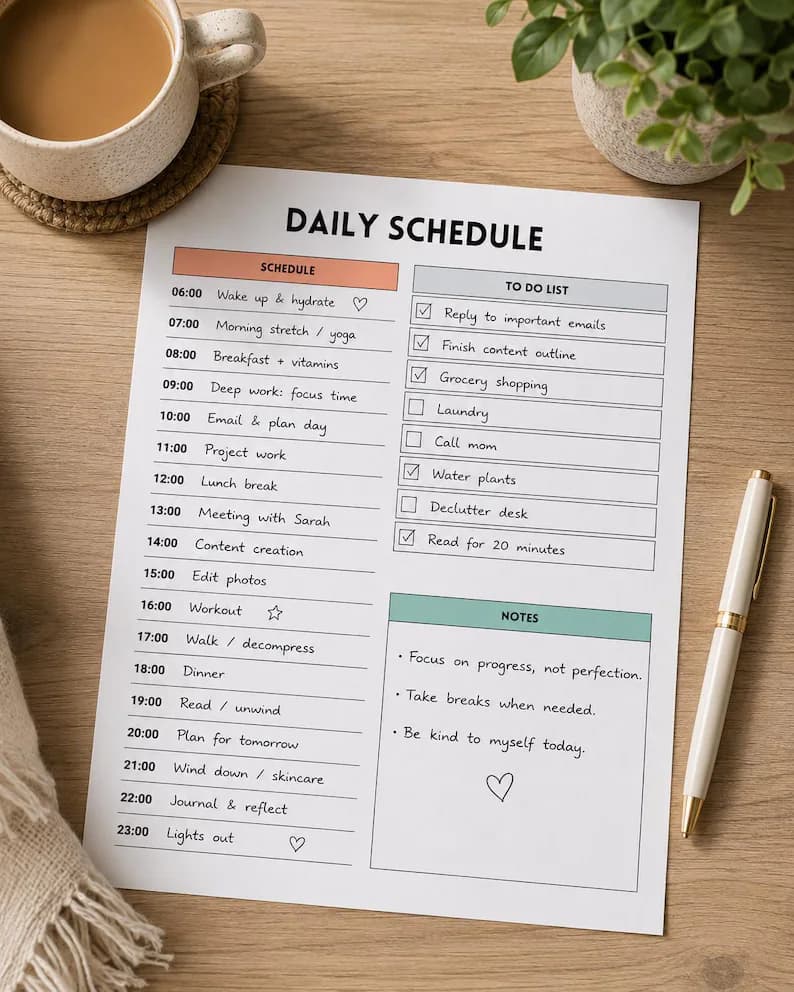
After pairing with AI, the bottleneck shifts from "how fast you code" to "how fast you decide." This guide gives you a copy-paste daily rhythm: 15 minutes of morning planning (1 goal + 3 verifiable tasks), a noon checkpoint (judge against acceptance criteria, not code), and an evening review plus a "context handoff note." Rhythm is the real secret to not getting burned as a solo developer with AI.

The biggest waste in vibe coding isn't tokens — it's rewrites caused by building the wrong thing. My rule: before any code, force the AI to interrogate you. This guide gives you a 10-question checklist, a one-line opener, and a three-round convergence method that turns "I thought I was clear" into "the AI actually got it." In practice, it cuts rework by more than half.
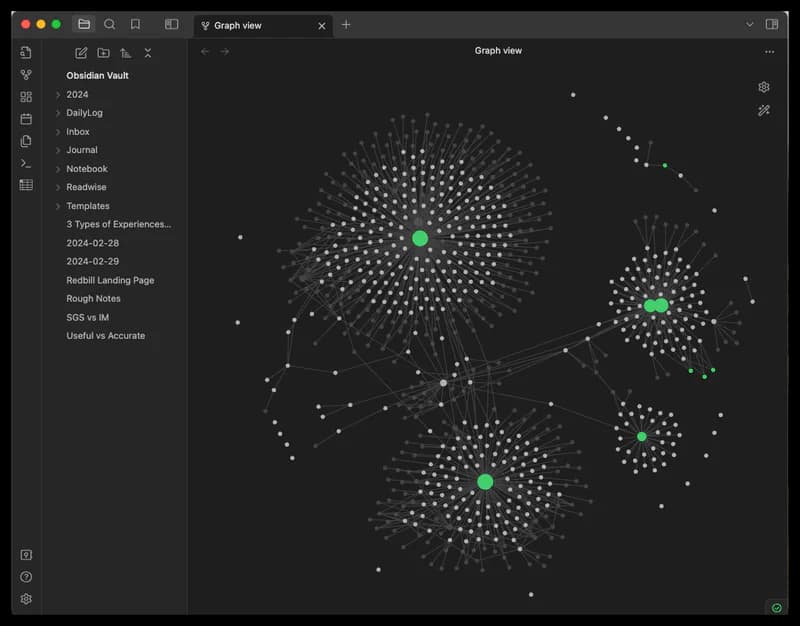
Obsidian is a local-first Markdown note-taking app: free, offline-capable, and built around bidirectional links plus 2,000+ community plugins that turn scattered notes into a living knowledge network. This guide walks you from installation, interface tour, links, graph view and Canvas to plugin picks, sync options, pricing, and a hands-on Zettelkasten workflow, with real screenshots at every step.