One Mission, a Hundred Agents: Cognitum One Open-Sources Ruflo, Ushering AI Coding Into the Swarm Era
Cognitum One released Ruflo, an open-source agent orchestration platform turning one mission into a 100+ agent end-to-end workflow — 74K stars, MIT licensed. Competition is sinking from models to harnesses.

Models keep getting stronger, but what actually determines whether an agent can do real work is often not the model — it's the scaffolding around it: tools, memory, workflows, sandboxes, approvals. On October 13, 2026, Cognitum One announced the latest release of its open-source project Ruflo: a "meta-harness" plus multi-agent orchestration platform for coding agents like Claude Code and Codex, under the MIT license at GitHub repo ruvnet/ruflo.
The press release leads with eye-catching numbers: 74,000 GitHub stars, 8,800 forks, 12.5 million npm downloads in twelve months. If those hold up, that's a new benchmark for open-source projects in the coding-agent ecosystem. More interesting is the thesis: "an agent is a model plus a harness," and Ruflo wants to be "the original one built for the job." While everyone else competes on models, someone started competing on what surrounds the model — that itself is a signal.
1. The release facts
Per Cognitum One's official release distributed via ACCESS Newswire on October 13, 2026 (carried on Morningstar), Ruflo's update brings two core capabilities: Ruflo Mods — turning "one mission" into an end-to-end agent workflow (research, build, test, validate, secure, benchmark, learn, full loop); and a single control plane — orchestrating swarms, intelligence, safety, operations, and extensible networks from one place, with human approval at the points that matter.
Company background: Cognitum One (cognitum.one) builds a "sovereign agentic platform." Its Founder and Chief AI Officer is Reuven "rUv" Cohen (Ruflo's creator, previously behind open-source projects RuView, RuFlo, and RuVector); Founding CEO is D. Christopher Keil. Ruflo also powers agent coordination inside ruOS, the company's enterprise computer platform for AI agents.
One disclosure: this article's information comes from the company's official press release — inherently marketing-flavored. Below, anything cited from the release is labeled as such; anything that's my judgment is labeled as mine. Product first, caveats after.
2. The core idea: agent = model + harness
Ruflo's entire narrative rests on one clean premise: an agent is "a model plus a harness." The model reasons and writes; the harness supplies the tools, memory, workflows, sandboxes, and controls that let it do real work. In founder Reuven Cohen's words: "Most people meet AI through a chat window, but real work rarely ends with one answer."
The idea isn't new — LangChain, AutoGen, and every agent framework says something like it. But Ruflo's angle is specific: it doesn't build a general agent framework, it builds a "swarm operating system" for coding agents. Its unit of organization is "queen-led swarms": queens assign work to architect, coder, tester, reviewer, security, and documentation agents, with 100+ specialized agents planning, building, testing, and checking each other in parallel. Topologies come in hierarchical, mesh, and adaptive flavors; consensus via Raft, Byzantine, and Gossip — the whole distributed-systems toolbox, ported over.
Methodologically, it bakes in SPARC (Specification, Pseudocode, Architecture, Refinement, Completion), architecture decision records (ADRs), and domain-driven design — all so that "work done by many agents" stays reviewable. That's an interesting echo of the Harvard paper's conclusion: when review becomes the bottleneck, agent frameworks must build in "reviewability." Putting ADRs and SPARC into the harness is an admission: agent output that humans can't efficiently review is pointless.
3. What's new in this release
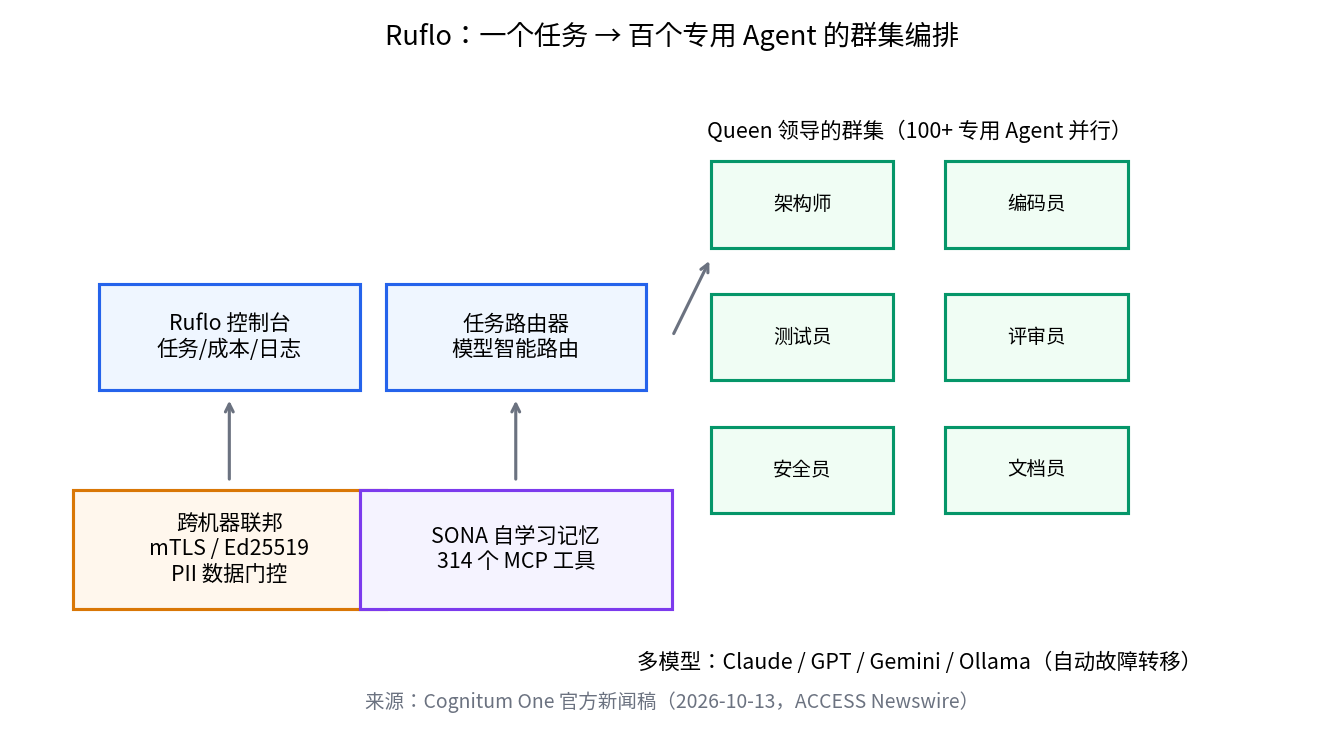
Ruflo's swarm orchestration: one mission flows through the console and task router to 100+ specialized agents running in parallel, on top of cross-machine federation and self-learning memory. Source: Cognitum One press release.
The increments, translated into plain language, are four things:
1. Ruflo Mods: one mission, end to end. Hand Ruflo a mission and it runs the full "research → build → test → validate → secure → benchmark → learn" loop. Mods route prompts and enforce policy directly inside Claude Code. It's a frontal answer to the stereotype that "agents can only do odd jobs": the harness's goal is for an agent to own "a whole mission," not "a function."
2. One control plane + human approval. Ruflo Console is a visual cockpit beside Claude Code: missions, workflows, agent activity, logs, token usage, and cost on one screen. Admins grant Claude four permission tiers — read / write / manage / full control — and choose whether it acts automatically or asks first. The default is "read-only + approval," with a "Take back control" button that pauses Claude's console tools at any time. That default says a lot: even the people building agent orchestration don't dare default agents to write access.
3. Cross-machine federation. Independent Ruflo installations on different computers, organizations, or cloud regions can discover each other, delegate sub-tasks, and share workloads. Remote agents start untrusted and prove identity through mTLS and Ed25519 challenge-response, with no shared secrets; behavioral trust scoring upgrades reliable peers over time and downgrades misbehaving ones immediately. There's also built-in PII data gating: a 14-type detection pipeline scans outbound federation messages for emails, API keys, Social Security numbers and the like before they leave the local machine, with per-trust-level policies (block / redact / hash / pass) and HIPAA, SOC 2, and GDPR modes producing auditable records.
4. SONA self-learning memory. Agents improve without retraining the model: SONA, working with ReasoningBank and trajectory learning, captures successful execution patterns as local embeddings in HNSW-indexed AgentDB memory for reuse in later tasks. A direct answer to the chronic disease of "agents starting from zero every time" — memory accrues at the harness layer, not the model layer.
There's more: 314 native MCP tools (CI checks, local security scans, cloud deployment hooks, observability), 26 CLI commands, 35 plugins, adaptive backpressure (preventing agent timeouts/crashes in long jobs), MetaHarness (a 1–100 readiness score for agent setups plus security-risk scans), and ruflo eject (packaging a configured swarm as a standalone agent toolkit). The feature list is long — long enough to suspect the roadmap got written into the press release. More on the caveats below.
4. Intelligent routing: small tasks get small models
One detail deserves special attention: intelligent model routing — simple tasks go to faster, cheaper models, complex reasoning to top-tier ones, across Claude, GPT, Gemini, Cohere, and local Ollama, with automatic failover.
That's the same logic as last week's Claude Haiku 5.5 price cut (which we covered: small models are becoming "sub-agent commodities"). When one mission fans out to 100 subagents running in parallel, you can't put Opus 5.5 on every subagent — the bill would explode. Model routing at the harness layer turns "cost optimization" from prompt tricks into infrastructure. It's also the economic precondition for multi-agent architectures to work at all: no cheap small models, no 100-agent swarms.
5. Getting started: two paths
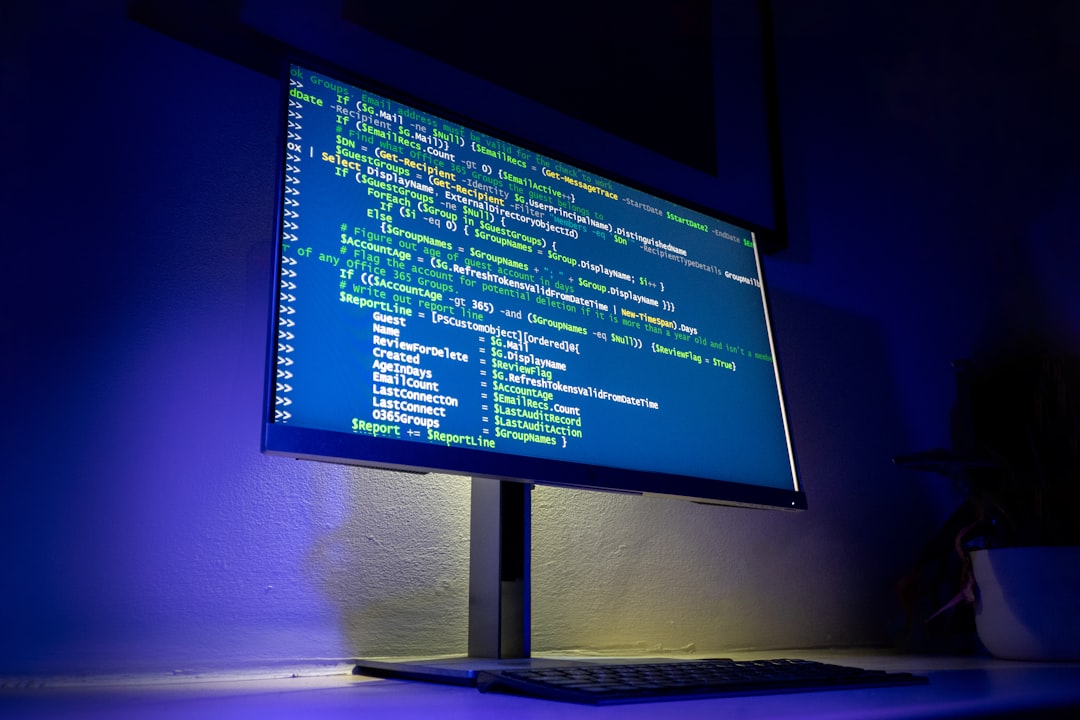
Ruflo's onboarding is terminal-native: Claude Code users go through the plugin marketplace; Codex and other MCP clients use npx.
Claude Code users: add ruvnet/ruflo in the plugin marketplace, install the ruflo-console and ruflo-mods plugins, reload, then open the console with /ruflo. Codex and other MCP clients: run the npx ruflo@latest init wizard in a project, then connect the client to Ruflo's MCP server. Federation needs the separate ruflo-federation package.
The official recommended starting move is notably restrained: "start with one bounded task, such as a read-only project review… as each one earns its place." That phrasing is rare in agent marketing — which usually promises "one click replaces your team." Ruflo's official line is instead "read-only first, more power later," consistent with its "read-only + approval by default" product design. This is a company that has read the Harvard paper (or been scared straight by it).
6. On the numbers: credit where due, questions where owed
Now the numbers. 74,000 stars, 8,800 forks, 12.5M npm downloads in twelve months — the release's own footnote says the star/fork/agent/tool/plugin figures come from the public ruvnet/ruflo repository as of October 12, 2026, and the download figure covers Ruflo-ecosystem npm packages over the twelve months through October 4, 2026. That footnote deserves credit: many PR releases don't source their numbers at all.
Still, three question marks. First, stars ≠ users, especially in the agent track — agent-related repos saw serious star inflation over the past year; starring is not using. Second, the 12.5M downloads are an "ecosystem packages" figure covering cumulative downloads of 35 plugins and related packages; CI reinstalls count too, so it can't be read as "12.5 million people used it." Third, the release cites no third-party benchmark scores — what does a 74k-star agent orchestration project actually score on SWE-bench-style evaluations? Unsaid.
My judgment: treating Ruflo as "an open-source harness worth trying" is reasonable; treating it as "a proven industry standard" is premature. MIT license plus self-hosting is a genuine advantage; but "swarm," "federation," and "SONA" are big words that ultimately need to be proven by stability and observability in real runs — not by press-release length.
7. Takeaways for vibe developers
Even if you never touch Ruflo, this release carries three judgments worth pocketing:
1. Competition is sinking from the model layer to the harness layer. As models bite ever closer on coding benchmarks (we just covered Meta's Muse Wonder overtaking Opus 5.5), differentiation moves to "who can manage 100 agents without chaos." For indie developers, that means: you don't need to wait for the next stronger model — organizing today's models with a better harness may pay off more. Writing a good AGENTS.md, setting up subagent division of labor, decomposing tasks well — the ROI of this "scaffolding work" is overtaking "switching models."
2. "Default distrust" is becoming the standard posture of agent product design. Ruflo's read-only-by-default + approval, untrusted-by-default remote agents, one-click control reclaim — these share one worldview with the Harvard paper: agent output must be verified. When evaluating any agent tool from now on, look at its "distrust design" first, its generation speed second.
3. Memory is moving from "the model's context" to "the harness's asset." SONA persisting successful trajectories as reusable local embeddings has a personal-scale version: turn the patterns you and your agent have validated (how to write tests, how to split tasks, project conventions) into documents and skills, instead of relying on the model's improvisation every time. Memory at the harness layer survives model switches.
8. My take
Ruflo's release is a microcosm of October 2026's agent-infrastructure arms race: the model side (Meta's Muse Wonder, Claude Haiku 5.5's price cut) and the harness side (Ruflo, the MCP tooling wave) are both escalating. But their logics run opposite — the model side preaches "stronger," the harness side preaches "more controllable." And the Harvard paper already told us "more controllable" is where the delivery bottleneck is.
So my judgment is simple: over the next year, what's worth tracking isn't "which model tops the coding leaderboard," but "which harness keeps 100 agents from tipping over." Whether Ruflo is that answer needs time to verify — but it asked the right question.
Comments (0)
Sources
Related articles
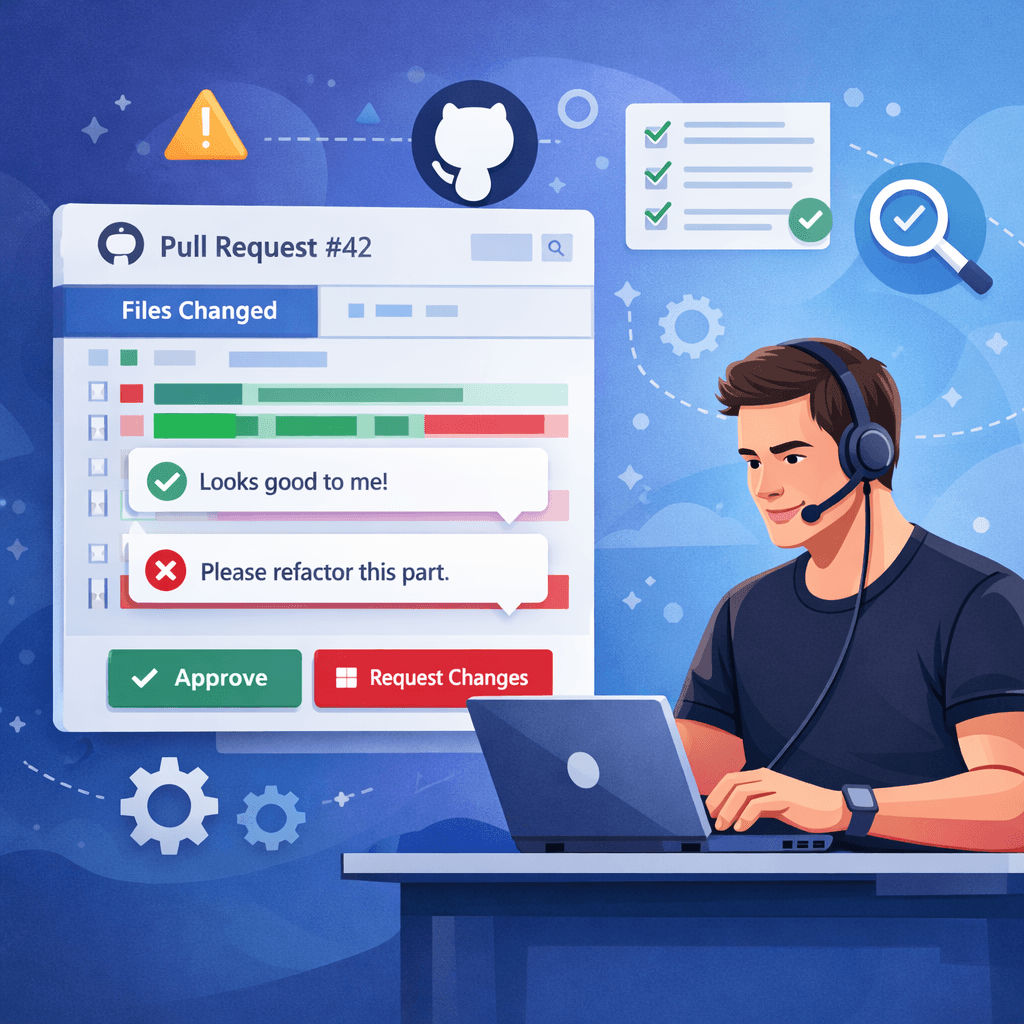
Harvard economists analyzed 718 firms and 300M work events: AI coding agents lifted code volume 30% and PRs 23%, yet finished software didn't budge — while PR review time rose 49%. The bottleneck has moved from writing code to reviewing it.
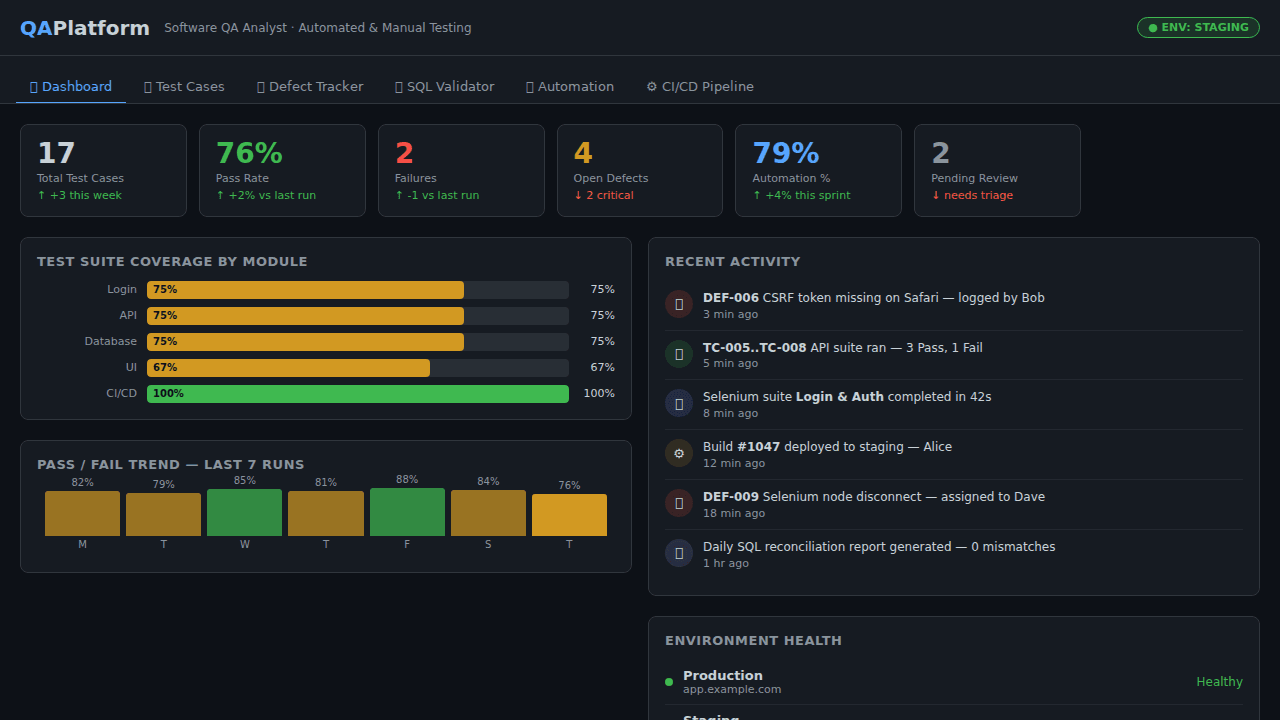
Autonomous testing startup Meticulous raised a $15M Series A; customers include Notion, Dropbox and Wiz. Its deterministic browsers and pixel-level diffing turn testing from a last check into a merge gate.
On October 12, 2026, Cursor announced The X Subscription: Grok, Grok Bot, Cursor and X Premium bundled into one plan with at least double the Grok coding usage — but third-party models are billed at API list price from the first request, and legacy Ultra is closed to new signups. We break down the changes, redo the cost math for four kinds of vibe coders, and offer three playbooks: wait, switch, or go hybrid.