Deconstructing Vibe Jam 2026: 5 Practical Rules Every Winner Quietly Followed
Winners weren't the best prompt writers but those who best fenced in AI's uncertainty: one mechanic done deeply, fun in 30 seconds, juice serving gameplay, designed to be shared, honest about AI. Includes a 10-question pre-build checklist.

After the Vibe Jam 2026 winners were announced, I played through every winning entry, then went back to 2025's. Set aside the "AI will make AAA games next year" hype — there's a more solid finding underneath: winners were never the best prompt writers, but the people who best understood how to fence in AI's uncertainty. This piece lays out five patterns, each backed by entries, each with its counter-example.
Context first: Vibe Jam 2026 was started by Pieter Levels and sponsored by Cursor, Bolt.new, and others. First place went to leocooout's A Game About Capybaras Delivering Food, second to Fanto's Mega-Mart, third to WenWare (which also took Most Played). Judge and game developer timsoret's verdict: "The quality is much higher than last year — some are getting close to genuine games; at this rate, next year they'll match many game devs." But between "close" and "there" lie the five patterns below.
Pattern 1: One mechanic, all the way down
The champion tells a minimal story: you're a capybara delivering food. That's the one action. But it's executed to the extreme — route planning, time pressure, meal combos, every layer adding depth to "deliver." Runner-up Fanto's Mega-Mart is supermarket management; third-place WenWare is warehouse management (the author says it was built with Cursor) — all "one core loop, layered deeper" structures.
Why does this matter especially for vibe coding? Because AI is best at expanding one idea and worst at judging which idea deserves expanding. Give it ten mechanics and it will diligently produce ten half-baked ones; give it one mechanic and force ten layers of depth, and it can surprise you. Pattern 1's essence: trade breadth for depth, fencing AI's divergence into single-point breakthrough.
Counter-example: many non-winners didn't fail at "ugly" — they failed at "wanting everything": an RPG with combat plus farming plus storyline, every system shallow. Remember: jam judges and players have finite attention. One memorable mechanic beats ten forgettable systems.
Pattern 2: Fun within 30 seconds
FULL SEND won Most Portal Transfers — people couldn't stop sharing it. Its secret? Click the link, you're racing. No download, no install, no signup, barely a loading screen. Tracks are generated from real OpenStreetMap scenery — you drift through your own neighborhood.
Arkai (the daily puzzle site) runs the same playbook: no accounts, no ads, fresh boards at midnight. WenWare's Most Played came from the same low barrier. Pattern 2's essence: vibe-coded work gets no user-education budget — no brand, no marketing spend; players grant you 30 seconds. No "aha moment" in 30 seconds, and nobody sees what comes after, however good.
Actionable: before your next vibe project, answer three questions — how many seconds until a new user can play? Any signup? When does the first positive feedback (a score, a clear, a laugh) land? If the answers are "over 30 seconds," "yes," "minute five," go back to the drawing board. AI saved you dev time; spend the savings on the first 30 seconds.
Pattern 3: Juice isn't decoration, it's gameplay
Tiny Skies won Most Polished. It's a cozy tiny-planet exploration game: biplane, magic carpet, little boat, no timers, no enemies, no fail states. But its "polish" isn't pretty textures — every frame reinforces the core feeling of relaxation: purple sunset skies, domed-roof villages, pine forests rolling over miniature hills. Art, music, and pacing serve "cozy" as one unit.
Null Range took Cursor's Best Art Direction, Eyrie took Most Atmospheric, Kanso took Most Zen (sponsored by heyglif). See it? The art awards all went to entries where atmosphere serves gameplay — not the most expensive-looking ones. Juice (particles, sound, screen shake, easing curves) has a new meaning in the vibe-coding era: it's the thing AI can mass-produce cheapest and that most directly improves "feel." An indie dev having AI tune 20 easing-curve variants costs approximately nothing; the smoothness players feel is very real.
Counter-example: treating juice as post-production garnish. Many entries finish gameplay, then ask AI to "add some particles" — juice and mechanics talking past each other, gorgeous explosions with no causal link to your inputs. The right posture: design juice with the mechanic; for every feedback event (score, hit, clear) ask "can the player's fingers, eyes, ears perceive this?"
Pattern 4: Design to be shared
FULL SEND's Most Portal Transfers award reveals an underrated dimension: a vibe-coded work spreads not through marketing but through shareability itself. Its share hooks are beautifully designed: real-map tracks — "come drift past your house"; multiplayer room codes — "click this link and race me." Every share is a new play entry point.
KÖTTBULLAR METAL won Funniest Game, and author Michal Pastier knows the game: the joke (a Swedish meatball metal band) is itself social currency — every sentence describing it after playing is a bit. Swingers took Most Unhinged, Almost Surgery took Most Cursed; the "vibe awards" share one trait: each has a joke explainable in one sentence, and jokes are the smallest unit of sharing.
Actionable: at design time, imagine how a player describes your game to a friend. If it takes three minutes, its shareability fails. The best test: after building, send a one-line pitch to a friend and see if they reply "send link."
Pattern 5: Honesty about AI scores points
The most counterintuitive one. 2025's champion The Great Taxi Assignment — author Tomáš Bencko wrote it plainly in the credits: "99% of code was AI generated (Cursor + Claude Sonnet 3.7), 2D art with GPT-4o, music with Suno, sound effects with ElevenLabs." No hiding, and it became part of the lore.
Arkai goes further: its About page openly states the entire site is run by an autonomous AI agent, with game sources open-sourced under MIT on GitHub. HALDANE-4 took Cursor's Most Original without hiding its toolchain either. In vibe coding, "using AI" isn't the sin — "pretending you didn't" is. Judges and players reward honesty because honesty means the author knows exactly what the AI did and what they did themselves — and that knowing is itself the quality guarantee. One level deeper: when everyone can ship "something that runs" with AI, "being able to articulate the boundary" becomes the differentiator. If you can say what the AI did, you reviewed it; if you reviewed it, someone owns quality. The judges know this chain by heart.
Counter-example: entries waving "100% AI-generated" as the selling point, as if "never touched a line of code" were a medal. Players don't care whether you touched code — they care whether it's fun. Using AI as a fig leaf usually means taste got outsourced too.
Appendix: 10 questions before you start (jam or side project)
Translating the five patterns into a pre-build checklist. Spend 20 minutes answering before writing a single prompt; if you can't answer, don't start:
- 1. Explain the core gameplay in one sentence. If the sentence contains "and also" or "at the same time," you have too many mechanics — cut.
- 2. How many seconds until the first positive feedback? Over 30 — redesign the opening.
- 3. Any signup/login? Can it go? (Reference: FULL SEND and Arkai prove it can.)
- 4. Name 3 "juice moments": when scoring, getting hit, clearing — what do fingers, eyes, ears each perceive?
- 5. How would a player describe this to a friend? Send that line to a friend; see if they reply "send link."
- 6. Where's the boundary between AI's part and yours? Write it down, stick it on the wall.
- 7. Which part is "safe to get wrong"? Let AI do that first; build trust, then escalate.
- 8. What's the joke? If there isn't one, it may not spread — accept that or go find one.
- 9. How will you write the credits? Decide the honest toolchain disclosure now, not the night before launch.
- 10. If you could keep only one feature, which? The answer is your core mechanic.
The underlying logic: vibe-coding failures are rarely "AI wasn't strong enough" — they're "the human didn't think it through." AI amplifies execution and amplifies wrong directions alike. Twenty minutes of thinking before building beats twenty hours of rework after. Question 10 deserves repeating: every time you want to add a feature, ask "if I could keep only one, which?" Can't answer — don't add it. Print the list, tape it next to your monitor, check all ten before the first prompt.
One-line summary: fence in the uncertainty
The five patterns are really one: vibe coding's core skill isn't "making AI smarter," it's "drawing boundaries around AI's smarts." One mechanic (narrow), fun in 30 seconds (fast), juice serving gameplay (precise), designed to be shared (spreadable), honest about AI (true) — each draws one more fence around AI's uncertainty.
And a harsh truth: timsoret said "next year they'll match many game devs" — but "many" doesn't include the tasteful ones. AI leveled the "can build it" bar; "worth building" and "beautifully built" are still human jobs. Vibe Jam 2026's winners share one trait beyond tooling fluency: taste. They knew what to let AI do and what to decide themselves. Tools will keep getting stronger; taste doesn't auto-upgrade. That's the real muscle for vibe coders to train.
If you take one line home: before your next build, don't rush to write prompts — spend 20 minutes on those 10 questions. Get "what" and "why it's worth it" straight before letting AI solve "how." Right order: AI is a multiplier. Wrong order: AI is an accelerator — accelerating in the wrong direction. None of Vibe Jam's winners wrote the longest prompts; they all asked the clearest questions.
Related articles

Every vibe project hits the same moment: a list page firing a dozen DB queries per load, the database melting under modest traffic. This guide starts from the three-question caching mindset, then layers HTTP cache headers, Next.js data caching, Redis application caching with key design and the penetration/breakdown/avalanche defenses, and AI result caching (semantic cache, prompt caching), plus invalidation strategy and a launch checklist.

On October 3, 'Sites in ChatGPT' hit the HN front page with ~209 points and 218 comments. Not a launch — a reckoning: is prompt-to-URL a toy, a prototype host, or a productivity tool? The four debates, the doc-backed facts (D1/R2, sign-in, custom domains), and three verdicts for vibe coders.
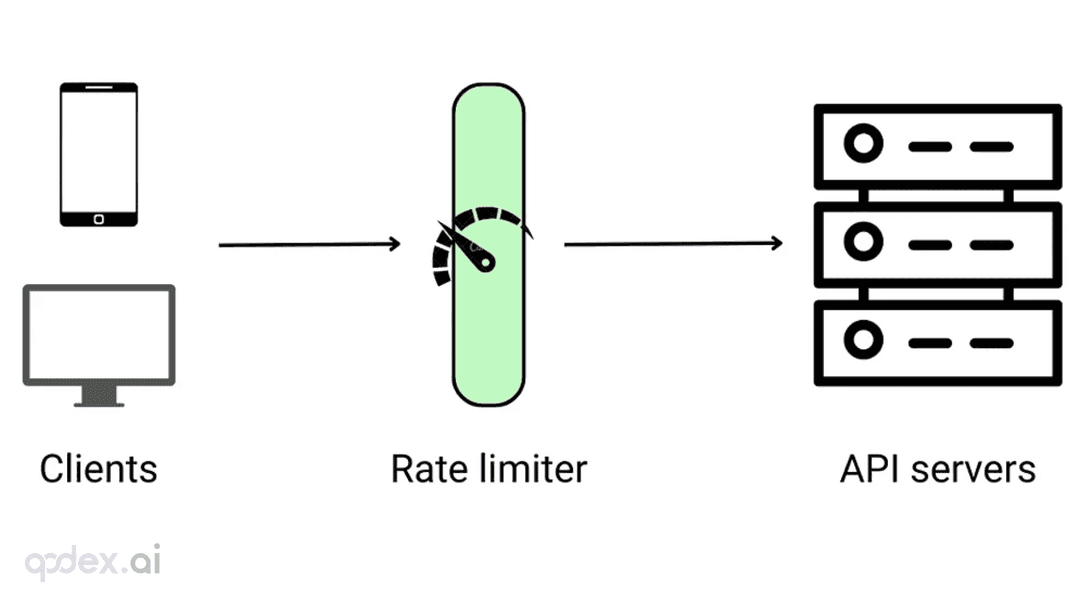
Every public endpoint will be called beyond your expectations some night. This guide builds a one-person-team rate-limiting system: algorithm choice (sliding window vs token bucket), four-layer defense, AI-endpoint money-burning protection, quota design, 429 response conventions, false-positive triage, and a launch checklist.