To Fine-Tune or Not: A Solo Team's Decision Guide Across Fine-Tuning, RAG, and Prompt Engineering
When results stall, the first instinct is 'let's fine-tune a model' — but 90% of the time, RAG or prompt engineering is cheaper, faster, and better. This decision guide gives you the three-way tree (task type × data volume × latency/cost), data-volume thresholds, the full cost formula, LoRA vs full fine-tuning, eval gate rules, and the 'don't fine-tune' anti-pattern list — so you spend the training budget only when it pays.
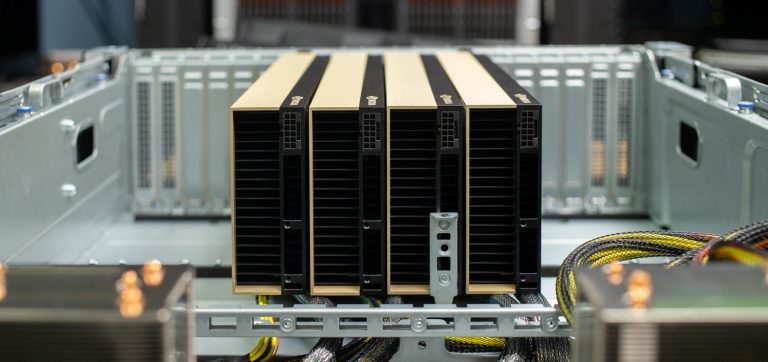
When results stall, a vibe coder's first instinct is usually: "let's fine-tune a model."
It sounds hardcore and feels productive: prepare data, rent GPUs, run training, watch the loss curve drop — the full "we're doing real ML" ritual. But the brutal truth is — for 90% of cases where people reach for fine-tuning, RAG or prompt engineering is cheaper, faster, and works better. Fine-tuning isn't a magic pill; it's expensive surgery. Done right, it's transformative. Done wrong, it burns two weeks and hundreds of dollars, and the model comes out dumber.
This article gives you a decision table, not a fine-tuning tutorial. When you finish, you'll be able to answer three questions: is this problem even worth fine-tuning? If yes, how much data preparation does it take? And how do you prove you didn't break the model?
First, one sentence that nails down the division of labor — every judgment below grows out of it:
- Prompt engineering: teaches the model "how to do it this time" — zero training cost, one line changed takes effect instantly; the ceiling is the model's own capability.
- RAG: gives the model "the ability to look things up" — knowledge lives outside, stays updatable, answers come with sources; the price is one extra retrieval hop of latency.
- Fine-tuning: rewires the model's "default behavioral habits" — baking a format, style, or domain behavior into the weights; knowledge updates require retraining.
Memorize this: fine-tuning changes behavior, not knowledge; RAG solves knowledge, not behavior. Get this sentence wrong and everything after it is wrong.
1. The Three-Way Decision Tree: Task Type First
The first fork in the decision is always task type, not data volume. Ask yourself in this order:
Question 1: Is this a knowledge problem or a behavior problem?
- The model gets your product's pricing wrong, misexplains error codes, or botches private API parameters — that's a knowledge problem. Knowledge changes (prices get adjusted, docs get updated); fine-tuning welds "things that change" into "things that are hard to change." Wrong direction. Go RAG.
- The model gets the answers right but the format is always off (JSON field order scrambled, support tone off-brand, code comment style inconsistent) — that's a behavior problem. Behavior is stable and needs to become muscle memory. That's fine-tuning's home turf.
- Both? Let RAG handle the knowledge first, then decide whether the behavior problem deserves a fine-tune (see section 7, "the combo").
Question 2: Have you honestly exhausted prompt engineering?
Before talking fine-tuning, do these three things first: iterate your system prompt 5+ times with A/B comparisons; try few-shot (3–8 high-quality examples); try decomposing the task (split one giant prompt into a 3-step pipeline). If you haven't finished these three, you don't need fine-tuning — you need prompt fundamentals. I've seen too many "3% gain from fine-tuning" cases where the real story was "the first prompt was garbage."
Question 3: How do latency and cost pencil out?
RAG's cost lands at inference time: one vector retrieval per request (tens to hundreds of milliseconds) plus a longer context (more input-token spend). Fine-tuning's cost lands at training time: tens to hundreds of dollars once, after which inference latency and token cost match the base model — or drop, since a smaller fine-tuned model can match a larger base model's behavior. So this rule of thumb is solid: the higher your call volume, the more fine-tuning pays off (training cost amortizes); low volume with fast-changing knowledge, RAG wins outright.
/media/content-media/a56f3ccd-38fe-490f-a5d3-6edb6bc228d5/2026/10/6fb26569-3a10-4d40-a694-7014df054425.jpg
The diagram above is fine-tuning's essence: at train time, more data, more compute, and more parameters press a capability into the base model. Note the arrow's direction — training is one-off; none of that cost recurs at inference. That's the physical basis of "higher volume favors fine-tuning."
2. Data-Volume Thresholds: How Many Samples Justify a Tune
The most common way fine-tuning dies is tuning on too little data. The table below reflects hard-won community experience (calibrated for LoRA on 7B–70B open models):
| Samples | Verdict | Why |
|---|---|---|
| < 100 | Don't tune — use few-shot prompting | The model will just memorize the 100 examples; generalization drops and you risk catastrophic forgetting |
| 100–500 | Probably don't; try RAG + strong prompts first | What tuning achieves at this scale, good prompts + examples can match — at zero cost |
| 500–2,000 | Judgment call — depends on task type | Behavior tasks (format/style) can tune; knowledge tasks still go RAG |
| 2,000–10,000 | The sweet spot | LoRA's best value zone here — behavior change is clear and stable |
| > 10,000 | Worth tuning seriously; consider full fine-tuning | Data is sufficient; the bottleneck becomes compute and tuning patience. But first: where did 10k high-quality labels come from? |
Note the soul-searching in that last row. The biggest cost of fine-tuning isn't GPUs — it's data. Ten thousand "high-quality" samples means cleaning, deduping, human spot-checks, and negative samples — typically 2–4 weeks for a solo team. GPU rental is the small line item. Anyone telling you "fine-tuning is cheap" probably forgot to bill the labeling labor.
Data-prep checklist (tick every box before you start):
- Do the samples cover your real input distribution — or just the easy categories you had lying around? (Skewed distribution = crashes in production.)
- Do you have negative samples? E.g., "when the user asks something out of scope, the model should decline." Without negatives, the model learns "always answer" and starts hallucinating with a straight face.
- Did a human spot-check 10%? Slip 5% bad samples from AI-generated training data into the mix and your gains go straight to zero.
- Did you hold out a validation set? Split by time or source, never random-shuffle (leakage makes the loss look pretty while production falls apart).
- Any PII in the data (phone numbers, emails)? Scrub it first — fine-tuning memorizes training data, which is how privacy incidents are born.
3. The Cost Formula: Training + Inference + Maintenance, All Three
People who only count training spend get educated by the bill in month three. The full formula:
Total cost = training cost × training runs + (per-inference cost delta × call volume) + maintenance
- Training cost: LoRA on a 7B model, one A100/H100 for several hours — roughly $30–150 per run at on-demand cloud prices. But note the "× training runs" — 3–5 tuning rounds is normal; nailing it first try is for the lucky.
- Per-inference cost delta: fine-tuning adds no inference cost, but it lets you use a smaller model to match a bigger model's behavior (e.g., a tuned 7B replacing a 70B) — saving 5–10× on tokens per call. The higher the volume, the more this earns.
- Maintenance (the easiest to forget): the base model gets upgraded (Llama 3 → Llama 4) and your tuned weights are obsolete — retune. The business changes (new messaging) — retune. Fine-tuning is one-time surgery, but the business is alive — every major business change is a follow-up bill.
Compare with RAG's bill: no training cost, but every request pays retrieval latency + longer input tokens; knowledge updates mean updating the vector store — effective in minutes, zero training spend. So: fast-changing knowledge with moderate volume → RAG; stable behavior to internalize with high volume → fine-tune. That sentence is worth $500.
/media/content-media/a56f3ccd-38fe-490f-a5d3-6edb6bc228d5/2026/10/525ea923-6e29-47fb-bf23-025781900c23.jpg
Above is the RAG architecture from AWS's official blog: retrieve → augment → generate. Notice all its cost sits at inference time — every request walks this pipeline. That's the visual proof that RAG and fine-tuning have completely different cost structures.
4. LoRA vs Full Fine-Tuning: The Only Table a Solo Team Needs
| LoRA (recommended) | Full fine-tuning | |
|---|---|---|
| Parameters touched | Only low-rank adapters (usually <1%) | All of them |
| VRAM needed (7B model) | Single 24GB card works (e.g., 4090) | 4×80GB minimum |
| Training cost | Tens of dollars per run | Hundreds to thousands per run |
| Catastrophic forgetting risk | Low (base weights frozen) | High — wrong data mix and the model goes dumb |
| Multi-task reuse | One base + N LoRA adapters, swapped on demand | One full model copy per task — storage and deployment burden |
| When to choose it | 95% of solo scenarios | Extreme pretraining domain shift (e.g., general → classical Chinese / molecular formulas) and you have 100k+ samples and budget |
One sentence: unless you can clearly articulate why LoRA isn't enough, always pick LoRA. Full fine-tuning is a toy for labs and giants — for a solo team, the burn rate outruns your funding round. And you don't have a funding round.
5. The Eval Gate: A Regression Suite You Must Pass After Tuning
Fine-tuning's deadliest invisible killer isn't "tuned badly" — it's "fixed A, broke B, and you never knew." Shipping without eval is driving blindfolded.
The gate, copy-paste ready:
- Before touching anything, assemble 200 regression tests: 100 target-task cases (what you want improved), 50 general-capability cases (math, common sense, instruction following — to catch catastrophic forgetting), 50 negatives (cases that should be refused or answered "I don't know").
- Run the base model first; record baseline scores.
- Re-run after tuning. Gate rules: target task improves ≥10%, general capability drops ≤3%, negative pass rate doesn't drop. Miss any one — back to tuning.
- The regression set never enters the training set. One leak and the whole gate is void.
On method: at 200 cases, don't pinch pennies — human-spot-check 50 + LLM-as-judge for the full set, with the judge's rubric spelled out (not "which is better," but "score against these 4 criteria"). Pure human is too expensive, pure automatic is untrustworthy; the hybrid is optimal.
One more uncomfortable truth: when the base model gets a generational upgrade (say, a new release 30% stronger), re-run your baseline before deciding to keep tuning. Plenty of people tuned for three months only to find the new base beats their tuned version zero-shot — those three months were an expensive funeral for the old model.
6. The Combo: When "RAG + Fine-Tuning" Actually Pays
RAG and fine-tuning aren't either/or — they solve orthogonal problems, so the combo is the norm. But order matters:
- RAG first, fine-tune later. RAG ships in a week; fine-tuning is measured in months. Use RAG to validate "is this problem worth solving" before investing in tuning to cement the behavior.
- The classic combo recipe: RAG handles knowledge; fine-tuning handles "how to use the retrieved knowledge." Customer support, for example: RAG recalls product docs; fine-tuning teaches the model to cite clause numbers, organize answers in company voice, and proactively say "I don't know" on empty retrieval. The latter is behavior, the former is knowledge — each in its place.
- The combo that doesn't pay: extremely fast-changing knowledge (daily) plus fine-tuning — you'll end up in retraining hell every week. The right move there is RAG + strong prompts, and spend the tuning budget on a better embedding model instead.
/media/content-media/a56f3ccd-38fe-490f-a5d3-6edb6bc228d5/2026/10/11f9b807-edda-49f1-88ec-cb78cf235df9.png
Above is the standard RAG workflow: chunk → embed → retrieve → augmented generation. When you go for the combo, fine-tuning's job is making the model better at consuming what this pipeline retrieves — not making the model memorize the documents themselves.
7. The "Don't Fine-Tune" Anti-Pattern List
Finally, nail down the most common "tuned for nothing" cases. Hit any one of these — stop immediately:
- Memorizing facts with fine-tuning: stuffing "the price list" or "API parameters" into weights. Prices change; the model keeps reciting the old ones. RAG lookups beat it every time. This is anti-pattern #1.
- Chasing fresh knowledge with fine-tuning: expecting tuning to teach the model last week's news. Knowledge cutoff is a base-model property; 10k news samples won't outrun the internet.
- Tuning on too little data: 200 samples on a 70B model — the loss curve looks gorgeous, production answers know nothing. It memorized your 200 and forgot the world.
- Tuning what prompts can fix: format problems first try "JSON schema output + 3 examples" — 90% of format issues die at that step without touching weights.
- Shipping without eval: "feels better after tuning" goes to production. Feelings are the most expensive test method.
- Expecting tuning to raise "IQ": fine-tuning changes behavioral habits, not reasoning ability. A base model at 60/100 on math stays 60/100 after tuning — just "in your format" at 60.
8. Worked Examples: Three Real Scenarios Through the Tree
Tables are nice; let's run three scenarios vibe coders actually hit:
Scenario A: AI support for your own SaaS, answering product-usage questions.
Question 1: knowledge or behavior? Product docs, pricing, error codes — all knowledge, updated weekly. Verdict: RAG. Vector store over the docs; updating a doc means reindexing, effective in minutes. Then a behavior layer: once RAG is humming and volume justifies it, consider one LoRA pass to cement company voice — the combo order from section 6.
Scenario B: a code-gen tool that must emit your company's comment conventions and directory layout.
Question 1: behavior (format/style), conventions stable, change twice a year. Question 2: exhausted prompts? Try system prompt + 5 examples first — that alone fixes ~80%. Question 3: if 20% format drift remains, and you've accumulated 3,000+ real "requirement → conforming code" pairs with tens of thousands of daily calls — verdict: LoRA fine-tuning, squarely in the sweet spot, training cost amortized to near-zero per call.
Scenario C: making the model remember 500 clients' private business rules and answer accurately.
Question 1: knowledge problem. 500 samples — per section 2's table, tuning on <500 is making the model memorize a phone book while forgetting general competence. Verdict: RAG + strong prompts, don't touch fine-tuning. Structure the 500 rules into the retrieval store; write the prompt as "answer only from retrieved results; say you don't know when retrieval is empty." If those 500 change daily, fine-tuning would be a disaster.
See the pattern? The tree's first two questions kill 80% of "let's fine-tune" impulses. The surviving 20% is fine-tuning's true territory. Fine-tuning isn't refuted — it's put back where it belongs: the last resort, not the first reflex.
The One-Sentence Decision
Compress 7,000 words into one: first ask "knowledge or behavior" — knowledge goes RAG, behavior tries prompts first; when prompts are exhausted, data passes 2,000 samples, and volume is large enough — then talk fine-tuning; and tuned models must pass the eval gate, or the tune didn't happen.
Fine-tuning isn't a pill; it's surgery. Surgery's value is in being unavoidable, not in looking impressive. Next time someone tells you "we fine-tuned a model," ask three questions: how many samples? What's the eval gate? Why not RAG? If they can't answer — that surgery was probably endured for nothing.
Comments (0)
Related articles
In the AI coding era, secrets leak because AI actively writes keys into code, comments, and commits — and pushes them. This guide gives vibe coders a five-state credential framework: generate, store, use, rotate, and incident response. Copy-paste ready: layered .env files, pre-commit hooks, production secrets-hosting picks, three AGENTS.md red lines, least-privilege third-party keys, a 30-minute leak SOP, and a monthly 5-minute inspection checklist.
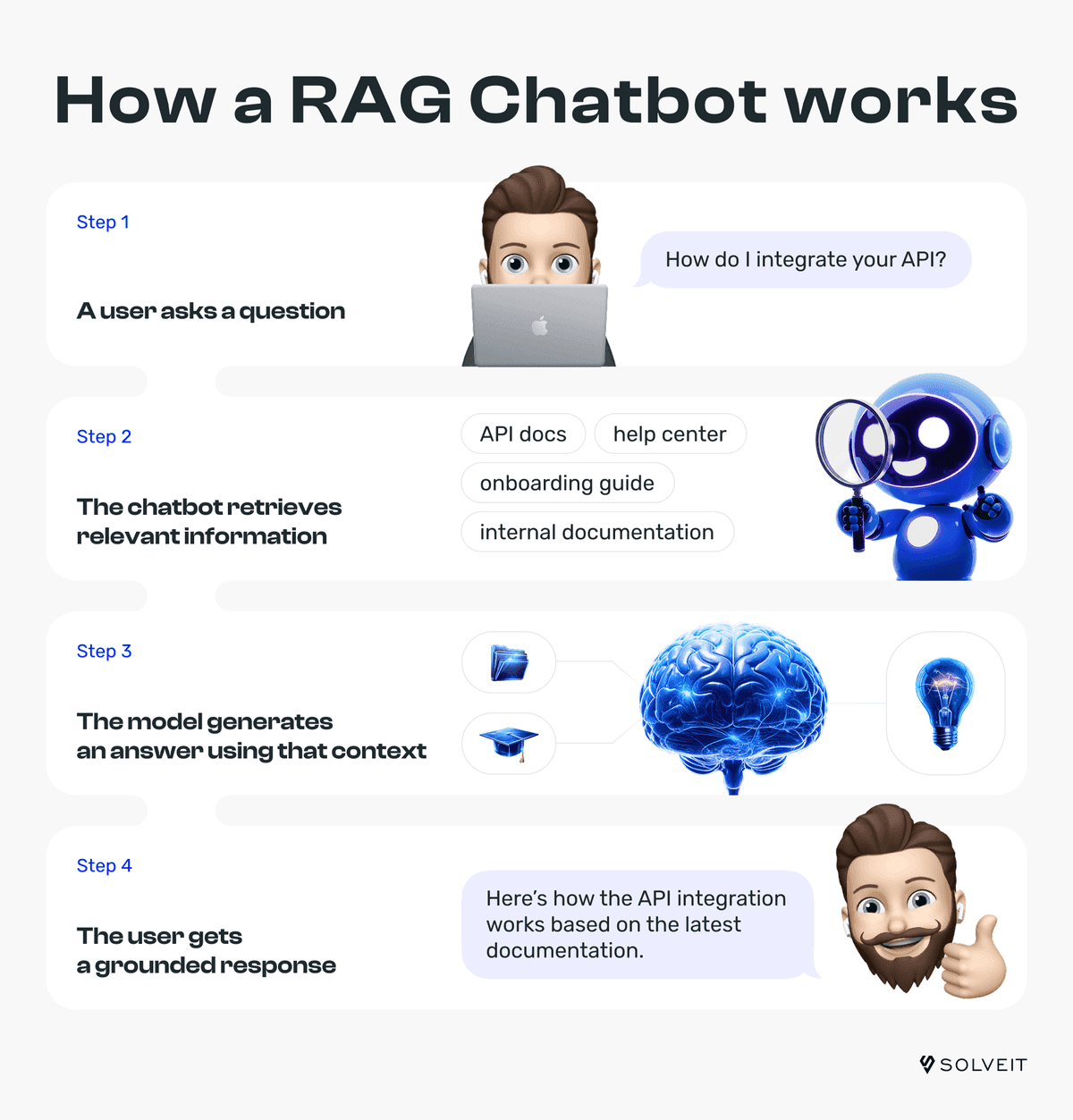
80% of RAG quality is decided before retrieval. This hands-on guide gives solo teams a trimmed-down RAG funnel: a four-question fit test (skip RAG if you can't answer yes twice), 300-512 token recursive chunking with 20% overlap, pgvector as the default store, BM25+vector hybrid retrieval fused by RRF (k=60), reranking only when unsure, a four-metric RAGAS eval over 30 golden Q&A pairs as the launch gate, and citation labels plus scripted refusal to stop hallucinations at generation time.
The cheapest GPU is your user's GPU. This guide shows indie teams how to push suitable inference workloads to the browser and edge — WebGPU, transformers.js, WebLLM, llama.cpp, Ollama, Apple MLX compared; 1B–8B quantized models mapped to tasks; an edge-first degradation chain with drop-in fallback code; packaging "data never leaves the device" as a selling point; hard limits on load size, memory and heat; and a two-week pilot SOP. Cloud stays only as the safety net.