Warp Sciences Wants Robots to Run Drug Discovery's Wet Labs
Former OpenAI science lead Kevin Weil launched Warp Sciences, raising $215 million at an $865 million valuation. It does not only use AI to pick compounds — it wants robots to make and test them, trained by chemists wearing cameras and sensor gloves.
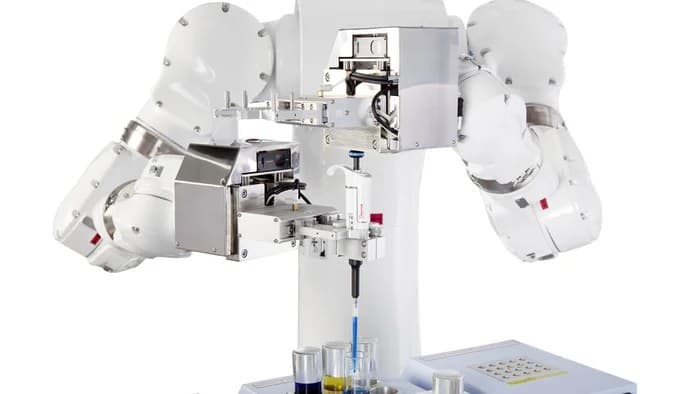
For years, the AI drug-discovery story has mostly been told at the software layer: models screen molecules, predict binding, generate candidate structures, and the remaining synthesis and testing is left to people and conventional labs. A funding announcement on October 22, 2026 pushes the story to the other end: a new company does not only want AI to pick "compounds worth making" — it wants robots to take over "making them and testing them" itself.
According to TechCrunch on October 22, 2026, former OpenAI science lead Kevin Weil has launched Warp Sciences, a new AI startup focused on automating lab work for drug discovery. The company has raised $215 million at an $865 million valuation — both figures come from Weil's own announcement on X, as reported by TechCrunch, and have not been independently verified. The round was led by Lightspeed, with participation from IVP, Mayfield, Lux Capital, Premji Invest, and Menlo Ventures. The framing matters: this was a short funding brief (In Brief), not an in-depth investigation. Valuation and round size are founder-reported; the investor list is the full extent of what the report gives, and this article adds nothing to it.
What exactly is it trying to automate?
As described, Warp Sciences trains robots to "make and test promising compounds identified by researchers." The human side is described concretely too: human chemists wearing cameras and sensor gloves perform lab tasks, and robots learn from them. The goal is an automated wet lab that can run around the clock — robots do not sleep or change shifts, so repetitive drug-discovery work is no longer cut up by human schedules.
Two different layers of automation are hiding in that sentence, and they are worth separating. The first is action automation: pipetting, weighing, mixing, heating, recording — turning what a chemist's hands do into repeatable robot actions. The second is process automation: deciding which candidates to make first, what counts as good enough, and how to adjust the next batch after a failure — which requires judgment, and which, for now, still comes from researchers. The report says robots make and test compounds "identified by researchers." The subject is still researchers deciding first, robots executing second. In other words, Warp Sciences is currently betting on making the execution layer solid, not claiming that AI can already decide on its own what drug to make. That restraint makes its story more credible, not less, than many "AI drug discovery" narratives.
The detail about "cameras and sensor gloves" is also worth noting. It is a learning-from-demonstration approach: rather than first writing a fixed protocol for the robot, let it watch people work and learn how they work. The advantage is a fast start — labs already have people doing these tasks, so the data is already on site. The disadvantage is equally direct: human actions are full of tacit knowledge — when to shake a little more, when to stop and look at a color change — that is hard to fully recover from video and glove data alone. If a robot learns only the shape of an action and not the "why" behind it, it will be steady on standard procedures and exposed on anomalies, unusual samples, and unexpected reactions, exactly where understanding breaks down.
Why "reshoring," not just "faster"
The other motive in the report carries an obvious geopolitical color. For years, biotech companies have outsourced the most labor-intensive work of synthesizing thousands of variations of molecules to contractors in China, such as WuXi AppTec. Weil hopes Warp Sciences can bring that work back home and insulate the entire drug-development process from geopolitical supply-chain risks.
"Hopes" and "facts" have to be kept apart here. "Hoping to reshore" is a strategic intent, not a completed transfer of capacity; "insulating from geopolitical risk" is a goal, not a delivered result. The report gives no lab locations, capacity figures, first customers, or first pharmaceutical partners, and no timeline. This article does not write intent as if it were status: what Warp Sciences has publicly shown so far supports only the judgment that "it wants to build automated wet labs, and it has raised substantial seed capital" — not the conclusion that "it has already changed the global drug-discovery supply chain."
Even so, the motive carries weight. The drug-discovery supply-chain problem used to be treated as a pure cost problem: send synthesis wherever labor is cheapest. But when synthesis capacity concentrates in a few regions and a few contractors, it becomes a resilience problem: geopolitical shifts, export controls, logistics disruptions — any break can directly stall a research pipeline. Warp Sciences is turning "resilience" itself into a selling point — not promising to be cheaper, but promising to be more controllable, closer to the research team, and less exposed to external variables. Whether that pitch holds depends on the real throughput and cost of automated labs, not on the tone of a funding announcement.
What $215 million at $865 million is actually paying for
A newly unveiled company raising $215 million at an $865 million valuation in its first public round is itself a judgment: investors are buying not a proven business but a hypothesis that "can only be tested with heavy assets." A software company can build a minimal product, find a few seed users, and then decide whether to scale. Wet-lab automation cannot — robots, lab space, safety compliance, chemical handling all carry high upfront costs, and without large starting capital there is not even a site on which to test the hypothesis.
That also means Warp Sciences' risk structure is entirely different from a typical AI software startup. Software startups usually fail because "nobody uses it." Hardware-plus-lab startups usually fail because "it works, but throughput, yield, and cost never line up at the same time." A robot that can run 100 reactions in a row is not the same as one that can run 10,000 reactions in a row, each reproducible; reproducing standard reactions is not the same as handling the endless anomalies of real research; handling anomalies is not the same as beating the unit cost of a mature outsourcing system. The money investors are paying now buys the chance to check those three question marks one by one, not an already-checked answer.
One more caution: a founder's halo is both an asset and a distraction here. Kevin Weil's record — former OpenAI science lead — does show he has seen how frontier AI research is organized. But organizing software research and organizing a wet lab are two different management skills: the first deals with code, compute, and data; the second deals with chemicals, biosafety, equipment maintenance, and lab workers' occupational safety. Carrying the first skill set directly into the second is the mental habit this company most needs to guard against. The report does not disclose Warp Sciences' lab leadership or its chemistry and automation team. Those people's backgrounds — not one founder's title — are the key information for judging whether robots can really be put into labs.
AI drug discovery is forking
Placed in the bigger picture, Warp Sciences marks a fork in the AI drug-discovery narrative. The mainstream narrative so far has been "software eats the front end of research": models discover, labs execute, with a clean division between them. Warp Sciences wants to blur that line: candidates picked by models no longer wait in line for manual synthesis but go straight into an automated execution queue. If that path works, the bottleneck of drug discovery shifts from "cannot think of good molecules" to "cannot make and test fast enough" — and the latter is exactly the kind of problem robots are good at solving.
But a fork also means the evaluation criteria have to change with it. For software-style AI drug companies, people ask "is the model accurate, does it screen fast." For a company like Warp Sciences, people should ask a different set: how many synthesis-and-test cycles per unit time? What are the failure and reproducibility rates? How often does an anomaly force a stop and human intervention? What is the full cost per experiment compared with outsourcing quotes? How far does safety and chemical-spill prevention go? The funding brief answers none of these. They are not unreasonable demands on the company; they are the normal scrutiny this kind of company must accept from its industry.
More broadly, Warp Sciences echoes a forming trend: AI's next battlefield is not only on screens but also in the physical world. Robots, labs, factories, warehouses — automation in these places used to be limited by "actions not flexible enough, judgment not reliable enough." Now, learning from demonstration and visual perception give robots a first real chance to "watch people work and learn to work like people." If wet labs can be partly automated, the same paradigm will sooner or later extend to materials synthesis, agricultural experiments, environmental testing, and other "hands-on intensive" research fields. Warp Sciences' value may lie not in which drug it ultimately makes, but in whether it validates the more general question: "can demonstration-trained robots enter the lab?"
Three lines of observation
First, watch throughput, not demos. A video of a robot moving smoothly proves nothing. What is persuasive is throughput, yield, and cost curves under continuous operation. The next disclosure from Warp Sciences worth taking seriously should be reproducible operating data, not another funding round.
Second, watch anomaly handling, not standard procedures. Real lab days are mostly spent handling deviations: a reaction that did not go as expected, an equipment alarm, a contaminated sample, contradictory results. Whether a robot can recognize an anomaly, stop safely, and leave a complete record for human review decides whether it is productivity or a new source of risk.
Third, watch team composition, not the founder's title. Wet-lab automation needs three kinds of people in the room at once: people who understand chemistry, people who understand robotics, and people who understand lab safety and compliance. Missing any one of the three, the project stalls somewhere unexpected. The most worthwhile part of the next report on Warp Sciences may well be its hiring list and lab leadership backgrounds.
What we still do not know
Again because this is a short brief, much key information is currently blank: lab locations and scale, first customers or partners, the first disease area or molecule type to enter the automated pipeline, whether the robot platform is built in-house or bought, when the first verifiable experimental data can be expected, and how the $215 million will be allocated. This article does not fill those blanks — guessing at a newly unveiled company's internal plans helps no reader.
In one sentence: Warp Sciences is worth watching not because it raised $215 million, but because it pushes the AI drug-discovery question one step further — from "can models think of good drugs" to "can robots make and test them." Many people are already working on the first question. The second has only just begun to attract serious money to verify. The funding buys time for that verification. The verification itself has only just started.
Robots in labs are not new
The idea of "letting machines run experiments" is not new. Pharmaceutical and biology labs have used liquid-handling workstations, automated dispensers, and high-throughput screening platforms for years. They solve the problem of "repeating one fixed action ten thousand times," and they solve it well. What Warp Sciences wants to solve is a harder layer: actions are not fixed, procedures are not written in stone, and experimental subjects change every day.
The gap is like the gap between an assembly line and an apprentice. An assembly line excels at repetition; an apprentice excels at adaptation. Traditional lab automation follows assembly-line thinking: standardize the procedure first, then hand the standardized procedure to machines. Its ceiling is whether the procedure can be standardized at all. Warp Sciences' learning-from-demonstration route follows apprentice thinking: let the machine watch people work first, then imitate them amid change. That route has a higher ceiling but also a higher bar — an apprentice that learns badly is more dangerous than a stopped assembly line, because it keeps producing wrong results while looking competent.
This distinction also explains why "robots in labs" have repeatedly stalled at the demo stage. Demos usually pick the most standard, cleanest procedures: fixed reagents, fixed concentrations, fixed steps, and of course robots look beautiful doing them. Real research days are anti-demo: reagent batches change, sample states change, instruments drift, experimental goals change mid-course. Whether Warp Sciences can cross the demo stage depends on its ability to handle the non-standard, not its fluency with the standard. The money investors are paying now is, in a sense, buying verification for the non-standard part.
What the investor list can and cannot tell us
Lightspeed leading, with IVP, Mayfield, Lux Capital, Premji Invest, and Menlo Ventures participating — this list includes both firms known for enterprise software and infrastructure and broad generalist funds. What can be read from it is that this round is not a single firm's isolated bet but a shared interest across several firms in the intersection of "AI plus robotics plus life sciences." What cannot be read is what each firm values, how the valuation was negotiated, or whether they disagree about Warp Sciences' technical route. A funding list is a public signal, not a due-diligence report; reading it as an endorsement of a technical route is over-interpretation.
One more reminder: $215 million in life sciences does not last as long as it does in software. Lab space, robot purchase and maintenance, chemicals and consumables, safety compliance, specialist salaries — each is a continuing expense. If Warp Sciences' verification cycle runs twice as long as expected, its burn rate will also be much faster than a software company's. At the next round's negotiating table, investors will no longer ask "is the story big enough" but "how much reproducible experimental data did the last round buy." That is the shared clock of every asset-heavy science startup, and Warp Sciences is no exception.
If it works, what happens to research organizations?
Suppose Warp Sciences' route eventually works. What changes is not only "experiments get faster" but the shape of research organizations themselves. Today's drug-discovery organizations schedule around people: researchers run experiments by day, instruments sit idle at night, data gets analyzed the next day. If robots can run around the clock, organizations will schedule around experiment queues: researchers' work shifts from "doing experiments by hand" to "designing experiments, interpreting results, and deciding what to run next."
The effect on talent is two-sided. On one hand, junior researchers will spend less time on repetitive operations and more time on judgment work. On the other hand, opportunities to train the basic skill of "doing experiments" will shrink, and a new generation of researchers may be better at designing experiments while having less hands-on feel for anomalies and textures in reactions. That is not an argument against automation; it is a reminder that automation changes not only efficiency but how an organization passes on knowledge. When "feel" is no longer passed on by doing things by hand, it has to be recorded another way — data logs, anomaly case libraries, robot demonstration data — or the organization will quietly lose part of its tacit knowledge while gaining efficiency.
Further on, if several companies' wet labs are automated and experimental data begins to accumulate in machine-readable formats, then "experiments" themselves could become combinable, reusable assets: can one company's failed experiment data help another company avoid the same pit? Under what rules can it be shared? That goes beyond any single company, pointing to an industry-wide data infrastructure question. But all of those prospects rest on one precondition: the first company that truly puts robots into labs and produces reproducible data has to appear first. Warp Sciences is competing to be that company, but competing is not yet being.
Comments (0)
Sources
Related articles
Four months after public launch, Town raised a $108 million Series B at a unicorn valuation. What it sells is not a chattier assistant but one Townie per employee, Townies sharing approved information, and a shared workflow that updates them all at once.
On October 22 Canva released Craft, its first in-house image model: it plans the layout before rendering, trained on millions of human-designed templates rather than photographs, up to 2K across 30+ aspect ratios, with in-image text in 55 languages. Leaderboard claims and pricing remain vendor claims; this piece gives a three-test method and a developer checklist.
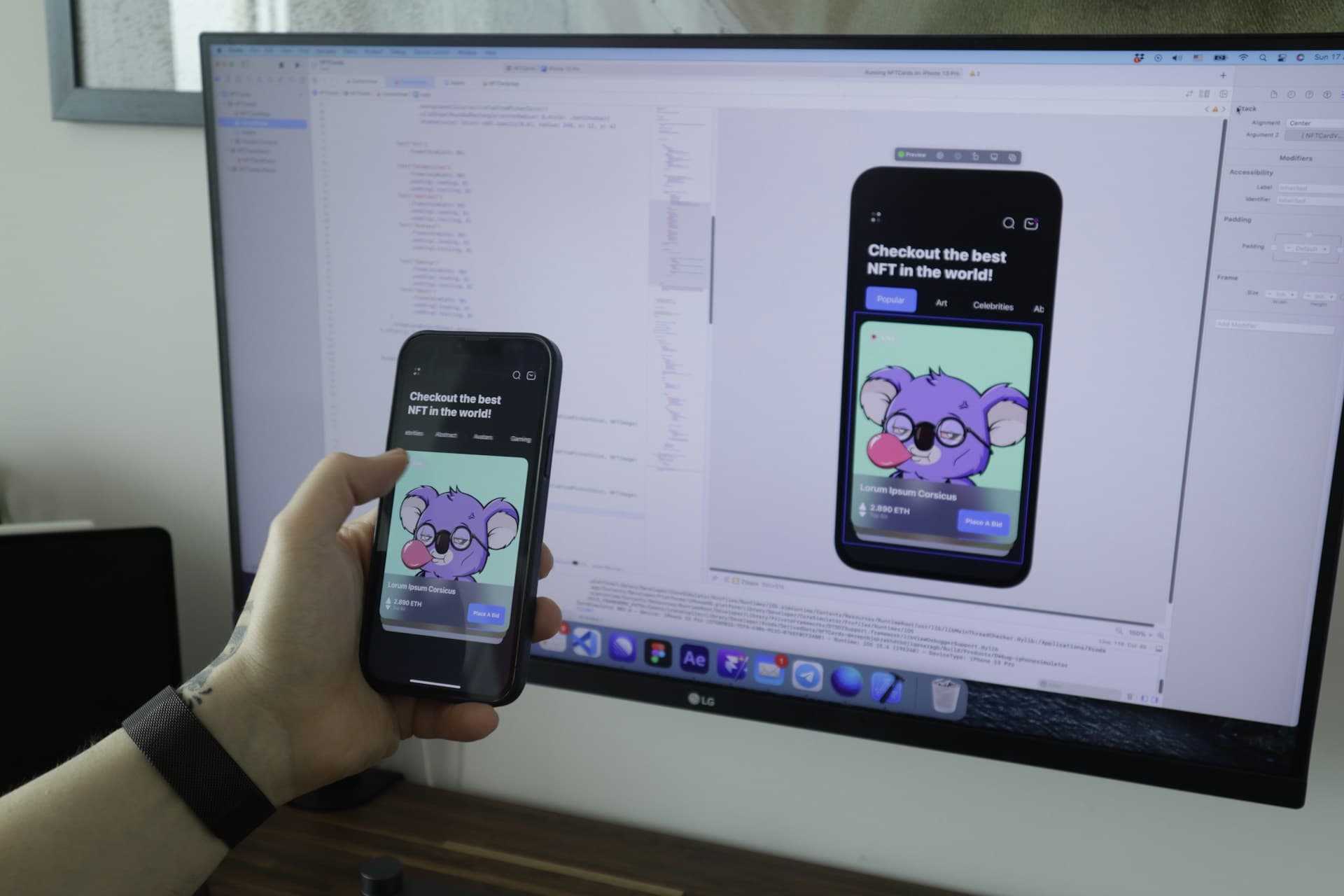
On October 23 Cursor brought Computer Use to the local IDE: agents can click, type, and screenshot desktop apps, demoed by driving the iOS Simulator through a signup flow. But cloud agents click disposable VMs while local agents click your real session — grants go only to the Cursor Computer Use helper, and anything on screen is default model input.