SiliconFlow Raises ¥2.3B Series C: ¥4.3B Total Sets a Record as Inference Costs Fall 10x in a Year
SiliconFlow (无问芯穹) has closed a ¥2.3B Series C, bringing total funding to ¥4.3B — a record for China's AI-native infrastructure sector. The numbers that matter: 37,000P of aggregated compute, 16 chip types, 40x token-call growth in seven months, and inference costs down 10x in a year with 'another 10x to go'. The bet is simple: whoever drives inference cost down defines the economics of the agent era — the same cost curve every vibe coding tool lives or dies on.
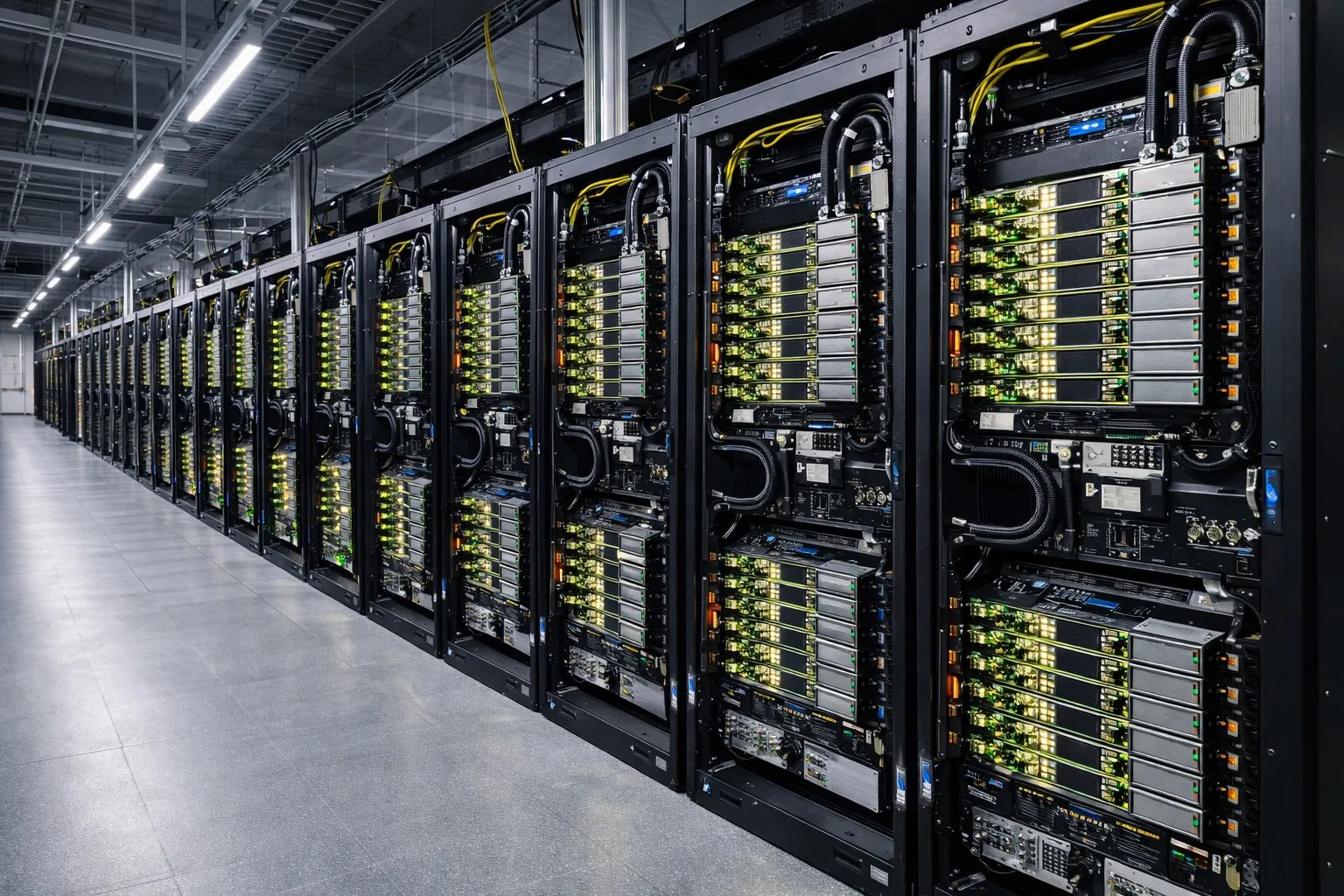
On October 12, Times Finance learned that SiliconFlow (无问芯穹), the Tsinghua-backed AI-native infrastructure company, has closed a ¥2.3 billion Series C funding round, bringing its total funding to ¥4.3 billion — a record for China's AI-native infrastructure sector on both a single-round and cumulative basis. PE Daily ran a cross-confirming report the same day. The timing is worth noting: for the past few months, domestic AI funding headlines have revolved around model companies and application companies. This time, the money flowed into the "picks and shovels" infrastructure layer — infrastructure built specifically for the agent era.
Founded in 2023 and incubated by Tsinghua University's Department of Electronic Engineering, SiliconFlow was founded by Professor Yu Wang of Tsinghua's EE department, with Xiaxue Li as co-founder and CEO. In just three years, it has gone from a university-spawned startup to ¥4.3 billion in cumulative funding. What did it get right? The answer isn't in model parameters — it's in a phrase the company repeats constantly: Agentic Infra.
The numbers first
Funding announcements usually dress numbers up for PR, but the operating figures disclosed this round happen to be the key to understanding the company:
- 37,000P of compute, 16 mainstream chip types, 100K-GPU scale: its Agentic Infra autonomous infrastructure platform unifies and schedules heterogeneous compute, with deployed reach of 37,000P across 16 mainstream chip types, supporting training, inference, and reinforcement learning at hundred-thousand-GPU scale.
- Token calls up 40x in seven months: as of July this year, daily token calls on its Agentic MaaS model-service platform had exploded 40x versus last December.
- Inference costs down 10x in one year, with "another 10x of headroom to come": over the past year, its "Token Factory" drove a 10x reduction in inference cost through a series of original technical innovations.
- Cross-cluster heterogeneous PD disaggregation: unveiled at WAIC this July, cutting time-to-first-token (TTFT) by 51.5% and per-token cost by 37.5%.
- Thousand-GPU heterogeneous mixed training at up to 97.6% utilization: four domestic chip lines — Huawei Ascend, Iluvatar CoreX, MetaX, and Moore Threads — each mixed with AMD/NVIDIA hardware in training runs; plus China's first 4,000+ km cross-region mixed training run with China Telecom (Hami, Xinjiang to Shenzhen, Guangdong).
Read together, the story is clear: demand is exploding (40x) while costs are collapsing (10x) — and the company claims the collapse isn't over ("another 10x to come"). An infrastructure company delivering demand-side explosion and supply-side cost reduction at the same time is exactly what capital wants to price. That's the most concrete logic behind the ¥2.3 billion figure.
"Front store, back factory, one hub": what is it actually selling?
SiliconFlow summarizes its strategy as "front store, back factory, one hub." It sounds like traditional manufacturing jargon, but each layer maps to a real pain point of the agent era.
The hub: a compute aggregation center
This is the foundation. The core capability is unifying and scheduling "diverse heterogeneous compute" — 16 chip types mixed together at hundred-thousand-GPU scale. Behind that description sit two hard problems: orchestrating domestic chips alongside NVIDIA/AMD hardware, and scheduling across regions and clusters. The former is the thousand-GPU heterogeneous mixed training mentioned above (97.6% utilization); the latter is the 4,000 km Hami-to-Shenzhen cross-region run. In a world where compute remains scarce, whoever can assemble "bulk compute" into "usable compute" holds pricing power.
The back factory: the Token Factory (Agentic MaaS)
This is the fastest-growing layer. A 40x jump in token calls over seven months means its customers — mostly model companies and agent applications — are handing it ever more inference load. The partner list includes leading model companies such as Zhipu and Moonshot. Note the detail: even well-funded model companies with their own compute are using its MaaS, which suggests the cost advantage is real, not subsidized vanity growth.
The front store: the AI productivity store
This is the industry-solutions layer, covering verticals like entertainment and gaming, healthcare, legal services, and energy and power. If the "back factory" sells standardized tokens, the "front store" sells packaged agent deployment capability. Its existence signals that SiliconFlow doesn't want to be just a pipe — it wants to move up the value chain and capture some of the application layer's margin.
Why heterogeneous mixed training deserves its own section
For anyone outside infra, "heterogeneous mixed training" is easy to skim past. But its technical substance is the part of this funding round most worth examining closely.
Traditional large-model training is "homogeneous": a batch of identical GPUs (say, all H100s) in one datacenter, linked by high-speed interconnect. Simple, but with two fatal flaws: supply is hostage to a single vendor, and costs won't come down. What SiliconFlow does is train the same model on a mix of architecturally diverse domestic chips — Ascend, Iluvatar, MetaX, Moore Threads — together with AMD/NVIDIA cards, at 97.6% utilization.
That means its scheduling layer must solve brutally fiddly problems: different chips have different compute density, memory bandwidth, and communication primitives — plus the latency of a 4,000 km cross-region link. Squeezing 97.6% utilization out of that "stew" shows the heterogeneous scheduler is a production system that actually runs, not a slideware concept. Add the July cross-cluster heterogeneous PD disaggregation architecture (splitting prefill and decode across different clusters — TTFT down 51.5%, per-token cost down 37.5%), and the technical thesis is crisp: squeeze every yuan of compute dry with engineering innovation instead of waiting for chip prices to fall.
For China's AI ecosystem there's a strategic layer too: it proves the "no single chip supplier" path is engineering-viable. Whatever you think of the geopolitics, commercially, one more optional compute source is one more unit of bargaining power.
Zooming out: the world's "AI plumbers" are telling the same story
SiliconFlow is not an isolated case. Over the past year, global capital has bet on the same position: CoreWeave pivoted from an Ethereum mining operation into an AI cloud with a soaring pre-IPO valuation; "new compute aristocrats" like Nebius and Lambda have raised money hand over fist; even OpenAI is in talks with Broadcom and Oracle about building its own compute. Everyone's logic is one sentence: models will get cheaper, applications will multiply, and the layer in between that turns compute into tokens is the most certain, most defensible layer.
But SiliconFlow's version has a Chinese characteristic: heterogeneity. The American players are basically "all-in on NVIDIA," competing on card procurement and datacenter scale; SiliconFlow competes on "every card works." That's partly forced (supply constraints) and partly differentiation — when everyone scrambles for the same card, the company that can schedule 16 chip types at 97.6% utilization owns a cost structure nobody else has. If high-end chip supply ever wobbles, its architecture is a natural hedge.
The flip side deserves honesty too: heterogeneous scheduling is several times more complex to engineer than the homogeneous approach, and supporting 16 chip types' drivers, operator libraries, and failure modes requires a very large infra team. How much of the ¥4.3 billion gets burned on "feeding engineers" is worth tracking. Whether the Token Factory's margins can cover that team determines whether this is "technology-driven economies of scale" or "a labor-intensive outsourcing business." The 40x growth figure is beautiful, but we haven't seen its unit economics yet.
One layer deeper: why PD disaggregation is the key innovation
The July cross-cluster heterogeneous PD disaggregation architecture deserves a few more sentences, because it's the key to judging whether "another 10x of cost reduction" is credible.
Model inference has two phases: prefill (ingesting the input, compute-intensive, done in one shot) and decode (emitting tokens one by one, memory-bandwidth-intensive and latency-sensitive). Traditional deployments pin both phases to the same GPUs — like making a sprinter and a marathoner wear the same shoes. PD disaggregation splits them: prefill runs on compute-heavy cards in bulk, decode runs on memory-optimized configurations, stitched together over high-speed networking. TTFT down 51.5% means the first word pops out more than twice as fast after you hit enter; per-token cost down 37.5% is real money.
The crucial part is "cross-cluster heterogeneous": the prefill cluster and the decode cluster can use different chips in different datacenters. That means cheap, older-generation cards can handle latency-insensitive prefill while the good cards are reserved for decode — every yuan spent where it matters. That kind of penny-pinching is exactly where "another 10x of headroom" comes from: inference optimization was never about the chips themselves, but about scheduling, splitting, and reuse in the engineering details.
The direct impact on vibe coding tools: halved TTFT dramatically shortens an agent's "think-act" loop. A coding agent that makes 50 tool calls, saving 200ms per step, finishes 10 seconds sooner. Don't dismiss those 10 seconds — an agent product's "smoothness" and "usability" often live or die on exactly those seconds. Cheaper cost plus lower latency is what moves agents from "usable" to "delightful."
Our take: the agent economy's margin line is the real bet
With the groundwork laid, here's my judgment: this ¥2.3 billion isn't betting on the vague concept of "AI infrastructure." It's betting on the margin structure of the agent era.
Look at vibe coding tools today: Cursor, Windsurf, Claude Code are, at bottom, "token resellers." Every line of code a user writes, every agent loop run, burns real inference dollars behind the scenes. These tools' gross margins are exactly the spread between "the subscription price sold" and "the inference cost burned." Cut inference cost 10x and a tool can either slash prices to grab market share or pack 10x more agent capability into the same price — either way, the shape of agent products gets remade.
SiliconFlow's "infrastructure agent swarm" — housekeeping agents, intelligent ops agents, and the KernelMind operator-generation agent that dynamically picks models and compute based on task complexity, latency, and token cost — has already productized this logic: it's using agents to schedule the infrastructure that serves agents. That's no coincidence. When an infra company starts optimizing infra with agents, "agents calling infra" and "infra serving agents" have formed a closed loop. In that loop, whoever commands the lowest inference cost commands the power to price every agent.
Now the "40x growth vs 10x cost cut" arithmetic: calls up 40x while costs fall 10x means revenue is expanding far faster than cost. That "economies of scale plus technical cost reduction" flywheel is the sexiest shape an infrastructure business can take. The valuation logic behind ¥4.3 billion is buying the continuation of that curve — plus the promise of "another 10x to come."
Promises are promises, of course. Cost declines are never linear; they get harder the further you go. But at least per the disclosed figures, SiliconFlow's past year of cost reduction came from "original technical innovation" (heterogeneous scheduling, PD disassembly) rather than cash-burn subsidies. That kind of cost reduction is structural — hard for rivals to replicate with a price war.
Risks: where this curve is most likely to break
Having made the bull case, the risks deserve equal airtime — ¥4.3 billion buys the future, not the past.
First, diminishing returns on the cost curve. How much of "10x in a year" was low-hanging fruit (going from zero optimization to basic optimization) versus sustainable architectural innovation? Once tricks like PD disaggregation and heterogeneous scheduling have been played, where does the next 10x come from? Engineering optimization gets harder by the law of the craft. If cost reduction decelerates while token-call growth normalizes, the valuation logic strains.
Second, big-customer concentration. Marquee customers like Zhipu and Moonshot are both the base and the risk: they wield enormous bargaining power and could build their own inference infra at any time. If one or two large customers migrate their loads away, the 40x growth story cracks. A MaaS business's moat isn't customer relationships — it's "always 20% cheaper than building it yourself." That line must be defended forever.
Third, intensifying competition. Cloud giants like Volcengine and Alibaba Cloud are also slashing inference prices aggressively, with bigger scale and deeper subsidy pockets. When cloud vendors treat price cuts as customer acquisition, independent infra companies get margin-squeezed. SiliconFlow's differentiation (heterogeneous scheduling, agent-native design) has to be hard enough that copying it costs cloud vendors more than partnering with it.
Each of these is a possible falsification path for this round's thesis. To track the company, three metrics suffice: token-call growth rate, per-token gross margin, and the technology lead window on heterogeneous scheduling. The numbers will talk.
An honest note on sourcing
One boundary needs stating plainly: Bloomberg reported on October 1 that SiliconFlow had confidentially filed with the Hong Kong Stock Exchange, targeting a listing as early as the first half of 2027 at a pre-IPO valuation of about ¥14.3 billion. We were unable to verify that report against a primary source, so we flag it here only as a pointer and won't elaborate. Readers citing it should distinguish "confirmed funding" from "market rumor."
What it means for vibe coding builders
Finally, what does this mean for our readers? If you're an indie developer or building products with vibe coding, this news matters not because "another company raised a lot of money," but for four concrete signals:
- Inference costs will keep falling — faster than you think. 10x in a year, "another 10x to come": agent workflows you consider "too expensive to run" today (repo-scale multi-agent parallel refactors, 24/7 monitoring agents) could be default configurations in 18 months. Model your product-planning cost assumptions as exponential decline, not linear. Every compromise you make today to save tokens (cutting reflection steps, capping tool calls) — keep a switch for it. The first person to flip that switch when costs land gets the head start.
- Domestic compute is becoming a real option. Heterogeneous mixed training working in production means your inference load won't necessarily have to run on one vendor's chips. For teams with compliance-sensitive workloads or domestic-market focus, one more supply chain is one more unit of safety margin. More practically: a domestic MaaS price war drags global inference prices down with it — you're the direct beneficiary.
- "Token factories" will get cheaper and more cutthroat. As infrastructure-layer margins compress, the surplus flows upstream to the application layer. Now is a good time to stockpile agent capability — every point of decline on the cost curve is your margin. If you're debating "whether to add agent features to the product," the answer is yes — but build the cost structure to be swappable, and don't lock yourself into one vendor's pricing.
- A little infra thinking directly helps your agent product. PD disaggregation and prefill/decode sound like infra topics, but they determine "how fast your agent's first step responds" and "what 100 steps cost." Understanding the cost structure lets you design agent loops that are both smart and cheap — e.g., routing simple judgments to small models and reserving big models for hard reasoning. That's exactly what SiliconFlow's "agent swarm" does at the infra layer, and you can copy the pattern at the application layer.
One-line summary: ¥2.3 billion buys three years of delivered engineering; ¥4.3 billion cumulative buys the position of "plumber of the agent era." Whether that position is worth it depends on whether the inference-cost curve can really deliver another 10x. For now, at least, the numbers are on its side.
Comments (0)
Sources
Related articles
October brought two Copilot retirement waves, GPT-5.5 leaving Codex, and 17 OpenAI API model identifiers shutting off — model swaps are now operations, not upgrades. This field guide delivers a complete swap SOP: three abstraction layers, a 30-minute minimum eval baseline, a four-step shadow-to-full rollout, 10-minute weekly notice monitoring, the true cost formula, three real failure modes, and a one-page copy-paste checklist.

Google DeepMind's new Polaris team is hiring Research Engineers to build evaluation frameworks for AI coding agents — no degree required, no minimum years of experience. The reported total comp of $550K–$1.1M comes from Tamay Besiroglu's X post (base salary is listed at $164K–$252K). Polaris hand-builds a small number of tasks, about a week each, to mirror real-world coding complexity. Evaluation itself has become a frontline lab job.
On October 8, the UK's ICO announced that ten AI giants — Amazon, Anthropic, Apple, Cohere, DeepSeek, Google, Meta, Microsoft, OpenAI, Stability AI — have made or committed to data-protection improvements. The bigger story is the regulator's next target: agentic AI. A six-week call for evidence is open until November 20, with a statutory code of practice on AI decision-making in the works. Three duties indie devs should know: lawful basis, transparency, safeguards.