DeepMind's Polaris Is Hiring: No Degree Required for Coding-Agent Evaluation Role, Reported Pay Up to $1.1M
Google DeepMind's new Polaris team is hiring Research Engineers to build evaluation frameworks for AI coding agents — no degree required, no minimum years of experience. The reported total comp of $550K–$1.1M comes from Tamay Besiroglu's X post (base salary is listed at $164K–$252K). Polaris hand-builds a small number of tasks, about a week each, to mirror real-world coding complexity. Evaluation itself has become a frontline lab job.
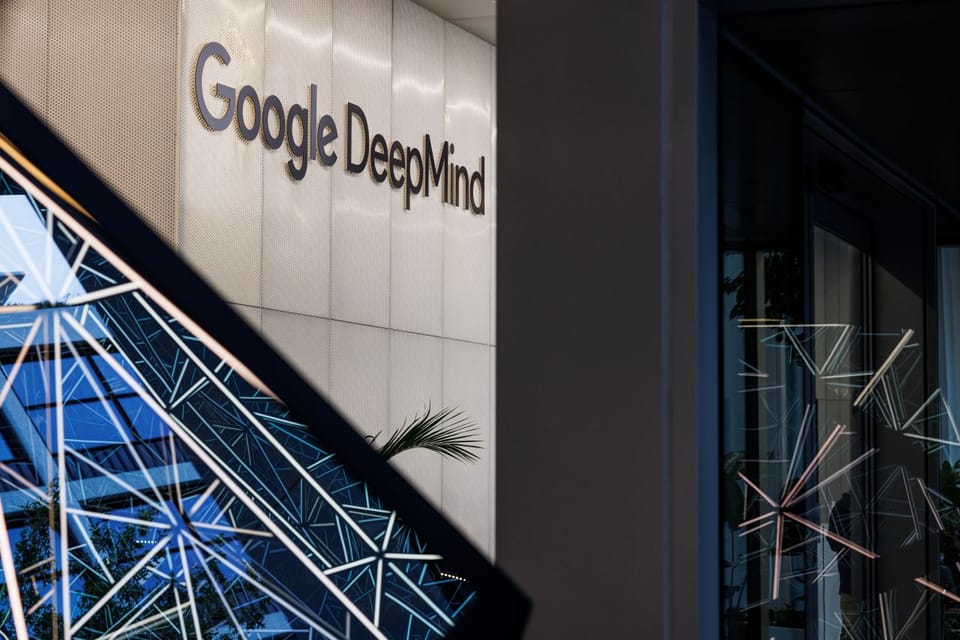
Around October 11, multiple English-language outlets reported nearly simultaneously on a hiring story: Google DeepMind's new Polaris team is recruiting Research Engineers, based in Mountain View, to build evaluation frameworks for AI coding agents — designing test tasks that genuinely measure Gemini's real-world software engineering ability. The two eye-catching details: the role requires no degree and no minimum years of experience, and the rumored compensation is $550K to $1.1M in total comp.
A note on sourcing before we go further, so nobody is misled: the $550K–$1.1M figure comes from Tamay Besiroglu's X recruiting post, not from the Google Careers job listing itself — the listing only shows a base salary band of roughly $164K–$252K, and multiple outlets explicitly flagged the bigger number as a reported figure. But even discounted, this is top-tier-lab money for top-tier pay. And what it's buying is not model training or infra, but a job many people treat as an afterthought: evaluation.
Who Polaris is, and who Besiroglu is
The name Tamay Besiroglu should ring a bell for anyone following AI progress: co-founder of Epoch AI, now a research scientist at DeepMind. Earlier this year, Google struck a talent-plus-licensing deal with his startup Mechanize — the $1.5B+ figure floated during negotiations was never confirmed in final terms; over a dozen former Mechanize employees joined with him, most landing on DeepMind's midtraining team. Mechanize's whole pitch was about "what work AI can do," and Polaris reads as a continuation of that thread: figuring out how to measure what AI coding agents can actually do.
Polaris's methodology cuts against the grain. The dominant benchmark playbook today is "synthetic data at scale": have models mass-produce tens of thousands of programming problems, run the scores, publish the leaderboard. Polaris does the opposite: hand-build a small number of tasks, spending about a week on each from idea to final review, aiming to mirror real-world coding complexity. Engineers can also propose projects to improve Gemini's training data and evaluation stack itself.
That choice is itself a judgment call: benchmark quantity is inflating while benchmark quality is deflating. When every coding agent scores 70%+ on public leaderboards like SWE-bench, the leaderboard stops discriminating. What a frontier lab actually needs is a yardstick that can tell whether the next version is better than the last one — and in what way. That kind of yardstick can't be mass-synthesized; it takes people who understand real engineering, spending a week polishing a single problem.
The signal hidden in the "preferred" list: contests, hackathons, benchmark builders
The most interesting part of the job description is the "preferred but not required" section: competitive programming background, math contest or hackathon experience, prior work designing evaluation frameworks or benchmarks. Taken together, the candidate profile is crisp: people who write the exams, not people who take them.
That's a shift worth savoring. For the past few years, the top of AI hiring prestige belonged to "people who can train big models." Now a frontier lab is offering seven-figure comp to "people who can write good tests." The logic underneath: as model capability approaches human-expert ceilings, the bottleneck moves from "how do we make the model bigger" to "how do we know whether it's actually any good." Exam-writing ability — decomposing fuzzy real-world competence into repeatable, gradeable, cheat-resistant test tasks — is becoming a scarce skill.
And "no degree required, no minimum years" isn't DeepMind doing PR. Contests and hackathons were always credential-blind proving grounds: an IOI gold, a Kaggle Grandmaster title, a widely adopted benchmark — these signals are harder than any diploma. Polaris's hiring logic is refreshingly honest: we need a very specific craft, a degree can't prove it, contests and shipped work can.
Deconstructing the salary number: what's actually inside the $1.1M
First, a correction many readers need: the $550K–$1.1M band is annual total compensation, a rumored figure. By the standard structure of a US big-lab Research Engineer offer, base salary is only one slice — the $164K–$252K on the job page is the base; the bulk is RSUs and annual bonus. The $1.1M ceiling most likely assumes top-end stock valuation plus maximum performance multipliers; how much vests each year depends on share price and vesting schedules.
Worth adding: "no degree required + million-dollar package" stories tend to get headline-optimized toward the most sensational number (one Indian outlet led with "up to Rs 10 crore"). When reading them, keep total comp separate from base, and "X-post scoop" separate from "job-page original" — the scout report that surfaced this story had both distinctions marked clearly. Read the fine print before bookmarking.
But even wrung dry, this remains a strong signal of an offer: a frontier lab willing to pay evaluation work at the same band as core model researchers. Inside DeepMind, evaluation is no longer a "run some tests after training" side quest — it's a first-class function with its own headcount, its own team (Polaris), and its own methodology.
Industry backdrop: benchmarks are inflating and deflating at the same time
Polaris's "handcrafted few" approach reads even more interestingly against this year's backdrop. On one hand, public AI-coding benchmarks are badly inflated: new leaderboards appear monthly, every agent's scores keep climbing, and former gold standards like SWE-bench no longer separate the leaders. Score inflation has a direct consequence: leaderboards are getting worse at answering "which agent is actually better for my real work."
On the other hand, high-quality evaluation tasks are deflating — genuinely scarce. Tests that reflect real dirty work like "fix a concurrency bug in a legacy codebase" are vanishingly rare. Synthetic data can mass-produce "write a binary search," but it can't produce "this repo has 14 implicit dependencies, changing A breaks B, and all the tests are mocks" — which is precisely the daily reality of real software engineering. Polaris is betting a week per problem on the thesis that in an age of benchmark inflation, what's scarce isn't question count, it's question fidelity.
That judgment has practical implications for tool selection too. Next time you see a coding agent advertised as "#1 on XX benchmark," ask one question: does that benchmark measure real engineering complexity, or synthetic-question score-farming? The former deserves a serious trial; the latter deserves a glance. Polaris's very existence is an upstream correction to leaderboard maximalism.
The real value for vibe coders isn't envy — it's homework to copy
Seeing $1.1M, most people's first reaction is envy. But for vibe coders who work with coding agents daily, this story's real value is that it validates something: evaluation is serious production work, not an optional garnish.
Think about your own workflow: you ask Claude Code / Cursor / Codex to build a feature — how do you know whether it did a good job? Probably "run it and see" plus "eyeball the diff." That's fine for small projects, but once agents start making more consequential decisions for you — refactoring core modules, writing payment logic, handling user data — "feels okay" isn't enough. You need the same thing Polaris is building, just at a smaller scale: your own golden test set.
Three moves worth copying:
- Write exam questions from real failures: Polaris spends a week polishing one task; you don't need to — but you can turn tasks your agent once botched into regression tests. Before switching models or prompts, run the set and check whether things got better or worse.
- Small and sharp beats big and watery: ten carefully designed tests covering your core business logic beat a hundred generic ones copied off the internet. An evaluation's quality ceiling is set by how well you understand your own product, not by question count.
- Bake evaluation into the workflow: don't let evals stay a "when I remember" chore. Run the set after every major agent-driven change and log the results. DeepMind staffed a full team for this; you can at least staff a ten-minute habit.
Notably, this site previously published two hands-on eval guides ("Stop iterating on vibes: build an evaluation harness for your AI agent" and the Chinese guide on eval systems for vibe projects), whose core thesis matches Polaris's methodology: "without evals, every model switch is a gamble." DeepMind paying seven figures for this work just added an expensive footnote to that thesis.
A final word on the "degrees are useless" misreading
Stories like this get easily flattened into "see, even DeepMind doesn't care about degrees." That's a misreading, and a dangerous one. Polaris doesn't require a degree because what it wants is scarcer and harder to get than a degree: contest records, hackathon portfolios, a benchmark-building track record. That's not a lower bar — it's a different, harder bar.
The takeaway for working developers isn't "stop studying" either — it's that "proof of ability is diversifying." In an era when agents write the code, people who can define problems crisply, design tests, and judge output quality are becoming more valuable than people who can hand-write every line. The Polaris job post is, in essence, a frontier lab placing a real-money bet on that trend.
Oh, and one honest footnote from the scout report: whether the posting was still open wasn't verified against Google Careers' live status. If this piece genuinely makes you want to apply, search Polaris on Google Careers yourself first — don't treat a news article as an offer letter.
Comments (0)
Sources
Related articles
CNBC reported Oct 11: US software-developer postings rose nearly 15% since late Feb 2025 while overall postings fell 7%. But seniors drove 71% of the gain and AI-titled roles 37%; totals remain 27.5% below pre-pandemic. Stanford's 2026 AI Index shows early-career developer employment down nearly 20%. What's growing isn't code-writing jobs — it's machine-driving jobs.

On October 8, the UK's ICO announced that ten AI giants — Amazon, Anthropic, Apple, Cohere, DeepSeek, Google, Meta, Microsoft, OpenAI, Stability AI — have made or committed to data-protection improvements. The bigger story is the regulator's next target: agentic AI. A six-week call for evidence is open until November 20, with a statutory code of practice on AI decision-making in the works. Three duties indie devs should know: lawful basis, transparency, safeguards.
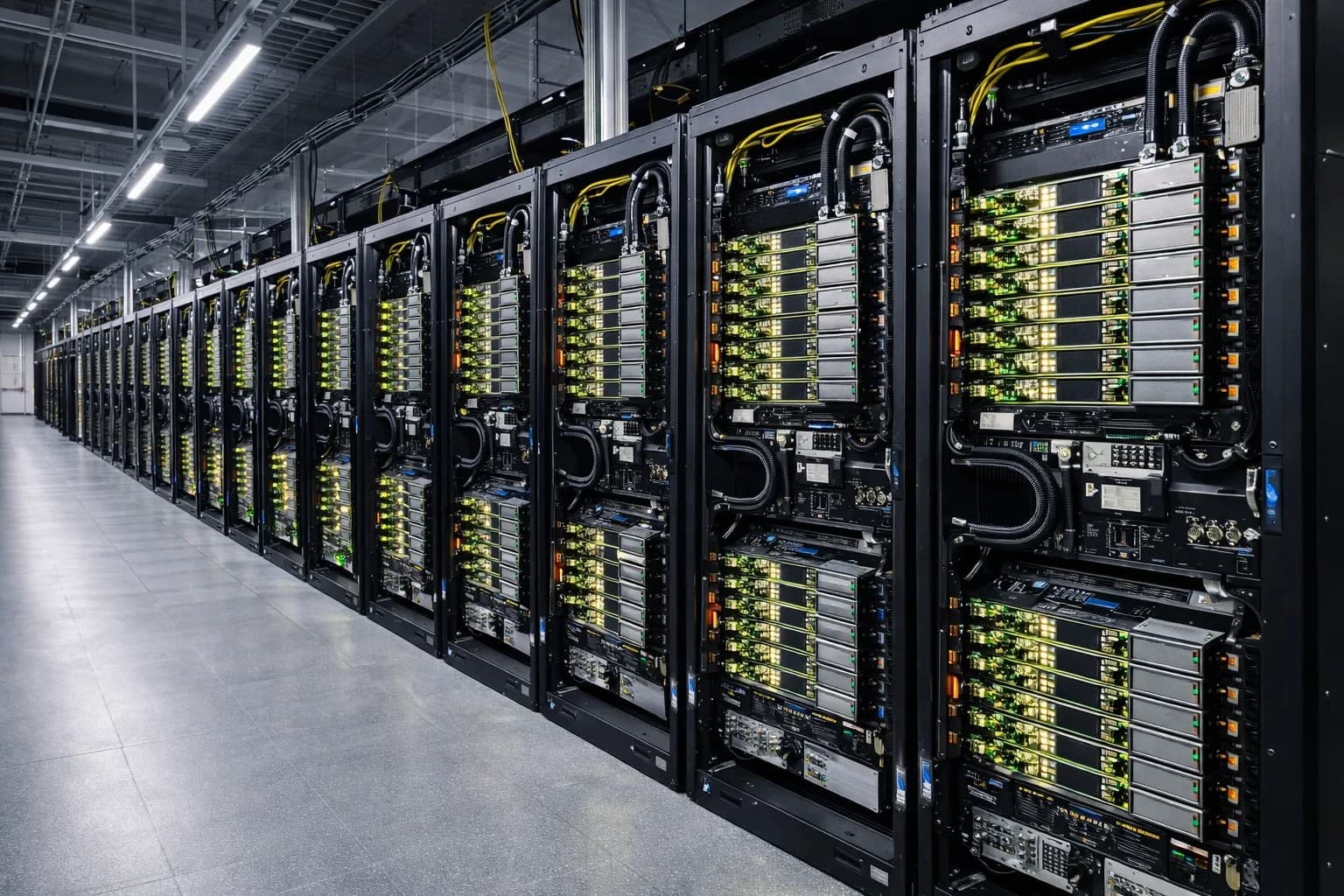
SiliconFlow (无问芯穹) has closed a ¥2.3B Series C, bringing total funding to ¥4.3B — a record for China's AI-native infrastructure sector. The numbers that matter: 37,000P of aggregated compute, 16 chip types, 40x token-call growth in seven months, and inference costs down 10x in a year with 'another 10x to go'. The bet is simple: whoever drives inference cost down defines the economics of the agent era — the same cost curve every vibe coding tool lives or dies on.