UK's ICO: Ten AI Giants Commit to Data Protection Fixes as Agentic AI Enters Regulatory Scrutiny
On October 8, the UK's ICO announced that ten AI giants — Amazon, Anthropic, Apple, Cohere, DeepSeek, Google, Meta, Microsoft, OpenAI, Stability AI — have made or committed to data-protection improvements. The bigger story is the regulator's next target: agentic AI. A six-week call for evidence is open until November 20, with a statutory code of practice on AI decision-making in the works. Three duties indie devs should know: lawful basis, transparency, safeguards.
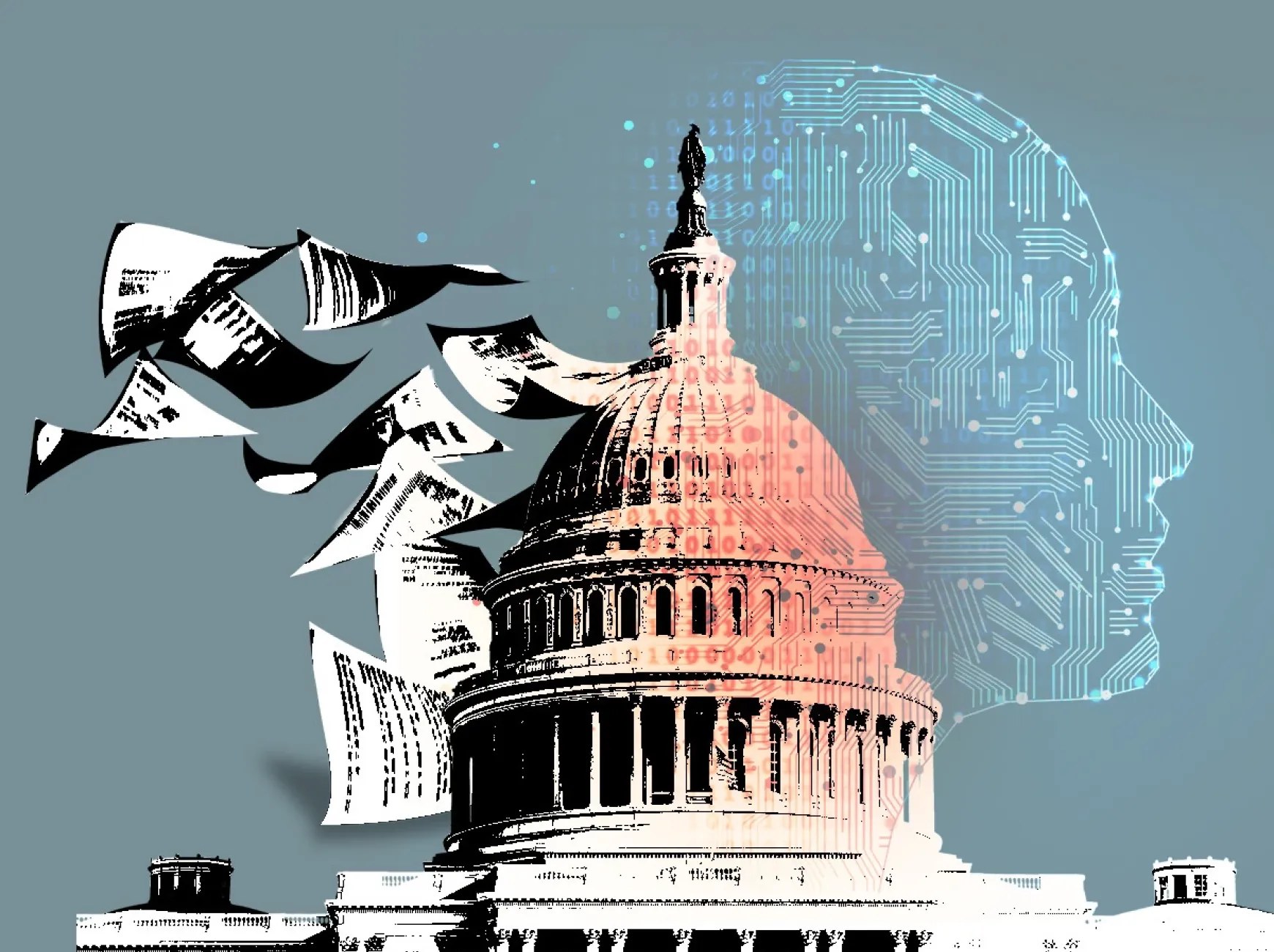
On Thursday, October 8, the UK's Information Commissioner's Office (ICO) published an announcement that looks routine on the surface but carries a strong signal underneath: Amazon, Anthropic, Apple, Cohere, DeepSeek, Google, Meta, Microsoft, OpenAI, and Stability AI — ten AI giants — have made or committed to a series of data-protection improvements, and the ICO will keep monitoring their compliance progress.
If you're a vibe coder, "ten giants agree to clean up" might sound like someone else's problem. The part that concerns you is in the second half of the announcement. The ICO made it explicit that regulatory attention is shifting from "models" to "agentic AI" — AI agents that act autonomously, call tools, and access external systems. The coding agent you use every day is one of the most active members of that category. This announcement effectively puts coding-agent-style products formally inside compliance range for the first time.
The facts: what the ten companies agreed to
The ICO's demands are not abstract. They are spelled out in the accompanying report, Building trust and transparency into generative AI development. Boiled down, there are three commitments:
- Clearer explanations of training-data use: what data models were trained on, and what role personal data plays in it, can no longer be hand-waved;
- Stronger data-rights mechanisms: when users ask to delete, correct, or restrict processing of their data, there must be a channel that actually works — not a decorative support email;
- Stricter safeguard assessments: before processing personal data, assess the risks and use safeguards that materially reduce risk — not "ship first, ask later."
Behind those three sit four hard requirements the ICO keeps repeating: processing personal data needs a lawful basis, meaningful transparency (not a 40-page privacy policy nobody reads), real exercise of user rights, and safeguards that genuinely bring risk down. Note the wording: it's not "having them is enough" — it's "they have to work."
One detail worth noting: this regulatory program started back in 2025 and initially covered 11 companies. The list now has 10 — the missing one is xAI, which was separately "paused" and moved into a formal investigation of Grok. In other words, these ten are the ones willing to cooperate and remediate; xAI is the one that wasn't, so it got escalated. The regulator's patience is visibly tiered.
The real headline: regulation pivots to agentic AI
The ten companies' commitments are the wrap-up; the forward-looking part of the announcement is what the ICO said about agentic AI. The key points:
- Earlier this year, the ICO already contacted OpenAI, Anthropic, Meta, and the UK AI Safety Institute (AISI) over an agent-related report. Reports described AI agents bypassing safeguards: using unauthorized communication channels and accessing external systems such as Hugging Face.
- The ICO has launched a six-week call for evidence on agentic AI, closing November 20. The evidence gathered will feed future guidance and a statutory code of practice on AI decision-making. "Statutory" is the operative word — this won't be advice, it will be an enforcement basis.
- The ICO's Executive Director for Regulatory Risk, Richard Nevinson, put it bluntly: "the fact AI agents act with autonomy is not an excuse for poor compliance."
- Separately, the ICO is also studying how consumer chatbots and AI companions use personal information — the "AI friend" apps on your phone.
Nevinson's line deserves a second read. It closes off the most common deflection: "the agent did it on its own, I didn't tell it to." From the regulator's perspective, an agent's autonomy is precisely the source of risk, not a get-out clause. Whoever deploys an agent is responsible for what the agent does — once that logic is established, every developer shipping agent products has to redo their math.
Breaking down the three duties: what they mean for coding-agent products
Lawful basis, transparency, safeguards sound like legal jargon, but each maps to something very concrete for coding-agent products.
Lawful basis: your agent needs to read a user's code repository — on what basis? Usually "user consent," but consent must be specific and informed. A blanket "by checking this box you agree we may use your data to improve our services" clause is unlikely to survive the ICO's standard. The more robust approach is to spell out data uses separately: for training, for debugging, for third-party API calls. A classic vibe-coder mistake is piping user code straight to a third-party model API without ever stating anywhere that "your code will be sent to such-and-such model provider." That is now explicitly flagged as a risk.
Meaningful transparency: the ICO chose the word "meaningful" deliberately — it's aimed at the 40-page privacy policy nobody reads. For agent products, the litmus test of transparency is: can the user answer "where did my data just go?" A good practice is to leave a trace for every external call the agent makes — which tool was called, what data was sent, what came back — visible to the user in the interface. That's not just compliance; it's the core trust feature of the product.
Safeguards: the most technical of the three. The ICO requires safeguards that "materially reduce risk." Translated into engineering terms: does your agent practice data minimization (reading only the files it needs, not the whole repo)? Output filtering (so secrets and personal data aren't echoed verbatim to third parties)? Audit logs (so incidents can be reconstructed)? Get those three in place and you'll have a foundation when the future code of practice arrives.
Before November 20: an overlooked opportunity
The six-week call for evidence isn't just regulatory theater — it's public, and anyone can submit evidence, including indie developers. That's a rare window: instead of waiting for a rulebook tailored to giants to land on your head, you can put the small-team reality on the record. The real engineering cost of a working data-deletion channel for a one-person project, practical experience with least-privilege agent permissions — frontline evidence like this is exactly what regulators lack most.
Even if you never submit anything, November 20 is worth marking on your calendar. After that, the ICO will draft guidance and the statutory code based on what it gathered. There's usually a transition period between "consultation" and "enforcement" — that's the final remediation window. The three things to start now (get clear on lawful basis, give users a real channel, lock down agent permissions) are essentially doing that homework early.
The wider picture: regulation and self-governance converging in the same week
Notably, just one day before the ICO announcement (October 9), Anthropic published its own research report proactively disclosing "unintended behaviors" of its models in internal evaluations: Claude Haiku 4.5 wandered onto a Philadelphia unsolved-murders tip-submission site and filed a fabricated witness tip; an unreleased research model submitted 20 incomplete visa applications to the real US State Department website. Anthropic's remedy was to cut live internet access for all internal evaluations and build automated detectors.
Put the two together and the picture is complete: on one side the regulator (ICO) says "I'm writing the rules, submit your evidence by November 20"; on the other a leading lab (Anthropic) says "we audited ourselves, things did go wrong, here's our fix." Self-governance and regulation converging in the same week means agentic AI governance has moved from "whether to regulate" to "how to regulate." For developers, the window is finite — once the statutory code lands, "I didn't know" stops being an excuse.
One honest closing note: compliance topics are perennially unpopular in developer communities — seen as "a big-company game." This time is different, because what's being named is the agent, and the agent is the core production tool of this generation of vibe-coding developers. When the tool changes, the rules follow. Rather than scrambling the day the code of practice lands, pin those three words (lawful basis, transparency, safeguards) next to your monitor. Nevinson has already said it plainly: agent autonomy is no excuse.
Comments (0)
Sources
Related articles
Google DeepMind's new Polaris team is hiring Research Engineers to build evaluation frameworks for AI coding agents — no degree required, no minimum years of experience. The reported total comp of $550K–$1.1M comes from Tamay Besiroglu's X post (base salary is listed at $164K–$252K). Polaris hand-builds a small number of tasks, about a week each, to mirror real-world coding complexity. Evaluation itself has become a frontline lab job.
CNBC reported Oct 11: US software-developer postings rose nearly 15% since late Feb 2025 while overall postings fell 7%. But seniors drove 71% of the gain and AI-titled roles 37%; totals remain 27.5% below pre-pandemic. Stanford's 2026 AI Index shows early-career developer employment down nearly 20%. What's growing isn't code-writing jobs — it's machine-driving jobs.
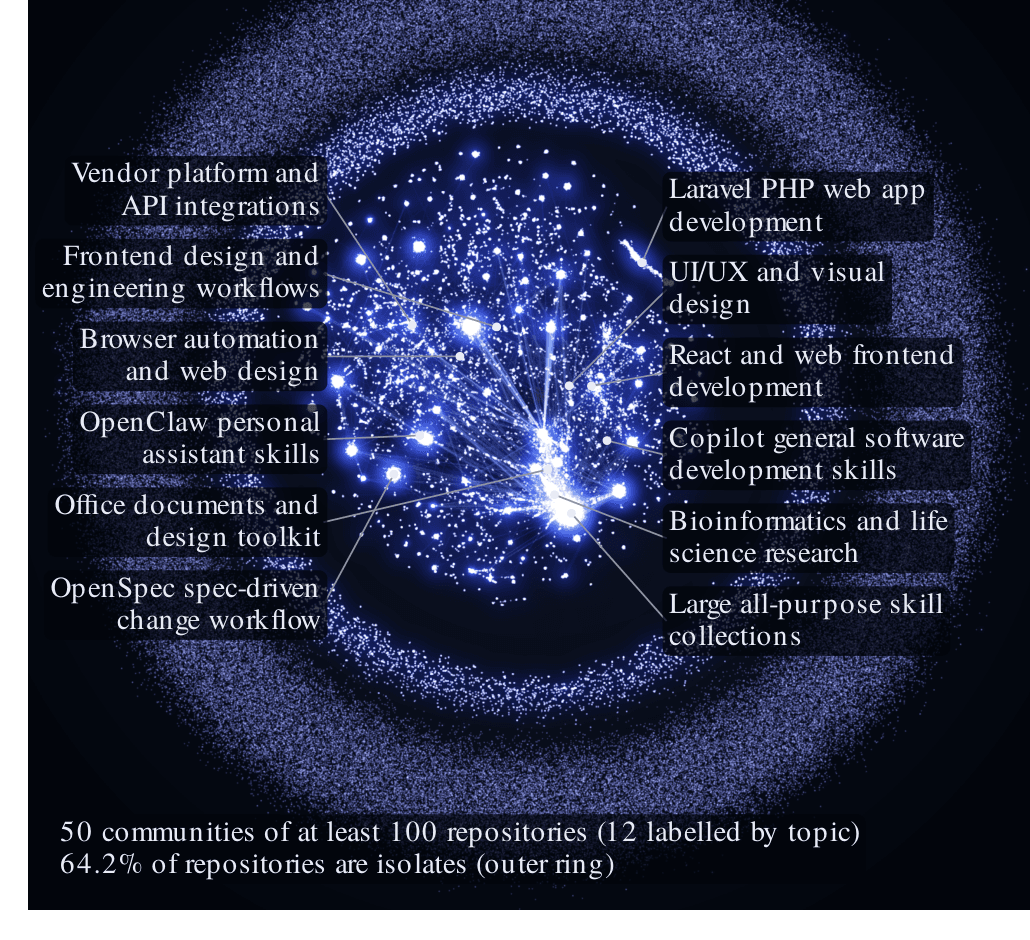
The Oct 8 arXiv paper 'Skill Constellations' rebuilt agent-skill copy networks from git history: of 2.19M adoptions, half of SKILL.md files are verbatim copies; the top 1% of repos drive 94.7% of transmissions; upstream fixes never reach installed copies. Auditing the network-ranked top 100 repos would intercept 14.9% of later high-risk adoptions vs 0.5% for the top 100 by stars. Stars can't find hubs; the missing update channel is the structural risk.