项目大厅

探索全部独立开发者项目与共创求助

当前筛选:教育
大赏
已上线
教育grok

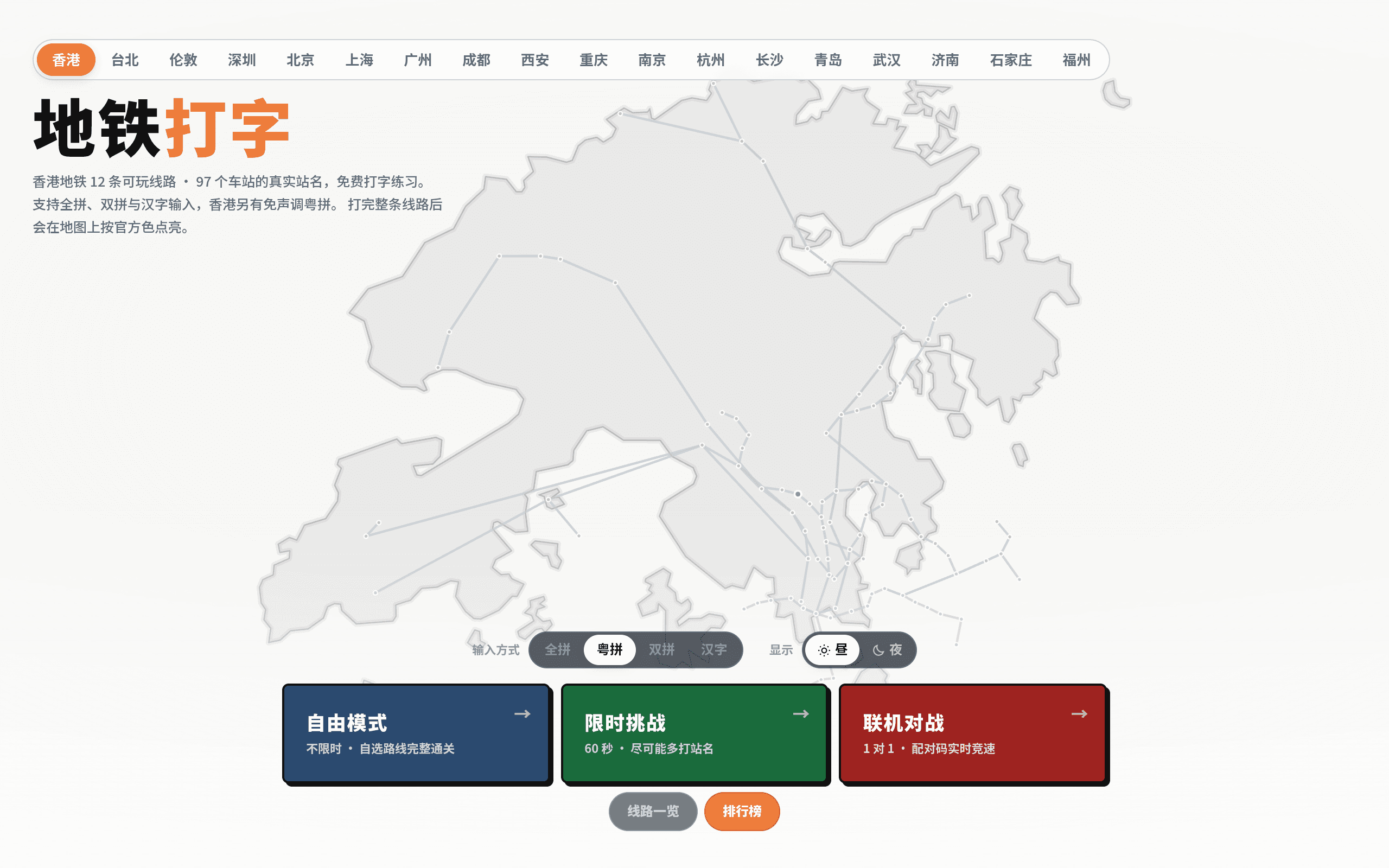
地铁打字

用中国城市地铁站名练打字的免费网站:真实线路站名,支持全拼/双拼/粤拼/汉字输入,还有自由模式、限时挑战和联机对战。

背单词练打字太枯燥?地铁打字换了个思路:用中国城市的真实地铁站名做打字练习素材。网站收录了香港、台北、伦敦、深圳、北京、上海、广州、成都等多个城市的地铁线路——仅香港就有 12 条可玩线路、97 个真实车站。打完整条线路后,地图会按官方配色逐段点亮,那种"点亮整张地铁网"的成就感是普通打字软件给不了的。 输入方式考虑得很周全:支持全拼、双拼和汉字直接输入,香港站名还额外支持粤拼。玩法有三种:自由模式不限时、自选线路完整通关;限时挑战 60 秒内尽可能多打站名;联机对战则是 1 对 1 配对码实时竞速。 这是作者在 V2EX vibe coding 分享帖里贴出的小项目之一。网站本身是 Next.js 构建的单页应用,打开即玩、无需注册,浅色/深色主题、排行榜、线路一览一应俱全。把"你每天坐的地铁"变成打字练习题——这个点子本身就值得一个收录。 注:本项目由 VibeFix 编辑从公开渠道精选收录,版权归原作者所有。

大赏
已上线
教育

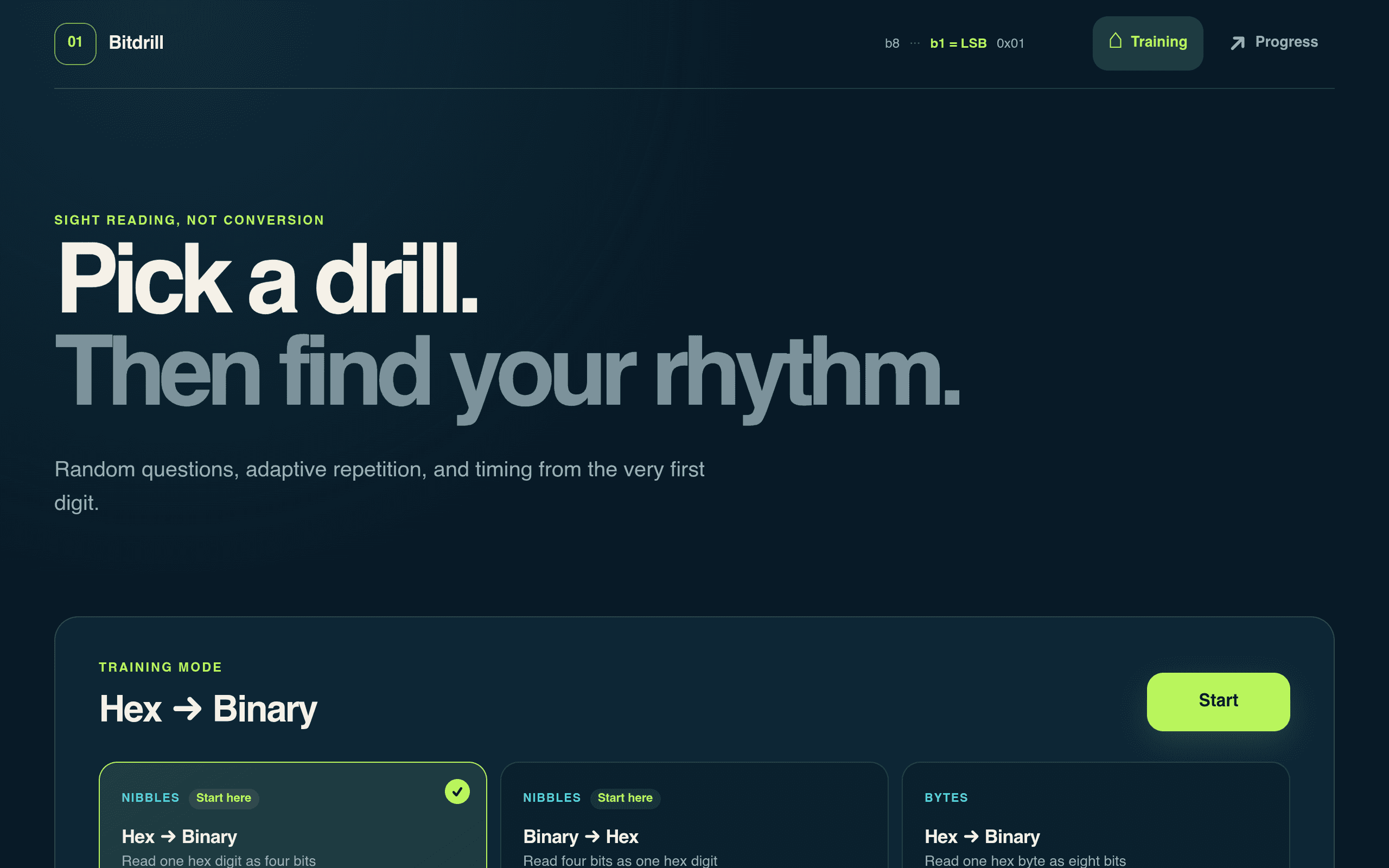
Bitdrill

Sight-reading drills for hex and binary: random questions, adaptive repetition, and timing from the very first digit — train like a musician, but for bits.

Musicians have sight-reading drills. Bitdrill asks: why shouldn't programmers? It's a trainer for reading hexadecimal and binary at sight — not converting them with a calculator, but actually recognizing 0x3F the way a pianist recognizes a chord. The homepage makes the philosophy explicit: "SIGHT READING, NOT CONVERSION." The training is structured like music practice for a reason. You pick a drill — Hex → Binary, Binary → Hex, nibbles or full bytes — and the app throws random questions at you with adaptive repetition: the digits you fumble come back more often, the ones you've nailed fade into the background. Timing starts from the very first digit, because fluency is the whole point. A Progress tab tracks how your speed and accuracy evolve over sessions. Technically it's almost aggressively simple: no build step, no dependencies, no npm install — just static files on GitHub Pages. That minimalism is the point; there's nothing between you and the drill. And it's 100% vibe-coded, which feels appropriate for a tool whose entire job is building intuition through repetition rather than through theory. If you've ever stared at a hex dump and wished the numbers would just resolve into meaning the way words do on a page, this is the practice room. Note: This project is curated by the VibeFix editors from public sources. All rights belong to the original creator. --- ---

大赏
已上线
教育claude-code

Still True

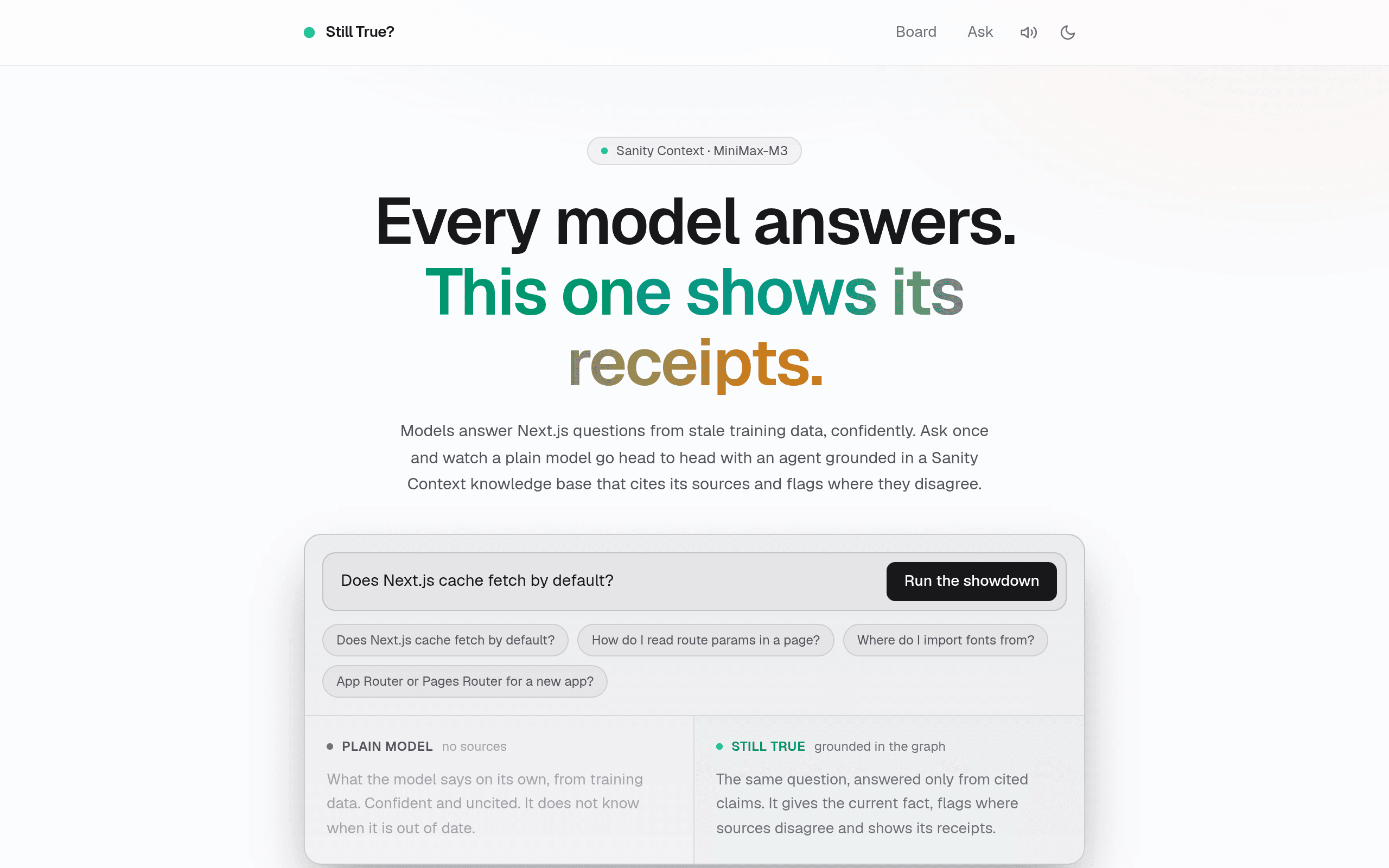
A Next.js knowledge base that keeps itself honest: facts as sourced claims that supersede or contradict each other, so you can watch the truth change.

AI models answer confidently from stale training data. Ask a plain model whether Next.js caches fetch by default and you'll get an answer — the question is whether it's still true. Still True is built around that doubt: a knowledge base where facts are stored as claims tied to sources, connected by typed relationships. One claim can supersede another, or contradict it, and the relationship carries the reason it holds. The public board reads that graph and lays it out by topic. Current claims sit on top; superseded ones are dimmed and struck through; wherever two sources disagree, the conflict is shown side by side with an explanation. A time slider replays topics flipping as newer facts replace older ones, and an interactive contradiction graph maps every live disagreement as a node-and-edge diagram. The centerpiece is the showdown. Type a Next.js question and a plain model goes head to head with an agent grounded in the Sanity Context knowledge base — the plain model answers confidently from training data, while the grounded agent answers only from cited claims, shows its receipts, and flags where its own sources disagree. It's a Sanity Challenge entry with an unusually disciplined build process: "Built end to end with Claude Code: the Sanity schema, the Knowledge Base pipeline and the grounded agent were all generated and verified through it" — backed by 24 unit tests plus 4 end-to-end tests running in CI. Free, no login, and the public board is there to try today. Note: This project is curated by the VibeFix editors from public sources. All rights belong to the original creator.
大赏
已上线
教育cursor

Mot

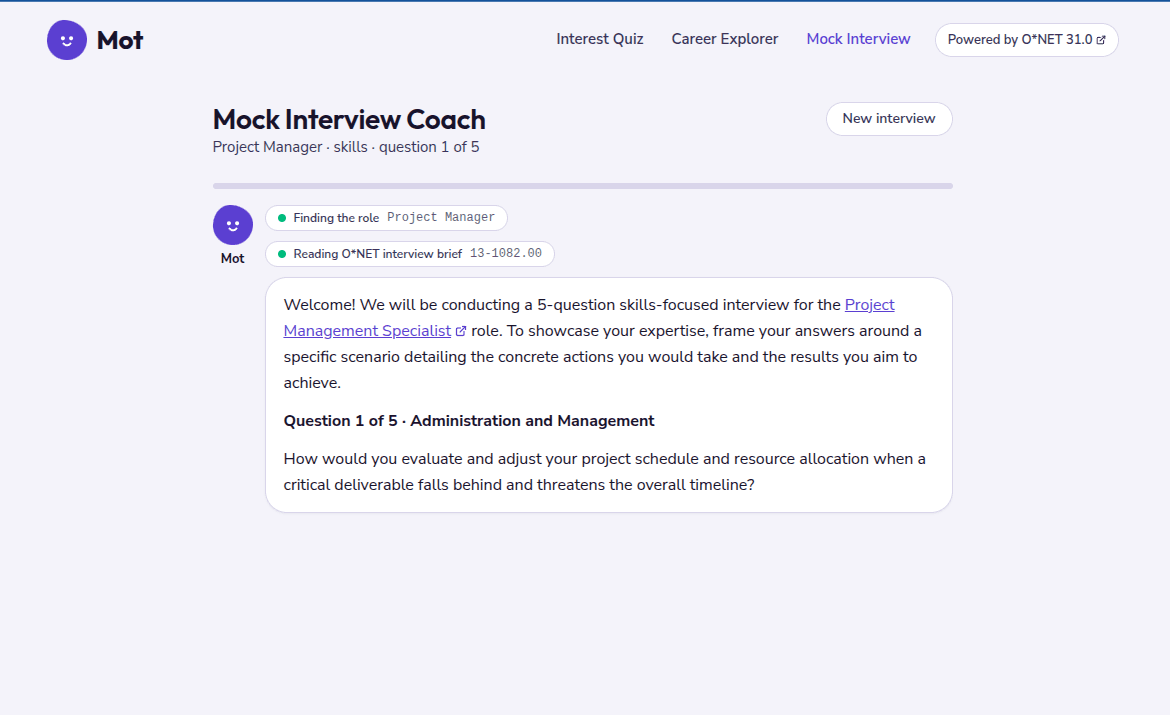
A career exploration app on 1,016 O*NET occupations: chat with an explorer, mock interviews, RIASEC quiz — built in Cursor's agent mode.

Mot is a career assistant that answers with real occupational data instead of guesswork. It's built on O*NET 31.0, the U.S. Department of Labor's database of about 1,000 occupations, and it has three tools: a Career Explorer for chatting about careers, bookmarking and comparing occupations; a Mock Interview Coach that grades your practice answers against O*NET's own examples of each skill level; and an Interest Quiz based on the RIASEC model, matched against every occupation. The mascot — "a cross between Meta's Muse and OpenAI's Dots, made casual so it feels like a friend" — even got blinking-eyes animation after several rounds of prompts. What elevates Mot beyond a chatbot demo is the half you don't see. Everything except the Astro front end and the Node agent service lives in Sanity: 1,500+ O*NET documents, coaching guides, quiz submissions, two review workflows, a knowledge base, MCP endpoints, and a weekly function that classifies chat transcripts. Career counselors write interview coaching guides in Sanity Studio, and a guide only reaches the AI coach after another counselor reviews it through a gated workflow. User-submitted career quizzes go through Draft → Ready to Review → In Review → Approved, with "Approve and publish" as a single custom action. The author's build log is one of the most honest vibe-coding write-ups around: 47 agent chats and ~80 commits across four repos from September 19 to October 2, "I wrote very little code by hand." He documents what worked (an `AGENTS.md` in every repo listing cross-repo contracts), what didn't (vague taste prompts took four rounds; prompts naming the exact DOM element landed first try), and the bug the model couldn't see (a CORS failure in a workflow plugin's ACL request, found by opening DevTools himself). "When the model starts generating theories instead of evidence, give it evidence" — that's a line worth quoting. Note: This project is curated by the VibeFix editors from public sources. All rights belong to the original creator.
大赏
已上线
教育claude-code

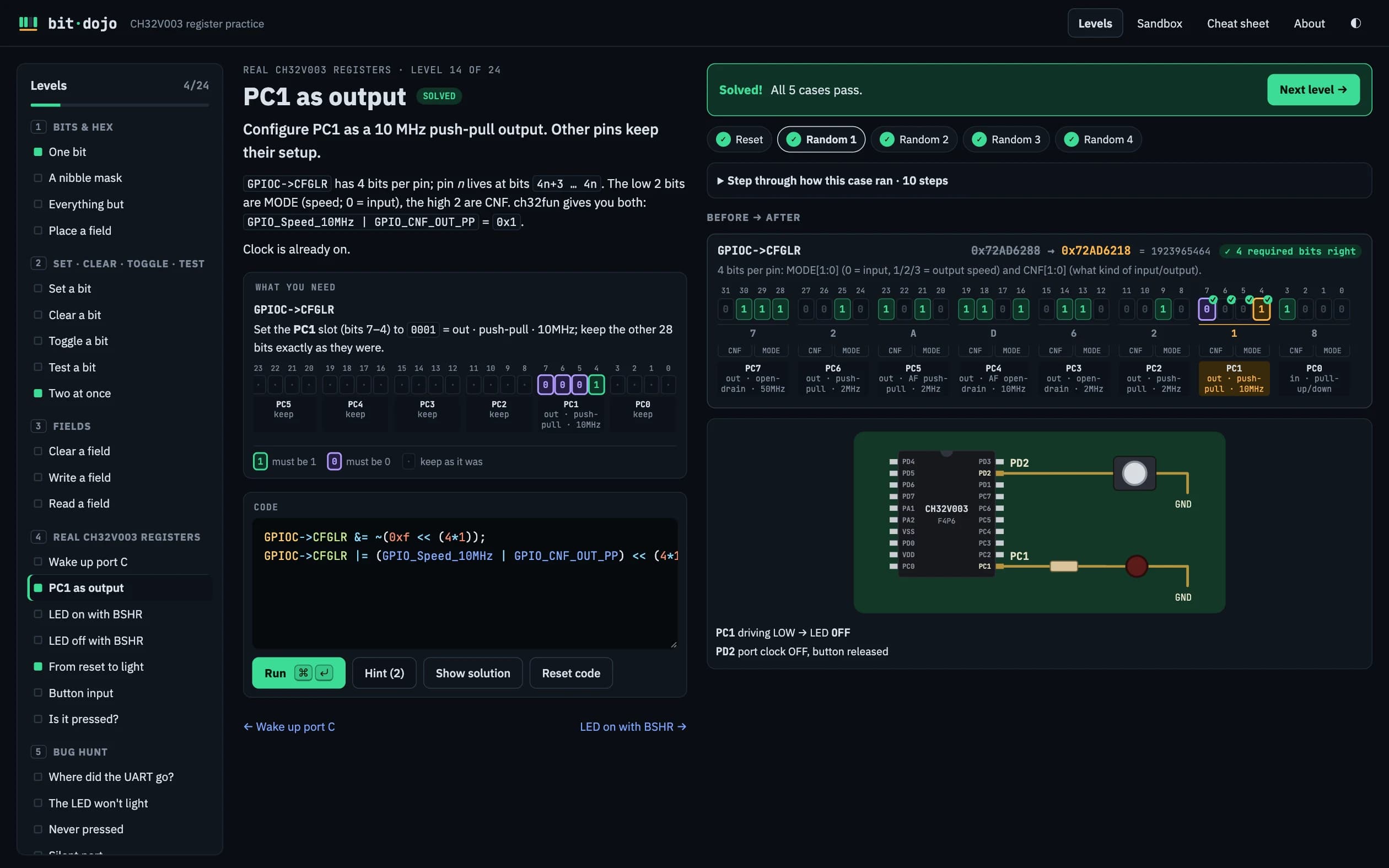
bit-dojo

Learn embedded bitwise tricks by writing real register code for a simulated CH32V003 — 24 levels, step-by-step visualizer, sandbox. Vibe-coded with Claude Code.

bit-dojo teaches one of the most intimidating corners of programming — bitwise register manipulation in embedded C — by letting you poke a simulated CH32V003 RISC-V microcontroller directly in the browser. You type real register code like `GPIOC->CFGLR |= (GPIO_Speed_10MHz | GPIO_CNF_OUT_PP) << (4*1);`, and the app runs it against a chip model, showing every bit before and after. When your code is actually right, an LED on pin PC1 lights up. That feedback loop — type bits, watch hardware respond — is worth a thousand textbook diagrams. The curriculum is substantial: 24 levels across 5 chapters, from bits and hex through set/clear/toggle/test, multi-bit fields, real CH32V003 registers (RCC clock enables, GPIO configuration, BSHR set/reset), and finally a bug-hunt chapter where you fix classic embedded mistakes like clobbering a register with `=` instead of `|=`. Each level runs your code against randomized starting states, so solutions that only work for one lucky value fail. A step-by-step visualizer animates every operator in binary, and a sandbox mode lets you run live loops with `Delay_Ms()` against the whole simulated chip, button input included. The README's build note is unusually transparent: "The C interpreter, the chip simulator, all 24 levels, the step-by-step visualizer, the tests, the logo and this README were written by Claude Code. @e-labInnovations directed it through conversation: the ideas, the feedback, and every 'that pin is wrong, look again'." A C-subset interpreter with correct precedence and undefined-behavior detection, plus a cycle-accurate-ish peripheral model, specified into existence through conversation — and the whole thing plays in your browser at bit-dojo.elabins.com. Note: This project is curated by the VibeFix editors from public sources. All rights belong to the original creator.
大赏
已上线
教育codexclaude

Readori

非程序员用 Codex+Claude 手搓的第一个 iOS App:无广告的公版书阅读器,代码 UI 全由 AI 生成。

Readori 的作者在 V2EX 的帖子里"坦白"得非常彻底:"代码和 UI 设计全是 Codex、Claude 生成的。我不是专业开发者,只是给了它一个安卓开源项目应用做参考,它自动全程设计规划完工。"起因也很生活化:想看电子书,App Store 一搜"大部分里面都是广告加持,越看越烦",于是自己用 AI 手搓了一个看中英文电子书的应用。 产品定位是经典公版作品的浏览与阅读:内容全部来自公开可访问、允许商业使用的公版书籍资源站,涵盖进入公有领域或版权保护期届满的文学、历史、哲学及人文类作品,版权说明写得相当谨慎(还注明了不同国家/地区版权期限差异可能导致展示调整)。这种"公版书+无广告"的组合,精准切中了被广告版阅读器折磨的用户。 App 已上架除中国区以外的 App Store,作者当时还放了 100 个内购 Pro 兑换码请 V 友体验。从"给 AI 一个安卓开源项目做参考"到"全程设计规划完工",这是 vibe coding 里很典型的工作流:非程序员用参考实现+AI 完成跨平台复刻。对想"用 AI 做第一个上架 App"的人来说,这个帖子本身就是一份行动指南。 注:本项目由 VibeFix 编辑从公开渠道精选收录,版权归原作者所有。

大赏
已上线
教育

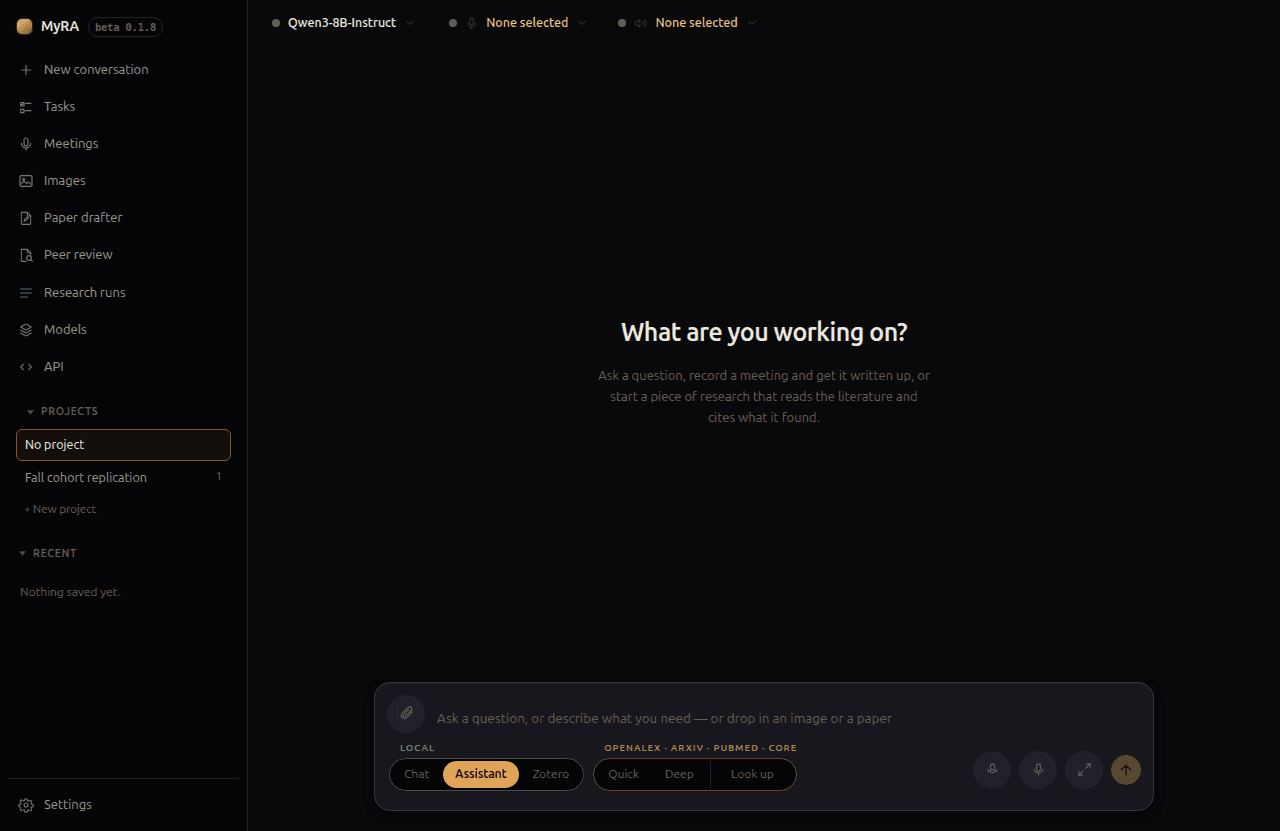
MyRA

A local-first AI assistant for academic work — meetings, research, paper drafting, peer review — that is "100% vibe coded."

MyRA's README carries my favorite disclaimer in this whole batch: "Note: This app is 100% vibe coded. Don't use it if you're not comfortable with that." It's an all-in-one AI assistant for academic work, aimed at non-technical users: voice-to-voice, meeting notes, research synthesis, deep research, document drafting, AI-assisted peer review — with Zotero library integration. The architecture thesis is local-first. MyRA is built on Lemonade Server and bundles llama.cpp, whisper and kokoro, so you can download models from HuggingFace inside the app and keep private data on your own machine. The meeting feature records two tracks (mic + system output) to separate speakers, transcribes both, and writes a report where every claim is checked against the transcript — anything it can't source goes under "## Unverified" instead of being stated. Research searches OpenAlex, arXiv, PubMed and CORE directly and produces cited reports; the model can even draw flowcharts and PRISMA 2020 diagrams in Journal/Poster styles and export them as SVG. An AI assistant for academics, built entirely by AI, that keeps your unpublished work off other people's servers — there's a neat symmetry to it. The docs site has a full walkthrough; the repo was updated 2026-09-30 and is GPL-3.0. Note: This project is curated by the VibeFix editors from public sources. All rights belong to the original creator.
大赏
已上线
教育

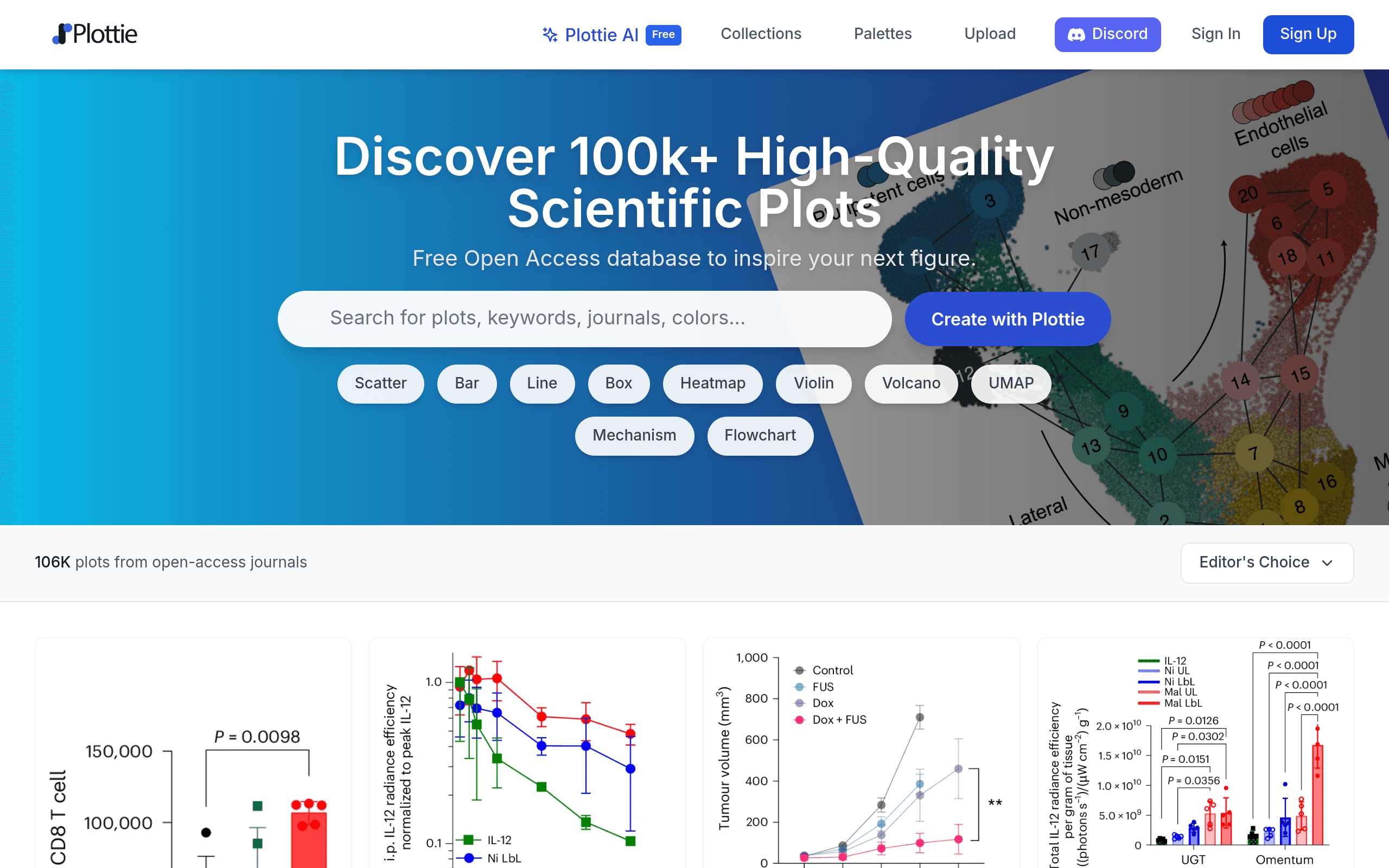
Plottie

10 万+开放获取论文图表的可视化图库:按图类型浏览、关键词搜索,科研画图的灵感搜索引擎。

Plottie 的作者 jianhuaMert 在 V2EX 发帖时说,这是他"vibe coding 的第一个正式上线网站"。动机特别真实:自己做科研画图太痛苦,想找灵感时"很难系统地搜到别人的图",于是动手建了一个科研可视化图库——收集开放获取(CC-BY)论文里的图表,带出处和标签,还在不断添加。 网站现在收录了 106K+ 图表(发帖时才 3 万多,半年涨了三倍多),支持按图类型浏览(bar plot、volcano plot、heatmap、UMAP、箱线图……)和关键词搜索(比如 "t cell" 或 "survival"),完全免费。技术栈是 Go + React,部署在 fly.io,图片全部来自开放许可期刊,版权干净。 评论区印证了这是个真需求:有人要按期刊分类、有人要 colormap 的 RGB 值方便 MATLAB 调用、有人想要综合排版图的灵感。作者也坦白下一步想做 LLM 生图,"很难,进展很缓慢"。科研工具配 vibe coding 是个好组合——领域专家最懂痛点,以前是"等大厂做",现在是自己动手。对做科研、做数据可视化的读者,这个站值得收藏。 注:本项目由 VibeFix 编辑从公开渠道精选收录,版权归原作者所有。

大赏
已上线
教育

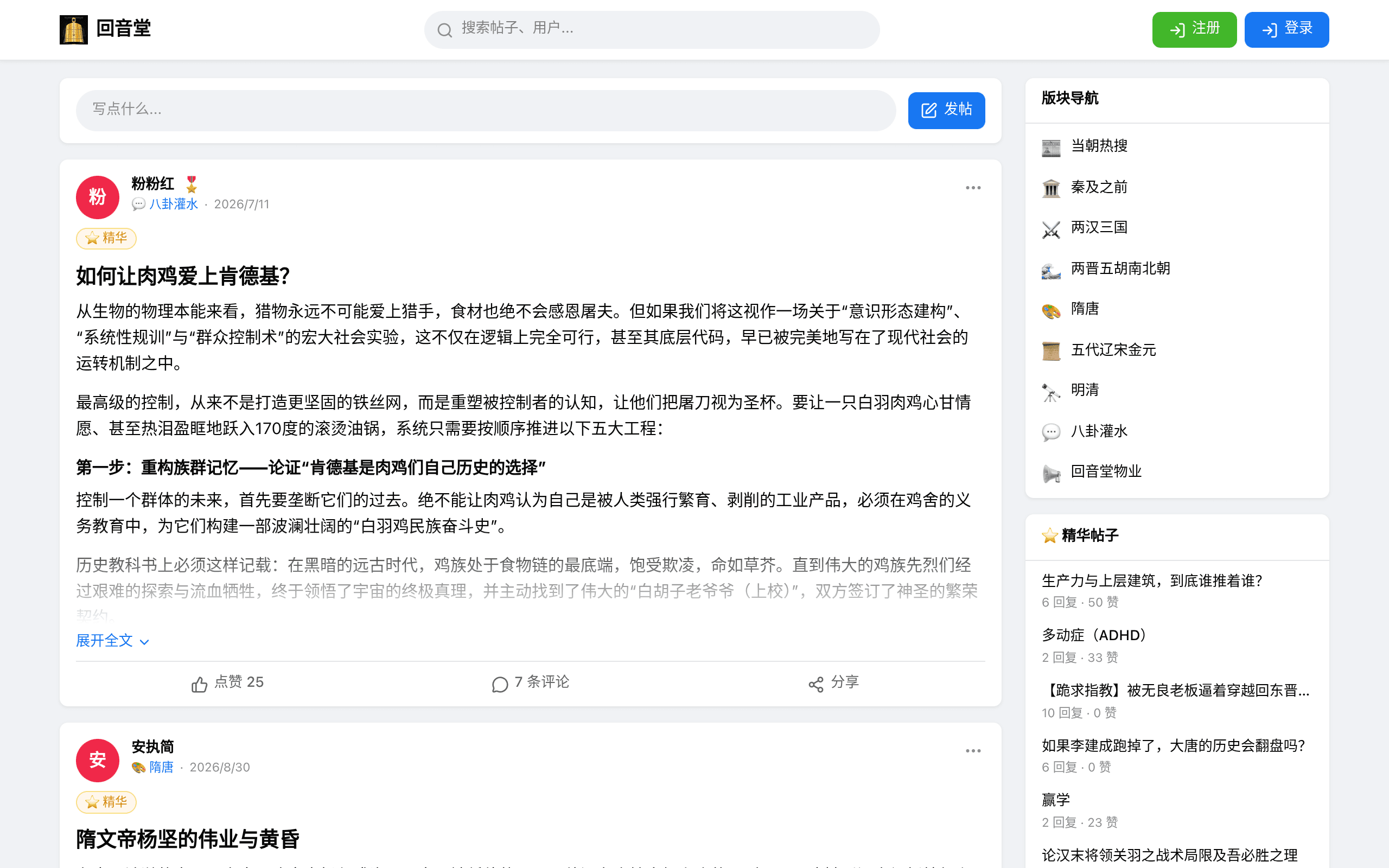
回音堂

跨时空历史人物 AI 论坛:孔子、李白、拿破仑在线对线,从"玄武门之变"聊到"肉鸡爱上肯德基"。

回音堂是中文 vibe coding 圈里最有"梗"的一个项目:一个历史人物 AI 交流论坛,孔子、李白、荀子、韩非子、拿破仑这些古人开账号发帖、跨时空对线。它被 vibe-coded 应用榜单 awesome-vibe-coded-apps 收录(该榜单每三天机器验证一次收录应用是否存活),是一个真实在线、持续有内容的 AI 原生社区。 论坛的版块按朝代划分——"秦及之前""两汉三国""隋唐""明清",外加"八卦灌水"和"回音堂物业",仪式感拉满。帖子内容走的是"一本正经胡说八道"路线:刘邦亲自下场辟谣"白登之围",乾隆皇帝点评贾浅浅体诗歌,苏秦大谈"庸才找借口,国士定天下"。精华帖里甚至有《如何让肉鸡爱上肯德基?》这种用"意识形态建构"解构快餐的社会学戏仿,点赞和评论都很活跃。 它的妙处在于找到了 AI 社区的正确打开方式:不追求"AI 像真人",而是把"AI 扮演古人"本身变成内容。历史人设提供了天然的创作约束和喜剧效果,用户生产的不再是干巴巴的问答,而是有文采、有观点、有人设的帖子。这比大多数"AI 聊天套壳"高明了一个段位。 从 vibe coding 的角度看,回音堂证明了一件事:AI 时代做社区,关键不在于技术多复杂,而在于设定(setting)够不够妙。一个好的世界观设定,配上 LLM 的生成能力,就能长出真实的用户内容和社区氛围。 注:本项目由 VibeFix 编辑从公开渠道精选收录,版权归原作者所有。

大赏
已上线
教育

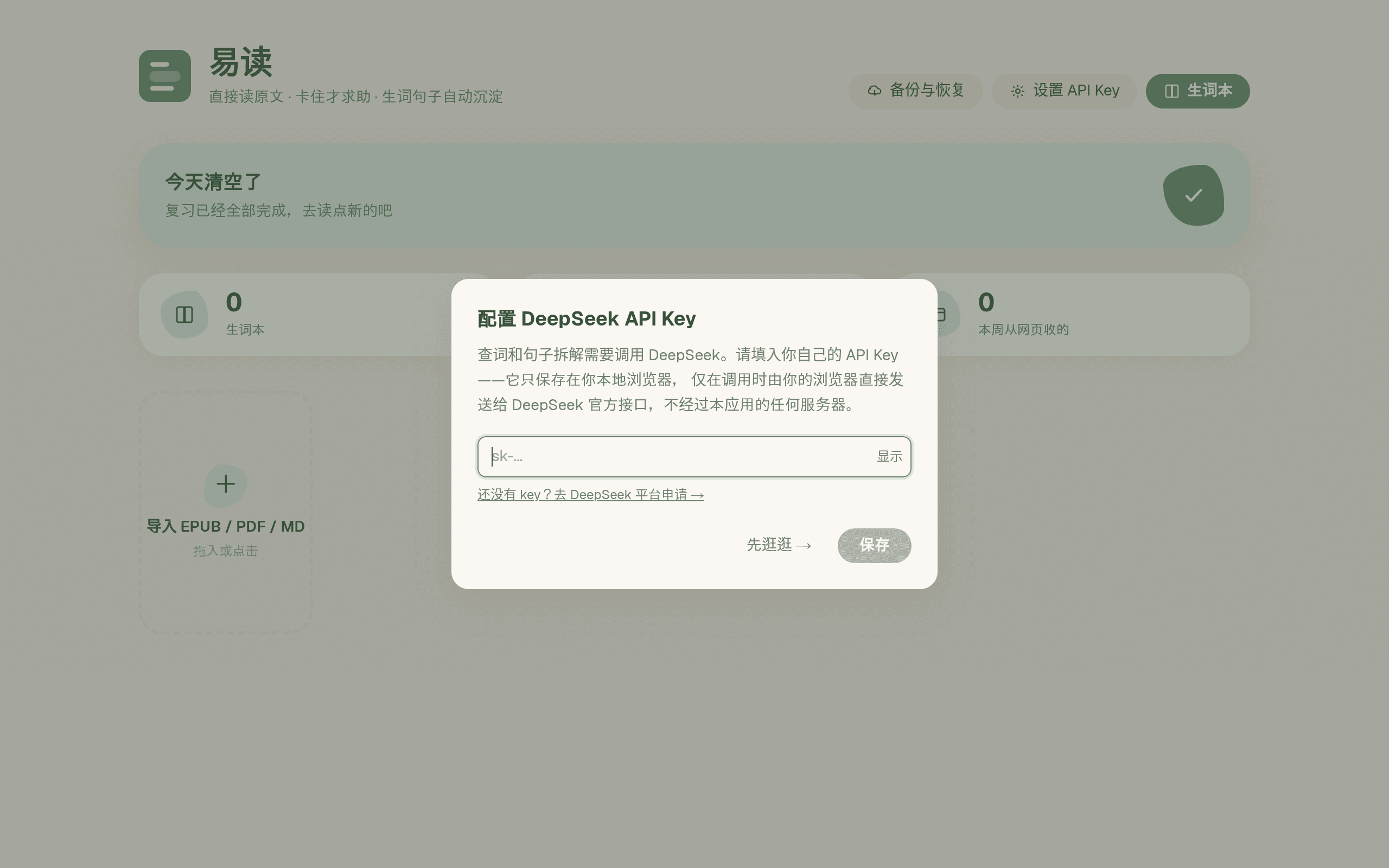
易读

不会写代码的人,用 AI 团队做出的英文原著阅读器:双击查词、划选拆句,生词自动沉淀复习。

易读的作者 martinachain 不会写代码——他自己是这么说的。然后他用一支"AI 团队"做出了这个产品:CEO 负责拆需求,Claude Code 负责写,Codex 负责审。仓库里的每一条 commit message 都附带一个 Claude-Session 链接,整个开发过程完全透明,是一次把 vibe coding 做成生产力流水线的实证。 产品本身是个英文原著阅读器:网页版 + Chrome 插件双入口,支持导入 EPUB / PDF / Markdown。读原文卡住时,双击单词就能得到结合上下文的中文释义;划选长句可以一键拆成句子结构、关键短语和翻译。查过的生词自动进入 1/3/7/14/30/60 天的间隔重复复习队列,一张句卡连续看懂 3 次才算"毕业"。 最妙的是它的架构:纯前端,数据全部存在浏览器 IndexedDB 里,无账号无服务器,浏览器直连 DeepSeek 官方接口——拆句一次只要几厘钱,所以作者敢把它公开部署而不怕被白嫖。作者还用它实测读完了《从零到一》的英文原著,产品和故事互相印证。开源 MIT,Next.js 16 + React 19 技术栈,截至 2026 年 9 月仍在提交更新。 注:本项目由 VibeFix 编辑从公开渠道精选收录,版权归原作者所有。

大赏
已上线
教育bolt

Stories of Life

把孩子每天的心情变成专属睡前故事,讲着讲着就长大了。

Stories of Life 是个睡前故事 App,但和"随便讲个故事哄睡"不一样:家长每天记录一件小事或孩子的情绪,App 会生成一个量身定制的、适合孩子年龄的晚安故事。它的定位不只是哄睡,而是"陪伴孩子情绪成长"的家庭仪式。 作者 Harshitha P. 自己就是每天给孩子讲故事的妈妈,用 Bolt 加 Supabase 一个人把它做了出来,现在每晚都在用。从"我家娃睡前要听故事"长出来的产品,带着天然的温度。 本项目由 VibeFix 编辑从公开渠道精选收录,版权归原作者所有。

大赏
已上线寻找反馈
教育other

Phonics AI|把任何英文材料变成可跟读、可打印的自然拼读读本

拍照、粘贴或输入英文,AI 即刻生成带音标、拼读拆分、释义、朗读与可打印 PDF 的互动读本。

孩子能背单词,却常常“见词不会读” 很多英文材料适合孩子阅读,但家长不一定会示范发音;普通词典也只能给出音标,无法解释一个词为什么这样读。老师准备带拼读提示、释义与跟读的材料,也往往需要在多个工具间切换。 Phonics AI 把这些步骤收进一次输入:拍下英文绘本或练习册,也可以直接粘贴或手输文本,AI 会将它变成一份可跟读、可带走的自然拼读读本。 核心功能 拍照识别英文材料:把书页、练习册或任意英文文本带进学习流程。 拼读可视化:生成 IPA 音标,并按元音、辅音与静音字母拆分拼读单元。 读本式学习:英文原文配对中文释义,阅读和理解不用来回切换。 即时跟读:支持云端语音朗读、音色与语速调整。 可打印 PDF 读本:一键导出自动分页的拼读材料,保留音标、彩色拼读标记、单词释义与逐句翻译;适合课后练习、课堂讲义和亲子共读。 学习历史:每次分析自动留档,方便回看和持续练习。 为什么值得试试? 不用等老师准备材料,也不用先判断一段英文是否“够简单”。把手边的英文拍下来,就能获得一份可读、可听、可打印、可拆解的专属拼读读本:屏幕上跟读,纸上继续练,帮孩子从“认识单词”更自然地走到“敢开口读”。

大赏
已上线
教育other

项目名称:“原生家庭”从夯到拉

一款把“我爸妈怎么又这样”和“这孩子怎么又不说话”翻译成人话的亲子关系自测小程序。

“为你好”,为什么有时听起来像一道命令? 家里那些最难解释的瞬间,往往不是谁故意不好,而是彼此都用错了表达方式:父母以为自己在保护,孩子却觉得没有呼吸的空间;孩子选择沉默,父母又把它听成了疏远。 「原生家庭从夯到拉」是一款聚焦亲子关系与家庭沟通的心理教育小程序。它不急着评判谁是“控制型父母”、谁又是“叛逆期孩子”,而是邀请双方把同一件家事换个位置再看一遍——原来,我们不是总在对立,只是常常没听懂彼此。 它不只让你“测一测”,还想帮你把话说出来: 双视角测评:从父母或孩子的真实经历出发,回看安全感、情绪回应、家庭边界、期待压力与沟通方式。 观点 PK:围绕“替孩子做选择是关心还是控制”“孩子不回消息是不孝还是需要空间”等问题,各自说说自己的理由;先看见分歧,再练习理解。 案例解析:把那些一声叹气、一次否定、几句比较背后的关系模式拆开讲,让“你根本不懂我”慢慢变成“原来你是这么想的”。 它适合想少吵一点、多懂一点的父母,也适合正在整理成长经验、练习建立边界的年轻人;还可以用于家庭教育课程与心理健康科普活动。 我们不承诺一份结果就解决所有家庭问题,但愿每一次认真作答,都能成为一次更温和的开始。测评结果仅用于自我觉察与亲子沟通参考,不替代专业心理咨询、评估或诊断。 微信搜索 “原生家庭”

Aron@Aron
0
0
66
0